
VAMPIRE CRABS: EVERYTHING YOU NEED TO KNOW (Geosesarma)
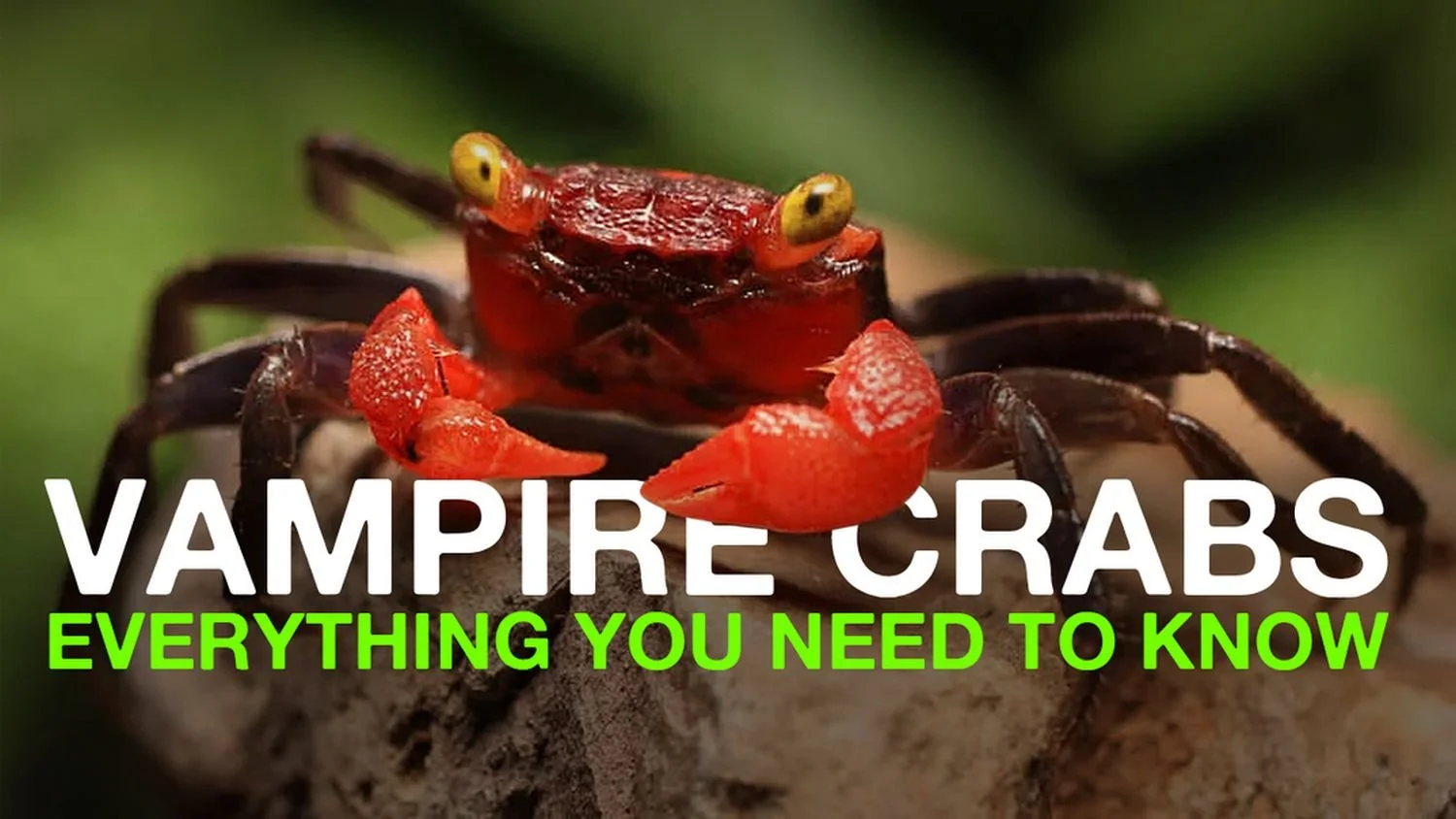
Geosesarma vampire crab care guide
In this article, you will learn everything you need to know about keeping Vampire Crabs, including how to build a low-maintenance ecosystem for them and how to get them breeding. There is a lot of content here to cover, so take your time with it. Building an ecosystem and caring for Vampire crabs properly takes time, but it isn’t difficult. If you want to support my work, I also have a comprehensive Vampire Crab ebook available that goes over all of this stuff in even more detail. But this guide will still turn you into an expert pretty quickly as well!
I also want to start off by saying Vampire Crabs CANNOT be kept in an aquarium. Anyone saying that they will happily live in an aquarium is not a credible source and should be discarded.
Geosesarma Vampire Crab Care Guide
Vampire Crab FAQs
Are vampire crabs easy to keep? Yes!
Are vampire crabs high maintenance? No!
How to make a vampire crab habitat? Keep reading!
Do vampire crabs need a heater? Yes!
Do vampire crabs need a filter or pump? (It Depends)
THIS GUIDE IN A VIDEO
If you prefer to watch and listen, rather than reading, this video guide might be more your thing.
BEFORE YOU BUY VAMPIRE CRABS WATCH THIS!
Before you do anything else, make sure you watch this video! Because there’s a good chance Vampire Crabs might not be the animals you are expecting them to be. If you finish watching the video and still think they are something you’d like to keep, you’ll find everything you need below.
Geosesarma - a Brief Introduction
Vampire crabs, Geosesarma SP, are small, freshwater crabs (crustaceans) native to the rain forests of Indonesia, Borneo and other parts of Southeast Asia. They are low-maintenance pets but there are some really important things you need to know to keep them happy and healthy. I’ve also listed quite a few videos in this guide, so make sure you check them out. If you are keeping Lepidothelphusa crabs you’ll find more information here.They require quite a few different things to be happy.
If you already have a specific Geosesarma species in mind that you would like to keep as a pet, you can find species profiles that go over individual species in more detail here.
ENCLOSURE & ENVIRONMENT BASICS for vampire crabs
Vampire crabs are quite small, with a maximum size of about 2 inches, so they do not require a large enclosure. That said, there are still some important rules to follow. A 5-gallon tank is the minimum size recommended for a group of three crabs (1 male 2 female), but a larger tank will provide more space for the crabs to explore and establish territories.
Important: While 5 gallons (18 litres) is the minimum size for a group of 3. It is also the most difficult size to work with. If you do not have the perfect ecosystem design, your crabs will simply kill each other. You are better off starting with a 10-gallon tank (45 liters) and keeping 3 crabs in that. 1 male 2 females. This is far easier and less stressful for everyone.
Related Reading:Low-Tech vs High-Tech Vampire Crab Paludariums. Which is better?
If you are trying to create a realistic biotope-style environment for Vampire Crabs, check out this research paper for a full breakdown of a few species natural habitats and diets.
It is important to provide plenty of hiding spots for the crabs, as they are shy and prefer to have places to retreat to. Coconut coir, cork bark, and live plants can all be used to create a natural and comfortable environment for your crabs. The more natural you make it the more active and visible your crabs will be. Remember they are rainforest crabs so try to emulate that.
Interesting Fact: There are 4 species of Geosesarma Vampire Crabs that prefer to spend more of their time off the ground and up in the trees. They are arboreal species of Vampire Crab and if you plan on keeping them I highly suggest a vertical style tank.
Vampire crabs need a warm, humid environment, with a humidity level of 75% or higher. A humidifier can be used to increase the humidity, or you can mist the enclosure regularly with a spray bottle.
WATER SECTION RULES:
Water temperature: 22–25°C (71–78°F)
PH: Between 7.5–8.0
KH (carbonate hardness): Between 0–10
GH (general hardness) Between 4–16
Ammonia: 0
Nitrite: 0
Nitrate: Lower than 20 ppm
Air Temperature: 22–28°C (71–82°F)
Overnight lows and daily highs are normal, so if your tank goes from 20–30c over a 24-hour period (slowly) that is perfectly fine. This is very similar to what happens in nature. However, you will need a heater for your tank during the colder months of the year.
Soil temperature: Is more important than air temperature, so if your air temperatures are a little low, check the soil temperatures using a thermometer, and if they are within the correct ranges, you don’t have to stress.
Simple, BUDGET, Beginner Vampire Crab Setup
If you are completely new to setting up paludariums, here is a video I’ve put together that shows you how to set up a really simple, cost-effective tank that meets all their requirements. It should help you get off to a great start without spending a fortune.
CAN YOU MIX VAMPIRE CRAB SPECIES? (COLOURS)
The simple answer to the question is NO and the complicated answer to this question is NO. Mixing Geosesarma species with any other species of crabs will lead to warfare and death! It might not happen right away but it’s a ticking time bomb and eventually, the different species will start killing eachother.
What kind of Water Should You Use for vampire crabs
Do not use RO (reverse osmosis water) unless you plan to remineralise it. Vampire crabs need a lot of minerals in their water to survive so RO on its own will eventually kill them.
Tap water works fine as long as you dechlorinate it first. Typical aquarium dechlorination products work fine.
Do you need a pump or filter to keep vampire crabs? Only if you don’t plan on adding a lot of aquatic plants. You can read our full guide on pumps and filters for vampire crabs here.
IMPORTANT!It is important to have a lid on the tank to prevent the crabs from escaping.
HOW DEEP SHOULD THE WATER SECTION BE FOR VAMPIRE CRABS?
Water depth is an important aspect for keeping Vampire Crabs, but it’s not as complicated as people make it out to be. There are only two simple requirements.
The water needs to be deep enough to cover their entire body fully so that they can molt. So about 5-6cm (1-2inchs) is the absolute minimum you want to go.
Interestingly, there is no maximum water depth for keeping vampire crabs. The only requirement is that they have plenty of ways to get out of the water. So if you want to make a water section 50cm (20 inches) deep, that’s perfectly fine, so long as they can easily get out of the water.
Fully Organic Vampire Crab Paludarium Idea
If you don’t like the idea of filling your mini ecosystem with a lot of plastic and fake stuff check out the video below. It will show you how to build a low tech, fully organic vampire crab paludarium using only natural materials. This method can be used in any size tank as well!
SUBSTRATE & LAND for vampire crabs
Vampire crabs require a substrate that is able to hold moisture and maintain a high level of humidity. I’ve found that the best substrate you can use is just plain old-fashioned dirt. It allows vampire crabs to burrow the best and seems to promote breeding much more than fancy soil mixes. Coconut coir or sphagnum moss works well but I wouldn’t go out and buy them for a project. Only use them if you really, really have to.
In the water section of the enclosure, a sandy substrate is recommended. On the land area, a dry/moist soil mix that the crabs can burrow into is needed. Bonsai soil mixed with coconut fibre is a good option. It is important to avoid using materials that can become compacted and make it difficult for the crabs to burrow.
CAN YOU KEEP JUST FEMALE VAMPIRE CRABS?
While it is possible to keep just female vampire crabs, it can be a little pointless. The reason for this is that female Vampire Crabs can store sperm for a long time, possibly up to a year. So if you are hoping to get only females to avoid having baby vampire crabs, the odds are that you will get a pregnant crab at some stage. It’s also really hard to come by female vampire crabs, so finding just females might not even be possible in your area.
Vampire Crab paludarium - ENVIRONMENT SETUP RULES
Vampire crabs require an environment that is heavily planted, with about 80% land and 20% water. Taller plants and branches that the crabs can climb on and hide in are recommended. A variety of hiding spots, both in the water and on land, should be provided. Some suggested plant ideas include:
Pilea Peperomioides
Hypoestes
Climbing ivy
Asparagus fern
Peace lily
Tradescantia
Dwarf banana plants
and any type of fern or moss.
NOTE: You can find a full list of plant options here
Any plant commonly used in a terrarium will work well. In the water section of the enclosure, any aquarium plants can be used. Vampire crabs have been observed to catch and eat Salvinia, a floating plant, in captivity.
Support our work and grab yourself a Vampire Crab SPECIES poster



VAMPIRE CRAB BEHAVIOUR
Vampire crabs are social creatures and should be kept in groups. It is recommended to have a ratio of one male to two females and to keep no more than three crabs per 5 gallons. It is important to provide plenty of hiding spots and enough space for all of the crabs to coexist peacefully.
While they are generally peaceful, males are territorial and will fight over females and resources. Each crab has a different personality and some may be more aggressive or social than others. Some can be outright murderous.
DON’T EXPECT TO SEE THEM OFTEN
Vampire crabs are nocturnal and will be most active at night. During the day, they will usually be found hiding in their burrows or among the plants in their enclosure. They are not particularly active creatures, but they do enjoy exploring their environment and may be seen climbing on plants or rocks. A blue RGB strip light can be used to observe the crabs at night. Captive-bred crabs are less shy and skittish so try to source captive-bred ones if you can.
VAMPIRE CRAB DIET & FOOD
Vampire crabs are omnivorous and will eat a variety of foods. In the wild, they primarily feed on small invertebrates and detritus (dead plant and animal matter). In captivity, they can be fed a variety of foods, including fruit, vegetables, and commercial crab pellets. Some suggested food options include boiled nettle, boiled spinach, boiled beans, boiled peas, boiled corn, boiled zucchini, banana, fish, shrimp, clams, snails, crickets, and other small bugs. Shrimp pellets are also a good option. It is important to provide a varied diet to ensure that your crabs receive all of the nutrients they need. Live and fresh foods like cricket, mealworms, shrimp, fish, snails etc are also very good for their diet.
If you want to look at a detailed guide on their diet in the wild, check out this Research paper. Below is a short excerpt from the research paper that you might find interesting. Though the sample size was only 33 crabs, so not very extensive.
“The primary food items for vampire crabs consisted of wood litter, leaves, and debris, with worms serving as a supplementary food source. This dietary preference indicates that vampire crabs are detritus feeders, a classification supported by their stomach content composition. Detritus feeders consume decomposing organic matter, including small particles from plants, fungi, and microorganisms found in sandy or muddy substrates where they reside.
The presence of debris as the most abundant food source in their diet (76.47% of the stomach content volume) aligns with the detritivorous nature of these crabs. Worms, found in only two sampled stomachs, contributed 19.67% to the volume, suggesting they may be a more sporadic but valuable food item. Wood and leaf litter, although present in nearly all stomachs, made up a minor fraction (2.34% and 1.52%, respectively), further highlighting the dominance of debris.”
Vampire Crab COINHABITANTS (LAND ANIMALS)
Springtails are super important to have in your vampire crab paludarium and without them your tank will more than likely fail.
Isopods are also beneficial to have in a crab enclosure, as they help to clean up any leftover food and crab waste. Though it’s best to have a side colony going as vampire crabs are prone to eating isopods to extinction pretty fast.
REMEMBER! Only keep one species of crab together. Mix colours/species almost always ends in death.
I highly suggest keeping a species-only tank for vampire crabs with the exception of your cleanup crew of isopods, springtails and earthworms. Especially if you want the best chances of breeding and raising babies.
Vampire crab COINHABITANTS: FISH
This is where things get a little more tricky! A lot of people want to add fish to their vampire crab tanks which is perfectly ok BUT! There are some important things to consider!
First, you need to make sure the fish you select has the required minimum amount of space (water volume) If your chosen species needs 10 gallons of water. Make sure you have 10 gallons of water for them to use.
Fish selection is also important, fast fish are best as they can usually escape any attempts to eat them. Most importantly avoid Beta fish as they have long fins and are easy targets for the crabs to catch. If they don’t catch them the first time. They will slowly rip your fish’s fins.
Adding fish will also reduce your chance of vampire crab babies by more than 90% as vampire crab babies spend a lot of time in the water and on the water’s edge the fish will pick them off pretty fast.
Vampire crab COINHABITANTS: SHRIMP & SNAILS
If fish are out of the question because your tank is a little too small you can consider adding shrimp Shrimp are a really good option to add as they are super fast and can almost always avoid being eaten.
While they have good survival odds your crabs will occasionally catch some shrimp and eat them, though if your tank is set up well your shrimp should breed faster than your crabs can eat them. Just make sure you only get neocaradina shrimp and not caradina shrimp as neos have very similar water requirements as vampire crabs.
Snails are also a given in vampire crab tanks so add as many as you like. With Ramshorn snails being the best option. Vampire crabs love to eat them and they bred pretty fast. I consider snails in the water as important as having springtails on the land.
BREEDING VAMPIRE CRABS
Vampire crabs are relatively easy to breed in captivity. They are sexually dimorphic, with males having larger claws and a more prominent abdomen than females. This video will explain the differences. It is important to provide a suitable environment for breeding, including a high level of humidity and a substrate that is suitable for burrowing (Plain soil is best). Here is a full guide on the process if you are curious.
VAMPIRE CRAB MOLTING
Vampire crabs shed their skin from time to time in a process called molting. They will do so in the water, so it is important to ensure that they have easy access to the water and a soft substrate to dig around in. Once they shed their skin, they will usually hide for a week or so.
Their colour will also change during this period. Molting allows the crabs to regenerate lost limbs and to grow. It is a stressful process for the crabs and they should not be disturbed during this time.
Note: There are some species of Vampire Crabs (Mandarins) molt on land. How common this is among other species is not yet.
VAMPIRE CRAB LIFE SPAN
The average lifespan of a vampire crab is 2 -2.5 years. Sadly not very long. Though I have heard cases of Geosesarma tiomanicum (Disco) living for 4+ years in captivity. In my personal experience keeping about 10 species at this point in time they generally max out at 2.5 years.
BUYING VAMPIRE CRABS ONLINE & SHIPPING

Picture @milleniumsnakes
This is where things get really complicated! Purchasing Geosesarma SP (Vampire Crabs) is difficult. Most online sellers are usually sold out with no restocking times. Especially in the US. Which pushes people to international sellers.
The problem with international sellers is that the crabs are in transit for an even longer period of time which increases their chances of dying dramatically. Finally, international sellers usually don’t follow all the required custom and biosecurity rules properly so you may be liable for costs and penalties when they finally do arrive. Wild-caught crabs may also be carrying diseases. So please do not use international sellers to buy these crabs online.
Below is a video that talks about all of the main causes of death.
Even with domestic and semi-local shipping a lot of crabs die in the shipping process. So if you are purchasing them online there is a high chance you will receive dead crabs or crabs that die within the first 2 weeks. Before you make a purchase online, check if there are any local breeders or sellers in your area, or nearby. You’re better off going for a short road trip to pick up crabs.
Finally, avoid any sellers that are offering rainbow packs or rainbow mixes. They clearly do not have your best interests in mind.
GRAB A POSTER & SUPPORT our WORK
If you’d like a poster of the most popular vampire crab species in the hobby you can check out our store. You’ll also be able to grab an ebook that covers all of the stuff in this guide in far more detail soon. So keep an eye out for it over on Amazon! Thanks for the support.

