
HOW TO SUCCESSFULLY BREED VAMPIRE CRABS (GEOSESARMA BREEDING)
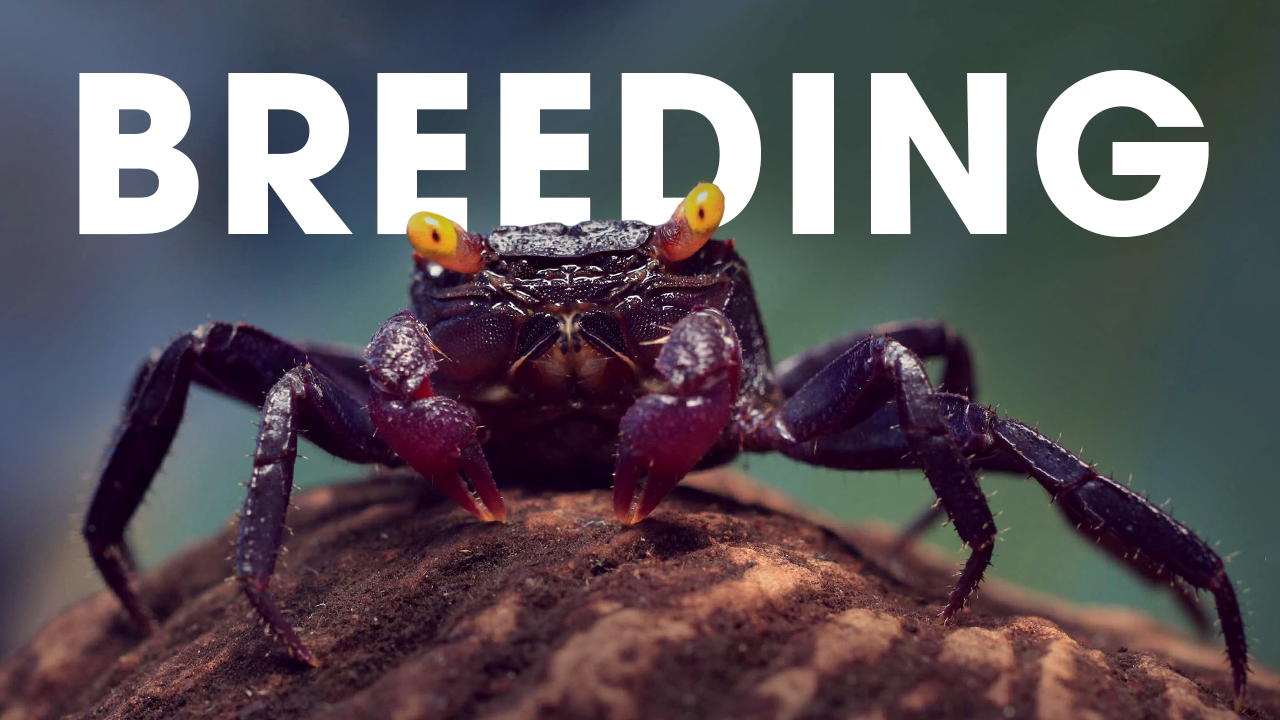
Learn how to breed Geosesarma Vampire crabs - A quick and easy guide
This guide aims to provide you with a clear, step-by-step process to ensure your success in breeding Geosesarma Vampire Crabs. I’ll try to keep it as simple and straightforward as possible. If you want more information check out my channel over on YouTube. If you’re new to vampire crabs and building paludariums I’ve got a ton of content on this website and YouTube that will make the process super simple and as cheap and organic as possible.
Introduction to Vampire Crab Breeding
Breeding vampire crabs is relatively easy, and with the right setup and care, you can achieve a high success rate. These crabs require a specific environment and a few key things to ensure they breed successfully and that the young crabs survive. Before you start anything else in this guide make sure you are keeping your crabs in the right conditions so read this guide first. Once you have the right basic environmental requirements you can work on the finer details.
Setting Up the Tank
Tank Size and Setup: A five-gallon tank is sufficient for breeding vampire crabs. Ensure the tank is heavily planted and provides an 80% land and 20% water environment. The crabs need plenty of hiding places, so include rocks, plants, and other decorations to create a natural habitat. While it can be done in a 5-gallon tank a 10-gallon tank will make things 10 times easier as you don’t have to completely perfect the design.
Water and Land Split: Maintain a proper water-to-land ratio. Vampire crabs require both environments to survive and live happily. So set up the tank with care. 80% of their environment should be land. Dirt, not rock, as they live in burrows in the ground. The remaining 20% should be allocated to water.
An example of a good vampire crab breeding tank
Hiding Spots: The tank needs to be extremely well detailed with a lot of hiding places and line of site barriers. Crabs need to be able to evade eachother easily. Open spaces lead to fights.
Introducing Your Crabs
Sex Ratio: When introducing your crabs, maintain a ratio of one male to two females. This balance helps prevent aggression and encourages breeding. Generally, it’s best to have 3 crabs per breeding tank using this ratio.
That said more females are better so 1 male with 4 or 5 females is also ok. Just don’t go more than 3 crabs per 5 gallons (25 litres) of space. If you do the cramping will cause problems and reduce breeding success.
How to sex geosesarma vampire crabs
Monitoring: Keep an eye on the male to ensure he doesn’t harass the females excessively. It’s normal for the male to mate with the female within the first 24 hours but it might take a few weeks in some instances. If you only have 1 male and 1 female the male is likely to mate her to death.
How do vampire crabs mate
Monitoring Breeding Behavior
Behavioural Signs: If you notice the female going into hiding after mating, she is likely pregnant. Be aware that some males can be aggressive, so monitor interactions to prevent harm to the female.
Hiding: Females often hide when pregnant. If you don’t see her frequently, it’s a good indication that she is pregnant. She might hide for a few months so don’t be too worried. And don’t be tempted to catch her out and check. That can stress her out and ruin the process.
Identifying and Caring for Pregnant Females
Identification: You can identify a pregnant female by the eggs hanging underneath her body. The gestation period typically lasts from one to one and a half months. Don’t catch and handle your females during this time.
Birthing: When the female is ready to give birth, she will move to the water section of the tank. The baby crabs will be born and start exploring their surroundings.
Caring for Baby Vampire Crabs | WHAT DO BABY VAMPIRE CRABS EAT?
Spotting Babies: The baby crabs are small and can be hard to see. Look closely at the water section of the tank to spot them. They often camouflage with the surroundings. They are usually only a little bigger than ants when starting out.
Removing Adults: To ensure the highest survival rate for the babies, remove the adult crabs from the tank once you notice the babies. This step prevents the adults from eating the young crabs.
Feeding Babies: Baby vampire crabs can survive on fish food and the microfauna in the tank, such as springtails and moss. Provide a bit of fish food to supplement their diet and help them grow. Springtails are the most valuable food source you can have and it helps reduce cannibalism among the young as they spend most of their time hunting springtails and not each other.
How to care for baby vampire crabs
Managing Adult Crabs
Isolation: Once you spot the babies, move the adults to a different tank to prevent them from eating the young. It’s easier to move the adults rather than trying to catch numerous tiny baby crabs.
Natural Selection: If you’re not concerned about maintaining a large crab population, you can leave the adults in the tank and allow natural selection to take its course. However, this will significantly reduce the number of surviving babies.
Breeding Vampire Crabs for Profit
If you want to really optimise breeding numbers you need to follow all of the rules above, however, you will need quite a few tanks/tubs set up for this. I highly suggest using 40-liter containers or bigger that you can stack to save space. You will also need to keep these containers well-lit during the day and warm as well. They require the same living conditions as the adults.
Make sure your set-up is 80% land and 20% water again, however, you can use plastic or glass dishes as your water section to make life a little easier with the tank set-up. Again make sure it is deep enough for them to fully submerge to molt.
Then add 1 male and 2-4 females per container then wait until you see babies.
Once you see babies you will need to remove the adults that have dropped their babies to prevent them from cannibalizing the young. This isn’t always easy.
Now you will need to monitor the babies as they grow, moving the bigger ones from each batch to new containers to keep similar-sized crabs together. If you don’t do this the bigger crabs will eat the smaller ones pretty fast. If you don’t have time or space to do this you can reduce cannibalism by feeding them very regularly.
IMPORTANT: Don’t expect to get rich doing this as each batch of babies will take about 8-9 months to start getting colour. Which is when you will want to start selling them. If you want to scale things up to make decent returns you're going to need a ton of space. If you are breeding multiple species, each species needs to be kept separately. I suggest setting them up in separate heated cupboards to save money on heating and to keep things organised.
Shipping Challenges: Vampire crabs do not ship well and often arrive dead if transported over long distances. If you plan to sell them, try to do so locally to avoid shipping issues. When shipping they have a 60–80% death rate so that will quickly eat into your margins.
The top reasons vampire crabs die
Shipping Preparation: If you must ship crabs, use express shipping and pack them carefully to minimize stress and prevent dehydration. Include a heat pack if necessary, and ensure they have enough moisture. Ship them in individual containers with a small amount of water and a lot of sphagnum moss or leaves to absorb any shock in transport. This will help minimise damages.
Local Sales: To avoid the risks associated with shipping, sell the crabs locally whenever possible. This approach minimizes stress for the crabs and ensures a higher survival rate.
Breeding geosesarma vampire crabs for profit
Buying and Selling Vampire Crabs
Buying Locally: When purchasing vampire crabs, try to buy from local sellers. Crabs shipped from international locations often experience rough handling and long transit times, leading to higher mortality rates.
Avoid International Sellers: Be cautious of sellers on platforms like Facebook who ship crabs from distant countries, such as Indonesia, Thailand, etc. These crabs are more likely to arrive in poor condition due to the extended travel time. Never order from an international seller and do not import crabs into your country if they are a biosecurity risk.
Frequently Asked Questions
Q: What determines the sex of baby vampire crabs?
A: The exact factors that determine the sex of baby vampire crabs are not well understood. It could be influenced by environmental conditions such as temperature, humidity, or the PH of the water.
Q: How long does it take for baby crabs to reach maturity?
A: Baby vampire crabs typically take about a year to reach full maturity and develop their adult colours.
Q: Can I keep multiple males together?
A: While baby crabs are not very aggressive, adult males can become territorial. It’s best to monitor their behavior and provide enough space to reduce aggression.
Q: What should I feed baby vampire crabs?
A: Baby crabs can be fed fish food and will also consume microfauna and plants in the tank. Supplement their diet with a bit of fish food for extra nutrients.
The ultimate geosesarma vampire crab care guide