
GEOSESARMA VAMPIRE CRAB SPECIES LIST
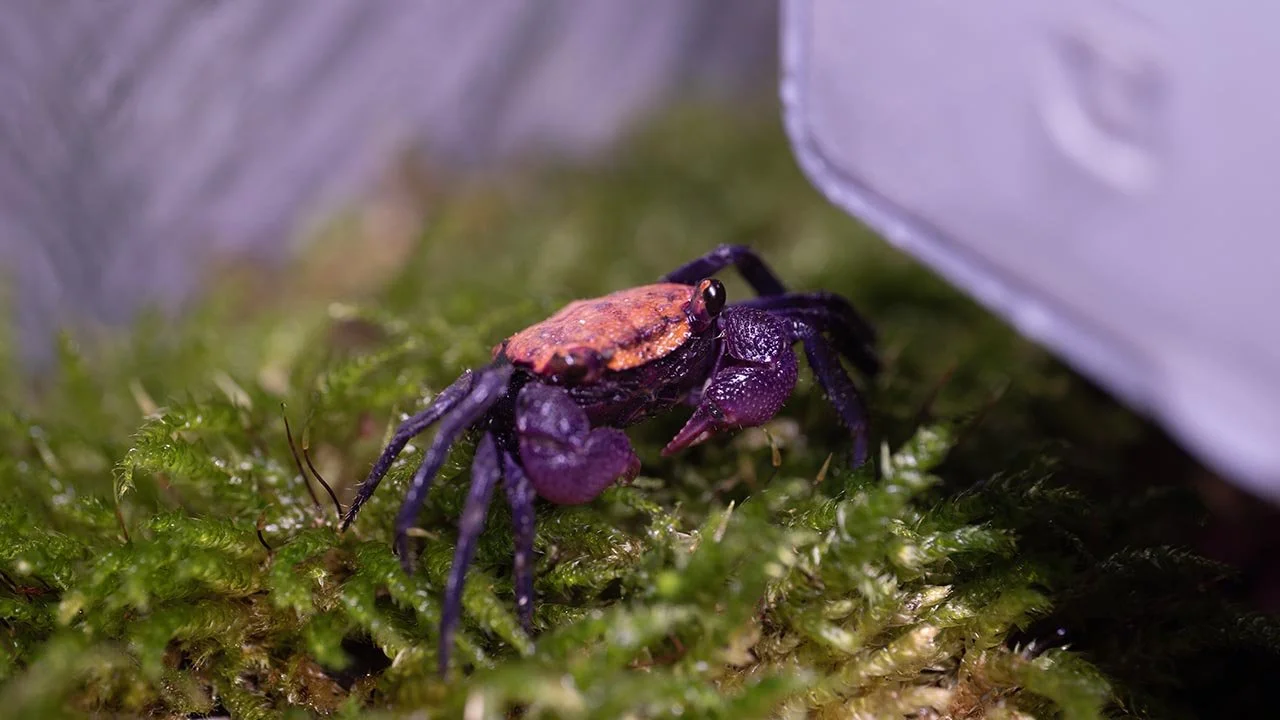
Geosesarma sp Halloween
At present, 75 species of crabs from the Geosesarma genus have been officially described, but only a limited number of these species make their way into the pet trade, with certain species being more commonly available than others. Additionally, many species that are bred in captivity have not yet received formal scientific recognition.
Below you will find a full list of the known Geosesarma Vampire Crab species in alphabetical order. This list includes all of the officially described species and the ones that are yet to be classified. Described species do not have the “sp” tag in their name.
We’ll be updating this list regularly as more and more information about each Geosesarma species is uncovered. So if you would like to help provide information or pictures for this list, please feel free to get in touch. Also, I do want to mention that identifying Geosesarma species is a bit like trying to catch falling knives at times. If this is your first time researching Vampire Crabs, you will notice that they have a ton of different names, as retailers like to make up their own names. So to help streamline things moving forward, try to use the primary names assigned in this guide.
Before you decide to buy anything online, make sure you read this guide or watch the video below.
I highly suggest checking out Lars Fehlandt’s website for even more detailed information on a lot of these species. He does brilliant work on the ground and is a huge source of information on Lepidothelphusa and Geosesarma species. If you are in Europe, Garnelio.de is one of the best stores to purchase selected species from. Some of the images used in this guide have also been sourced from their store.
Important: While I’ve done my best to tag and link the photographers in this guide, I have missed some (no info available) so if you do spot your image please let me know so I can credit and source you correctly.
Geosesarma Species IDentification | A-z
Geosesarma aedituens

Scientifically Described: Yes
Availability in trade: None
Discoverer: Naruse & Jaafar, 2009
Other common names:
Activity:
Difficulty Level:
Visible differences to other species:
Distribution area/Locality: Bali, Indonesia
Food preferences:
Habitat preferences: Found in tropical mountain forests, absent near watercourses. They live in burrows, which they dig themselves.
Additional findings:
Research:
Image Source: iNaturalist
Full Species Profile: Coming Soon
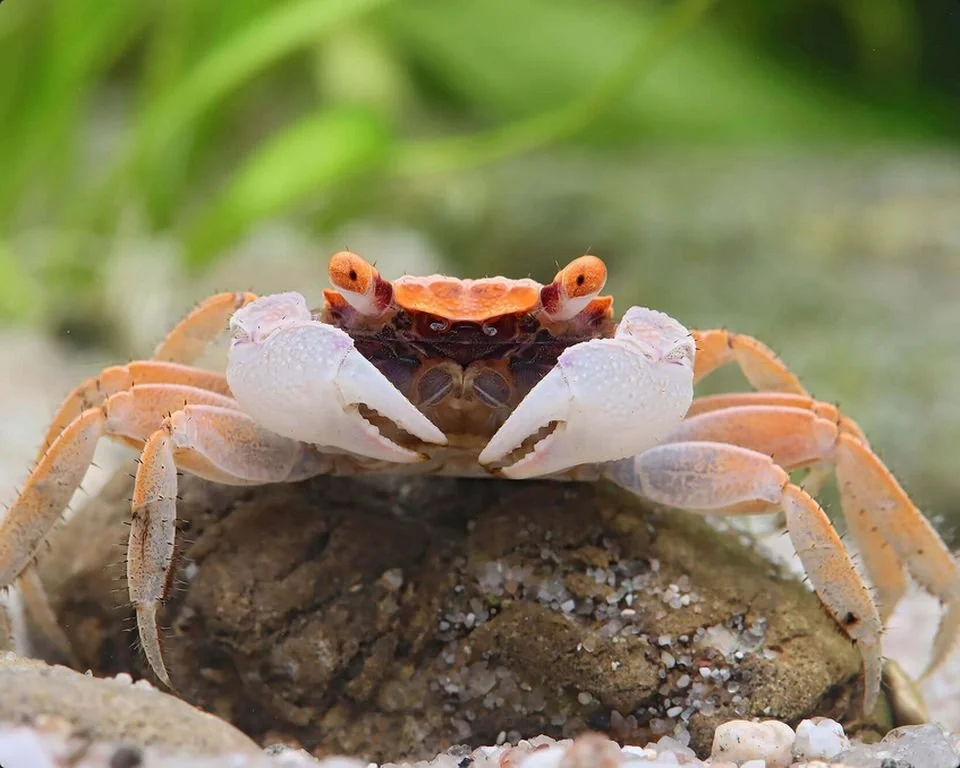
Geosesarma albomita
Scientifically Described: Yes
Availability in trade: Yes
Discoverer: Yeo & P.K.L.Ng, 1999
Other common names: Disco white claw, Carnaval white claw, Disco, Geosesarma tiomanicum, Carnaval, Red carnaval, Disco orange
Activity:
Difficulty Level:
Visible differences to other species:
Distribution area/Locality: Gunung Kajang, Pulau Tioman, Malaysia
Food preferences:
Habitat preferences: Tropical forest floor, near watercourses, mountainous areas. Typical rainforest settings.
Additional findings: sometimes they can have different colours, sometimes changing leg colour to dark grey.
Research:
Image Source: http://garnelio.de/
Full Species Profile: Coming Soon
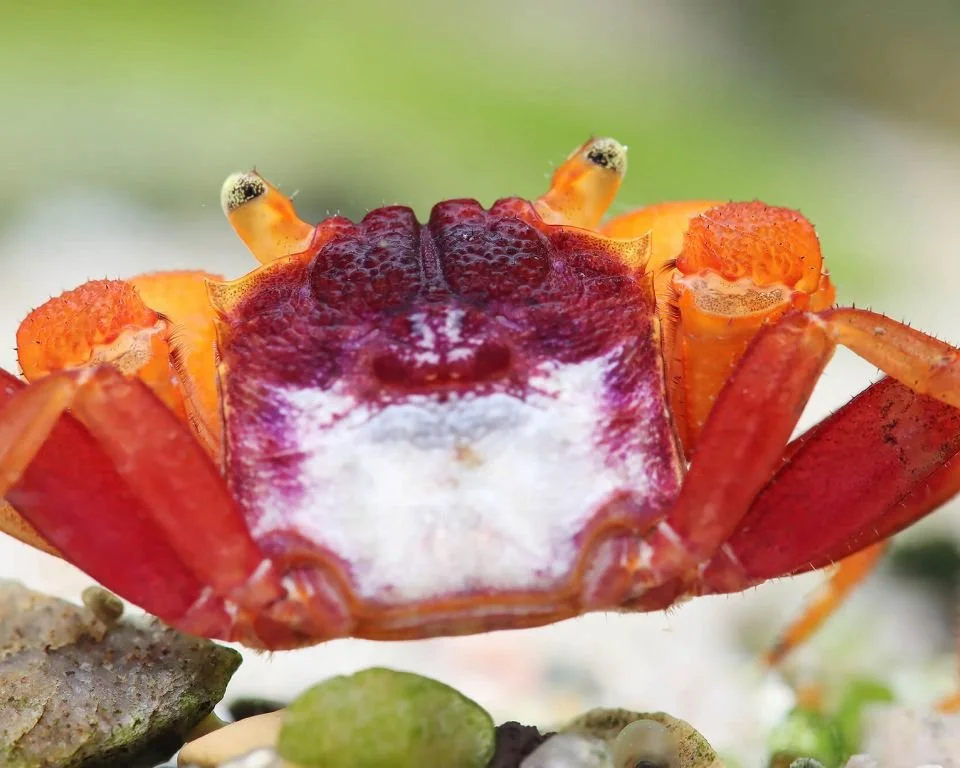
Geosesarma ambawang

Scientifically Described: Yes
Availability in trade: Maybe
Discoverer: Ng, Peter K. L. (2015)
Other common names: Geosesarma nothophorum, Mandarin, Geosesarma pontianak
Activity:
Difficulty Level:
Visible differences to other species:
Geosesarma ambawang: Has a proportionally wider carapace.
Geosesarma pontianak: Features a more square-shaped carapace and longer, slimmer legs.Distribution area/Locality: Gunung Ambawang - Pontianak - West Borneo – Indonesia
Food preferences:
Habitat preferences: Tropical forest floor, near watercourses. Sandy substrate, mountain forest area. Likes to climb and spend time off the ground.
Additional findings: Because of their similarity and overlapping geographic distribution, Geosesarma ambawang is often confused with Geosesarma nothophorum or Geosesarma pontianak. It is likely available in the trade but can be hard to distinguish from closely related species. There is a chance it may be mixed with other species.
Research:
Image Source: http://garnelio.de/
Full Species Profile: Coming Soon
Geosesarma anambas

Scientifically Described:
Availability in trade:
Discoverer:
Other common names:
Activity:
Difficulty Level:
Visible differences to other species:
Distribution area/Locality:
Food preferences:
Habitat preferences:
Additional findings:
Research:
Image Source:
Full Species Profile:
Geosesarma amphinome
Scientifically Described:
Availability in trade:
Discoverer:
Other common names:
Activity:
Difficulty Level:
Visible differences to other species:
Distribution area/Locality:
Food preferences:
Habitat preferences:
Additional findings:
Research:
Image Source:
Full Species Profile:
Support our work and grab yourself a Vampire CRAB poster.

Geosesarma araneum
Scientifically Described:
Availability in trade:
Discoverer:
Other common names:
Activity:
Difficulty Level:
Visible differences to other species:
Distribution area/Locality:
Food preferences:
Habitat preferences:
Additional findings:
Research:
Image Source:
Full Species Profile:
Geosesarma aurantium


Scientifically Described: Yes
Availability in trade: No
Discoverer: P.K.L. Ng, 1995
Other common names:
Activity:
Difficulty Level:
Visible differences to other species:
Distribution area/Locality: Mount Silam - Sabah, Borneo, Malaysia
Food preferences:
Habitat preferences: Bottom of tropical forests, near water streams. A mountain species found in the highlands rather than lowland forests.
Additional findings: Prefers a terrestrial lifestyle. Probably molts on land.
Research:
Image Source: https://www.inaturalist.org/
Full Species Profile: Coming Soon
Geosesarma sp Banana


Scientifically Described: No
Availability in trade: Yes
Discoverer:
Other common names: Lemon, Yellow black eye, Sunshine
Activity: Mostly Crepuscular, Nocturnal
Difficulty Level: Easy
Visible differences to other species:
Distribution area/Locality: Java, Indonesia
Food preferences: Omnivore, a great hunter, doesn’t seem to have a food preference and will eat most things.
Habitat preferences: The forest floor in burrows near bodies of water and streams. Though they will also climb quite a lot. Semi-social in bigger groups but will fight other males regularly. Females are avid borrowers and will spend a lot of time in the soil.
Additional findings: Quite similar to Geosesarama halloween, however with a yellow back and black legs.
Research:
Image Source: vk.com
Full Species Profile: Coming Soon
Geosesarma batak

Scientifically Described: Yes
Availability in trade: No
Discoverer: Manuel-Santos, P.K.L. Ng & Freitag, 2016
Other common names:
Activity:
Difficulty Level:
Visible differences to other species:
Distribution area/Locality: Palawan, Philippines
Food preferences:
Habitat preferences: Highly skilled at climbing and spends much of its time on trees. Digs burrows in decaying tree trunks.
Additional findings:
Research:
Image Source: https://www.inaturalist.org/
Full Species Profile: Coming Soon
Geosesarma bau


Scientifically Described: Yes
Availability in trade: No
Discoverer: P.K.L. Ng & Grinang, 2004
Other common names:
Activity:
Difficulty Level:
Visible differences to other species:
Distribution area/Locality: Kuching, Bau - Sarawak, Malaysia
Food preferences:
Habitat preferences: Found near stream waters. Inhabits tropical forests and limestone regions. Lives beneath layers of fallen leaves. A lowland species.
Additional findings:
Research:
Image Source: https://lars-fehlandt.de/
Full Species Profile: Coming Soon
Geosesarma sp bicolor

Scientifically Described: Yes
Availability in trade: Yes
Discoverer: Ng, P. K. L.; Davie, P. J. F. (1995)
Other common names: Tricolour, Black Eye, Carnaval
Activity: Mostly Crepuscular, Nocturnal
Difficulty Level: Easy
Visible differences to other species:
Distribution area/Locality: Ujung Kulon, West Jawa, Indonesia
Food preferences:
Habitat preferences: Tropical forest floor, near streams and water sources. Prefers a terrestrial lifestyle and enjoys burrowing.
Additional findings:
Research: MarineSpecies.org
Image Source:
Full Species Profile: Coming Soon
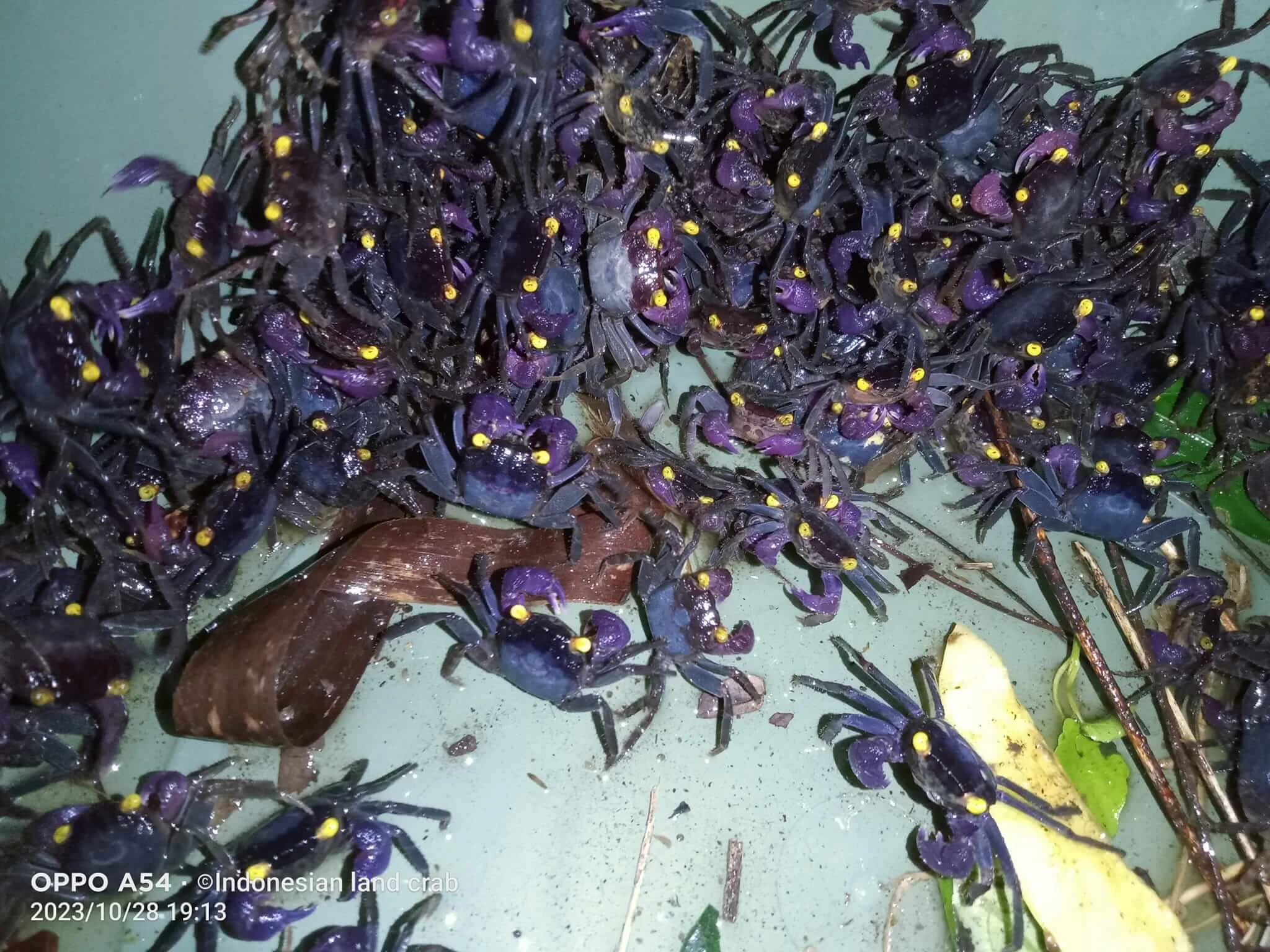
Geosesarma SP Blue Devil
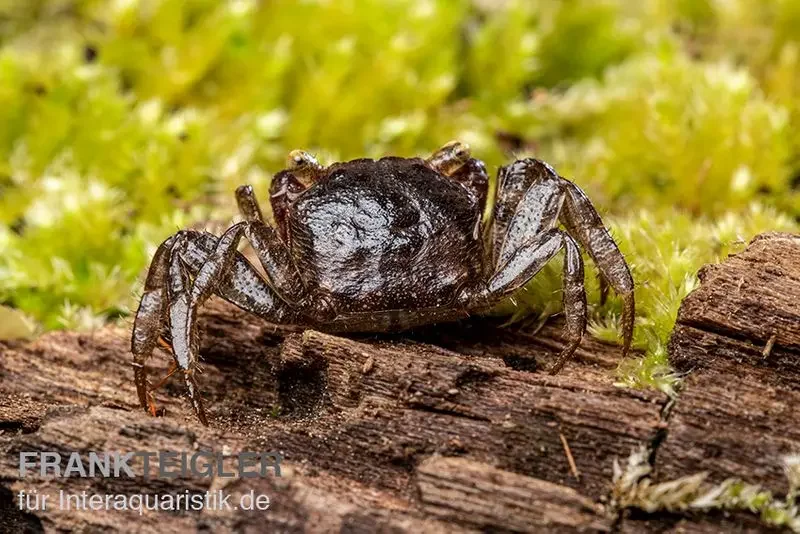
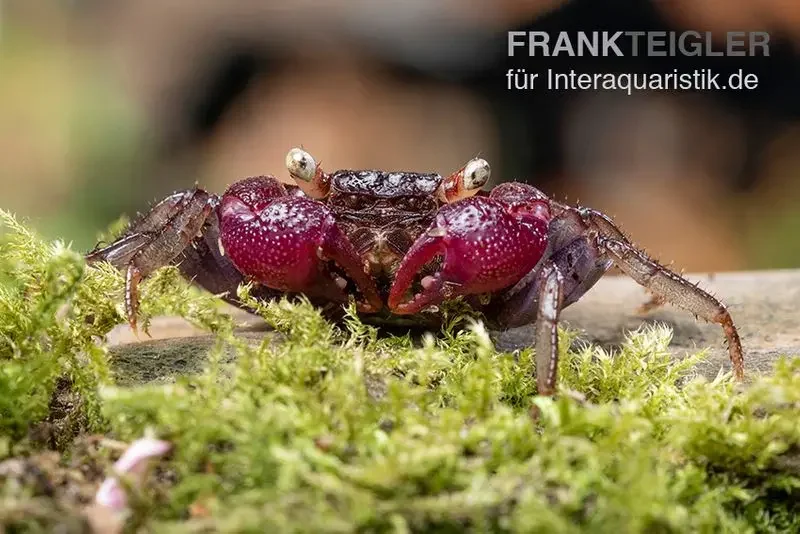
Scientifically Described: No
Availability in trade: Popular (02.2025)
Discoverer:
Other common names: Geosesarma bogorensis, Geosesarma noduliferum Blue Vampire, Purple Vampire, Geosesarma Dennerle Blue, Ultra Purple Arm
Activity: Small, typically terrestrial crabs. Excellent climbers. Can be kept in paludariums. Live in groups, social animals. Do not damage plants.
Difficulty Level: Easy
Visible differences to other species:
Carapace: Divided into two colors – violet-brown/violet-black and dark blue
Legs: Dark brown/violet-black/black
Claws: Violet
Eyes: Yellow
Underside: Brown/black
Distribution area/Locality: Java, Indonesia
Food preferences:
Habitat preferences: Tropical forest floor, near water streams. Prefers a terrestrial lifestyle and enjoys digging burrows.
Additional findings: This crab is often mistakenly labeled as Geosesarma noduliferum (bogorensis)
Research:
Image Source: Indonesian Land Crab (Facebook), Interaquaristik.de
Full Species Profile: Coming Soon
Geosesarma bintan
Scientifically Described:
Availability in trade:
Discoverer:
Other common names:
Activity:
Difficulty Level:
Visible differences to other species:
Distribution area/Locality:
Food preferences:
Habitat preferences:
Additional findings:
Research:
Image Source:
Full Species Profile:
Geosesarma bunian
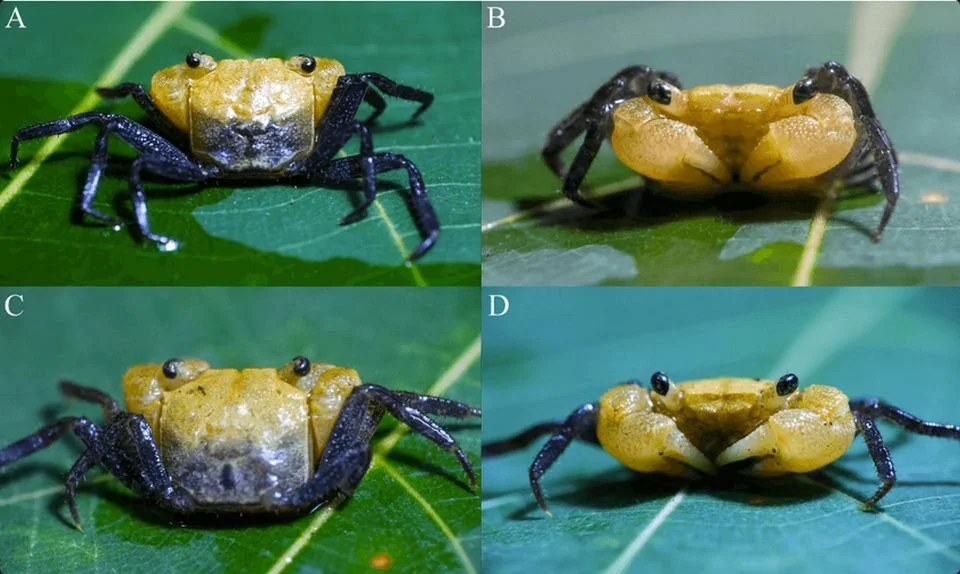
Scientifically Described: Yes
Availability in trade: No
Discoverer: Ng, Khadijah-Ahmad & Ahmad, 2025
Other common names:
Activity:
Difficulty Level:
Visible differences to other species:
Distribution area/Locality: Gunung Jerai, Kedah, Malaysia
Food preferences:
Habitat preferences: Tropical forests. A highland species. Likes to climb as most geosesarma species do.
Additional findings:
Research: Ng, P.K.L., Khadijah-Ahmad, S. & Ahmad, A.B. (2025). On a new species of vampire crab from the Geosesarma foxi species-group (Crustacea: Brachyura: Sesarmidae) in northern Peninsular Malaysia. Raffles Bulletin of Zoology. 73: 162–168.
Image Source: IKCNHM
Full Species Profile: Coming Soon
GEOSESARMA SP CARNAVAL


Scientifically Described: No
Availability in trade: Yes
Discoverer:
Other common names: Vampire, Purple Vampire Crab, Red Carnaval, Vampire Purple, Orange Eye
Activity:
Difficulty Level:
Visible differences to other species:
Distribution area/Locality: West Java, Indonesia
Food preferences:
Habitat preferences: Tropical forest floor, near streams and water sources.
Additional findings:
Research:
Image Source:
Full Species Profile: Coming Soon
Geosesarma cataracta


Scientifically Described: Yes
Availability in trade: No
Discoverer: P.K.L. Ng, 1986
Other common names:
Activity:
Difficulty Level:
Visible differences to other species:
Distribution area/Locality: Bukit Larut, Taiping, Perak, Malaysia
Food preferences:
Habitat preferences:
Additional findings:
Research:
Image Source: https://www.inaturalist.org/
Full Species Profile: Coming Soon
Geosesarma celebense
Scientifically Described:
Availability in trade:
Discoverer:
Other common names:
Activity:
Difficulty Level:
Visible differences to other species:
Distribution area/Locality:
Food preferences:
Habitat preferences:
Additional findings:
Research:
Image Source:
Full Species Profile:
GEOSESARMA SP CHERRY
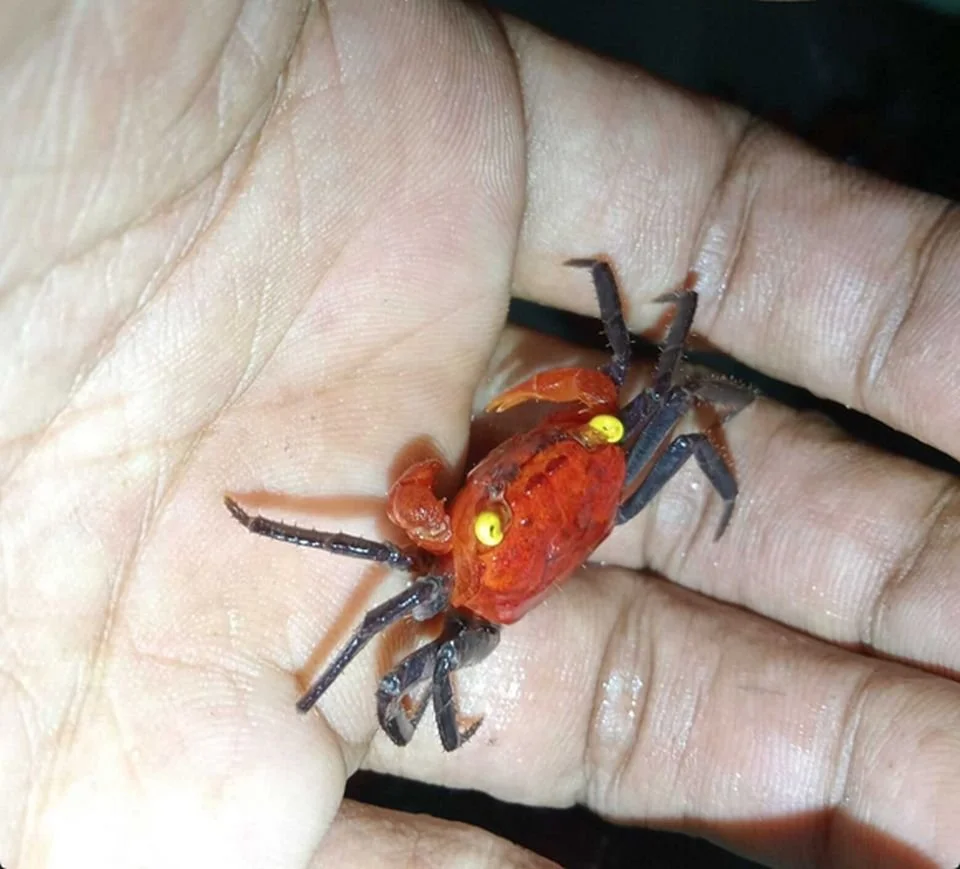

Scientifically Described: No
Availability in trade: No
Discoverer:
Other common names:
Activity:
Difficulty Level:
Visible differences to other species:
Distribution area/Locality: Java, Indonesia
Food preferences:
Habitat preferences: Found on the tropical forest floor, near stream waters.
Additional findings:
Research:
Image Source: https://www.greenflow.hk/
Full Species Profile: Coming Soon
Geosesarma sp Chocomilk


Scientifically Described: No
Availability in trade: Yes
Discoverer:
Other common names:
Activity:
Difficulty Level:
Visible differences to other species:
Distribution area/Locality: Java, Indonesia
Food preferences:
Habitat preferences: Found on the tropical forest floor, near stream waters.
Additional findings:
Research:
Image Source:
Full Species Profile: Coming Soon
Geosesarma cikaniki


Scientifically Described: Yes
Availability in trade: No
Discoverer: P.K.L. Ng & Wowor, 2019
Other common names:
Activity:
Difficulty Level:
Visible differences to other species:
Distribution area/Locality: Bogor Regency, West Java, in the Cikaniki Resort of Halimun Salak National Park, Indonesia
Food preferences:
Habitat preferences: Found on the tropical forest floor, near stream waters. A mountain species often found between rocks on sandy ground.
Additional findings:
Research:
Image Source: https://www.inaturalist.org/ and CHECKLIST ON FAUNA DIVERSITY GUNUNG HALIMUN SALAK NATIONAL PARK: Cikaniki-Citalahab
Full Species Profile: Coming Soon
Geosesarma confertum

Scientifically Described: Yes
Availability in trade: No
Discoverer: Ortmann, 1894
Other common names:
Activity:
Difficulty Level:
Visible differences to other species:
Distribution area/Locality: Cibodas in Cianjur Regency at the border of Mount Gede Pangrango National Park, West Java, Indonesia
Food preferences:
Habitat preferences: Found on the tropical forest floor, near stream waters. Lives in moss or burrows between roots. A mountain species.
Additional findings:
Research:
Image Source: https://www.inaturalist.org/
Full Species Profile: Coming Soon
Geosesarma danumense


Scientifically Described: Yes
Availability in trade: No
Discoverer: P.K.L.Ng, 2002
Other common names:
Activity:
Difficulty Level:
Visible differences to other species:
Distribution area/Locality: Danum Valley Field Centre - Sabah, Borneo, Malaysia
Food preferences:
Habitat preferences: Found on the tropical forest floor, near stream waters. They enjoy climbing shrubs and frequently do so.
Additional findings:
Research:
Image Source: https://www.inaturalist.org/ and The freshwater crabs of Danum Valley Conservation Area in Sabah, East Malaysia, with a description of a new species of Thelphusula Bott, 1969 (Crustacea, Brachyura, Gecarcinucidae, Potamidae, Sesarmidae) - Peter K. L. Ng, Paul Y. C. Ng
Full Species Profile: Coming Soon
Geosesarma sp Cream


Scientifically Described: No
Availability in trade: Yes
Discoverer:
Other common names: Cream top, Falcon
Activity:
Difficulty Level: Easy
Visible differences to other species:
Distribution area/Locality: Java, Indonesia
Food preferences:
Habitat preferences: Tropical forests like most other Geosesarma species. Seems to prefer life on the ground.
Additional findings:
Research:
Image Source: Indonesia land crab
Full Species Profile: Coming Soon
Geosesarma sp Devil’s Eye


Scientifically Described: No
Availability in trade: Yes
Discoverer:
Other common names: Dark red yellow eye, Maroon, Ruby Red
Activity:
Difficulty Level: Easy
Visible differences to other species:
Distribution area/Locality: Java, Indonesia
Food preferences:
Habitat preferences: Tropical forests like most other Geosesarma species. Seems to prefer life on the ground.
Additional findings:
Research:
Image Source: https://garnelio.de/ and https://interaquaristik.de/
Full Species Profile: Coming Soon
Geosesarma demani
Scientifically Described:
Availability in trade:
Discoverer:
Other common names:
Activity:
Difficulty Level:
Visible differences to other species:
Distribution area/Locality:
Food preferences:
Habitat preferences:
Additional findings:
Research:
Image Source:
Full Species Profile:
Geosesarma dennerle


Scientifically Described: Yes
Availability in trade: Yes
Discoverer: Ng, Schubart & Lukhaup, 2015
Other common names: Purple Vampire Crab, Yellow back.
Activity: Mostly Crepuscular, Nocturnal
Difficulty Level: Easy
Visible differences to other species: Purple, partial Yellow Back, light purple claws or dark purple claws. They sometimes have bright yellow eyes but may also have white eyes. The same goes for the yellow spot on their back. Sometimes It’s very bright sometimes it’s barely visible. The picture above is a good example of Geosesarma colour variations.
Distribution area/Locality: North of Cilacap city – Cilacap, Central Java, Indonesia
Food preferences: Omnivore, great hunter, doesn’t seem to have a food preference and will eat most things.
Habitat preferences: The forest floor in burrows near bodies of water and streams. Though they will also climb quite a lot. Semi-social in bigger groups but will fight other males regularly. Females are avid borrowers and will spend a lot of time in the soil.
Additional findings: Endangered in the wild from over-collection. One of the first species of Geosesarma in the hobby. Surprisingly one of the more friendly and social species, though they will still fight sometimes.
Research: Link to research paper
Image Source: IndoorEcosystem
Full Species Profile: Geosesarma Dennerle
Geosesarma faustum


Scientifically Described: Yes
Availability in trade: No
Discoverer: Ng, 2017
Other common names:
Activity:
Difficulty Level:
Visible differences to other species:
Distribution area/Locality: Penang Hill, Malaysia
Food preferences:
Habitat preferences: Found near stream waters in tropical rainforests. A highland species, inhabiting bromeliads and neoregelias. An excellent climber.
Additional findings:
Research:
Image Source: https://www.inaturalist.org/ and Ng, Peter K. L., 2017, On the identities of the highland vampire crabs, Geosesarma foxi (Kemp, 1918) and G. serenei Ng, 1986, with description of a new phytotelmic species from Penang, Peninsular Malaysia (Crustacea: Decapoda: Brachyura: Sesarmidae), Raffles Bulletin of Zoology 65, pp. 226-242
Full Species Profile: Coming Soon
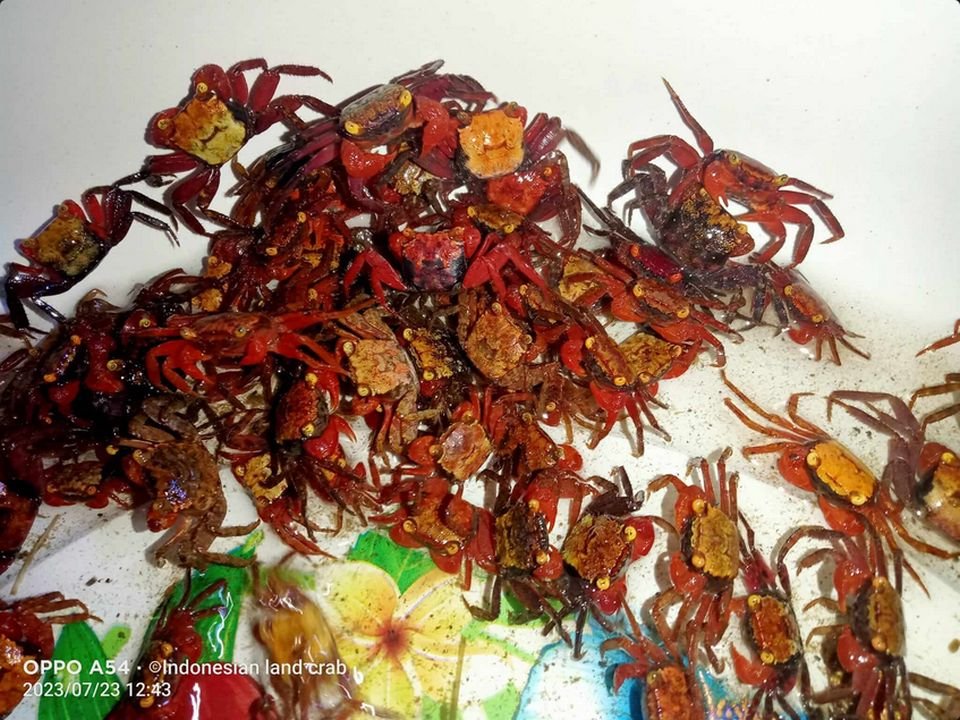
Geosesarma sp Fire
Scientifically Described:
Availability in trade: Yes (Rare)
Discoverer:
Other common names: Orange, Rouxi fire, Orange Vampire
Activity:
Difficulty Level:
Visible differences to other species:
Distribution area/Locality: Java, Indonesia
Food preferences:
Habitat preferences: Found on the tropical forest floor, prefers a terrestrial lifestyle, likes to dig burrows.
Additional findings:
Research:
Image Source:
Full Species Profile: Coming Soon
Geosesarma foxi

Scientifically Described: Yes
Availability in trade: No
Discoverer: Kemp, 1918
Other common names:
Activity:
Difficulty Level:
Visible differences to other species:
Distribution area/Locality: Gunung Raya, Langkawi Island, Malaysia
Food preferences:
Habitat preferences: Found near stream waters in tropical rainforests. A mountain species, living under rocks and fallen trees.
Additional findings:
Research:
Image Source: Ng, Peter K. L., 2017, On the identities of the highland vampire crabs, Geosesarma foxi (Kemp, 1918) and G. serenei Ng, 1986, with description of a new phytotelmic species from Penang, Peninsular Malaysia (Crustacea: Decapoda: Brachyura: Sesarmidae), Raffles Bulletin of Zoology 65, pp. 226-242
Full Species Profile: Coming Soon
Geosesarma garutense
Scientifically Described:
Availability in trade:
Discoverer:
Other common names:
Activity:
Difficulty Level:
Visible differences to other species:
Distribution area/Locality:
Food preferences:
Habitat preferences:
Additional findings:
Research:
Image Source:
Full Species Profile:
Geosesarma gordonae
Scientifically Described:
Availability in trade:
Discoverer:
Other common names:
Activity:
Difficulty Level:
Visible differences to other species:
Distribution area/Locality:
Food preferences:
Habitat preferences:
Additional findings:
Research:
Image Source:
Full Species Profile:
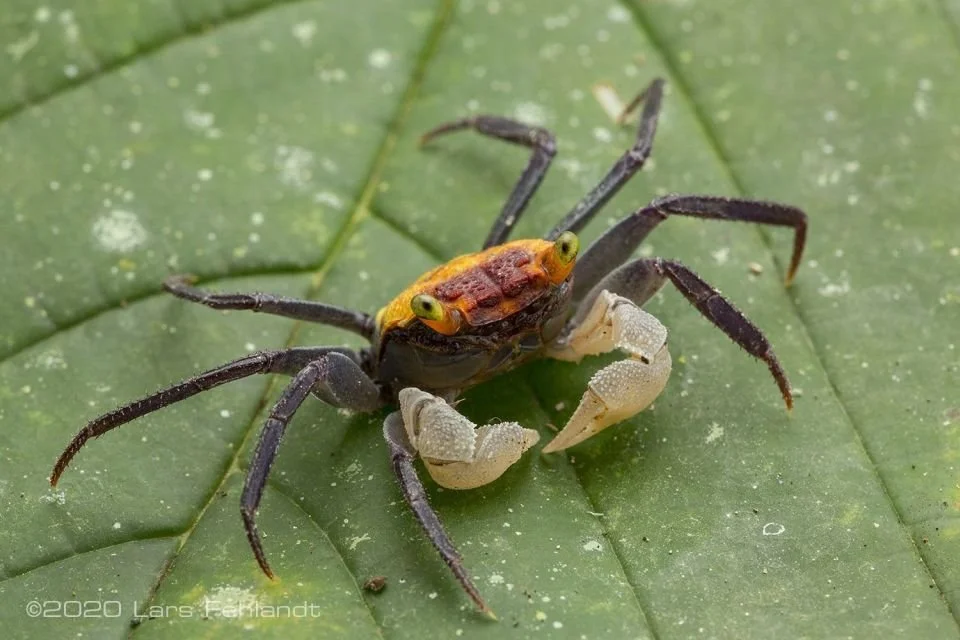
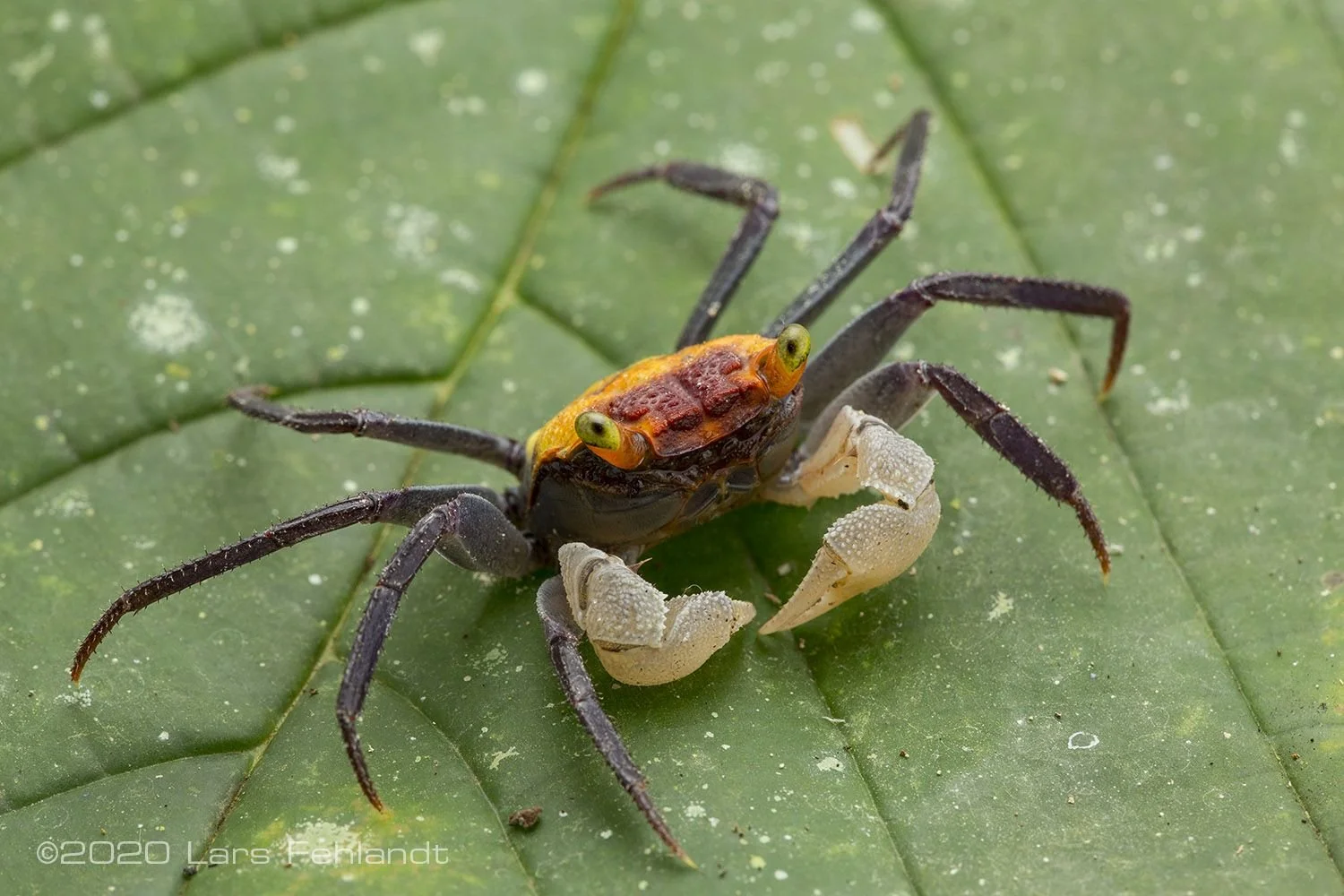
Geosesarma gracillimum
Scientifically Described: Yes
Availability in trade: No
Discoverer: De Man, 1902
Other common names:
Activity:
Difficulty Level:
Visible differences to other species:
Distribution area/Locality: Eastern Sarawak – Malaysia, Brunei Darussalam
Food preferences:
Habitat preferences: Prefers a terrestrial lifestyle. Not endemic, but is found in several national parks in the eastern region.
Additional findings: In the images above the black leg version has also been called Geosesarma Gracillimum. As a result I need to do some more research in order to find it’s true identity.
Research:
Image Source: http://lars-fehlandt.de/ and Ng, P. Y. C., & Ng, P. K. L. (2019). Geosesarma spectrum, a new species of semiterrestrial vampire crab (Crustacea: Decapoda: Brachyura: Sesarmidae) from Brunei Darussalam, Borneo. Zootaxa, 4614(3): 529–540
Full Species Profile: Coming Soon
Geosesarma hagen


Scientifically Described: Yes
Availability in trade: Yes
Discoverer: Ng, Schubart & Lukhaup, 2015
Other common names: Red devil
Activity: Mostly Crepuscular, Nocturnal
Difficulty Level: Easy
Visible differences to other species: Sometimes they will have bright yellow eyes, sometimes they will be white, or a shade in between.
Distribution area/Locality: North of the city of Cilacap – Cilacap, Central Java, Indonesia
Food preferences: Omnivore, a great hunter, doesn’t seem to have a food preference and will eat most things.
Habitat preferences: The forest floor in burrows near bodies of water and streams. Though they will also climb quite a lot. Semi-social in bigger groups but will fight other males regularly. Females are avid borrowers and will spend a lot of time in the soil.
Additional findings: Endangered in the wild from over-collection. One of the first species of Geosesarma in the hobby.
Research: Link to research paper
Image Source: IndoorEcosystem
Full Species Profile: Geosesarma Hagen
Geosesarma SP Halloween


Scientifically Described: No
Availability in trade: Yes
Discoverer:
Other common names: Orange black leg, Purple Carnaval
Activity: Mostly Crepuscular, Nocturnal
Difficulty Level: Easy
Visible differences to other species:
Distribution area/Locality: Central Java, Indonesia
Food preferences: Will eat nearly all commercial fish foods but really enjoys hunting and eating live foods like isopods, crickets, springtails, worms etc.
Habitat preferences: The forest floor in burrows near bodies of water and streams. Though they will also climb quite a lot. Semi-social in bigger groups but will fight other males regularly. Females are avid borrowers and will spend a lot of time in the soil.
Additional findings: Sometimes the colour on their backs will be closer to brown rather than orange which can be a sign of stress or dietary issues.
Research:
Image Source: IndoorEcosystem
Full Species Profile: Geosesarma Halloween
Geosesarma hashimi
Scientifically Described:
Availability in trade:
Discoverer:
Other common names:
Activity:
Difficulty Level:
Visible differences to other species:
Distribution area/Locality:
Food preferences:
Habitat preferences:
Additional findings:
Research:
Image Source:
Full Species Profile:
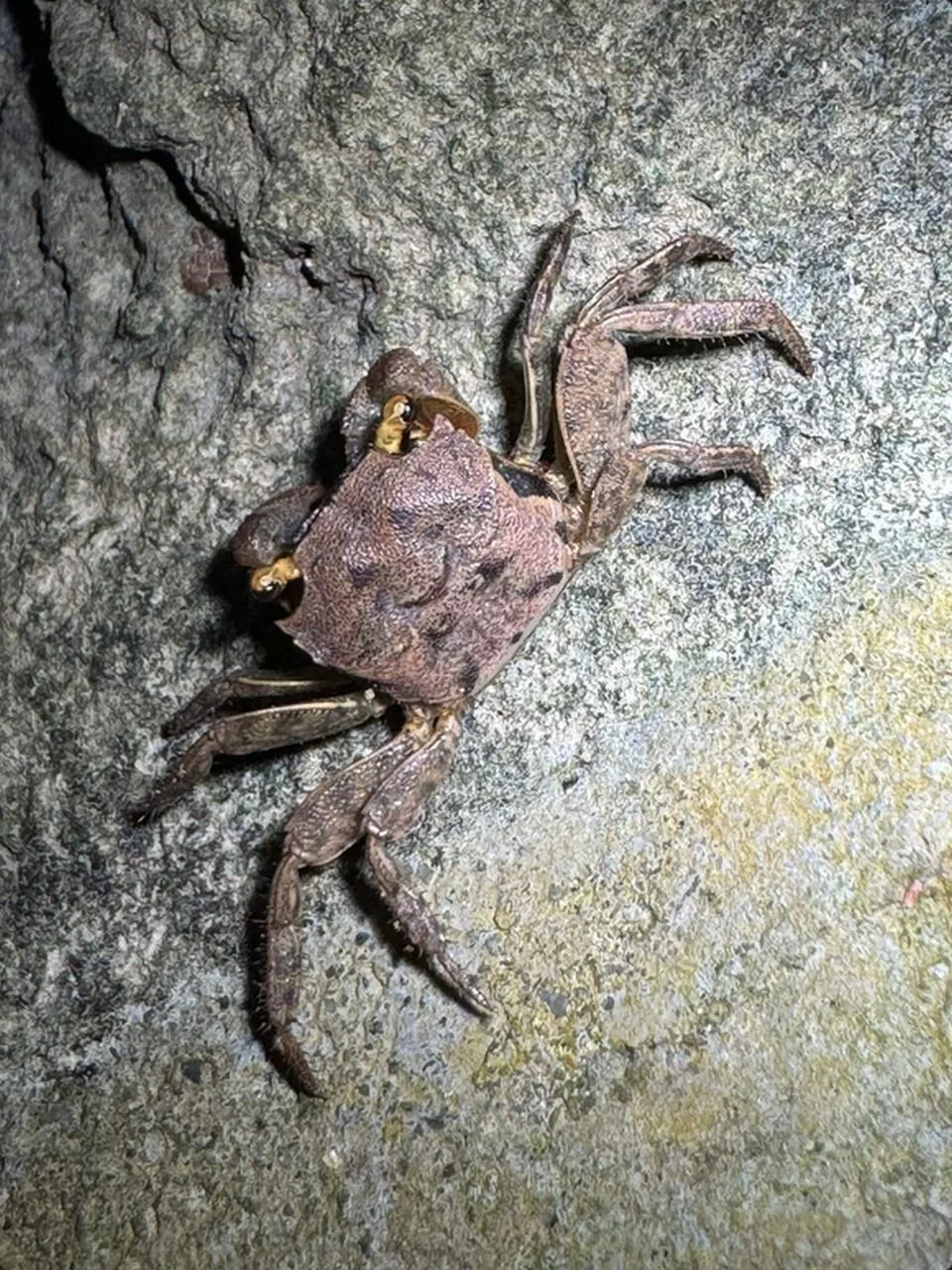
Geosesarma hednon

Scientifically Described: Yes
Availability in trade: No
Discoverer: P.K.L. Ng, H.-C. Liu & Schubart, 2004
Other common names:
Activity:
Difficulty Level:
Visible differences to other species:
Distribution area/Locality: Taiwan, Philippines
Food preferences:
Habitat preferences: Tropical rainforest floor. Near water streams.
Additional findings: Interestingly, this species is not endemic and has a wider distribution.
Research:
Image Source: https://www.inaturalist.org/
Full Species Profile: Coming Soon
Geosesarma ianthina
Scientifically Described:
Availability in trade:
Discoverer:
Other common names:
Activity:
Difficulty Level:
Visible differences to other species:
Distribution area/Locality:
Food preferences:
Habitat preferences:
Additional findings:
Research:
Image Source:
Full Species Profile:
Geosesarma insulare
Scientifically Described:
Availability in trade:
Discoverer:
Other common names:
Activity:
Difficulty Level:
Visible differences to other species:
Distribution area/Locality:
Food preferences:
Habitat preferences:
Additional findings:
Research:
Image Source:
Full Species Profile:
Geosesarma johnsoni
Scientifically Described:
Availability in trade:
Discoverer:
Other common names:
Activity:
Difficulty Level:
Visible differences to other species:
Distribution area/Locality:
Food preferences:
Habitat preferences:
Additional findings:
Research:
Image Source:
Full Species Profile:
Geosesarma katibas


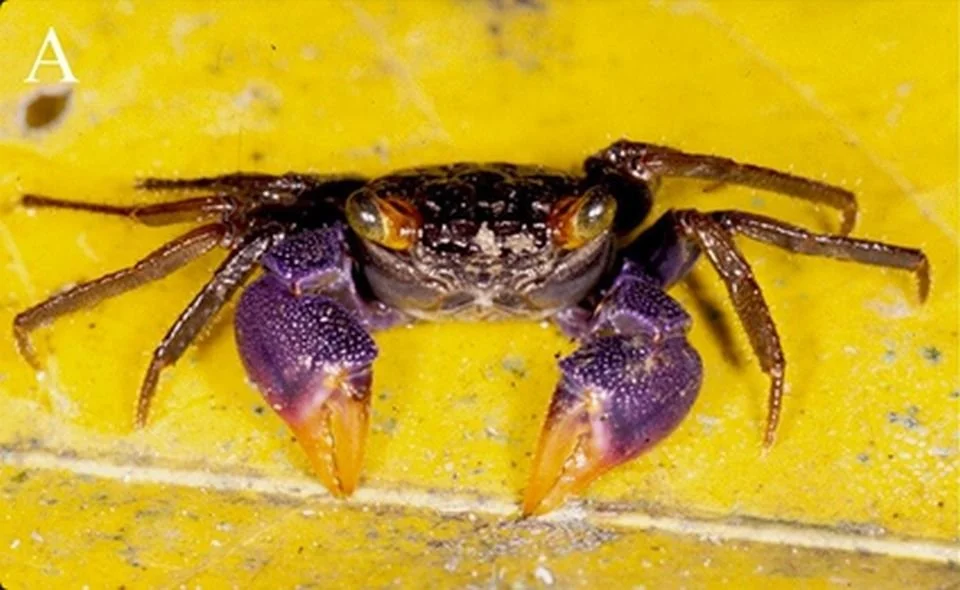

Scientifically Described: Yes
Availability in trade: No
Discoverer: Pkl Ng, 1995
Other common names:
Activity:
Difficulty Level:
Visible differences to other species:
Distribution area/Locality: Sungei Katibas, Sarawak, Malaysia
Food preferences:
Habitat preferences: Near water streams. Tropical forest.
Additional findings:
Research:
Image Source: https://lars-fehlandt.de/ and Ng, P. Y. C., & Ng, P. K. L. (2019). Geosesarma spectrum, a new species of semiterrestrial vampire crab (Crustacea: Decapoda: Brachyura: Sesarmidae) from Brunei Darussalam, Borneo. Zootaxa, 4614(3): 529–540
Full Species Profile: Coming Soon
Geosesarma krathing


Scientifically Described: Yes
Availability in trade: Yes
Discoverer: P.K.L.Ng & Naiyanetr, 1992
Other common names: Tangerine-head Crab
Activity:
Difficulty Level:
Visible differences to other species:
Distribution area/Locality: Krathing Waterfall, Chanthaburi Province, Amphoe Makham, Eastern Thailand
Food preferences:
Habitat preferences: Found near stream waters in tropical forests.
Digs burrows and climbs shrubs and trees.Additional findings:
Research:
Image Source: https://www.inaturalist.org/
Full Species Profile: Coming Soon
Geosesarma larsi


Scientifically Described: Yes
Availability in trade: No
Discoverer: Ng & Grinang, 2018
Other common names:
Activity:
Difficulty Level:
Visible differences to other species:
Distribution area/Locality: Gunung Ampungan, Serian, Sarawak – Malaysia
Food preferences:
Habitat preferences: Found near stream waters in tropical forests. Digs burrows and is a mountainous species. Inhabits water reservoirs within fern trunks.
Additional findings: Personally I think this is the most pretty of all the known Geosesarma species.
Research:
Image Source: https://lars-fehlandt.de/ and Ng, Peter K. L. & Grinang, Jongkar, 2018, A new species of highland vampire crab (Crustacea: Brachyura: Sesarmidae: Geosesarma) from Serian, Sarawak, Zootaxa 4508 (4), pp. 569-575 : 570-573
Full Species Profile: Coming Soon
GEOSESARMA SP LAVA


Scientifically Described: No
Availability in trade: Yes
Discoverer:
Other common names: Lava, Spiderman
Activity:
Difficulty Level:
Visible differences to other species:
Distribution area/Locality: Ciremai, West Java, Indonesia
Food preferences:
Habitat preferences: Found near stream waters in tropical forests. Digs burrows and is a mountainous species. Found on the side of a volcano originally.
Additional findings:
Research:
Image Source:
Full Species Profile: Coming Soon
Geosesarma lawrencei
Scientifically Described:
Availability in trade:
Discoverer:
Other common names:
Activity:
Difficulty Level:
Visible differences to other species:
Distribution area/Locality:
Food preferences:
Habitat preferences:
Additional findings:
Research:
Image Source:
Full Species Profile:
Geosesarma lebak

Scientifically Described: Yes
Availability in trade: No
Discoverer: P.K.L.Ng & Wowor, 2019
Other common names:
Activity:
Difficulty Level:
Visible differences to other species:
Distribution area/Locality: Banten - Mount Halimun Salak National Park, Indonesia
Food preferences:
Habitat preferences: Found on the tropical forest floor, near stream waters. Thrives on rocky substrates, in rice fields, and near human settlements. Prefers open spaces.
Additional findings:
Research:
Image Source: The vampire crabs of Java, with descriptions of five new species from Mount Halimun Salak National Park, West Java, Indonesia (Crustacea: Brachyura: Sesarmidae: Geosesarma) - Peter K. L. Ng & Daisy Wowor
Full Species Profile: Coming Soon
Geosesarma leprosum
Scientifically Described:
Availability in trade:
Discoverer:
Other common names:
Activity:
Difficulty Level:
Visible differences to other species:
Distribution area/Locality:
Food preferences:
Habitat preferences:
Additional findings:
Research:
Image Source:
Full Species Profile:
Geosesarma maculatum
Scientifically Described:
Availability in trade:
Discoverer:
Other common names:
Activity:
Difficulty Level:
Visible differences to other species:
Distribution area/Locality:
Food preferences:
Habitat preferences:
Additional findings:
Research:
Image Source:
Full Species Profile:
Geosesarma malayanum
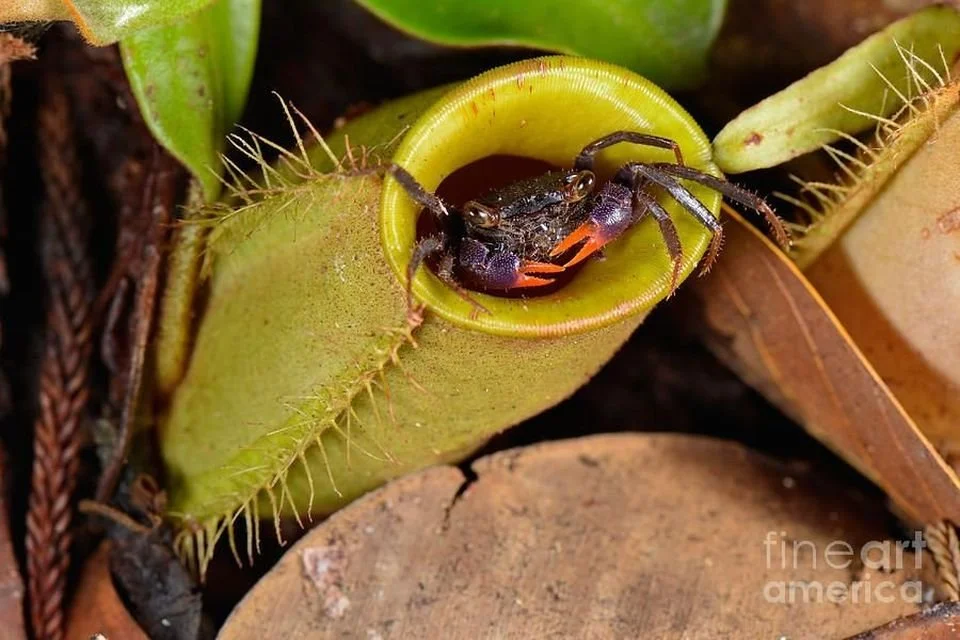
Scientifically Described: Yes
Availability in trade: No
Discoverer: P.K.L.Ng & Lim, 1986
Other common names:
Activity:
Difficulty Level:
Visible differences to other species:
Distribution area/Locality: Continental Malaysia
Food preferences:
Habitat preferences: Found near stream waters in tropical forests. Digs burrows and inhabits pitcher plants. This species molts on land.
Additional findings: One of the most sort after species in the hobby for its relationship with pitcher plants
Research:
Image Source: naturepl.com
Full Species Profile: Coming Soon
GEOSESARMA SP MARBLE
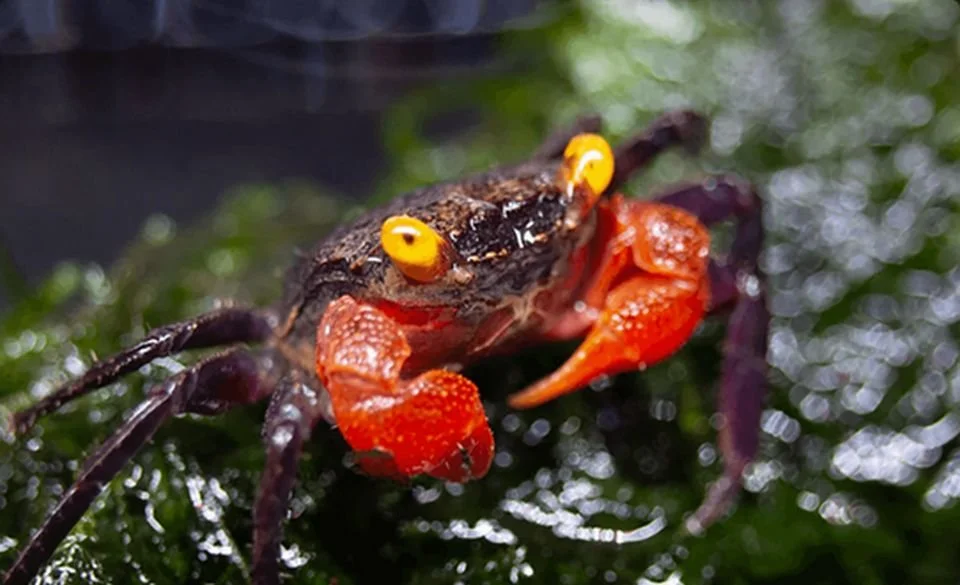


Scientifically Described: No
Availability in trade: Yes (Rare)
Discoverer:
Other common names: Red Arm, Chocolate
Activity:
Difficulty Level:
Visible differences to other species:
Distribution area/Locality: Java, Indonesia
Food preferences:
Habitat preferences: Tropical forest floor. Near water streams.
Additional findings:
Research:
Image Source: https://aquaticarts.com/
Full Species Profile: Coming Soon
Geosesarma mirum


Scientifically Described: Yes
Availability in trade: No
Discoverer: Shy & P.K.L.Ng, 2019
Other common names:
Activity:
Difficulty Level:
Visible differences to other species:
Distribution area/Locality: Central Taiwan
Food preferences:
Habitat preferences: Found near stream waters, digging burrows. Inhabits human settlements, cemented riverbanks, and streams. A lowland species.
Additional findings:
Research:
Image Source: Geosesarma mirum, a new species of semi-terrestrial sesarmid crab (Crustacea, Decapoda, Brachyura) from central Taiwan - Shy J Ng P K L pensoft
Full Species Profile: Coming Soon
Geosesarma nannophyes
Scientifically Described:
Availability in trade:
Discoverer:
Other common names:
Activity:
Difficulty Level:
Visible differences to other species:
Distribution area/Locality:
Food preferences:
Habitat preferences:
Additional findings:
Research:
Image Source:
Full Species Profile:
Geosesarma nemesis


Scientifically Described: Yes
Availability in trade: No
Discoverer: P.K.L.Ng, 1986
Other common names:
Activity:
Difficulty Level:
Visible differences to other species:
Distribution area/Locality: Gunung Pulai and Gunung Panti, Johore – Malaysia and Singapore
Food preferences:
Habitat preferences: Found near stream waters in tropical forests. Digs burrows under rocks and also inhabits pitcher plants.
Additional findings:
Research:
Image Source: https://inaturalist.org/
Full Species Profile: Coming Soon
Geosesarma nigripes

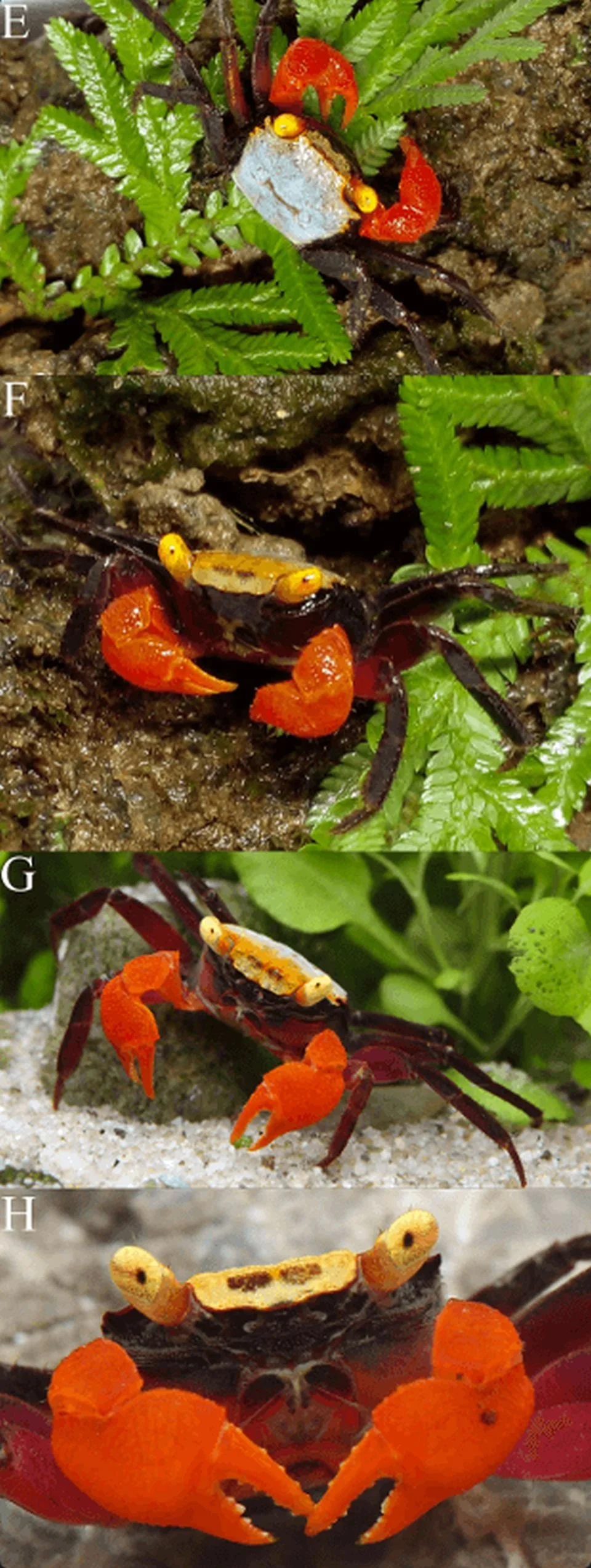
Scientifically Described: Yes
Availability in trade: Yes
Discoverer: Peter K. L. Ng & Daisy Wowor, 2024
Other common names: Golden Back, Rainbow, Golden Top, Rouxi
Activity: Mostly Crepuscular, Nocturnal
Difficulty Level: Easy
Visible differences to other species: They are very similar to Riani but have brown/black legs instead of red legs. They are also extremely hard to distinguish from Rouxi as well.
Distribution area/Locality: Adimulya - Central Java – Indonesia
Food preferences: Will eat nearly all commercial fish foods but really enjoys hunting and eating live foods like isopods, crickets, springtails, worms etc.
Habitat preferences: Stolen burrows, kind of shy, likes to come out at dusk and dawn and hides during the peak of daylight hours.
Additional findings: They are a highly aggressive species and will fight to keep their own territories. Before they were officially identified as two species Riani and Nigripes they were often mixed and sold together which is why a lot of people had major fighting issues in their captive setup. Thankfully now that the species is properly identified they can be better managed.
If you are planning to keep these, I would suggest a larger tank 50x30x30cm (for a max of 3 crabs 1 male 2 females) bigger is always better though.Research:
Image Source: Two new species of vampire crabs (Crustacea: Decapoda: Brachyura: Sesarmidae: Geosesarma De Man, 1892) from Java, Indonesia - Peter K. L. Ng & Daisy Wowor
Full Species Profile: Coming Soon
Geosesarma noduliferum


Scientifically Described: Yes (I’m yet to find pictures along with a research paper though)
Availability in trade: Yes
Discoverer: De Man, 1892
Other common names: Purple Vampire Crab.
Activity: Mostly Crepuscular, Nocturnal
Difficulty Level: Easy
Visible differences to other species: From everything that I have managed to dig up on this species. there are two different colour variations of this species. The original purple version and the orange-clawed version. Sometimes they will have bright yellow eyes, sometimes they will be white, or a shade in between.
Distribution area/Locality: Near Bogor - West Java – Indonesia
Food preferences: Omnivore, a great hunter, will eat a variety of different commercial foods, frozen foods, insects, etc.
Habitat preferences: The forest floor near bodies of water and streams. Plenty of room to burrow into the soil and hide under leaf litter.
Additional findings: This species has a rather complex naming history. It is most commonly referred to as Bogorensis, though it is sometimes listed—albeit far less frequently—as Noduliferum. Unfortunately, we have yet to find any official papers containing colour photographs of this species.
Research:
Image Source: https://www.garnelio.de/
Full Species Profile: Coming Soon
Personal note: Up until recently I’ve been referring to this species as Bogorensis which is not its official classification and instead a name stemming from its place of origin “Bogor” in West Java - Indonesia. Officially it is called Geosesarma Noduliferum.
That said you will probably never see the purple version listed for sale as Noduliferum and instead you will see the orange-clawed version, which is shown below. When comparing both colours side by side from the back, they do indeed look very similar with the exception of their claws.
Geosesarma notophorum
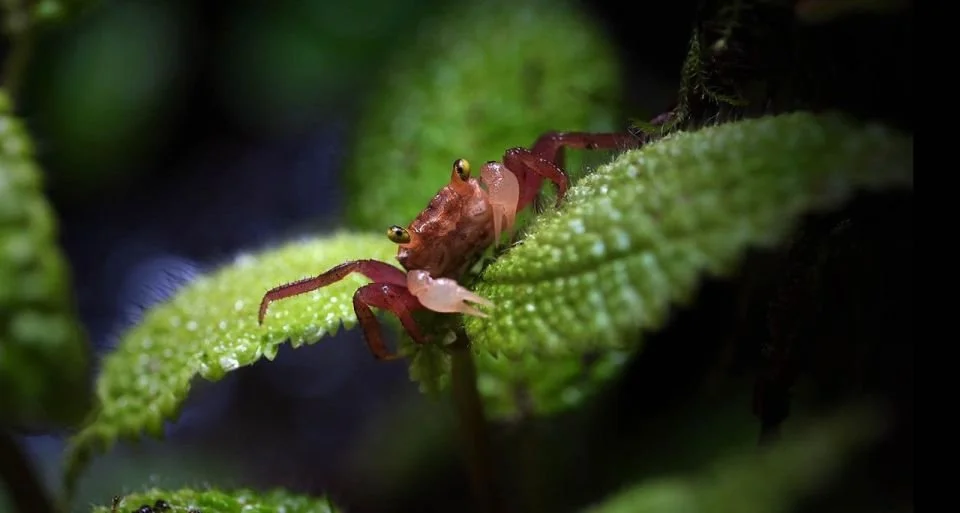
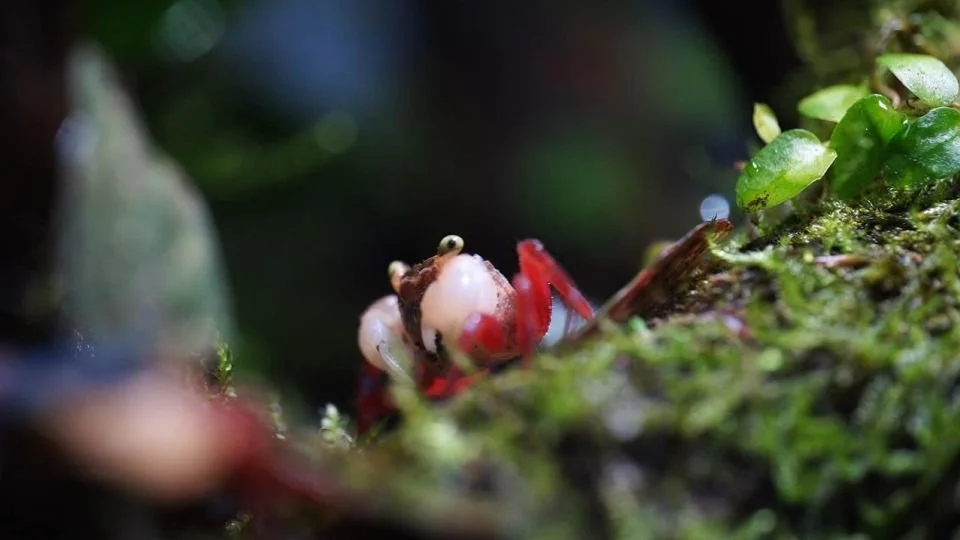


Scientifically Described: Yes
Availability in trade: Yes
Discoverer: Ng & C. G. S. Tan, 1995
Other common names: White Mandarin, White Claw
Activity: Mostly Crepuscular, Nocturnal
Difficulty Level: Master
Visible differences to other species: Seem to be quite active during the day. A lot more aggressive than other species. They require x2 to x3 the amount of space most other species do to reduce male fighting. I wouldn’t keep them in anything less than an 80x30x30cm enclosure for the best results.
Distribution area/Locality: Pulau Lingga Indonesia
Food preferences: Will eat nearly all commercial fish foods but really enjoys hunting and eating live foods like isopods, crickets, springtails, worms etc. The more huntable food you provide the better.
Habitat preferences: Rarely visit the water section; molt on land. They also like to spend a lot of time in the canopy so are great for tall tanks. While we are still experimenting with the ideal ecosystem set up for these crabs it might be possible to keep them in a vivarium rather than a paludarium. So long as they still have access to small pools of water to keep their gills moist.
Additional findings: To make matters even more confusing, Geosesarma Pontianak (Mandarin) and Geosesarma Notophorum (White Mandarin) are often mixed up, and you'll frequently see them mislabeled under each other's names. So for clarity, I’ll be sticking to the current naming system used in this guide. Source: Martin Hohle & Dr. Martin Singheiser | Dec 13, 2016 Geosesarma guide Book.
These are some of the most delicate species in the hobby. They have a very, very poor survival rate when shipped. Quite often a 95% mortality rate within the first 4 - 6 weeks. So if you are planning on getting vampire crabs I would avoid getting Geosesarma Notophorum as your first choice of vampire crab.
Research:
Image Source: @millenniumsnakes & IndoorEcosystem
Full Species Profile: Geosesarma Notophorum
Geosesarma ocypodum
Scientifically Described:
Availability in trade:
Discoverer:
Other common names:
Activity:
Difficulty Level:
Visible differences to other species:
Distribution area/Locality:
Food preferences:
Habitat preferences:
Additional findings:
Research:
Image Source:
Full Species Profile:
Geosesarma sp Orange Claw (Geosesarma SP Red noduliferum)


Scientifically Described: No
Availability in trade: Yes
Discoverer:
Other common names: Red noduliferum, Red Arm Vampire, Lecaude Vampire Crab, Blue diamond orange claw
Activity: Mostly Crepuscular, Nocturnal
Difficulty Level: Easy
Visible differences to other species: From everything that I have managed to dig up on this species there are two different colour variations of this species. The original purple version and the orange-clawed version.
Distribution area/Locality: Near Bogor - West Java – Indonesia
Food preferences: Omnivore, a great hunter, will eat a variety of different commercial foods, frozen foods, insects, etc.
Habitat preferences: The forest floor near bodies of water and streams. Plenty of room to burrow into the soil and hide under leaf litter.
Additional findings: This species has a lot of different names. Noduliferum is the one it is referred to most often.
Research:
Image Source: https://www.garnelio.de/
Full Species Profile: Coming Soon
Personal note: Up until recently I’ve been referring to this species Geosesarma Noduliferum which it is commonly listed as in most places. When comparing colours with Geosesarma Noduliferum (Commonly Bogorensis) side by side from the back, they do indeed look very similar with the exception of their claws.
Geosesarma sp Orange Crowned
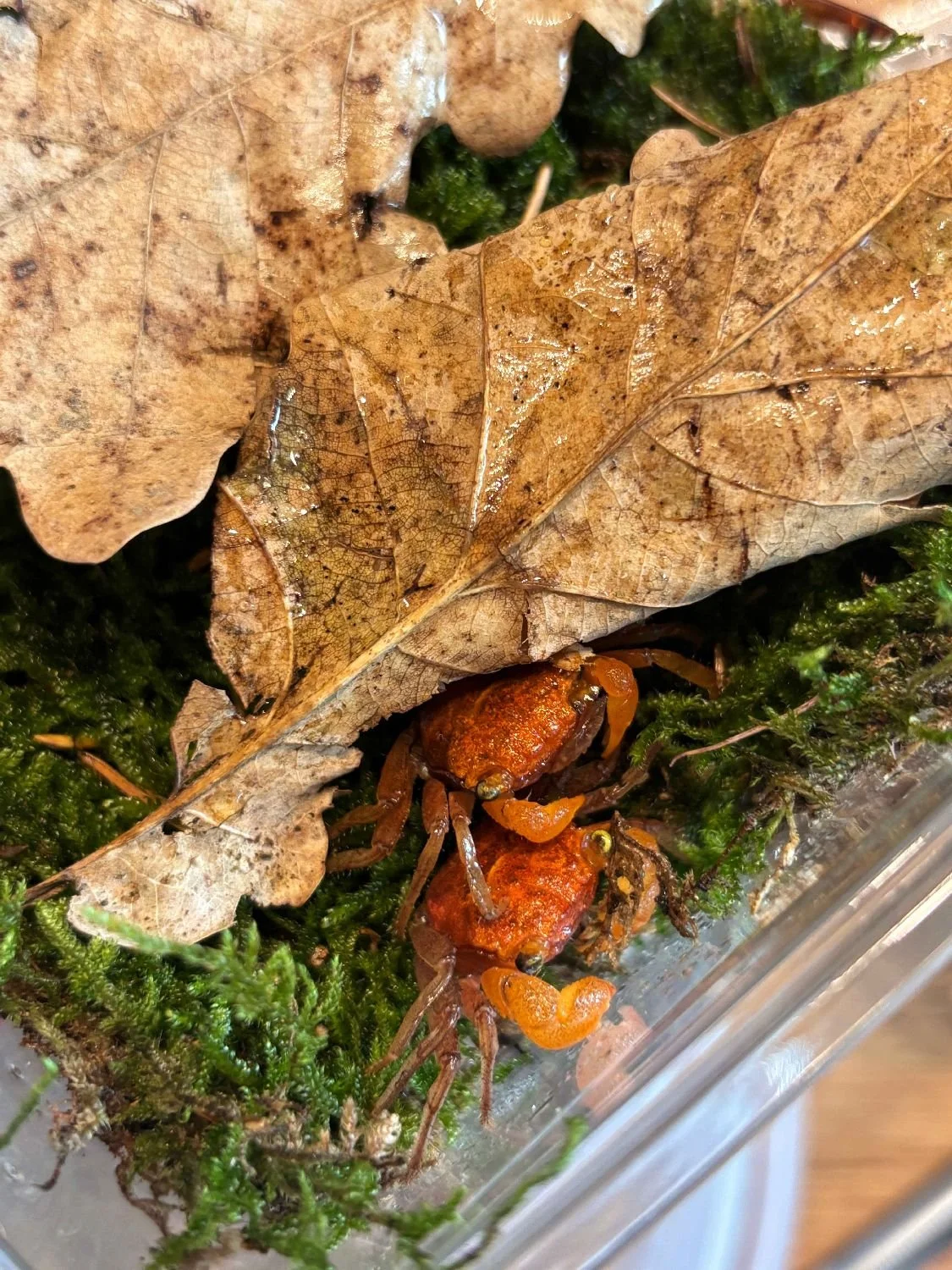
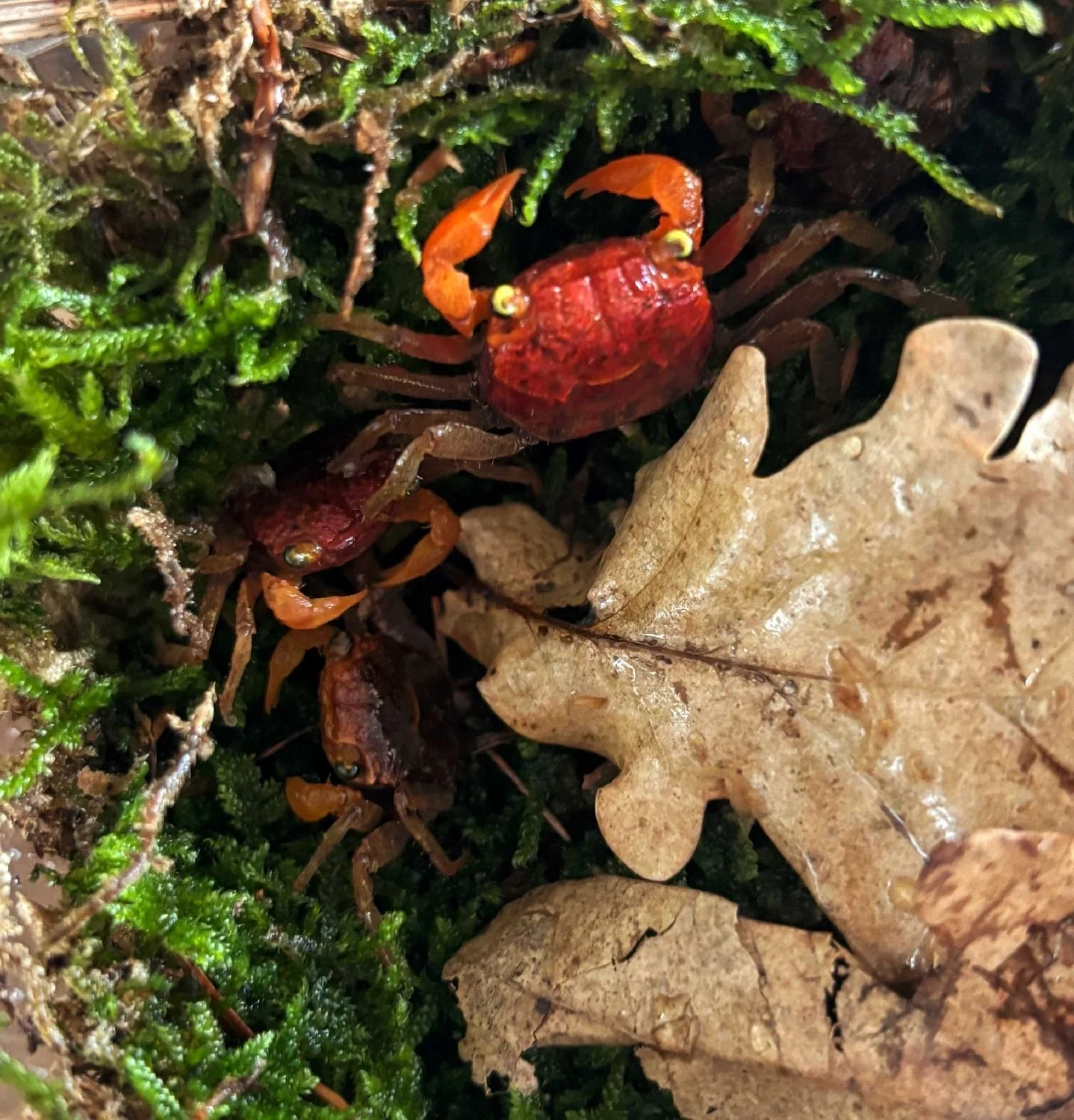
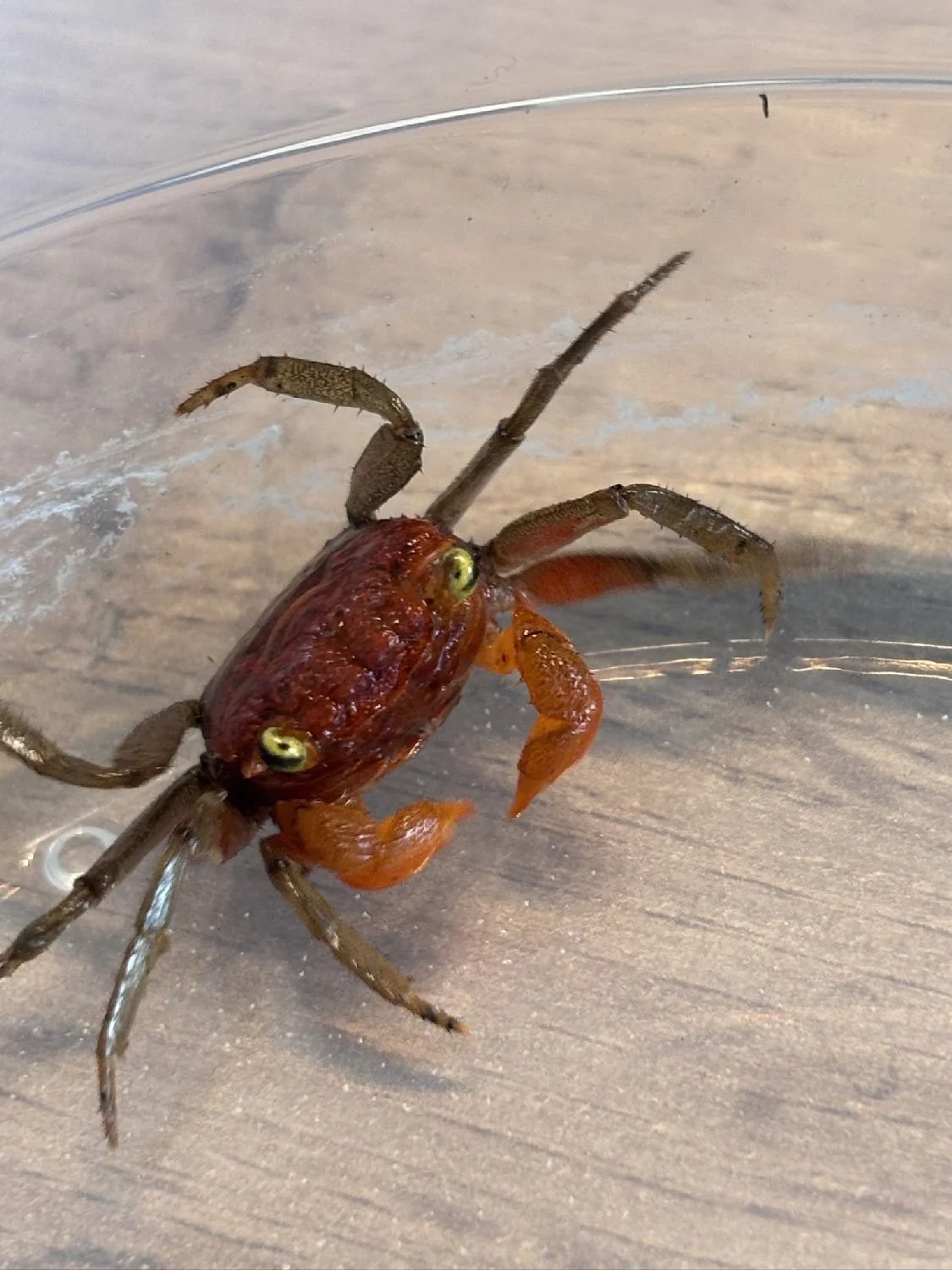
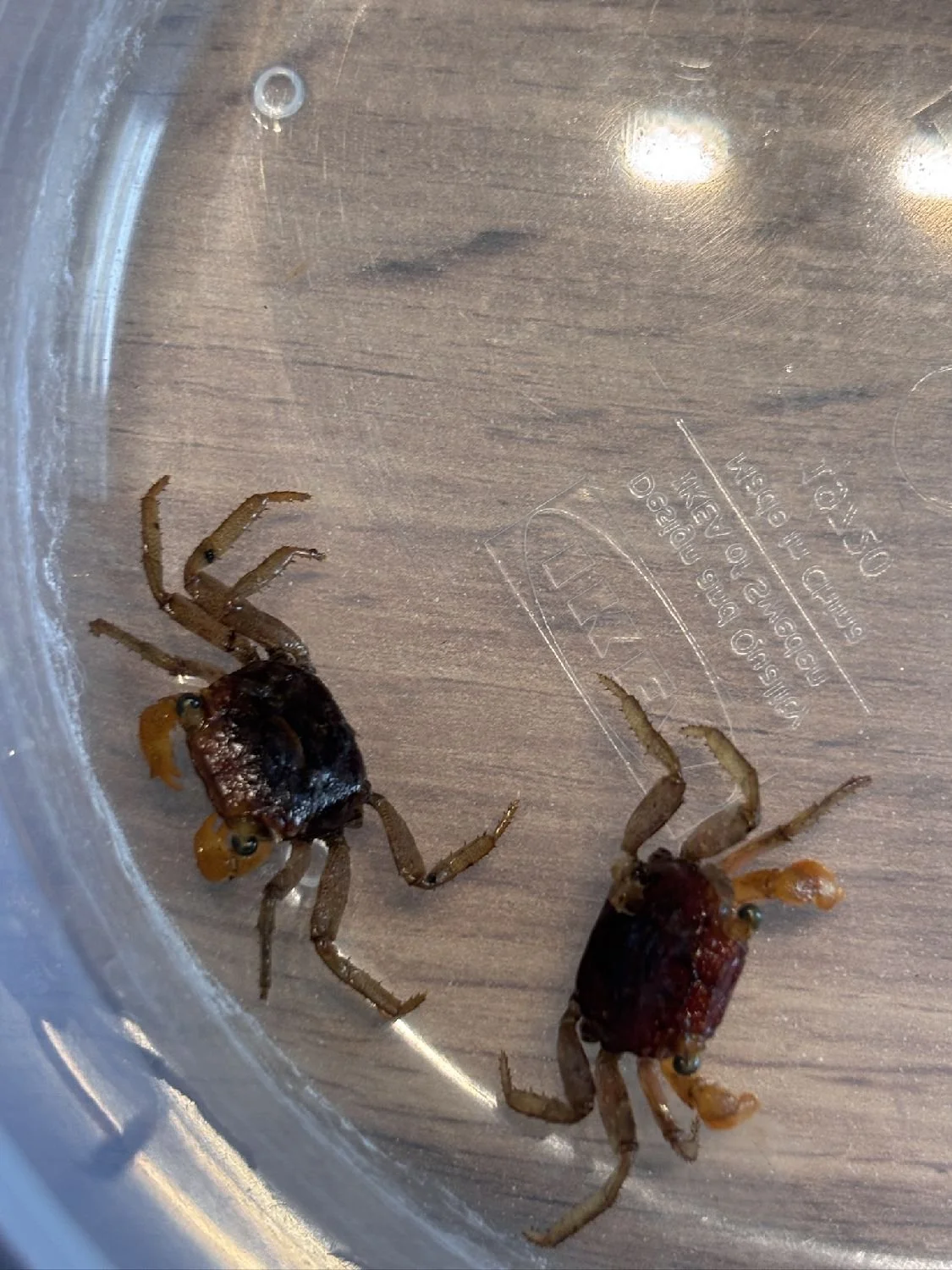
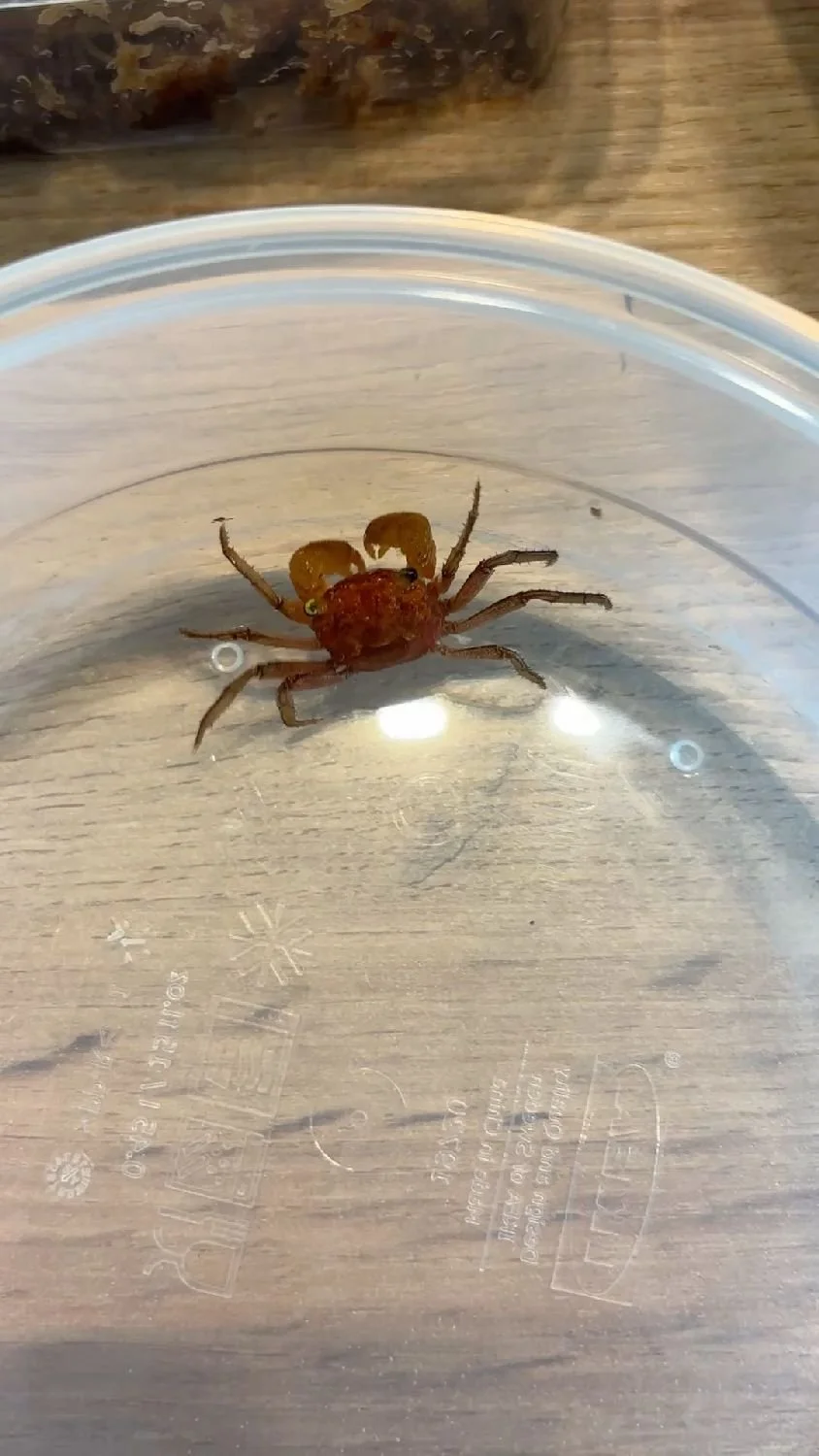
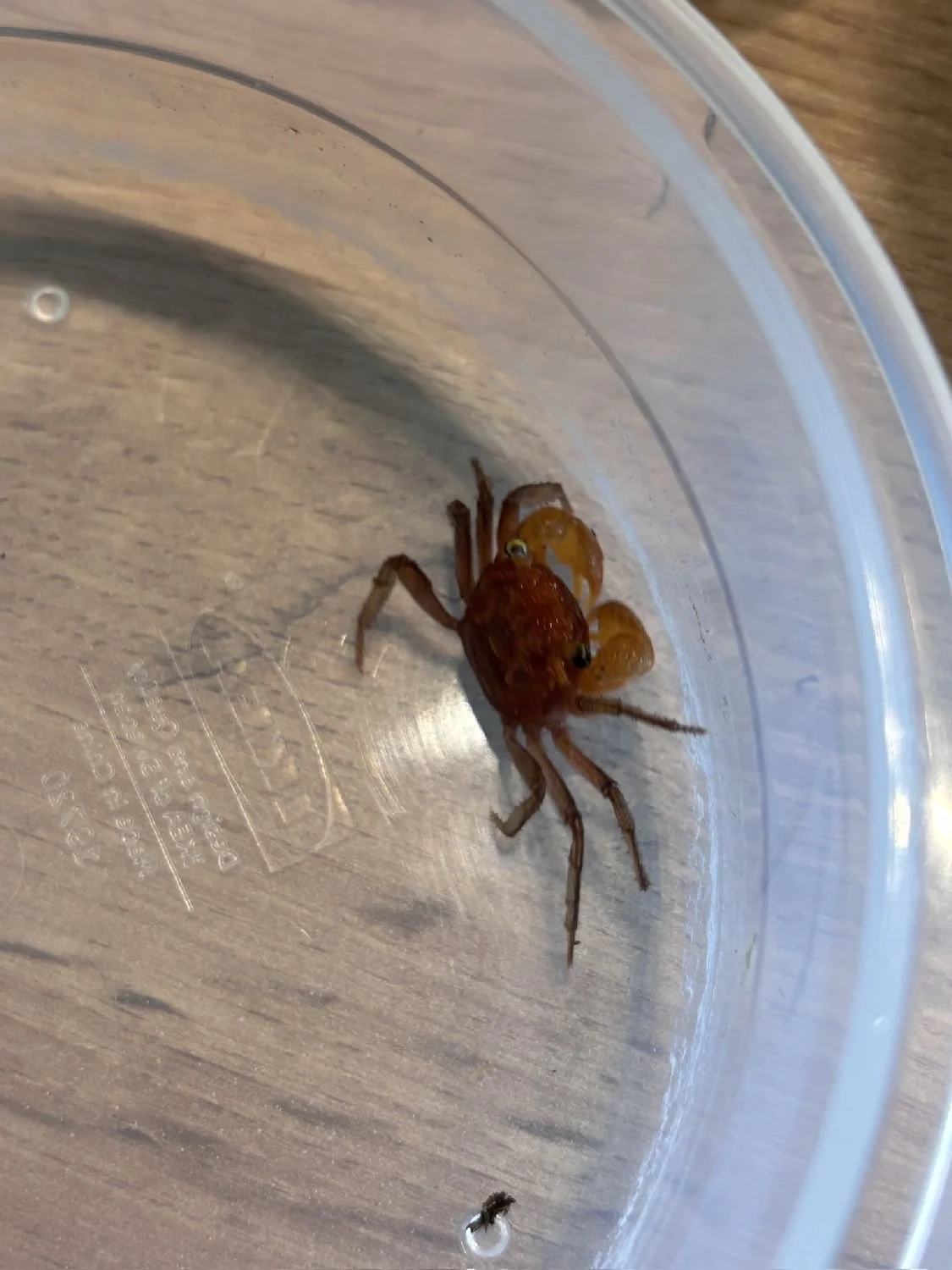
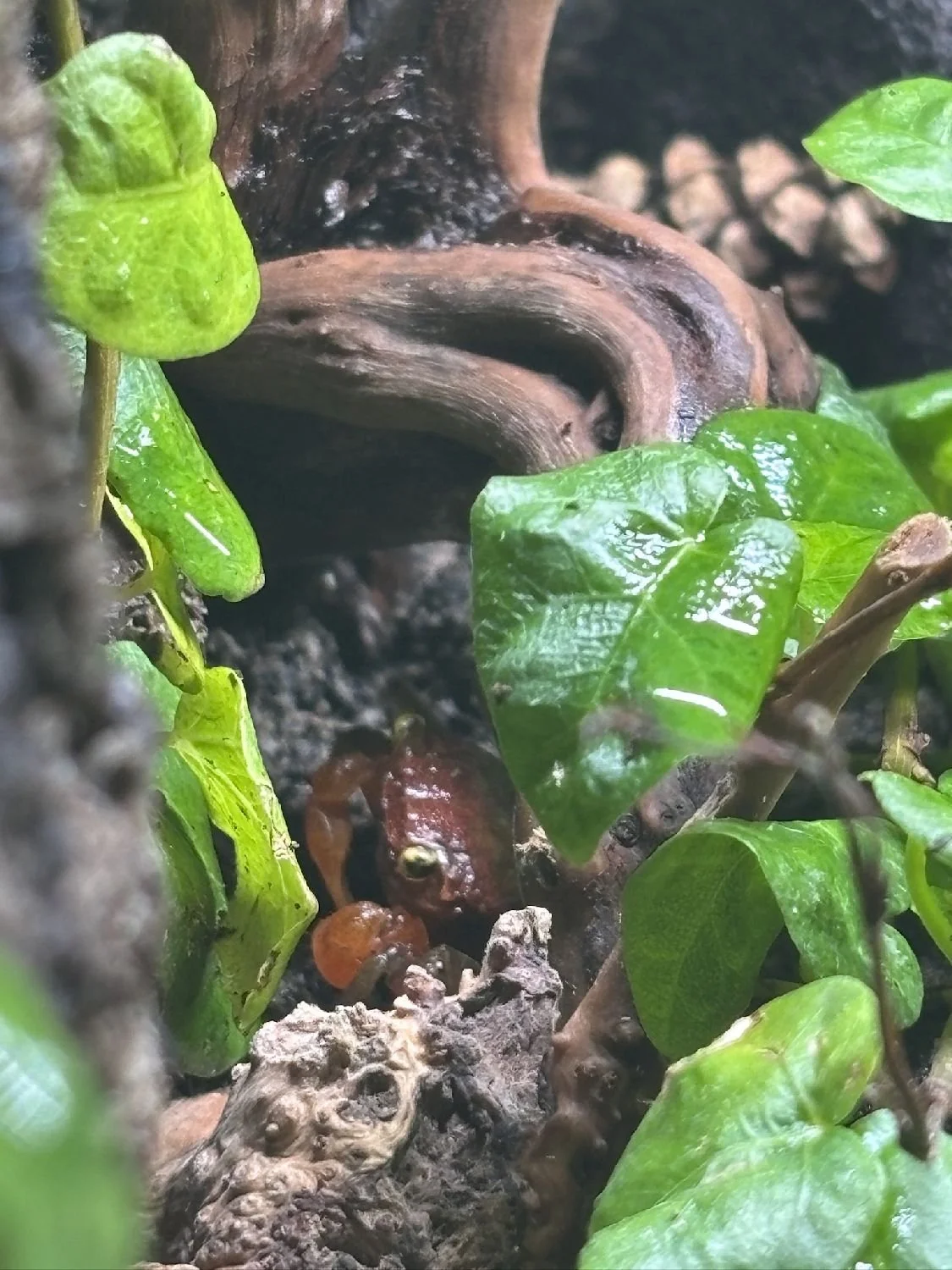
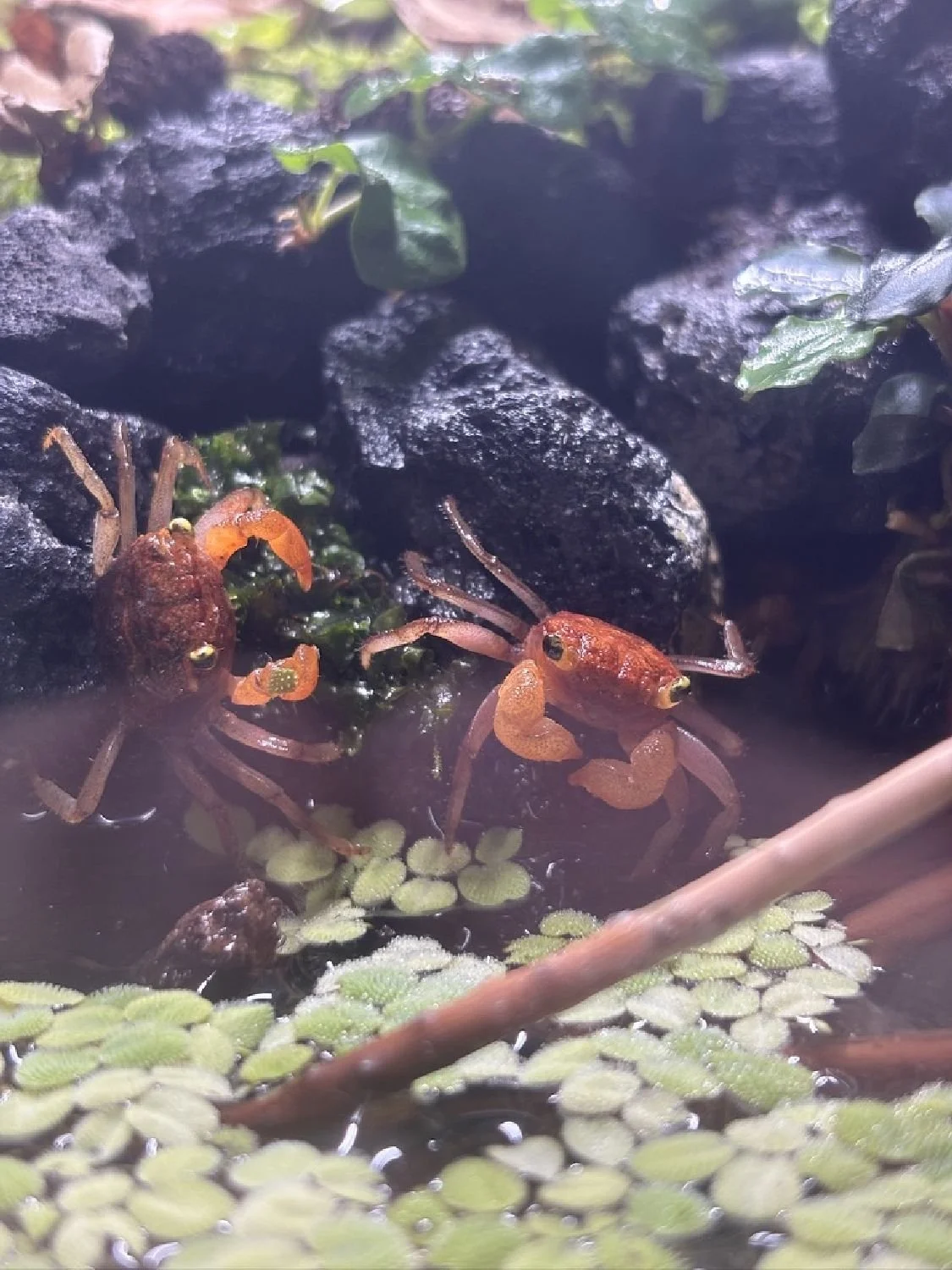
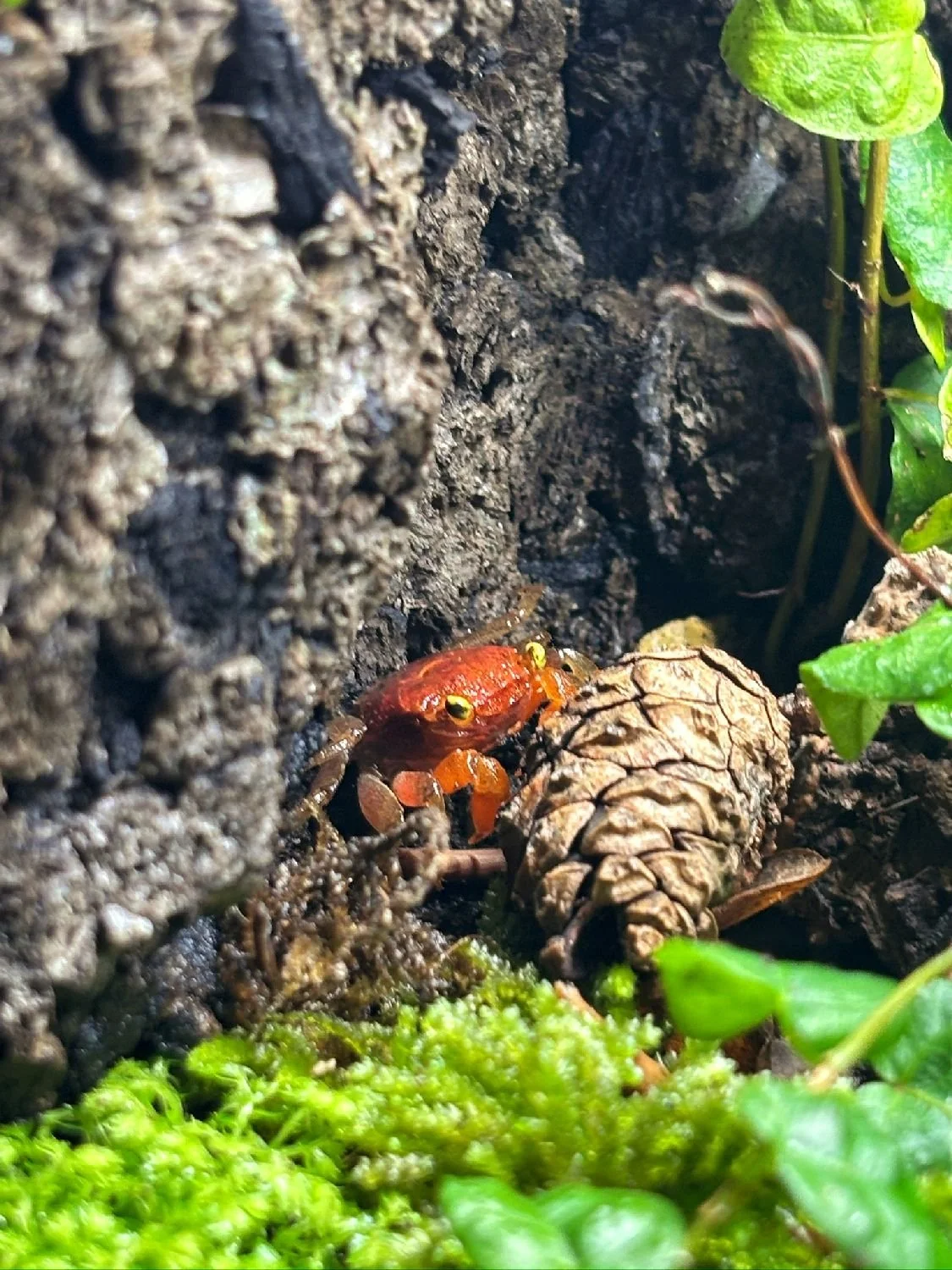
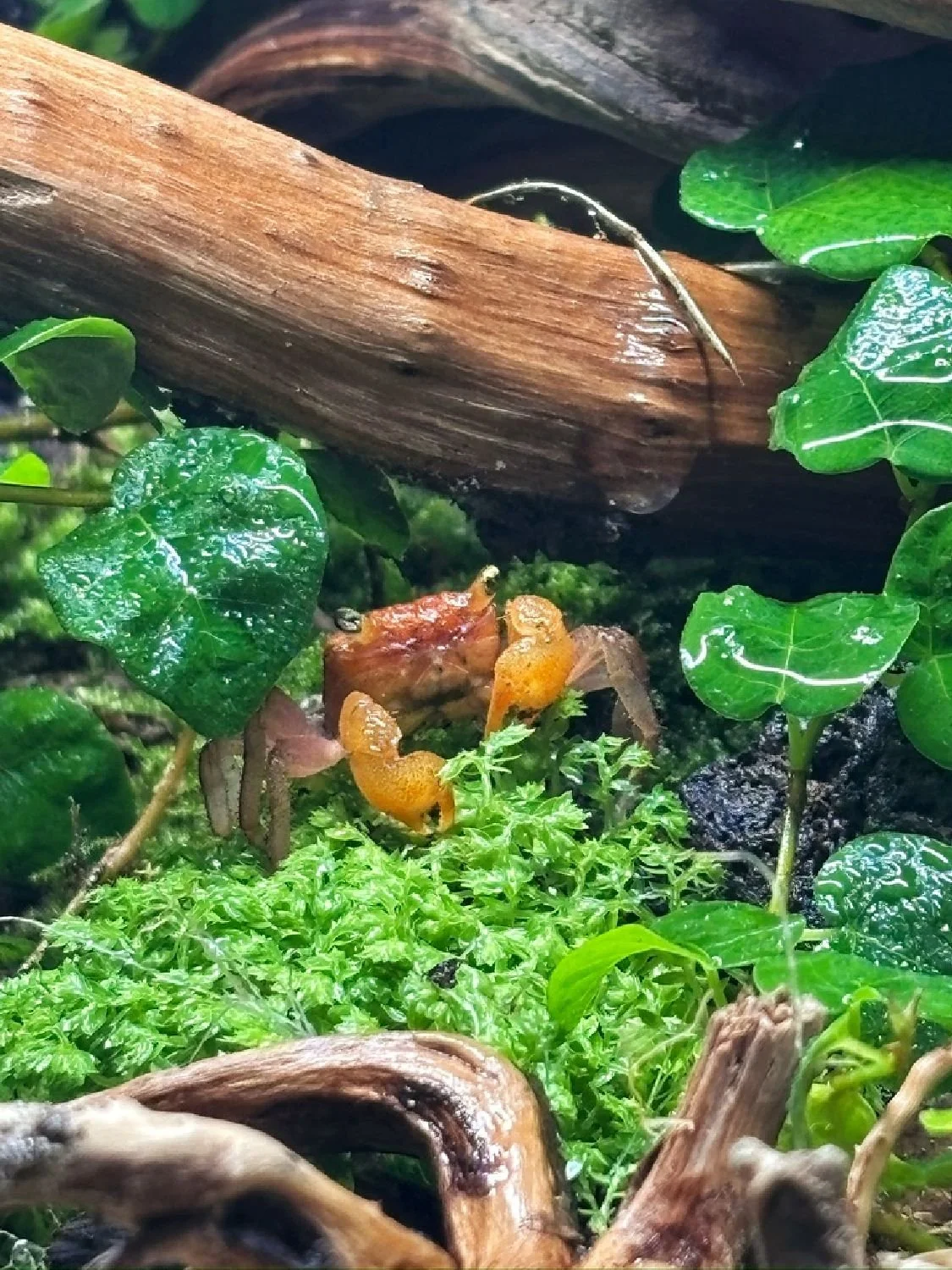
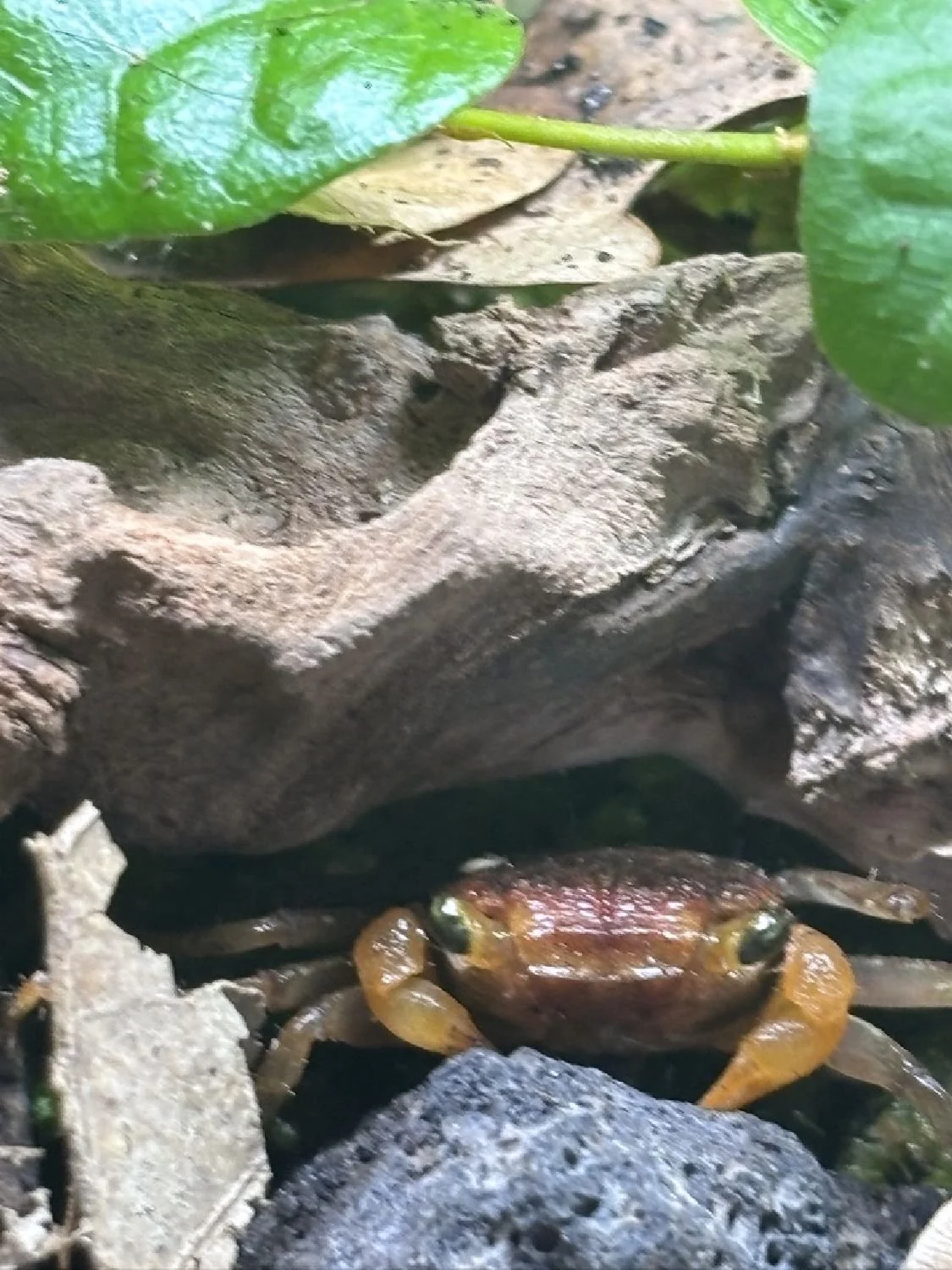
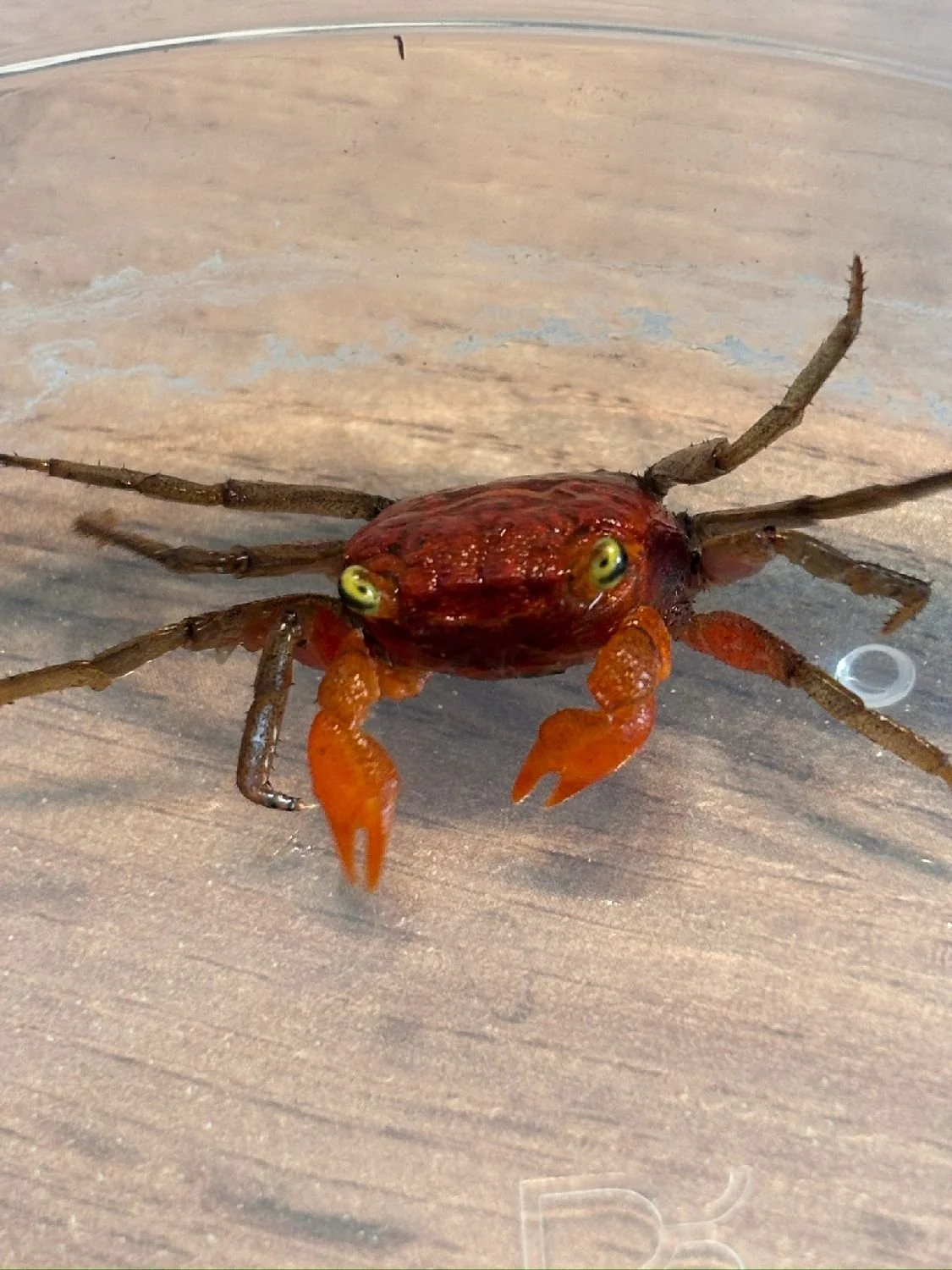
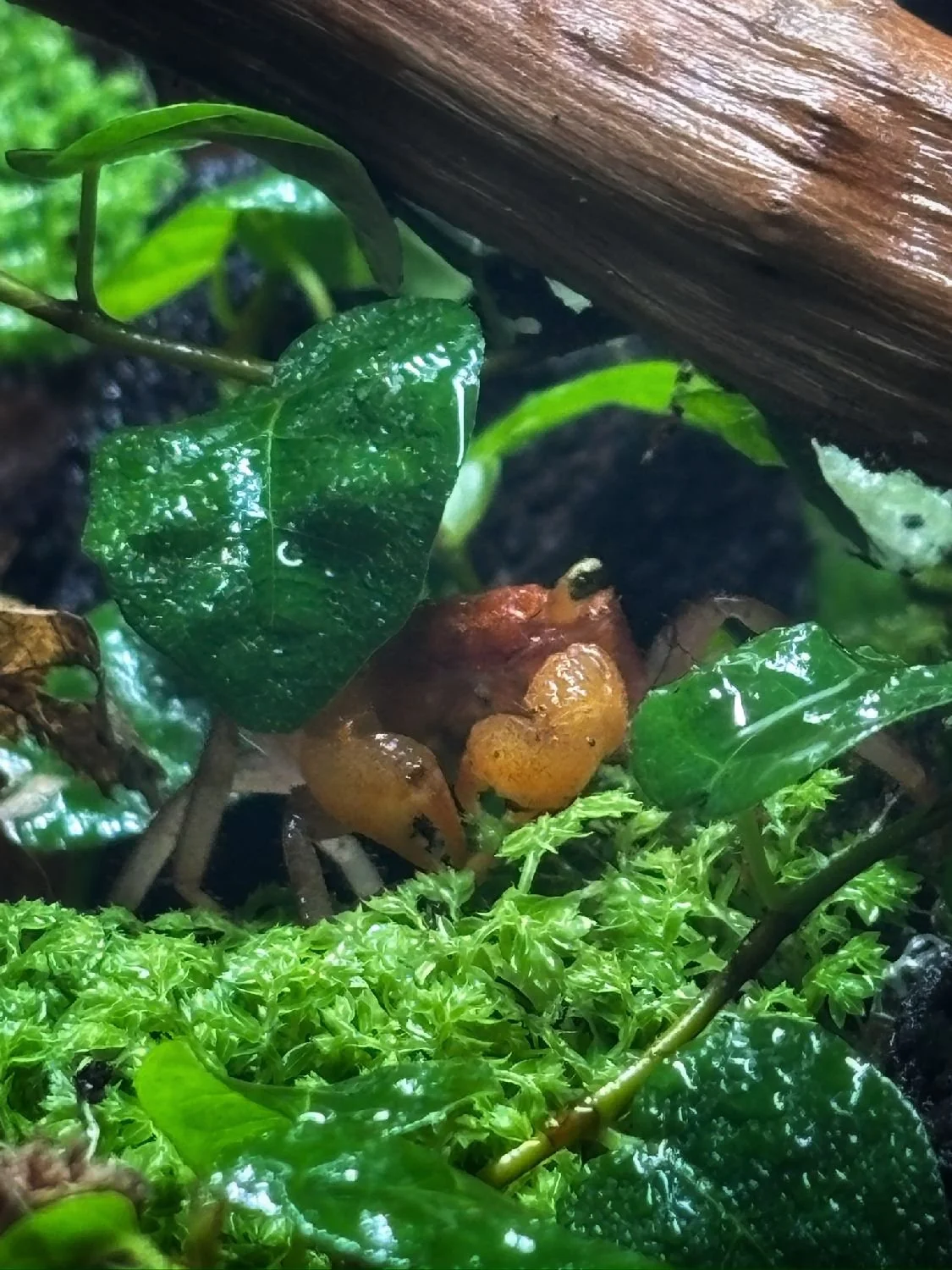
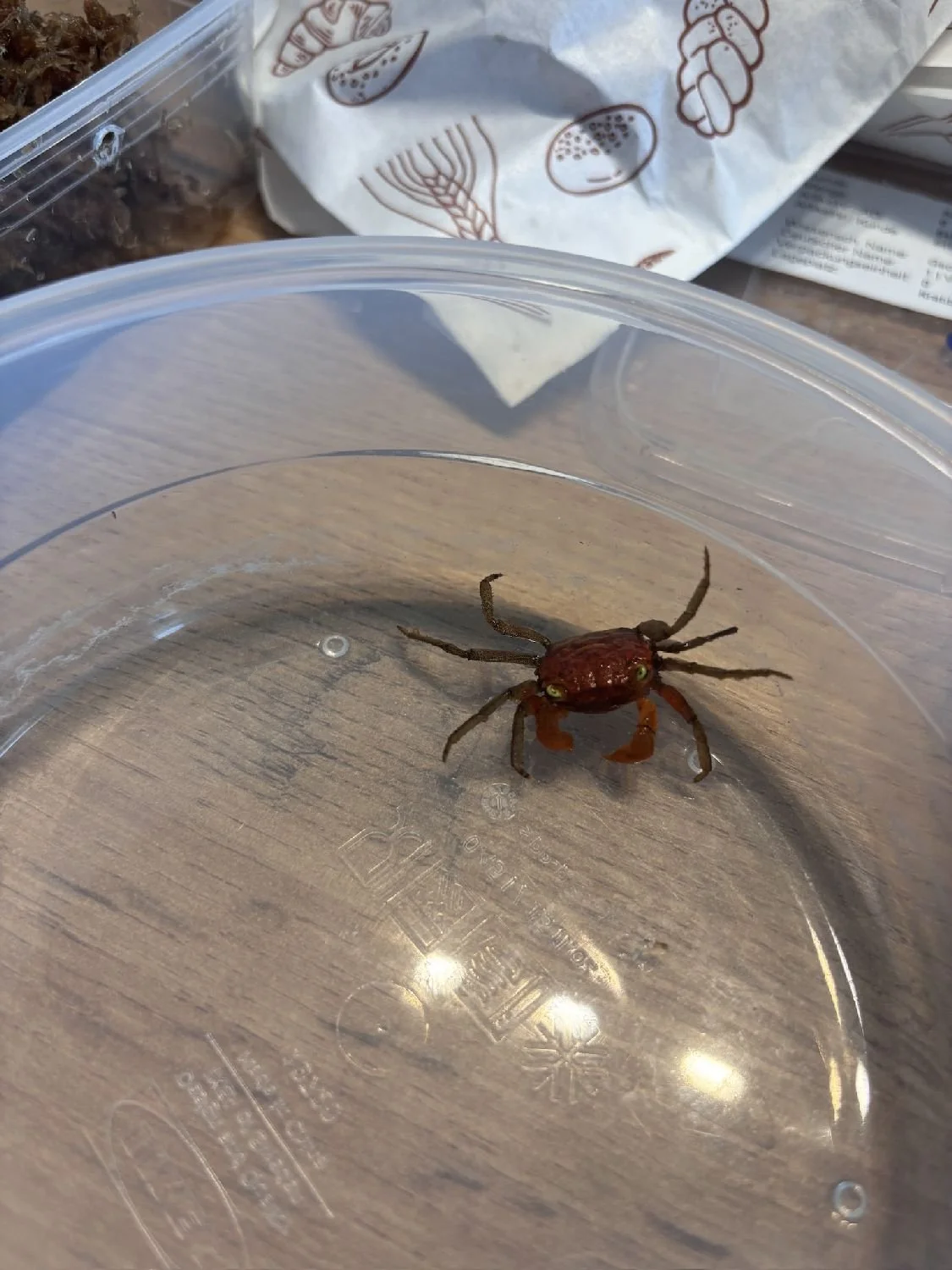
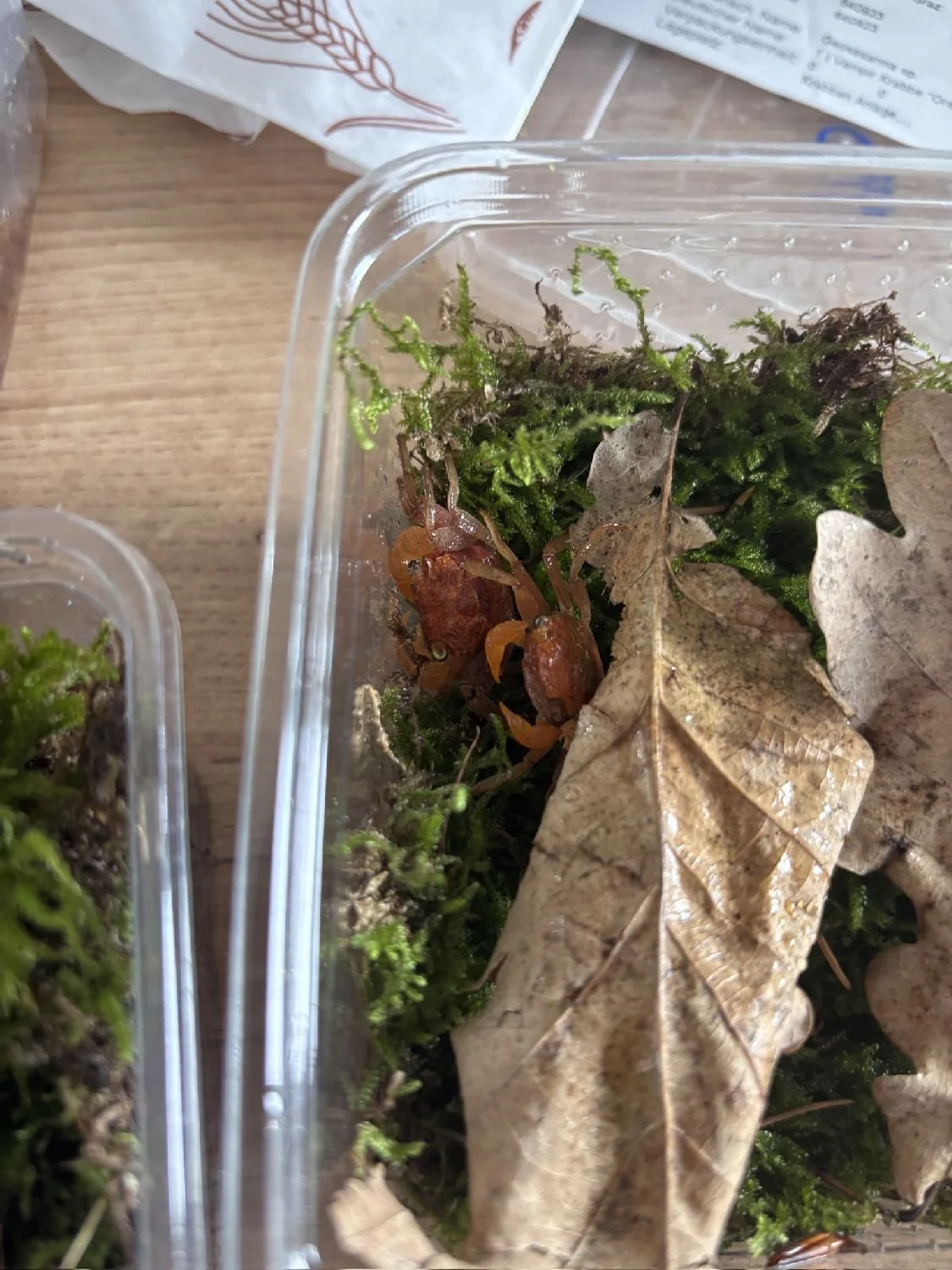
Scientifically Described: No
Availability in trade: Very Rarely, new, only in Germany (as of 02.2026)
Discoverer:
Other common names: Orange crowned, Quite often confused with Geosesarma Lava
Activity: Social, live in groups, excellent climbers
Difficulty Level: Moderate (terrestrial crabs that need a paludarium setup)
Visible differences to other species:
Carapace is divided into two colours: orange top, red bottom
Legs gray-pink
Claws yellow
Eyes green-yellow
Underside orange
Distribution area/Locality: Probably Java, Indonesia
Food preferences: Omnivorous (typical for Geosesarma, not known to damage plants)
Habitat preferences: Terrestrial, bottom of tropical forests, like to dig burrows; suitable for paludariums
Additional findings: Small, social animals; prefer a terrestrial lifestyle; do not damage plants
Image Source: JungleClaws (tomile)
Full Species Profile: Coming Soon
Geosesarma sp Orchid


Scientifically Described: No
Availability in trade: Yes
Discoverer:
Other common names: Blue devil, Spectrum, Blue ghost, Indigo Blue, Purple diamond
Activity: Mostly Crepuscular, Nocturnal
Difficulty Level: Easy
Visible differences to other species:
Distribution area/Locality: Java, Indonesia
Food preferences: Will eat nearly all commercial fish foods but really enjoys hunting and eating live foods like isopods, crickets, springtails, worms etc.
Habitat preferences: Likes to spend a lot of time in the canopy so are great for tall tanks. But will also spend time on the ground in burrows. It’s a bit of an all-rounder.
Additional findings:
Research:
Image Source: https://www.garnelio.de/
Full Species Profile: Coming Soon
Geosesarma penangense
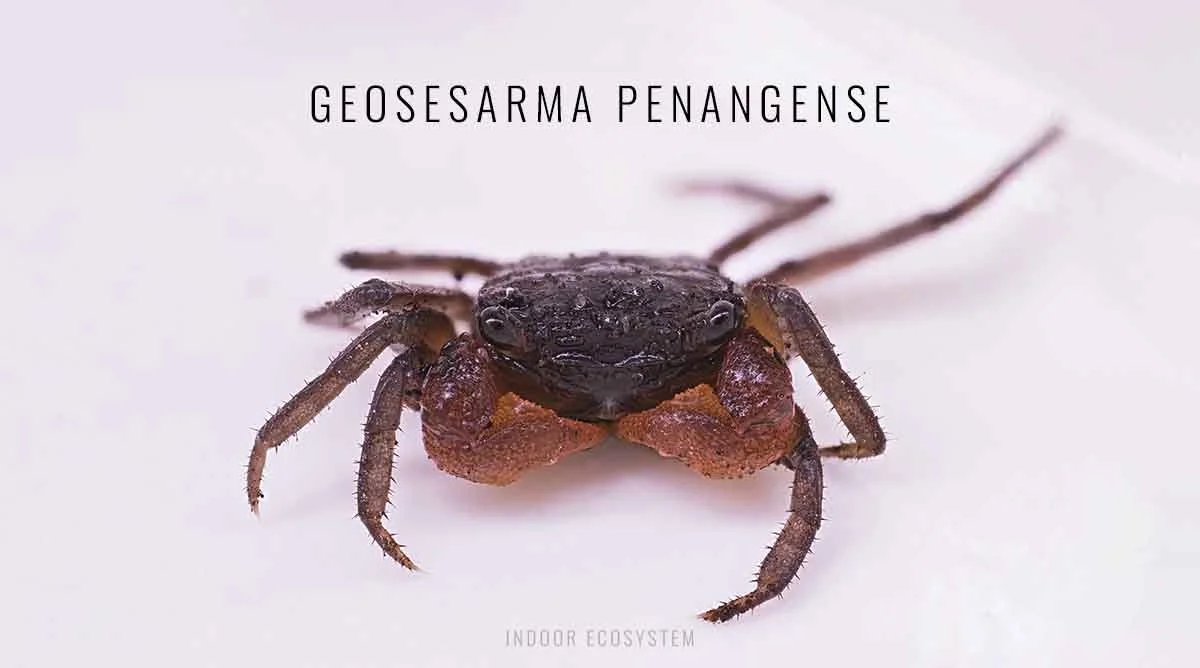
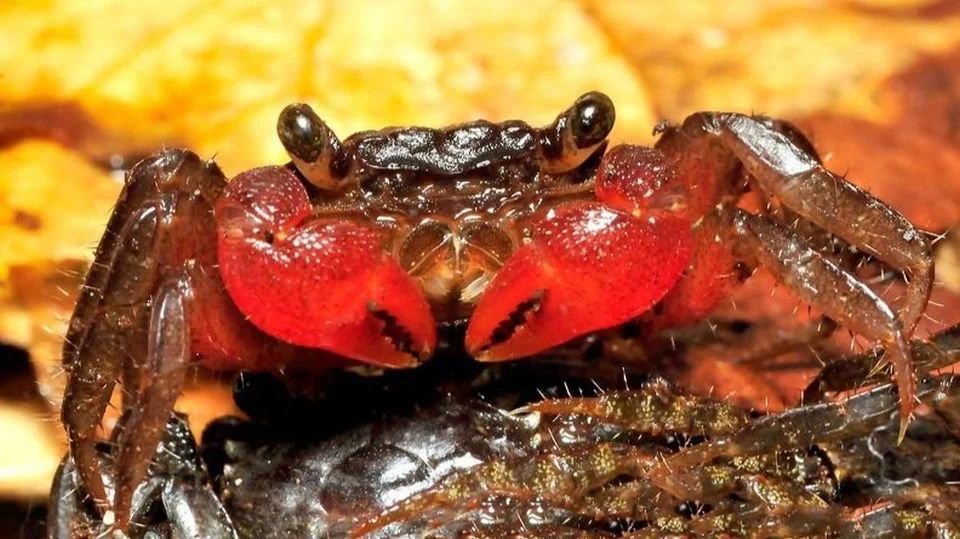

Scientifically Described: Yes
Availability in trade: Yes
Discoverer: Tweedie, 1940
Other common names: Borneo red
Activity: Mostly Crepuscular, Nocturnal
Difficulty Level: Easy
Visible differences to other species: Not as colourful as most other Geosesarma species.
Distribution area/Locality: While they have the name Borneo Red, they aren’t actually from Borneo and instead are endemic to Penang Island in Malaysia
Food preferences: Omnivore, great hunter that loves to hunt on the forest floor. Has quite a hunger for snails.
Habitat preferences: These guys seem to spend a lot more time on the ground and in the leaf litter.
Additional findings: Babies prefer to dig out their own little burrows near the waterline rather than take up residence in nooks and cracks in the rocks and logs. Most other species seem to squeeze into any gap they can rather than making burrows so early on. If you’re looking for a species that is active this is not the crab for you. They hide more than any other species I’ve kept and bred.
Research:
Image Source: http://panzerwelten.de/ and http://inaturalist.org/
Full Species Profile: Coming Soon
Geosesarma penrissen
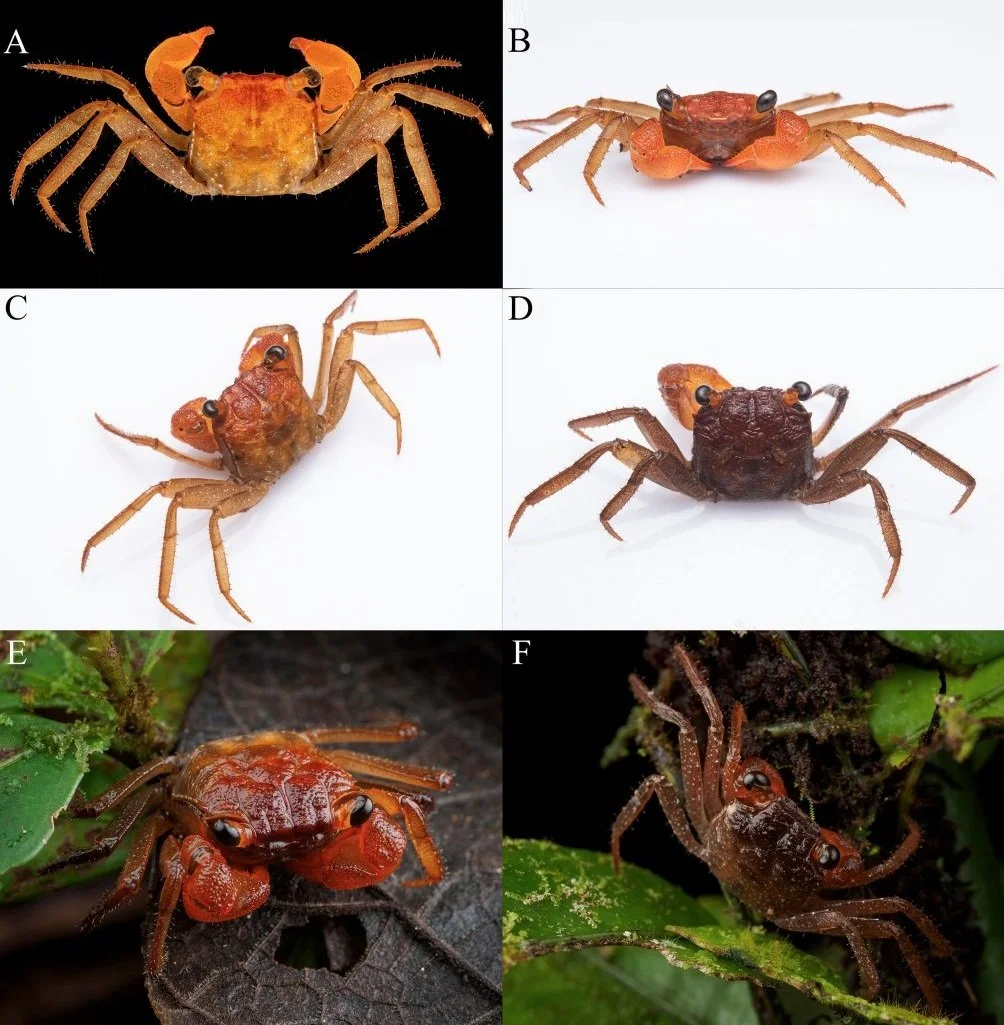
Scientifically Described: Yes
Availability in trade: No
Discoverer: JONGKAR GRINANG, PAUL Y. C. NG and PETER K. L. NG 2026
Other common names:
Activity: Mostly Crepuscular, Nocturnal
Difficulty Level: N/A
Visible differences to other species: Mostly tones of brown, orange and red. Earthy colours.
Distribution area/Locality: A montane forest in southwestern Sarawak, Malaysian Borneo
Food preferences: Omnivore, great hunter that loves to hunt on the forest floor. Has quite a hunger for snails.
Habitat preferences: Forest floor and low growing plants and trees.
Additional findings:
Research:
Image Source: https://novataxa.blogspot.com/2026/06/geosesarma.html?m=1
Full Species Profile: Coming Soon
Geosesarma peraccae


Scientifically Described: Yes
Availability in trade: No
Discoverer: Nobili, 1903
Other common names:
Activity:
Difficulty Level:
Visible differences to other species:
Distribution area/Locality: Johore and South Pahang – Malaysia, Singapore
Food preferences:
Habitat preferences: Tropical forest floor. Near water streams. Lowland species. Swampy areas.
Additional findings:
Research:
Image Source: https://bugsandinsects.wordpress.com/ and FIRST RECORD IN SINGAPORE OF A NEPENTHIPHILOUS CRAB, GEOSESARMA PERRACAE (CRUSTACEA: DECAPODA: SESARMIDAE) - H. H. Tan and P. K. L. Ng
Full Species Profile: Coming Soon
Geosesarma sp Pitya


Scientifically Described: No
Availability in trade: Yes
Discoverer:
Other common names: Lavender, Violet
Activity: Mostly Crepuscular, Nocturnal
Difficulty Level: Easy
Visible differences to other species:
Distribution area/Locality: Java, Indonesia
Food preferences:
Habitat preferences: Tropical forest floor. Near water streams.
Additional findings:
Research:
Image Source: Indonesia land crab
Full Species Profile: Coming Soon
GeosesarMA POMEGRANATE

Scientifically Described: No
Availability in trade: No
Discoverer:
Other common names: Pomegranate
Activity: Mostly Crepuscular, Nocturnal
Difficulty Level: Unknown
Visible differences to other species:
Distribution area/Locality: Unknown
Food preferences:
Habitat preferences: Tropical forest floor. Near water streams.
Additional findings:
Research:
Image Source: Crabnesia
Full Species Profile: Coming Soon
Geosesarma pontianak


Scientifically Described: Yes
Availability in trade: Yes
Discoverer: Ng, Peter K. L. (2015)
Other common names: Mandarin
Activity: Mostly Crepuscular, Nocturnal
Difficulty Level: Master
Visible differences to other species:
Distribution area/Locality: North Pontianak – West Borneo, Indonesia
Food preferences: Will eat nearly all commercial fish foods but really enjoys hunting and eating live foods like isopods, crickets, springtails, worms etc.
Habitat preferences: Pontianak molt on land and they also like to spend a lot of time in the canopy so are great for tall tanks. Unlike their similarly named cousin (Notophorum - White mandarin) Pontianak still uses the water section though not all that often.
Additional findings: Geosesarma ambawang and Geosesarma pontianak are very similar, with differences in biological traits. The most noticeable external difference is eye colour: Geosesarma pontianak has bright yellow eyes, while Geosesarma ambawang has lighter, almost white eyes. Additionally, Geosesarma ambawang has a proportionally wider carapace, whereas Geosesarma pontianak has a more square-shaped carapace and longer, slimmer legs.
Due to their resemblance, overlapping geographical range, and occasional misidentification as Geosesarma nothophorum, distinguishing this species from closely related ones, such as Geosesarma ambawang and Geosesarma nothophorum, can be challenging. They are likely to be mixed in the trade.
To make matters even more confusing, Geosesarma Pontianak (Mandarin) and Geosesarma Notophorum (White Mandarin) are often mixed up, and you'll frequently see them mislabeled under each other's names. So for clarity, I’ll be sticking to the current naming system used in this guide. Source: Martin Hohle & Dr. Martin Singheiser | Dec 13, 2016 Geosesarma guide Book.
Research: Link to research paper
Image Source: @millenniumsnakes
Full Species Profile: Here
Geosesarma protos
Scientifically Described:
Availability in trade:
Discoverer:
Other common names:
Activity:
Difficulty Level:
Visible differences to other species:
Distribution area/Locality:
Food preferences:
Habitat preferences:
Additional findings:
Research:
Image Source:
Full Species Profile:
Geosesarma sp Purple Haze


Scientifically Described: No
Availability in trade: Yes
Discoverer:
Other common names: Buricak, Graphite Grey
Activity:
Difficulty Level: Easy
Visible differences to other species: Molts on land which isn’t all that common amongst geosesarma species
Distribution area/Locality: Bukit Dewa Kebumen, Central Java, Indonesia
Food preferences:
Habitat preferences: Tropical forest floor, near streams and water sources. Based on its longer than typical legs it’s likely to be a very good climber and potentially molts on land.
Additional findings:
Research:
Image Source: https://inaturalist.org/ and https://www.garnelio.de/
Full Species Profile: Coming Soon
Geosesarma pylaemenes
Scientifically Described:
Availability in trade:
Discoverer:
Other common names:
Activity:
Difficulty Level:
Visible differences to other species:
Distribution area/Locality:
Food preferences:
Habitat preferences:
Additional findings:
Research:
Image Source:
Full Species Profile:
Geosesarma raj


Scientifically Described: Yes
Availability in trade: No
Discoverer: Schubart & P.K.L. Ng, 2014
Other common names:
Activity:
Difficulty Level:
Visible differences to other species:
Distribution area/Locality: Bintan, Indonesia
Food preferences:
Habitat preferences: Found on the tropical forest floor in mountainous areas.
Occasionally located away from stream waters.Additional findings:
Research:
Image Source: Two new species of land-dwelling crabs of the genus Geosesarma De Man, 1892 (Crustacea: Brachyura: Thoracotremata: Sesarmidae) from Bintan Island, Indonesia - Christoph D. Schubart & Peter K L Ng
Full Species Profile: Coming Soon
Geosesarma rathbunae


Scientifically Described: Yes
Availability in trade: No
Discoverer: Serène, 1968
Other common names:
Activity:
Difficulty Level:
Visible differences to other species:
Distribution area/Locality: Culasi, Panay Island, Alegre, Sebaste, Antique, Philippines
Food preferences:
Habitat preferences: Tropical forests. Mountain species. Enjoys climbing.
Additional findings:
Research:
Image Source: http://inaturalist.org/
Full Species Profile: Coming Soon
GEOSESARMA SP RED CLAW


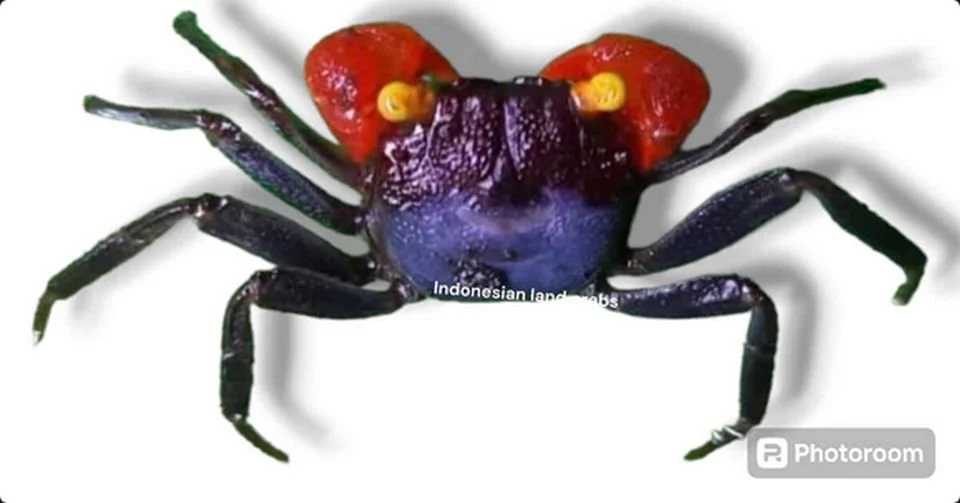

Scientifically Described: No
Availability in trade: Yes
Discoverer:
Other common names: Red Gloves, Red noduliferum, Red Arm Vampire, Lecaude Vampire Crab, Blue diamond red claw, Bicolor Carnaval Crab
Activity:
Difficulty Level:
Visible differences to other species:
Distribution area/Locality: Yogyakarta, Java, Indonesia
Food preferences:
Habitat preferences: Prefers a terrestrial lifestyle and enjoys burrowing
Additional findings:
Research:
Image Source: https://www.greenflow.hk/
Full Species Profile: Coming Soon
Geosesarma robustum
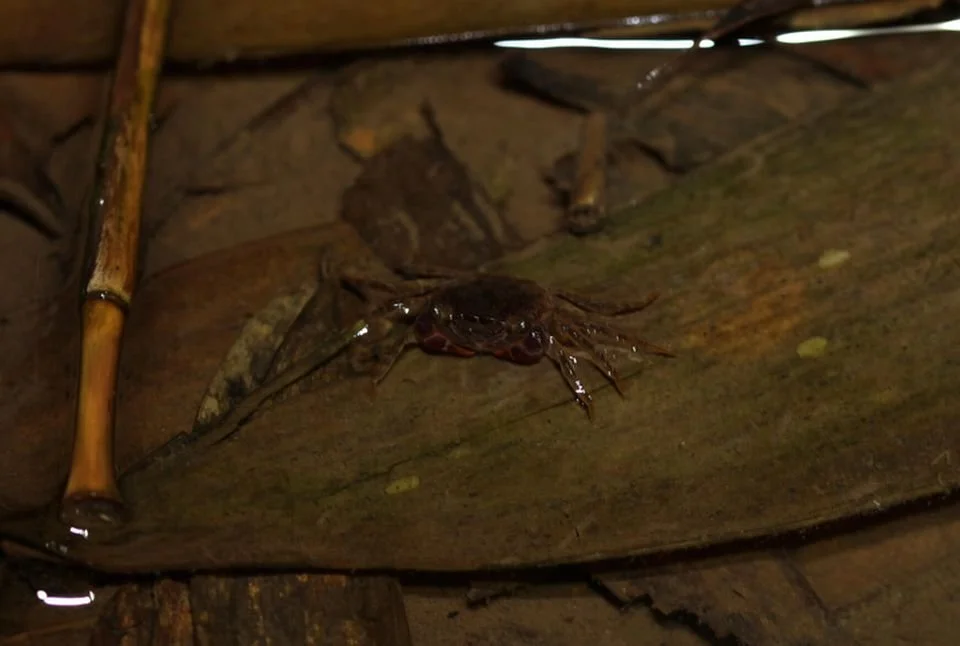
Scientifically Described: Yes
Availability in trade: No
Discoverer: P.K.L. Ng & Wowor, 2019
Other common names:
Activity:
Difficulty Level:
Visible differences to other species:
Distribution area/Locality: Bogor Regency, West Java, Gunung Bunder Resort of Mount Halimun Salak National Park, Indonesia
Food preferences:
Habitat preferences: Found on the tropical forest floor, near watercourses. Thrives on rocky substrates and cobbles. A mountain species.
Additional findings:
Research:
Image Source: https://inaturalist.org/
Full Species Profile: Coming Soon
Geosesarma riani


Scientifically Described: Yes
Availability in trade: Yes
Discoverer: Peter K. L. Ng & Daisy Wowor, 2024
Other common names: Golden Back, Rainbow, Golden Top, Rouxi
Activity: Mostly Crepuscular, Nocturnal
Difficulty Level: Easy
Visible differences to other species: They are very similar to Nigripes but have red legs instead of black/brown. They are also extremely hard to distinguish from Rouxi as well.
Distribution area/Locality: Banjar – West Java, Indonesia
Food preferences: Will eat nearly all commercial fish foods but really enjoys hunting and eating live foods like isopods, crickets, springtails, worms etc.
Habitat preferences: Tropical forest floor. Near watercourses. Rocky, stony areas. Lowland species. Stolen burrows, kind of shy, likes to come out at dusk and dawn and hides during the peak of daylight hours.
Additional findings: They are a highly aggressive species and will fight to keep their own territories. Before they were officially identified as two species Riani and Nigripes they were often mixed and sold together which is why a lot of people had major fighting issues in their captive setup. Thankfully now that the species is properly identified they can be better managed.
If you are planning to keep these, I would suggest a larger tank 50x30x30cm (for a max of 3 crabs 1 male 2 females) bigger is always better though.Research: Link to research Paper
Image Source: IKCNHM and http://inaturalist.org/
Full Species Profile: Coming Soon
Geosesarma SP Ronin
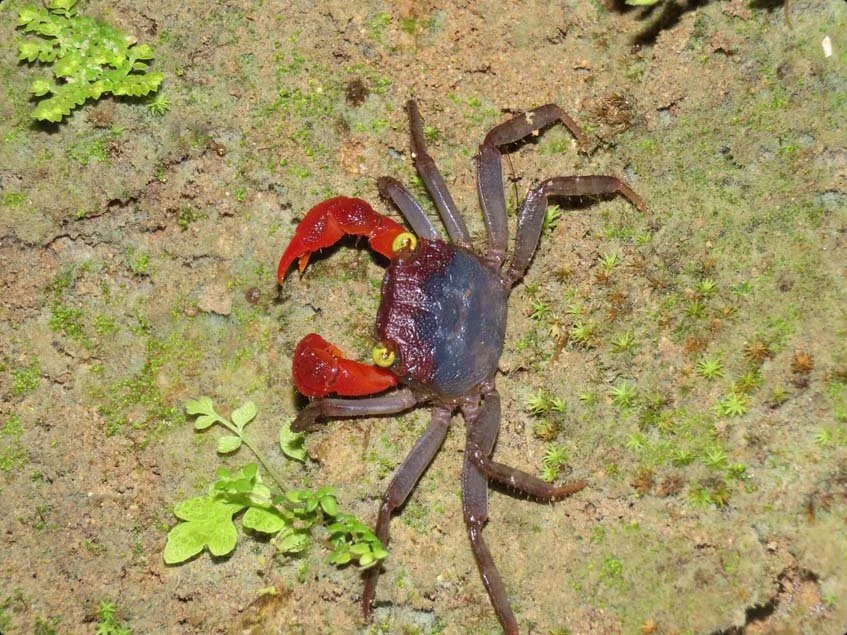
Scientifically Described: No
Availability in trade: Rare
Discoverer:
Other common names: Red Gloves, Red Noduliferum, Red Arm Vampire, Lecaude Vampire Crab, Blue Diamond Red Claw, Bicolor Carnaval Crab
Activity: Small, typically terrestrial crabs. Excellent climbers. Can be kept in paludariums. Do not damage plants. Live in groups, social animals.
Difficulty Level: Easy
Visible differences to other species:
Carapace – Divided into two parts: upper red, lower blue
Legs – Black
Claws – Red
Eyes – Yellow
Underside – Red and black
Distribution area/Locality: Yogyakarta, Java, Indonesia
Food preferences:
Habitat preferences: Tropical forest floor, near streams and water sources. Prefers a terrestrial lifestyle and enjoys burrowing.
Additional findings:
Research:
Image Source: iNaturalist.org (Geosesarma images)
Full Species Profile:
Geosesarma CF rouxi
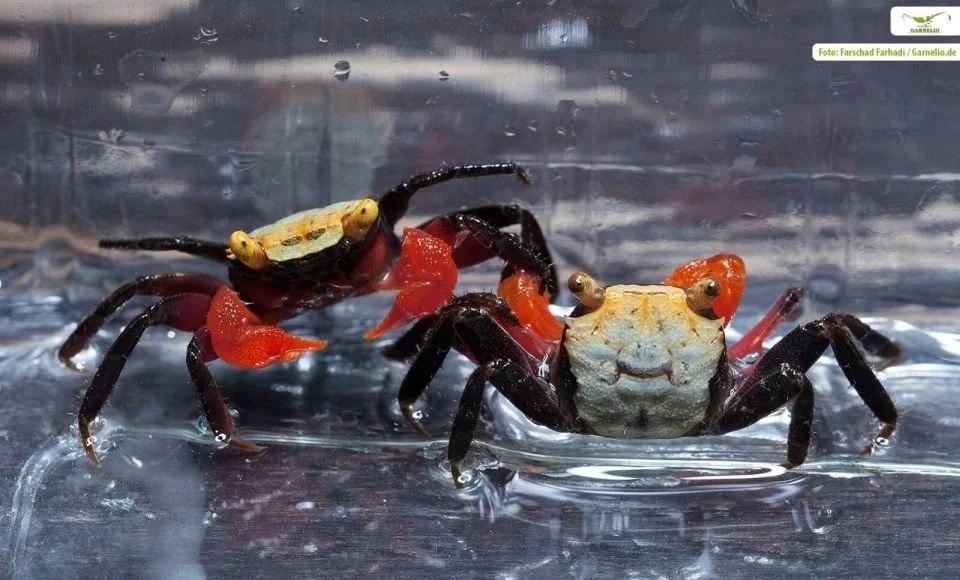
Scientifically Described: Yes (Though no accurate pictures currently exist)
Availability in trade: Yes
Discoverer: Serène, 1968
Other common names: Golden Back, Rainbow, Golden Top, Riani, Nigripes.
Activity: Mostly Crepuscular, Nocturnal
Difficulty Level: Easy
Visible differences to other species: They are very similar to Nigripes and Riani and were officially classified first, but based on location data it is quite likely still its own species. However, the visual differences between Rouxi and Riani/Nigripes are almost visually impossible to distinguish.
Distribution area/Locality: Batu – Malang - East Java, Indonesia
Food preferences: Will eat nearly all commercial fish foods but really enjoys hunting and eating live foods like isopods, crickets, springtails, worms etc.
Habitat preferences: Stolen burrows, kind of shy, likes to come out at dusk and dawn and hides during the peak of daylight hours.
Additional findings: They are a highly aggressive species and will fight to keep their own territories. Before they were officially split from Rouxi (one species) into Riani and Nigripes (two species) they were often mixed and sold together which is why a lot of people had major fighting issues in their captive setup. Thankfully now that the species is properly identified they can be better managed.
If you are planning to keep these, I would suggest a larger tank 50x30x30cm (for a max of 3 crabs 1 male 2 females) bigger is always better though.Research: Link Classification
Image Source: https://www.garnelio.de/
Full Species Profile: Coming Soon
Complications: Confirming with absolute certainty whether this species truly exhibits this appearance is challenging. Following the classification of Geosesarma riani and Geosesarma nigripes, it is likely that crabs previously attributed to this appearance in the pet trade were, in fact, newly identified species as of 2024. The scientific descriptions of these species lack detailed information about their external characteristics, making it difficult to rely on photographs for accurate identification. Determining species based on biological structures alone adds another layer of complexity.
What we do know is that Geosesarma rouxi is native to the eastern part of Java, where imports have become increasingly rare. However, these crabs were likely available in the trade between 2006 and 2015. Older listings and photographs labeled as Geosesarma rouxi show a strong resemblance to Geosesarma nigripes, though some specimens exhibit more violet-colored legs, which could better represent the true appearance of Geosesarma rouxi.
Despite being three distinct species, Geosesarma riani and Geosesarma nigripes are still frequently misidentified as Geosesarma rouxi and are often housed together. Notably, the study describing Geosesarma riani and Geosesarma nigripes did not dismiss the existence of Geosesarma rouxi, nor did it divide it into two separate species, as some have claimed. Instead, it confirms that these are three independent and distinct species.
Geosesarma sp Ruby Red


Scientifically Described: No
Availability in trade:
Discoverer:
Other common names: Tomato, Red tomato, Blood
Activity:
Difficulty Level:
Visible differences to other species: Typically has yellow eyes rather than orange eyes like Geosesarma Tomato
Distribution area/Locality: Java, Indonesia
Food preferences:
Habitat preferences: Tropical forest floor, near streams and water sources.
Additional findings:
Research:
Image Source: https://myhomenature.com/ and Indonesia land crab
Full Species Profile: Coming Soon
Geosesarma sabanum

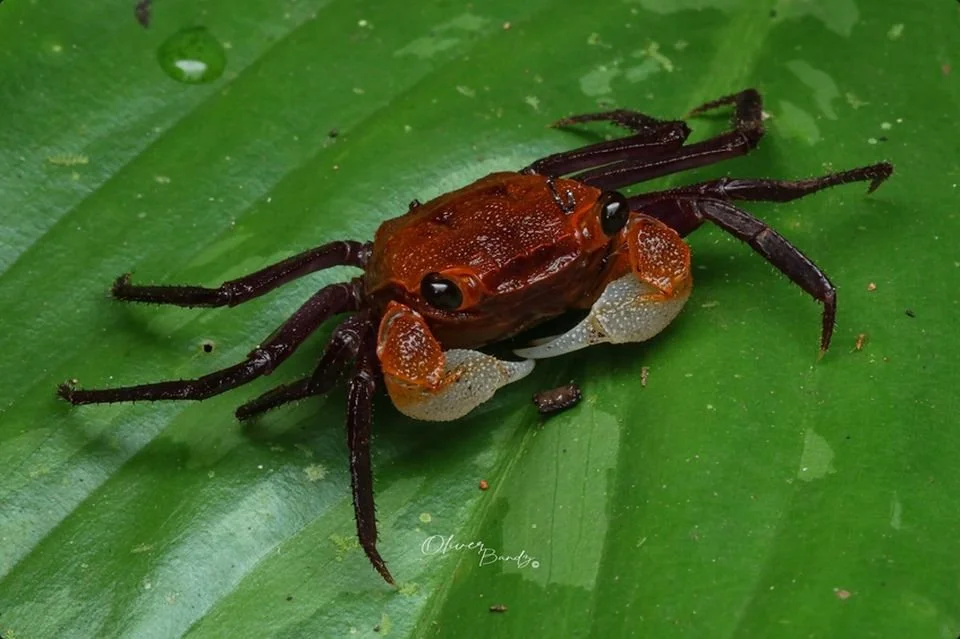
Scientifically Described: Yes
Availability in trade: Yes
Discoverer: P.K.L.Ng, 1992
Other common names:
Activity:
Difficulty Level:
Visible differences to other species:
Distribution area/Locality: Tawau Hills Park - Sabah, Borneo, Malaysia
Food preferences:
Habitat preferences: Found on the tropical forest floor, near watercourses.
Enjoys climbing shrubs and does so frequently.Additional findings:
Research:
Image Source: https://inaturalist.org/ and The freshwater crabs of Danum Valley Conservation Area in Sabah, East Malaysia, with a description of a new species of Thelphusula Bott, 1969 (Crustacea, Brachyura, Gecarcinucidae, Potamidae, Sesarmidae) - Peter K. L. Ng, Paul Y. C. Ng
Full Species Profile: Coming Soon
Geosesarma sarawakense


Scientifically Described: Yes
Availability in trade: No
Discoverer: Serène, 1968
Other common names:
Activity:
Difficulty Level:
Visible differences to other species:
Distribution area/Locality: Sarikei – Sibu - Western Sarawak – Malaysia
Food preferences:
Habitat preferences: Near watercourses. Tropical forest. Digs burrows. Lowland species. Found in marshes. A true swamp species.
Additional findings:
Research:
Image Source: https://panzerwelten.de/
Full Species Profile: Coming Soon
Geosesarma scandens


Scientifically Described: Yes
Availability in trade: No
Discoverer: P.K.L.Ng, 1986
Other common names:
Activity:
Difficulty Level:
Visible differences to other species:
Distribution area/Locality: Fraser’s Hill, Pahang – Malaysia
Food preferences:
Habitat preferences: Found in tropical forests, this mountain species enjoys climbing.
Occasionally found in pitcher plants.Additional findings:
Research:
Image Source: https://www.inaturalist.org/observations/256775044
Full Species Profile: Coming Soon
Geosesarma schubarti
Scientifically Described:
Availability in trade:
Discoverer:
Other common names:
Activity:
Difficulty Level:
Visible differences to other species:
Distribution area/Locality:
Food preferences:
Habitat preferences:
Additional findings:
Research:
Image Source:
Full Species Profile:
Geosesarma sekop
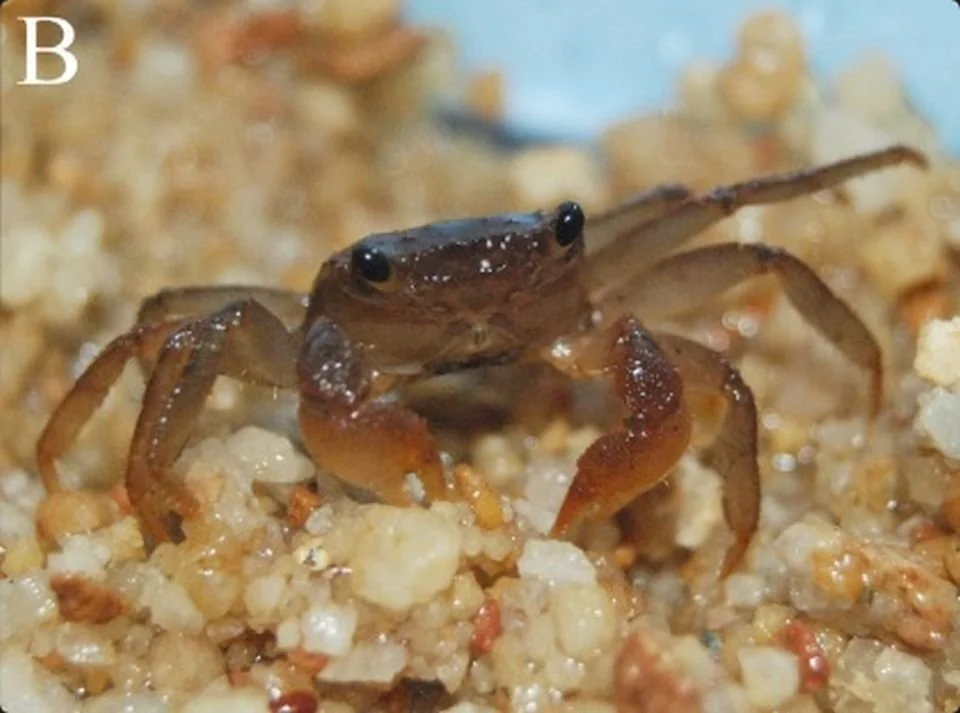
Scientifically Described: Yes
Availability in trade: No
Discoverer: P.K.L.Ng & Wowor, 2019
Other common names:
Activity:
Difficulty Level:
Visible differences to other species:
Distribution area/Locality: Bogor and Sukabumi Regencies, West Java, in Gunung Bunder and Kawahratu Resorts of Mount Halimun Salak National Park, Indonesia
Food preferences:
Habitat preferences: Tropical forest floor. Near streams. Moss and cliffs by streams. Mountain species.
Additional findings:
Research:
Image Source: The vampire crabs of Java, with descriptions of five new species from Mount Halimun Salak National Park, West Java, Indonesia (Crustacea: Brachyura: Sesarmidae: Geosesarma) - Peter K. L. Ng & Daisy Wowor
Full Species Profile: Coming Soon
Geosesarma serenei


Scientifically Described: Yes
Availability in trade: No
Discoverer:
Other common names:
Activity:
Difficulty Level:
Visible differences to other species:
Distribution area/Locality: Maxwell Hill, Bukit Larut, Perak, Malaysia
Food preferences:
Habitat preferences: Tropical Forest. It is found on embankments, covered with vegetation.
Additional findings: They may have more than one colour, Orange or Yellow (to be confirmed)
Research:
Image Source: iNaturalist
Full Species Profile:
Geosesarma sinuofrontatum
Scientifically Described:
Availability in trade:
Discoverer:
Other common names:
Activity:
Difficulty Level:
Visible differences to other species:
Distribution area/Locality:
Food preferences:
Habitat preferences:
Additional findings:
Research:
Image Source:
Full Species Profile:
Geosesarma sodalis
Scientifically Described:
Availability in trade:
Discoverer:
Other common names:
Activity:
Difficulty Level:
Visible differences to other species:
Distribution area/Locality:
Food preferences:
Habitat preferences:
Additional findings:
Research:
Image Source:
Full Species Profile:
Geosesarma solomonense
Scientifically Described:
Availability in trade:
Discoverer:
Other common names:
Activity:
Difficulty Level:
Visible differences to other species:
Distribution area/Locality:
Food preferences:
Habitat preferences:
Additional findings:
Research:
Image Source:
Full Species Profile:
Geosesarma spectrum


Scientifically Described: Yes
Availability in trade: No
Discoverer: P.Y.C. Ng & P.K.L. Ng, 2019
Other common names:
Activity:
Difficulty Level:
Visible differences to other species:
Distribution area/Locality: Ulu Temburong National Park, Brunei Darussalam
Food preferences:
Habitat preferences: Found on the tropical forest floor, near streams and water sources.
They enjoy digging burrows, and young individuals are sometimes found hiding in pitcher plants.Additional findings:
Research:
Image Source: http://inaturalist.org/ and Ng, P. Y. C., & Ng, P. K. L. (2019). Geosesarma spectrum, a new species of semiterrestrial vampire crab (Crustacea: Decapoda: Brachyura: Sesarmidae) from Brunei Darussalam, Borneo. Zootaxa, 4614(3): 529–540.
Full Species Profile: Coming Soon
Geosesarma starmuehlneri
Scientifically Described:
Availability in trade:
Discoverer:
Other common names:
Activity:
Difficulty Level:
Visible differences to other species:
Distribution area/Locality:
Food preferences:
Habitat preferences:
Additional findings:
Research:
Image Source:
Full Species Profile:
Geosesarma sukabumi


Scientifically Described: Yes
Availability in trade: No
Discoverer: P.K.L. Ng & Wowor, 2019
Other common names:
Activity:
Difficulty Level:
Visible differences to other species:
Distribution area/Locality: Sukabumi Regency, West Java, at Gunung Koneng Resort of Mount Halimun Salak National Park, Indonesia.
Food preferences:
Habitat preferences: Tropical forest floor, near streams. On slopes in leaf litter under plants. Quite a shy species that spends most of it’s time on the ground.
Additional findings:
Research:
Image Source:
Full Species Profile: Coming Soon
Geosesarma sumatraense
Scientifically Described:
Availability in trade:
Discoverer:
Other common names:
Activity:
Difficulty Level:
Visible differences to other species:
Distribution area/Locality:
Food preferences:
Habitat preferences:
Additional findings:
Research:
Image Source:
Full Species Profile:
Geosesarma sylvicola
Scientifically Described:
Availability in trade:
Discoverer:
Other common names:
Activity:
Difficulty Level:
Visible differences to other species:
Distribution area/Locality:
Food preferences:
Habitat preferences:
Additional findings:
Research:
Image Source:
Full Species Profile:
Geosesarma tagbanua


Scientifically Described: Yes
Availability in trade: No
Discoverer: Manuel-Santos, P.K.L. Ng & Freitag, 2016
Other common names:
Activity:
Difficulty Level:
Visible differences to other species: It has really long legs compared to other species.
Distribution area/Locality:
Food preferences:
Habitat preferences: Found on the tropical forest floor, near streams. Also inhabits limestone caves within forests. Looking at it’s legs it’s probably a really good climber.
Additional findings:
Research:
Image Source: vk.com
Full Species Profile:
Geosesarma sp Tomato


Scientifically Described: No
Availability in trade: Yes
Discoverer:
Other common names: Tomato, Ruby Red, Blood Red
Activity: Mostly Crepuscular, Nocturnal
Difficulty Level: Easy
Visible differences to other species: Red legs and claws, top of the carapace is red, the underside is darker.
Distribution area/Locality: Java, Indonesia
Food preferences: Will eat nearly all commercial fish foods but really enjoys hunting and eating live foods like isopods, crickets, springtails, worms etc. Really likes boiled peas and fresh shrimp.
Habitat preferences: The forest floor in burrows near bodies of water and streams. Though they will also climb quite a lot. Semi-social in bigger groups but will fight other males regularly.
Additional findings: Quite a shy species as well and likes to spend a lot of time in burrows in the soil.
Research:
Image Source: https://www.garnelio.de/ and IndoorEcosystem
Full Species Profile: Coming Soon
Geosesarma ternatense
Scientifically Described:
Availability in trade:
Discoverer:
Other common names:
Activity:
Difficulty Level:
Visible differences to other species:
Distribution area/Locality:
Food preferences:
Habitat preferences:
Additional findings:
Research:
Image Source:
Full Species Profile:
Geosesarma teschi
Scientifically Described:
Availability in trade:
Discoverer:
Other common names:
Activity:
Difficulty Level:
Visible differences to other species:
Distribution area/Locality:
Food preferences:
Habitat preferences:
Additional findings:
Research:
Image Source:
Full Species Profile:
Geosesarma tiomanicum


Scientifically Described: Yes
Availability in trade: Yes
Discoverer: P.K.L. Ng, 1986
Other common names: Disco, Carnaval, Red Carnaval, Disco Orange
Activity:
Difficulty Level:
Visible differences to other species: These guys are one of the biggest of all the “known” Geosesarma species to date and are probably the most aggressive as well. While normal geosesarma species can be kept in a ratio of 3 crabs per 5 gallons (25 litres). It’s best to double that rule for Geosesarma Tiomanicum to keep them in at least a 10-12 gallon tank.
Distribution area/Locality: Pulau Tioman, Malaysia
Food preferences: Loves live foods of any kind but will take most commercial fish foods.
Habitat preferences: The forest floor in burrows near bodies of water and streams. Though they will also climb quite a lot. Semi-social in bigger groups but will fight other males regularly.
Additional findings: One of the most shy species of Geosesarma that is extremely nocturnal, though captive bred crabs are a lot less shy and will come out during the day.
They may also have one of the longest lifespans, with a reported case from the U.S. of a large male living nearly 4 years. It was estimated to be close to a year old at the time of purchase. This is more than double the typical lifespan recorded for Geosesarma vampire crabs.
Research:
Image Source: https://www.garnelio.de/
Full Species Profile: Coming Soon
Geosesarma todaeng

Scientifically Described: Yes
Availability in trade: No
Discoverer: Ng, Yeesin & Promdam, 2023
Other common names:
Activity:
Difficulty Level:
Visible differences to other species:
Distribution area/Locality: Burret - Swamps, Narathiwat, Thailand
Food preferences:
Habitat preferences: Swamps, lowland swamp forests. Excellent climbers, often found on palm trees.
Additional findings:
Research:
Image Source: A New Species of Vampire Crab (Crustacea: Brachyura: Sesarmidae: Geosesarma) from a Freshwater Swamp Forest in Narathiwat Province, Southern Thailand, with a Note on Geosesarma serenei Ng, 1986 - PETER K. L. NG1, PUN YEESIN AND RUEANGRIT PROMDAM
Full Species Profile: Coming Soon
Geosesarma vicentense
Scientifically Described:
Availability in trade:
Discoverer:
Other common names:
Activity:
Difficulty Level:
Visible differences to other species:
Distribution area/Locality:
Food preferences:
Habitat preferences:
Additional findings:
Research:
Image Source:
Full Species Profile:
GEOSESARMA SP VIOLET TRICOLOUR


Scientifically Described: No
Availability in trade: Yes
Discoverer:
Other common names: Tricolor, Bicolor, Black Eye, Carnaval, Denerli
Activity:
Difficulty Level:
Visible differences to other species:
Distribution area/Locality: Java, Indonesia
Food preferences:
Habitat preferences: Tropical forest floor, near streams and water sources.
Additional findings:
Research:
Image Source:
Full Species Profile:
Geosesarma sp Volcano

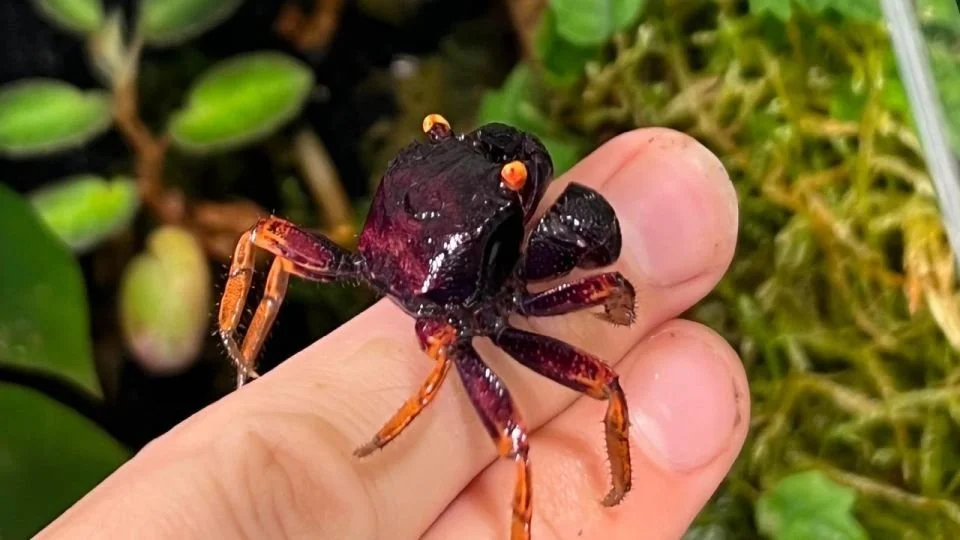


Scientifically Described: No
Availability in trade: Yes
Discoverer:
Other common names: Geosesarma DareDevil
Activity: Mostly Crepuscular, Nocturnal
Difficulty Level: Easy
Visible differences to other species: Sometimes the claws are purple with tiny orange tips, other times they are almost jet black.
Distribution area/Locality: West Java Indonesia.
Food preferences: Pretty much the same as all other Geosesarma species and will eat most commercial fish foods but live and dried insects are highly suggested for their dietary needs.
Habitat preferences: They seem to spend most of their time hiding in and around the shoreline near the water section. But will explore during the night.
Additional findings:
Research:
Image Source: Instagram:@greenhellexotics Store: Greenhellexotics and https://www.garnelio.de/
Full Species Profile: Coming Soon
Geosesarma WONGI

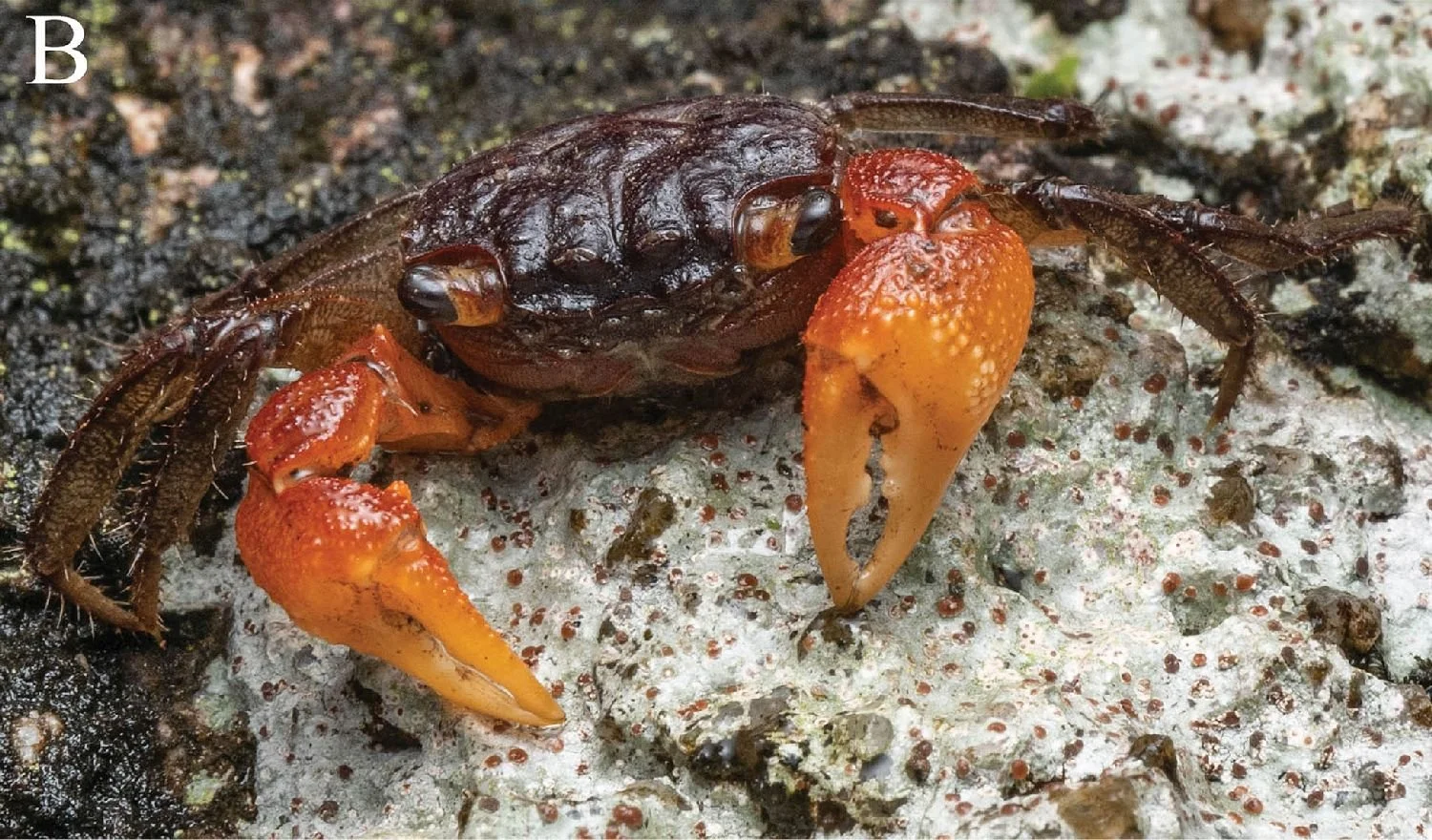
Scientifically Described: Yes
Availability in trade: No indication of presence in the aquarium or wildlife trade.
Discoverer: Peter K. L. Ng (2025) (species named wongi in honour of Wong Tet Seng, who helped arrange collection)
Other common names: None reported. No vernacular or trade names provided.
Activity: Mostly Crepuscular, Nocturnal
Difficulty Level: Not reported. No husbandry or captive-care information provided in the paper.
Visible differences to other species:
Distinctive coloration: dark brown carapace and legs with bright dark-orange chelipeds and lighter orange fingers in adult males.
Rectangular carapace wider than long with prominent low rounded tubercles and granules.
Adult male chela with a very prominent transverse crista on the inner surface.
Dactylus with a large median molariform tooth and 15–17 small sharp granules on the dorsal margin.
Pollex with two submolariform teeth on the proximal cutting edge.
Male pleon proportionately wide, especially somite 6.
Male first gonopod (G1) with an elongate, spatuliform distal chitinous part bearing a distinct median cleft, separating it from closely related species (G. peraccae, G. cataracta).
Distribution area/Locality: Tapah Hills, Batang Padang area, Perak, Peninsular Malaysia (550 m above sea level.)
Food preferences: Not reported. Probably similar to most other Geosesarma species.
Habitat preferences: Semiterrestrial freshwater species. Collected in forested hill areas; exact microhabitat not specified. Found sympatrically with Geosesarma malayanum. Related species often occur near damp areas and waterfalls.
Additional findings:
This is the 13th species of Geosesarma reported from Peninsular Malaysia.
Closest morphological relatives are G. peraccae and G. cataracta.
Adult males exhibit size-related variation in chela morphology.
The study also re-examined G. cataracta, showing its type series was mixed and included a non-Geosesarma species.
Research: ZooKeys Ng, P. K. L. (2025). Geosesarma wongi sp. nov., a distinctive new species of semiterrestrial crab from Tapah Hills in Perak, Peninsular Malaysia; with notes on G. peraccae and G. cataracta.
Focus: comparative taxonomy, morphology, freshwater sesarmid crabs of Southeast Asia.Image Source: Photographs by Francis Seow-Choen (live coloration) and additional figures from the original publication.
Full Species Profile: Pending
Geosesarma sp Yellow Eye


Scientifically Described: No
Availability in trade: Yes
Discoverer:
Other common names: Blue devil, White arm, Blue diamond, Golden eye
Activity: Mostly Crepuscular, Nocturnal
Difficulty Level: Easy
Visible differences to other species:
Distribution area/Locality: Java, Indonesia
Food preferences: Pretty much the same as all other Geosesarma species and will eat most commercial fish foods but live and dried insects are highly suggested for their dietary needs.
Habitat preferences: They seem to spend most of their time hiding in and around the shoreline near the water section. But will explore during the night.
Additional findings:
Research:
Image Source: https://www.garnelio.de/ and @millenniumsnakes
Full Species Profile: Coming Soon

SUPPORT OUR WORK &
GRAB A POSTER
If you’d like a poster of the most popular vampire crab species in the hobby you can check out our store.