
HIGH TECH VS LOW TECH VAMPIRE CRAB SETUPS

I bet you can’t tell which is high-tech and which is low-tech.
When setting up a vampire crab ecosystem, you generally have two different paths to choose from. You can go all out with a high-tech paludarium that is fully automated and packed with advanced gear, or you can keep things simple with a low-tech setup that covers only the essentials. Most people end up somewhere in the middle, balancing cost, effort, and reliability.
In this guide, we’ll break down the pros and cons of both high-tech and low-tech vampire crab tank setups, along with the equipment each type typically requires. Product links are included for reference, mainly to help you get a general sense of pricing. Once you know the tank size you want, you can start picking out other equipment that suits your tank size.
Important:
Before setting up a tank, make sure you fully understand the needs of vampire crabs. Read our care guide first if you haven’t already. It’s essential to know what you’re getting into.
Tank Size Recommendation:
A 5-gallon (20-litre) tank is the absolute minimum size for keeping vampire crabs, but it is also the most difficult to maintain successfully. If you are new to the hobby, it is strongly recommended that you start with a 10-gallon (50-litre) tank. This will be easier for you and provide a more stable environment for your crabs.
Low Tech vs High Tech Paludariums
Just like with aquarium setups, paludariums can be divided into two categories: low-tech and high-tech. Each has its own advantages and disadvantages depending on your goals, budget, and experience level. I’ve been doing this for a long time, and I personally prefer low-tech tanks, but I do see the appeal of going all out sometimes.
Low Tech Paludariums
Pros:
Lower cost due to minimal equipment (basic lighting, no filtration, and often no water feature)
Easier to set up and maintain, making them ideal for beginners or casual hobbyists
Fewer technical components mean a lower risk of system failures
Lower energy consumption and fewer ongoing expenses
Cons:
Plant growth may be slower and colours less vibrant, especially with low-quality lighting
Lack of automation means more manual maintenance, which can be a problem if you travel
What do you need for a LOW-tech vampire crab tank?
First, you will need a tank, and there are a few styles to choose from and a million different sizes. So, pick something that works well in your space.
Aquarium-style tanks are simply an aquarium, this works great, but you’ll need to get a lid so your crabs don’t escape.
Terrarium-style tanks are usually front-open tanks, but sometimes they are just aquariums with mesh lids.
Vertical-style tanks are tall front-open tanks and are quite popular, but aren’t suited for 99% of vampire crab species, so unless you are getting one of the arboreal species, skip these.
Once you’ve picked out your tank, all you night is a light and a heater. The rest is all entirely optional, including a filter or pump.
Below is a list of links you can check out if you’re curious about your options.
Aquarium-style landscape tanks
5 gallons (20 litres)
10 gallons (38 litres)
15 gallons (55 litres)
20 gallons (75 litres)
Terrarium-style landscape tanks
5 gallons (20 litres) is very hard to find. (avoid 12x12x12 cubes)
12 gallons (38 litres)
15 gallons (55 litres)
20 gallons (75 litres)
Vertical-style tanks
25 gallons (95 litres)
50 gallons (190 litres)
General Equipment
Light (Required)
Heater (Required)
Pump (Optional)
Filter (Optional)
High Tech Paludariums
Pros:
Can support a wider variety of plants and animals, including more demanding tropical species
Improved plant growth and colouration thanks to strong lighting, CO₂ injection, and climate control systems (note: CO₂ injection into water is less common in paludariums)
Greater control over environmental conditions, including misting, humidity, and lighting cycles
A high degree of automation can allow for extended periods away without needing daily care
Cons:
Higher upfront and ongoing costs due to equipment such as CO₂ systems, LED lighting, and automated controllers
More complex to design and maintain, which may lead to micromanaging or obsession over system stats
Greater reliance on electronics, which can fail and cause rapid declines in tank stability or animal health
High-performance lighting systems typically consume more power and increase operating costs
What do you need for a high-tech vampire crab tank?
First and most importantly, you will need a tank, and there are a few styles to choose from.
Aquarium-style tanks are simply an aquarium, this works great, but you’ll need to get a lid so your crabs don’t escape.
Terrarium-style tanks are usually front-open tanks, but sometimes they are just aquariums with mesh lids.
Vertical-style tanks are tall front-open tanks and are quite popular, but aren’t suited for 99% of vampire crab species, so unless you are getting one of the arboreal species, skip these.
Since high-tech tanks have lots of different options, you can basically add things on as you think you need them. Of all the things listed, I would spend a decent amount of money on a good light with colour and intensity options. This will allow you to set ramp-up and ramp-down timers and certain colours for certain times of the day or night. For example, red or blue for a few hours at night.
Below is a list of links to equipment that will help you on your path to a high-tech Vampire Crab tank. The first thing you need to pick is your tank, then you can work out the size of the light, filter, pump, heater, fogger, mister, etc. And remember, you don’t need everything, and you don’t need it all at once. A light and a heater are the only things that are non-negotiable.
Aquarium-style landscape tanks
5 gallons (20 litres)
10 gallons (38 litres)
15 gallons (55 litres)
20 gallons (75 litres)
Terrarium-style landscape tanks
5 gallons (20 litres) is very hard to find. (avoid 12x12x12 cubes)
12 gallons (38 litres)
15 gallons (55 litres)
20 gallons (75 litres)
Vertical-style tanks
25 gallons (95 litres)
50 gallons (190 litres)
General Equipment
Light (Required)
Pump
Filter
Heater (Required)
Fogger
Misting system
Ventilation system
Temperature controller
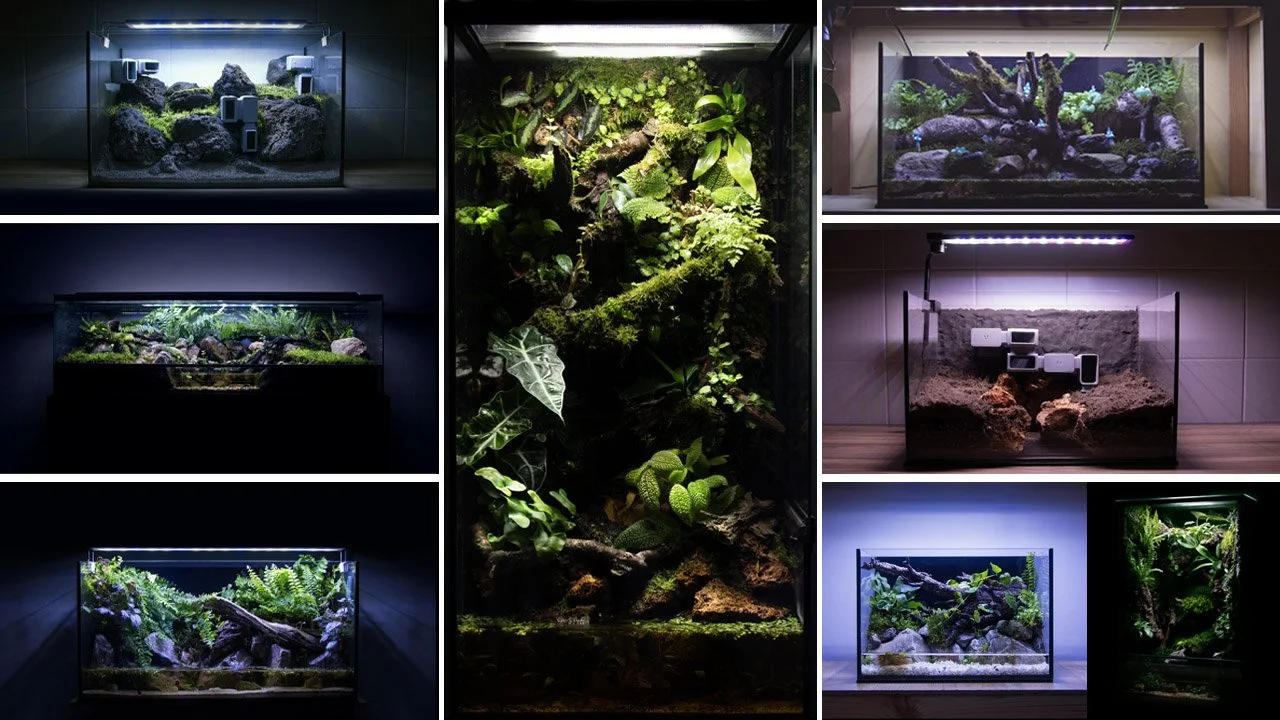
All of these tanks except for the tall central one are low-tech tanks. So you can do a lot with a little sometimes.