
THE BEST VAMPIRE CRAB SPECIES FOR VERTICAL TANKS

Geosesarma Vampire CRAB Species for Vertical paludariums
In this article, we’re going to look at the best species of vampire crabs for vertical-style setups. While all Geosesarma Vampire crab species love to climb and will climb just about anything, including glass, some are known to be arboreal species in the wild. Which means they prefer to spend most of their time in the canopy rather than on the ground. Before you get ahead of yourself, there are quite a few things you need to consider and plan for first.
Geosesarma Vampire CRAB Species for Vertical paludariums
While there are over 75 different types of Geosesarma Vampire Crab currently known, more and more are being discovered all the time. Sadly, next to no information is being gathered about their specific environments and behaviour.
As of writing, there are 4 known species of Geosesarma crabs in the hobby that prefer to spend their time off the ground. That said, not all of them are “true” arboreal species. True arboreal species molt on land rather than in water.

Geosesarma Notophorum molt on land
Even though the species on this list like to climb and spend more time off the ground, that doesn’t mean you can ignore all of the other basic requirements when keeping them. They still need a large land section with soil (dirt) and a water section to hydrate in and molt. Though as you will find out shortly not all of these species will molt in the water.
Any of these 4 species Vampire Crab species are best suited for vertical-style paludariums, but they can also be kept in standard paludariums as well. It’s just that they like to climb a lot more, and higher than other species, so they will make better use of your entire tank.
Geosesarma notophorum
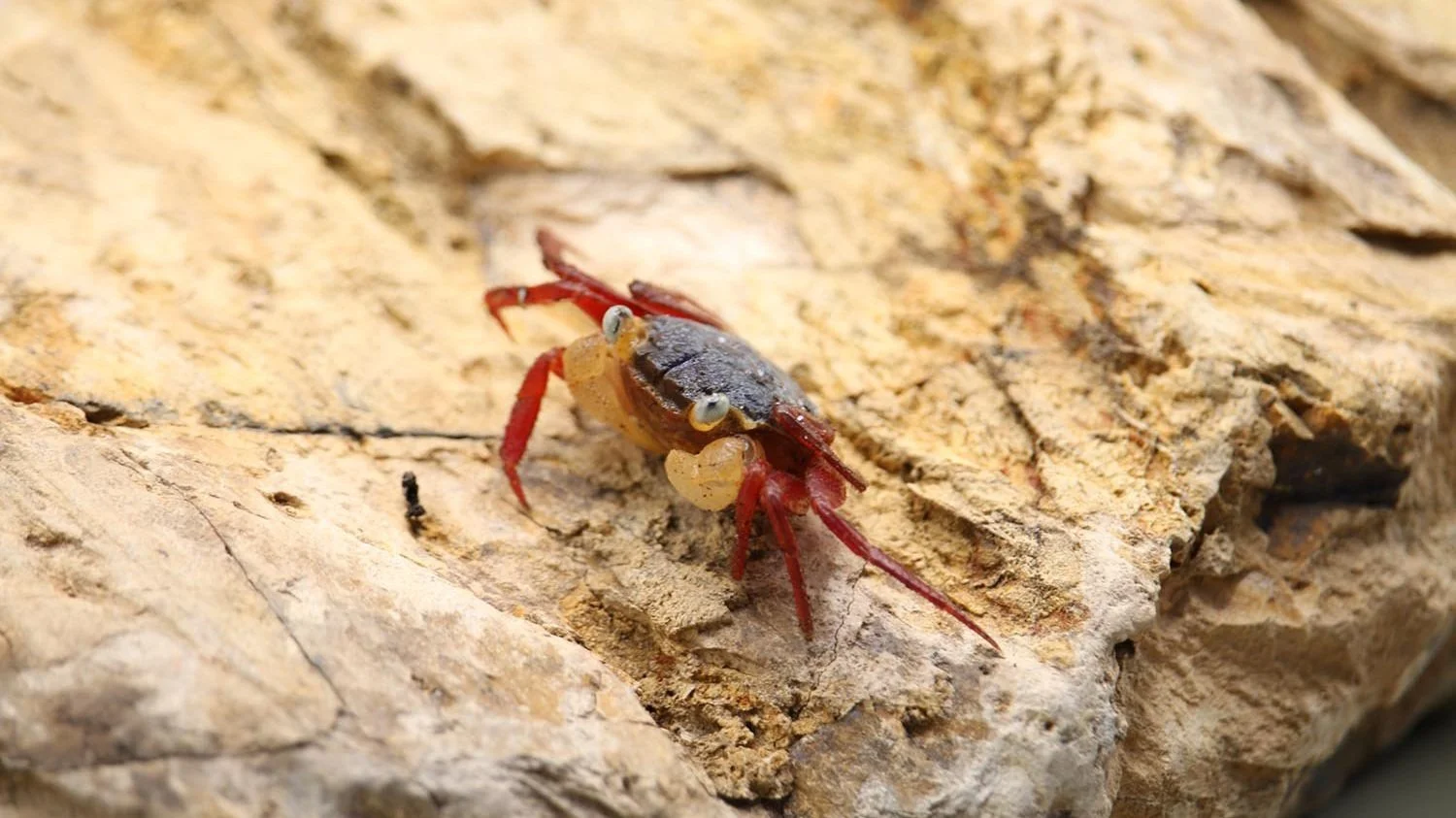
Geosesarma sp. notophorum @milleniumsnakes
Scientifically Described: Yes
Availability in trade: Yes
Discoverer: Ng & C. G. S. Tan, 1995
Other common names: White Mandarin, White Claw
Activity: Mostly Crepuscular, Nocturnal
Difficulty Level: Master
Visible differences to other species: Seem to be quite active during the day. A lot more aggressive than other species. To the point that I would call them hyper-aggressive. They require x2 to x3 the amount of space most other species do to reduce male fighting. I wouldn’t keep them in anything less than an 80x30x30cm enclosure for the best results, and no more than 3 crabs in that space. 1 male and 2 females.
Distribution area/Locality: Pulau Lingga, Indonesia
Food preferences: Will eat nearly all commercial fish foods but really enjoys hunting and eating live foods like isopods, crickets, springtails, worms, etc. The more huntable food you provide, the better.
Habitat preferences: Rarely visit the water section; molt on land. They also like to spend a lot of time in the canopy, so they are great for tall tanks. While we are still experimenting with the ideal ecosystem set up for these crabs, it might be possible to keep them in a vivarium rather than a paludarium. So long as they still have access to small pools of water to keep their gills moist.
Additional findings: To make matters even more confusing, Geosesarma Pontianak (Mandarin) and Geosesarma Notophorum (White Mandarin) are often mixed up, and you'll frequently see them mislabeled under each other's names. So, for clarity, I’ll be sticking to the current naming system used in this guide. Source: Martin Hohle & Dr. Martin Singheiser | Dec 13, 2016 Geosesarma guide Book.
These are some of the most delicate species in the hobby. They have a very, very poor survival rate when shipped. Quite often a 95% mortality rate within the first 4 - 6 weeks. So, if you are planning on getting vampire crabs, I would avoid getting Geosesarma Notophorum as your first choice of vampire crab.
Research:
Image Source: @millenniumsnakes & IndoorEcosystem
Full Species Profile: Geosesarma Notophorum
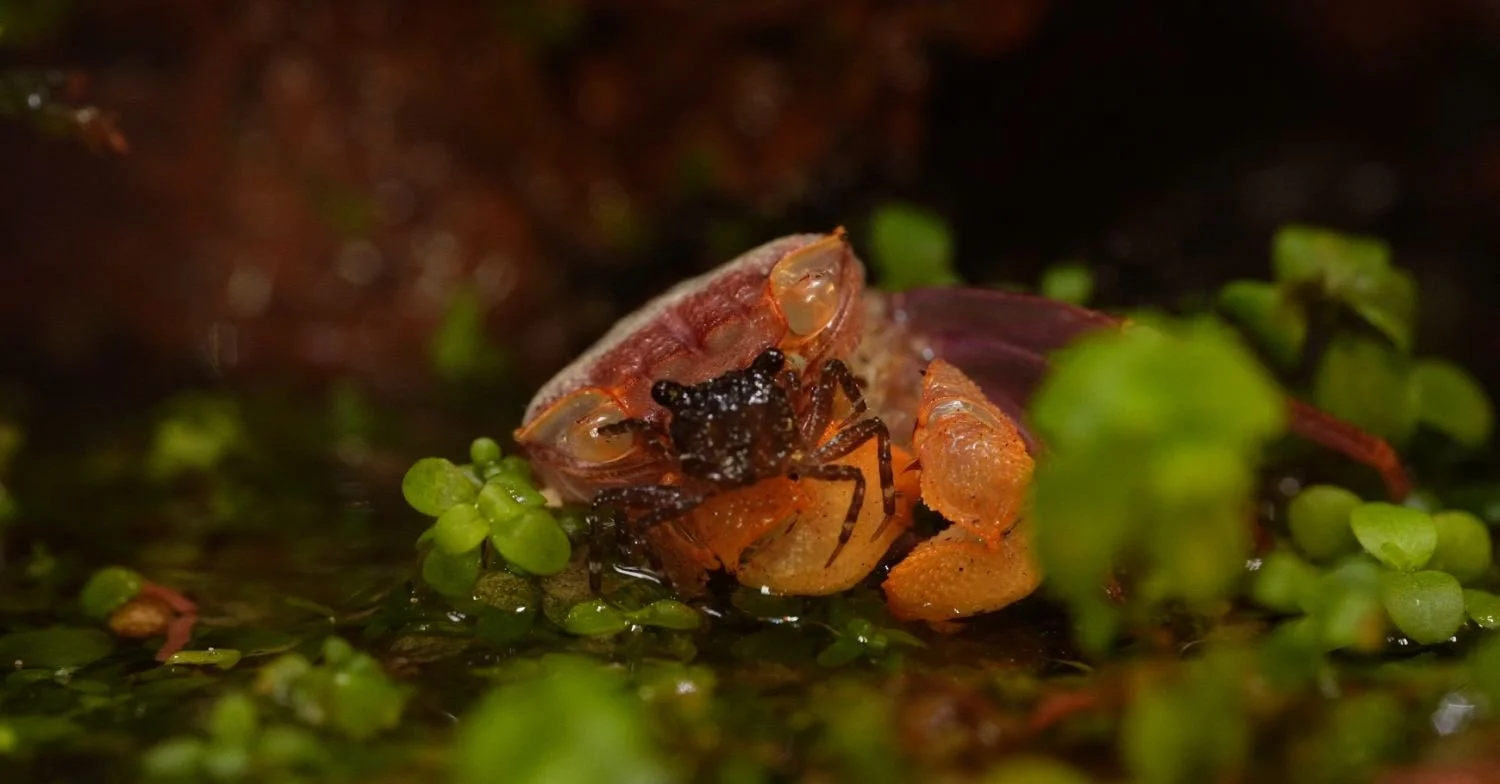
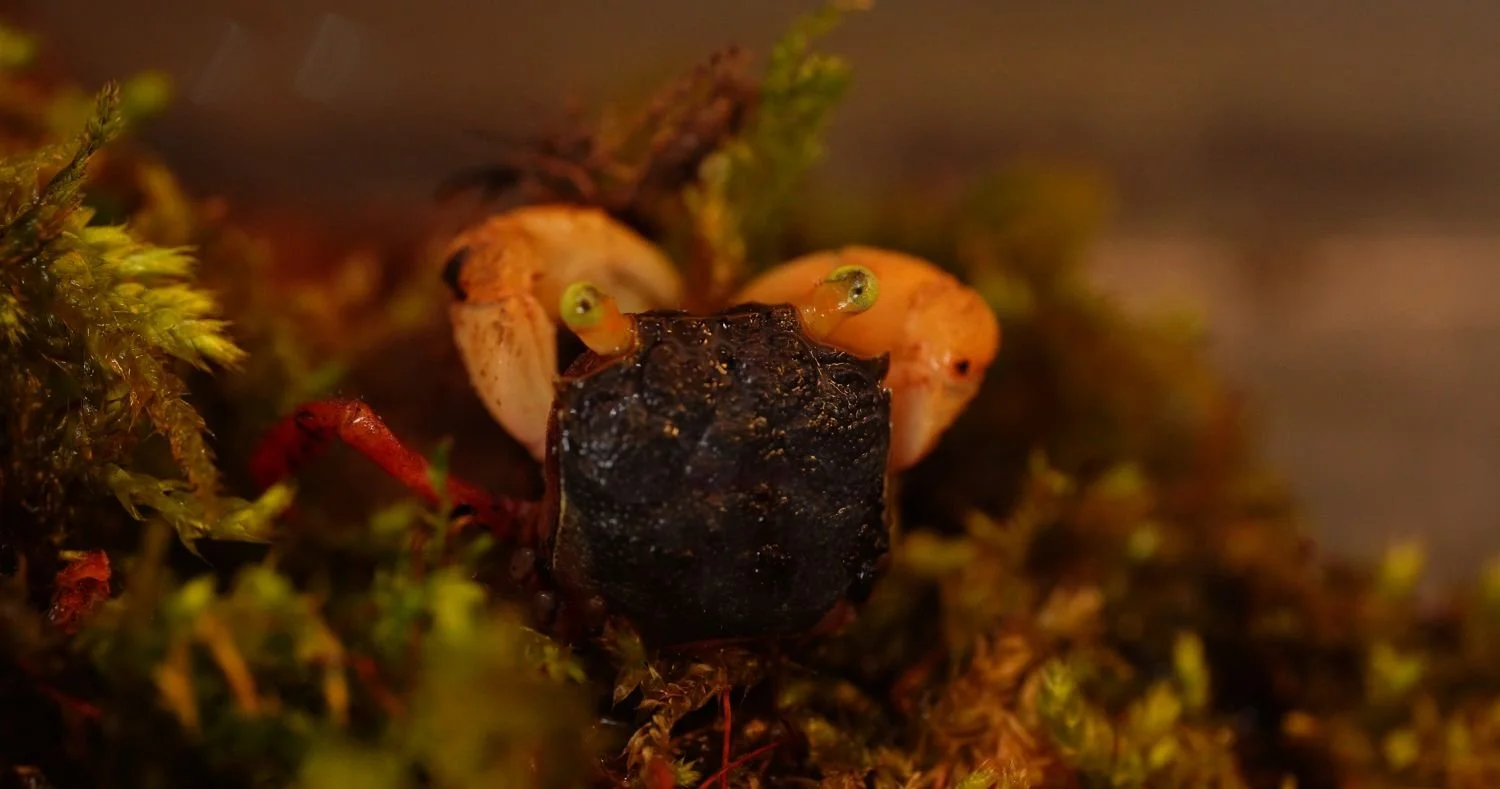
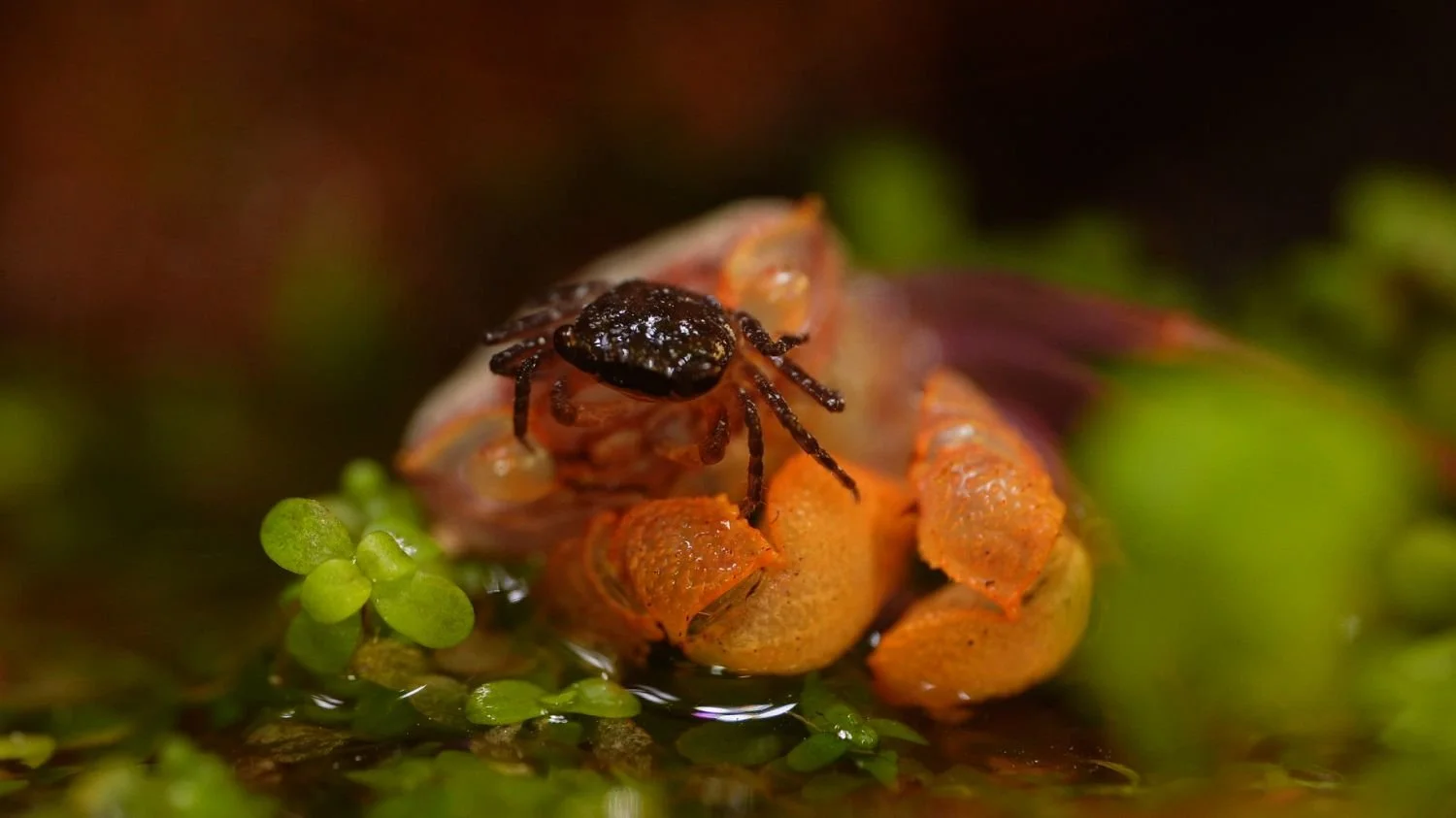
Geosesarma Orchid
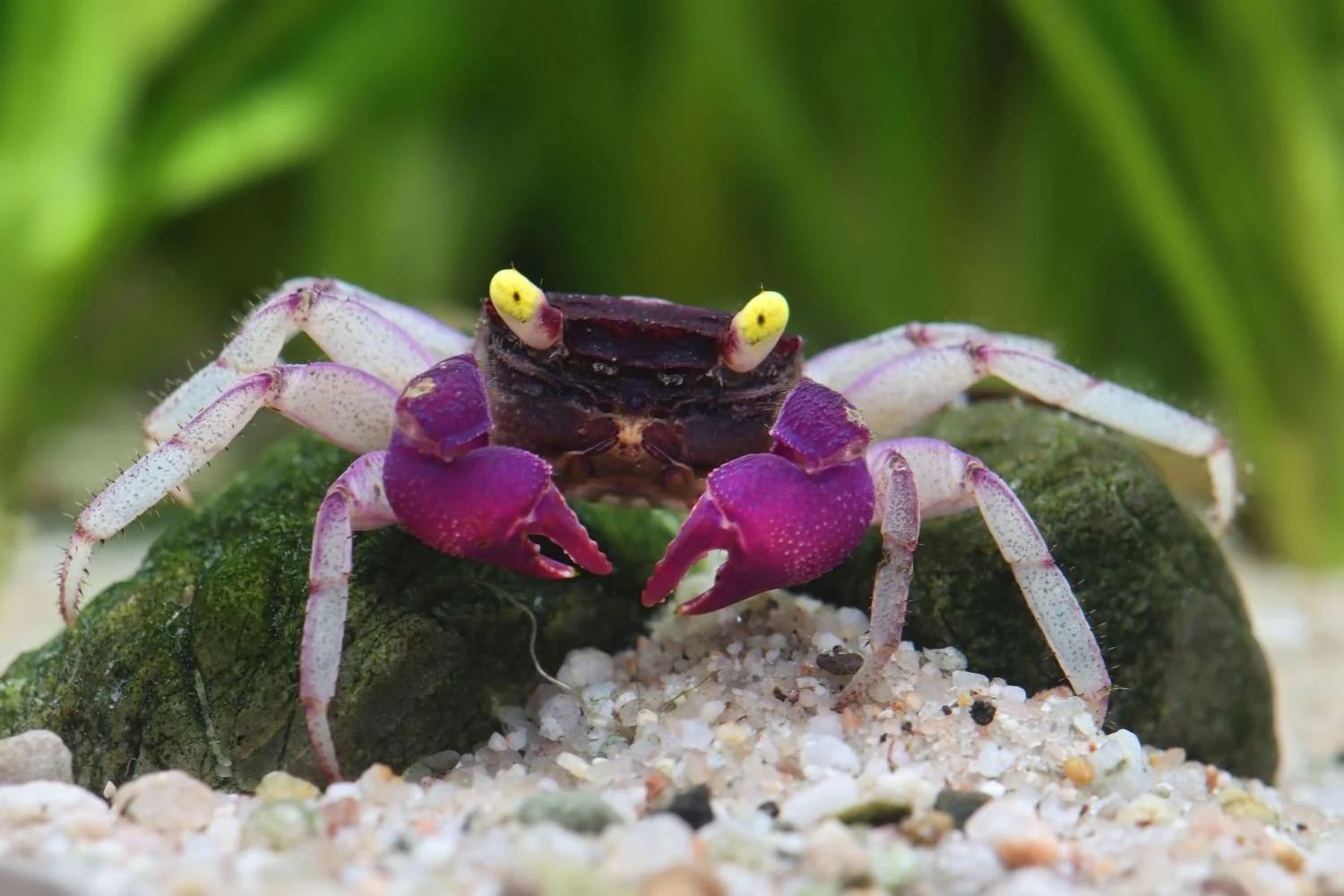
Geosesarma sp. Orchid
Scientifically Described: No
Availability in trade: Yes
Discoverer:
Other common names: Blue devil, Spectrum, Blue ghost, Indigo Blue, Purple diamond
Activity: Mostly Crepuscular, Nocturnal
Difficulty Level: Easy
Visible differences to other species:
Distribution area/Locality: Java, Indonesia
Food preferences: Will eat nearly all commercial fish foods but really enjoys hunting and eating live foods like isopods, crickets, springtails, worms etc.
Habitat preferences: Likes to spend a lot of time in the canopy so are great for tall tanks. But will also spend time on the ground in burrows. It’s a bit of an all-rounder.
Additional findings:
Research:
Image Source: https://www.garnelio.de/
Full Species Profile: Coming Soon
Additional findings: These are a bit of a wild card vertical species as they still molt in the water but have slightly longer legs, which usually signifies they are more likely to have an arboreal element to their existence. Overall, they are probably more of an all-rounder rather than strictly being an arboreal species.
Geosesarma pontianak
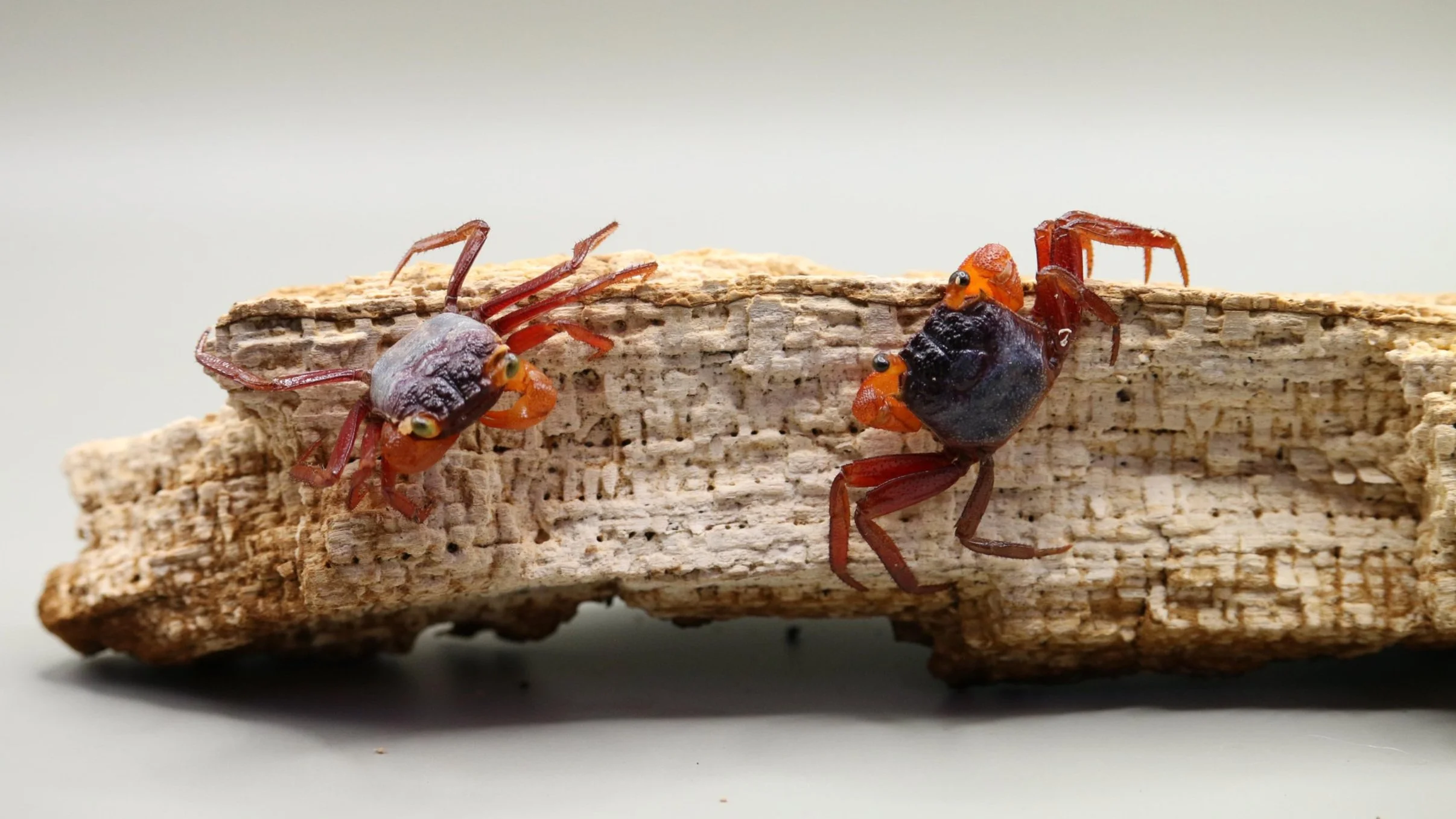
Geosesarma Pontianak Photo: @milleniumsnakes
Scientifically Described: Yes
Availability in trade: Yes
Discoverer: Ng, Peter K. L. (2015)
Other common names: Mandarin
Activity: Mostly Crepuscular, Nocturnal
Difficulty Level: Master
Visible differences to other species:
Distribution area/Locality: North Pontianak – West Borneo, Indonesia
Food preferences: Will eat nearly all commercial fish foods but really enjoys hunting and eating live foods like isopods, crickets, springtails, worms etc.
Habitat preferences: Pontianak molt on land and they also like to spend a lot of time in the canopy so are great for tall tanks. Unlike their similarly named cousin (Notophorum - White mandarin) Pontianak still uses the water section though not all that often.
Additional findings: Geosesarma ambawang and Geosesarma pontianak are very similar, with differences in biological traits. The most noticeable external difference is eye colour: Geosesarma pontianak has bright yellow eyes, while Geosesarma ambawang has lighter, almost white eyes. Additionally, Geosesarma ambawang has a proportionally wider carapace, whereas Geosesarma pontianak has a more square-shaped carapace and longer, slimmer legs.
Due to their resemblance, overlapping geographical range, and occasional misidentification as Geosesarma nothophorum, distinguishing this species from closely related ones, such as Geosesarma ambawang and Geosesarma nothophorum, can be challenging. They are likely to be mixed in the trade.
To make matters even more confusing, Geosesarma Pontianak (Mandarin) and Geosesarma Notophorum (White Mandarin) are often mixed up, and you'll frequently see them mislabeled under each other's names. So for clarity, I’ll be sticking to the current naming system used in this guide. Source: Martin Hohle & Dr. Martin Singheiser | Dec 13, 2016 Geosesarma guide Book.
Research: Link to research paper
Image Source: @millenniumsnakes
Full Species Profile: Coming Soon
Geosesarma sp. Purple Haze

Geosesarma sp Purple Haze
Scientifically Described: No
Availability in trade: Yes
Discoverer:
Other common names: Buricak, Graphite Grey
Activity:
Difficulty Level: Easy
Visible differences to other species:
Distribution area/Locality: Bukit Dewa Kebumen, Central Java, Indonesia
Food preferences:
Habitat preferences: Tropical forest floor, near streams and water sources. Based on its longer than typical legs, it’s likely to be a very good climber and potentially molts on land.
Geosesarma Purple Haze is potentially an arboreal species, as they have slightly longer legs than other geosesarma species and molt on land. But more information needs to be gathered to confirm this.
Additional findings:
Research:
Image Source: https://inaturalist.org/ and https://www.garnelio.de/
Full Species Profile: Coming Soon
Habitat preferences:
Additional findings:
Research: Ongoing
How to Optimise Your Paludarium For Arboreal Vampire Crab Species?
As these four species like to spend more time off the ground, it’s best to incorporate a water feature in your paludarium that has pooling areas. This will allow your crabs to hydrate without having to climb all the way to the bottom of the tank. The pools don’t need to be huge, but they should be big enough to fit a full-sized adult in fully. That means fully submersed, should they want to go for a proper swim.
Other than that, you’re goal should be to replicate a Southeast Asian tropical jungle as best you can. Below is an example if you are lacking inspiration.