
HOW TO BUILD A PALUDARIUM FOR VAMPIRE CRABS
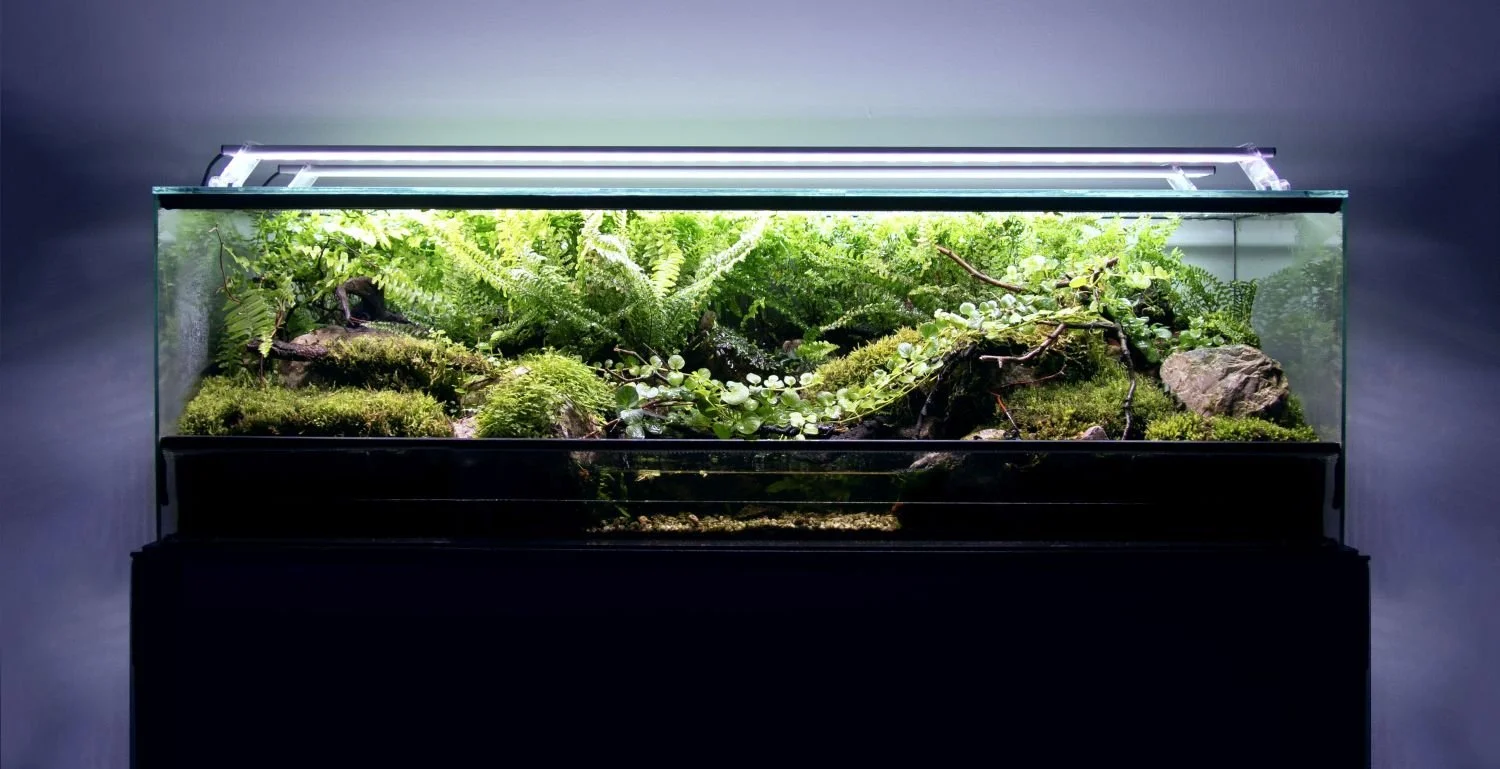
20 gallon long | 90 Liter Vampire Crab Ecosystem
For everyone new to the term, a paludarium is a combination of an aquarium and a terrarium, with both aquatic and terrestrial elements. It is a great option (the only one) for keeping vampire crabs, as it allows for the creation of a humid and heavily planted environment that meets their needs. Below is a full explanation of how to build the perfect enclosure for Vampire Crabs.
TIP: A paludarium is a type of tank that combines elements of both an aquarium and a terrarium, with both water and land areas. For Vampire Crabs, it is recommended to have a ratio of 80% land to 20% water in the tank.
Before you start! Are Vampire Crabs the right pet for you?!
I recently put this video together based on the sheer number of questions I get about keeping vampire crabs. In this video, I answer the top 3 questions that constantly fill my inbox, most of which are from new keeper worried or disappointed with their crab experience. So it’s certainly worth a watch. You can find the article that goes over the same topic here.
BUILDING A PALUDARIUM FOR VAMPIRE CRABS
GETTING STARTED — What you’ll need
Determine the size and location of your paludarium. Consider the size and number of animals you will be keeping, as well as the space and lighting conditions in the location where you plan to set up the tank. Vampire Crabs are best kept in the following numbers: 3 crabs per 5 gallons (1 male, 2 female). Too many males will cause terrible fighting. Bigger tanks and more complex tanks can accommodate more, but this is a safe guideline to start with. As you gain more experience, you will know what works better or worse.
Choose and purchase the necessary equipment and materials. This will include items such as a tank, filter, heater, lighting, substrate, and plants. (more info on those below) You can find a full equipment list here.
Related Reading: Low-Tech vs High-Tech Vampire Crab Paludariums. Which is better?
Minimum Tank Size and Requirements
A minimum tank size of 5 gallons (25 litres) is recommended for vampire crabs. Though there are some species that need way more space than this. You can find a full species list here.
The optimal temperature range for vampire crabs is 22–28°C (71–82°F). Too long above or below this will kill them.
It is important to maintain a pH of 7.5–8.0, a KH of 0–10, and a GH of 4–16 in the tank.
The humidity in the tank should be kept at 75% or higher.
Nitrate levels should be kept lower than 20 ppm.
Vampire crabs have a lifespan of 2 to 2.5 years. Though there are a couple of species that can live up to 4 years (anecdotal)
Make sure to have a lid on the tank, as vampire crabs are exceptionally good climbers. If they escape, they will die.
You can find a full guide to Vampire Crab tank sizes here.

5 Gallon | 25 Liter Vampire Crab Tank. Don't forget a lid!
Ideal Vampire crab Environment
A heavily planted tank with a ratio of 80% land to 20% water is ideal for vampire crabs.
The water section should have a sandy substrate, while the land area should have dry/moist soil that the crabs can burrow into. Bonsai soil mixed with coconut fibre works well. But you can use any soil you like so long as it is free from pesticides and fertilisers.
Provide plenty of places for the crabs to climb and hide, such as taller plants and branches.
Offer a variety of hiding locations in both the water and land areas.
Keep in mind that each crab has a different personality and some may spend more time in the water than others.
Vampire crabs are mostly nocturnal, so a red (best) or blue (second best) RGB light can be useful for observing them at night.
Suggested Plant Ideas
Terrestrial Plants
Pilea Peperomioides
Hypoestes
Climbing Ivy
Asparagus fern
Peace lily
Tradescantia
Dwarf Banana plants
Any type of ferns
All types of moss
Any plant commonly used in a terrarium will also work well.
You can find a full terrestrial plant list here.
Aquatic Plants
Any aquarium plants will work well in the water section of the tank.
Vampire crabs have been observed catching and eating Salvinia (a floating plant) in the water.
Lighting options for viewing Vampire Crabs at night
If you would like to view your vampire crabs when they are out at night this guide is an idea that I quite often use. It is super affordable and looks great. Just don’t leave them running all night! Vampire Crabs do like total darkness.
Vampire Crab Lighting Guide
BUILDING A VAMPIRE CRAB ENCLOSURE (PALUDARIUM)
The following are video guides you can follow for a range of different tank sizes if you are more of a visual learner.
TANK POSITION AND SET UP
First, make sure you have your tank set up in a location that you like. You don’t want to be moving it later on. I highly suggest a position that doesn’t get direct sun or lots of cold air during winter. When you have your spot picked out, set up the light and mount your heater.
Water Circulation (Filter vs NO Filter)
To maintain proper water circulation in the paludarium, a small pump is added. This pump helps move water from one end of the tank to the other without causing flow issues. Connecting tubing to the pump and adding a filter on the intake end is crucial to prevent debris from entering the system. But having a filter or pump isn’t 100% required if you have lots of aquatic plants.
How does this work? Well, the plants do the work of the filter and suck up all the nutrients that build up in the water over time. You will still have to do small 20-30% water changes every 1 to 2 weeks though. Just to make sure everything is safe. You would have to do these anyway, even if you have a filter. I generally make tanks without pumps and filters to make life easier. The less time I have to spend cleaning a filter the better!
Support our work and grab yourself a Vampire Crab poster.


Establishing Land-Water Barrier
Vampire crabs primarily live on land, so it’s important to create an 80% land and 20% water split in the habitat. This is achieved by using rock or wood to build a barrier, ensuring a gradual transition from land to water. Rock is easier than wood, so keep that in mind if you’re new to this process. Take your time with this step as it is important to get it right. If you mess it up it’s hard to fix things once everything else is in place.
Vampire Crab Biotope set up
CREATING THE FALSE BOTTOM (SUBSTRATE SYSTEM)
The next step is to add a false bottom drainage layer. I generally use clay balls, also known as Leca, as they are cheap and lightweight. However, you can also use crushed lava rock or coarse gravel if you can’t find leca. This will serve as a mechanical filter, keeping the future soil layer out of the water. It also provides a home for beneficial bacteria that help maintain water quality through the nitrogen cycle.
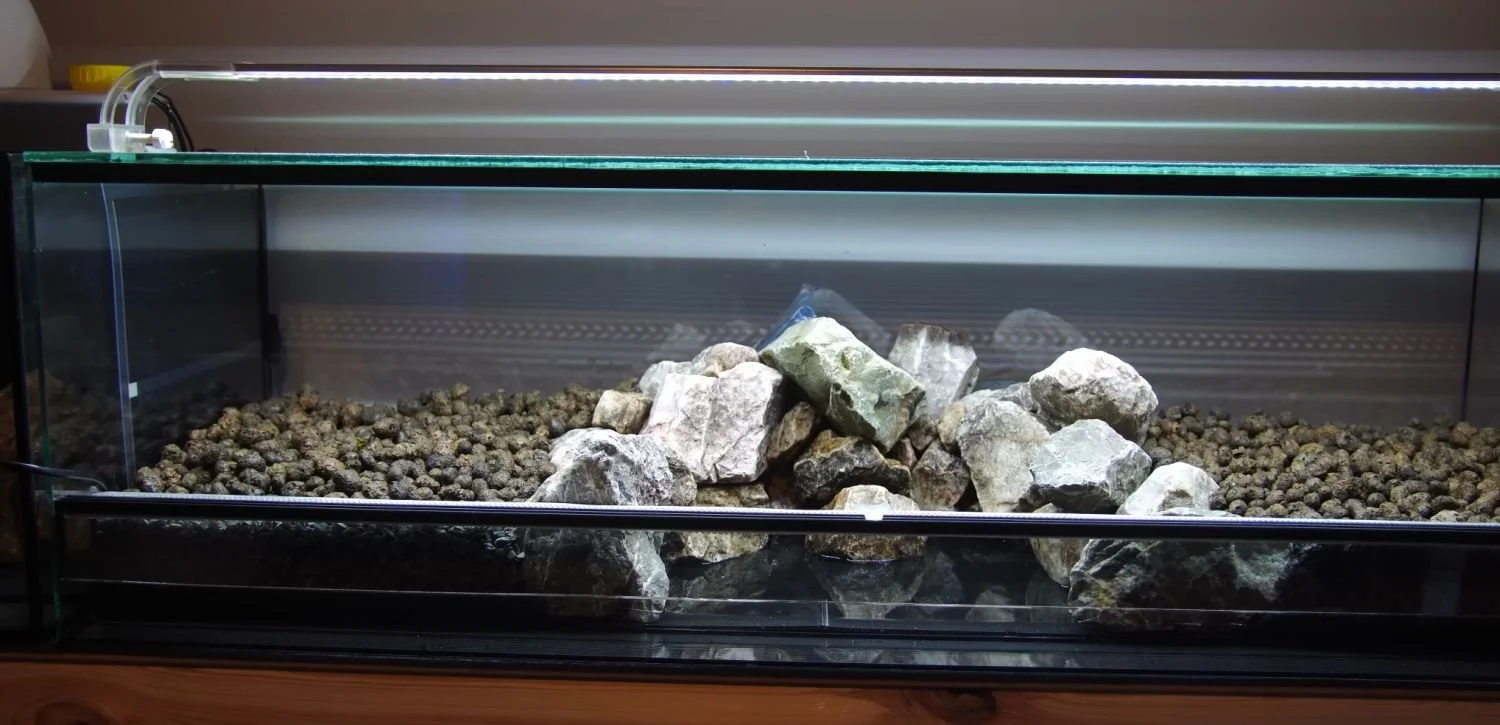
The best substrate for a vampire crab ecosystem
ADDING SOIL TO THE LAND SECTION AND SAND OR GRAVEL TO THE WATER SECTION
Next, you will need to add a barrier material on top of the false bottom that you just made. I generally use weed matting, but you can use window screening or coconut fibre. The goal is to prevent the soil/dirt from getting into the substrate system.

So, place your chosen material down, then add your soil/dirt on top of it. If a little bit of soil gets into the water here and there, that’s not the end of the world, but if a lot does, you will have nutrient and water quality issues. As well as a bad smell.
You can use any kind of soil, even soil from the garden, just make sure it is poison, pesticide and fertiliser free. Also, keep in mind that soil from the garden might contain pests and other critters.
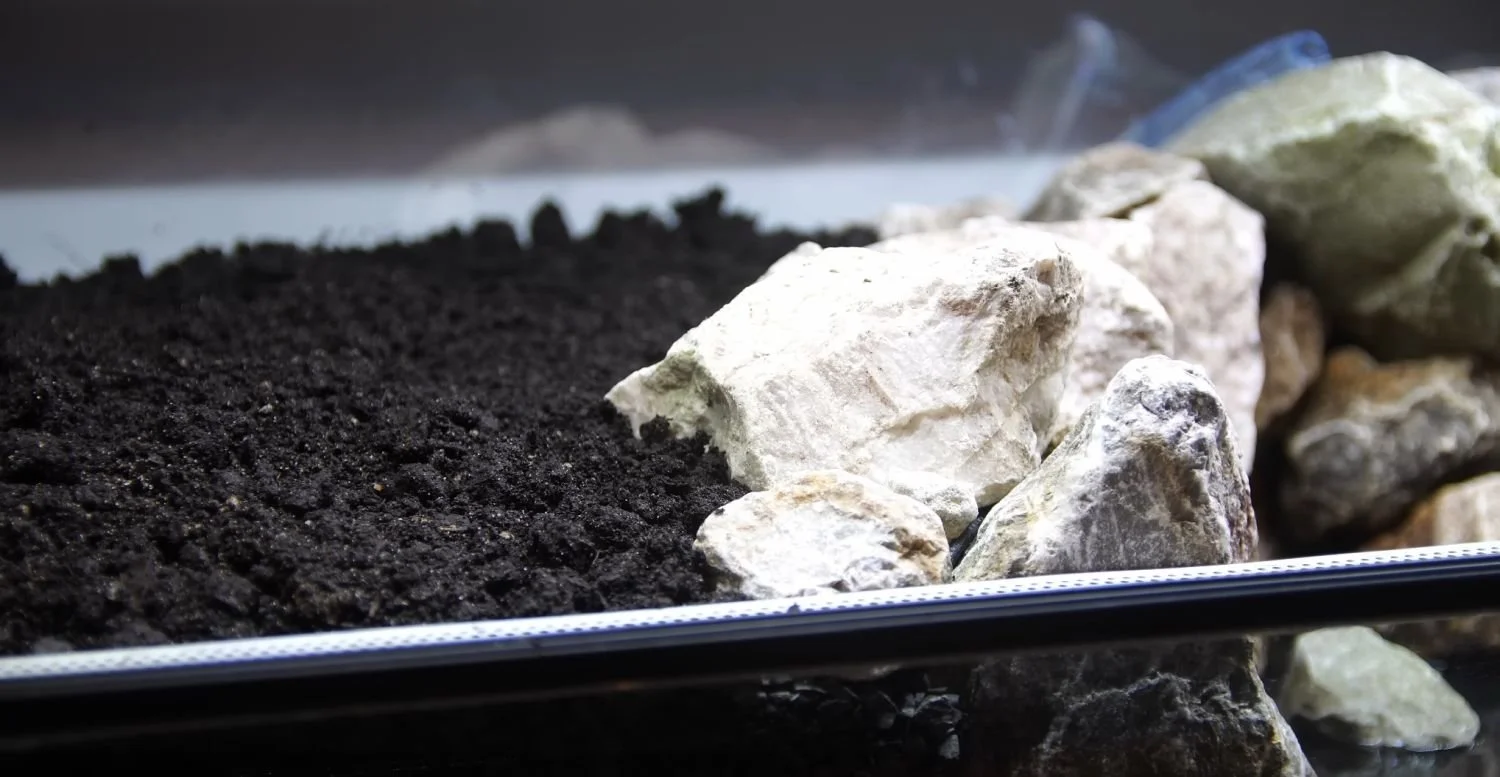
The best soil for a vampire crab ecosystem
The water section is super simple, just pick out a small grained gravel or a colour of sand that you like the look of, then pour it in. Some brands might need a rinse or they will be very dusty.
Adding Hardscape (Rocks & WOOD)
Hardscape elements like logs, branches, sticks and other pieces of wood are added to enhance the natural look of the habitat. These materials can be bought from stores or collected from the forest, but should be soaked in water to remove potential pests. You should also check to make sure you can legally collect stuff in your area awe well.
Plant AND MOSSES
For a paludarium, plant choices are really important. Ferns and mosses are ideal choices, as they love high humidity and damp spaces. But you can certainly choose any species you like, just make sure it is happy with high humidity, potentially having wet feet and that it doesn’t get too big!
Mosses are the same, they generally like a lot of light and a nice steady balance of moisture. Don’t let them dry out too much or get too soggy and wet. Aquatic mosses like Java moss do well on land and in the water which make them a good choice.
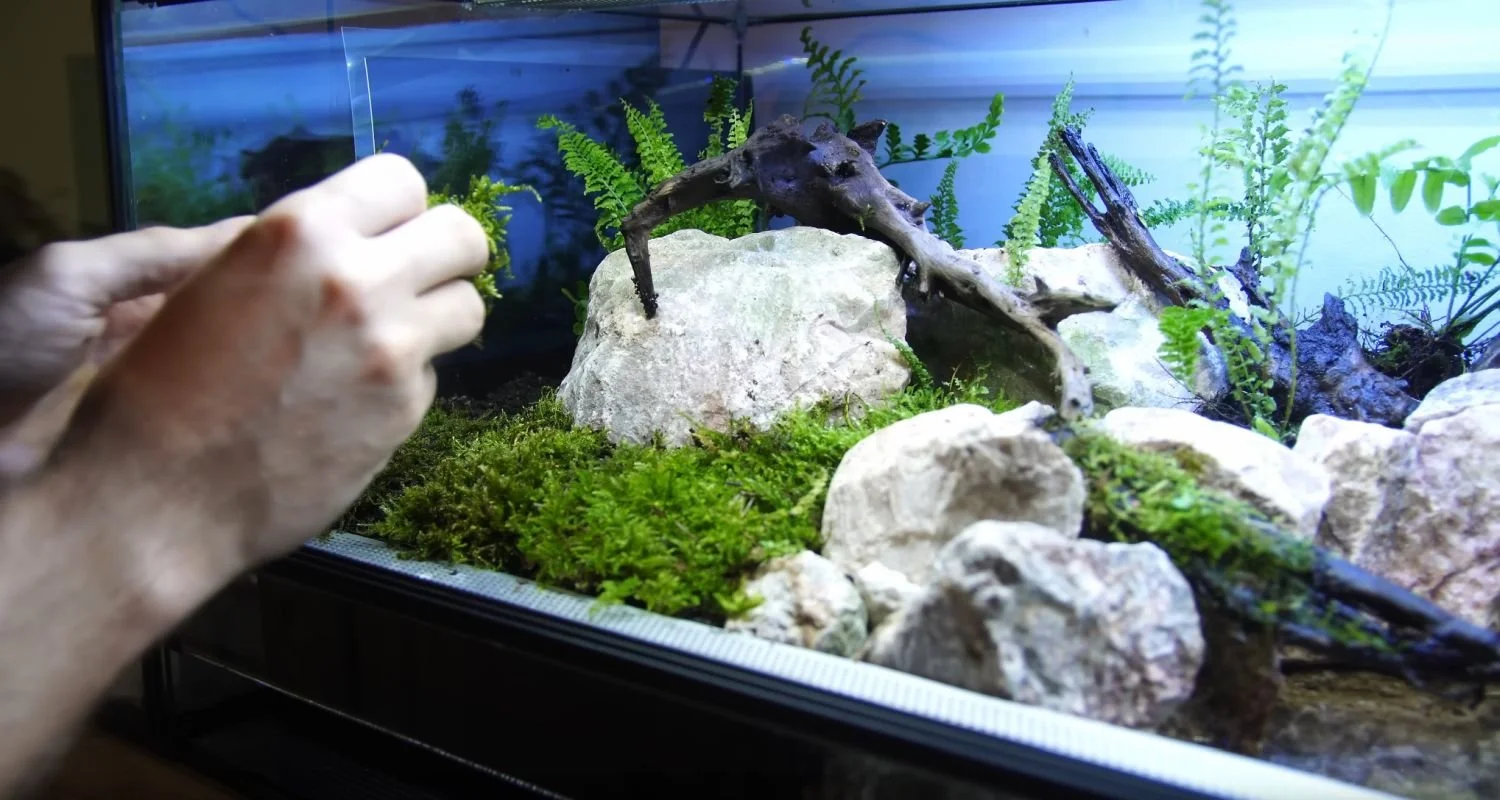
Planting a vampire crab ecosystem
Filling with Water
Using dechlorinated tap water, fill the water section of the paludarium until it’s about half an inch or a few centimetres below the soil layer. This prevents the soil from sitting in water, which could lead to water quality issues. If your soil and water are mixing, you need to adjust things until they don’t. This is a non-negotiable step!
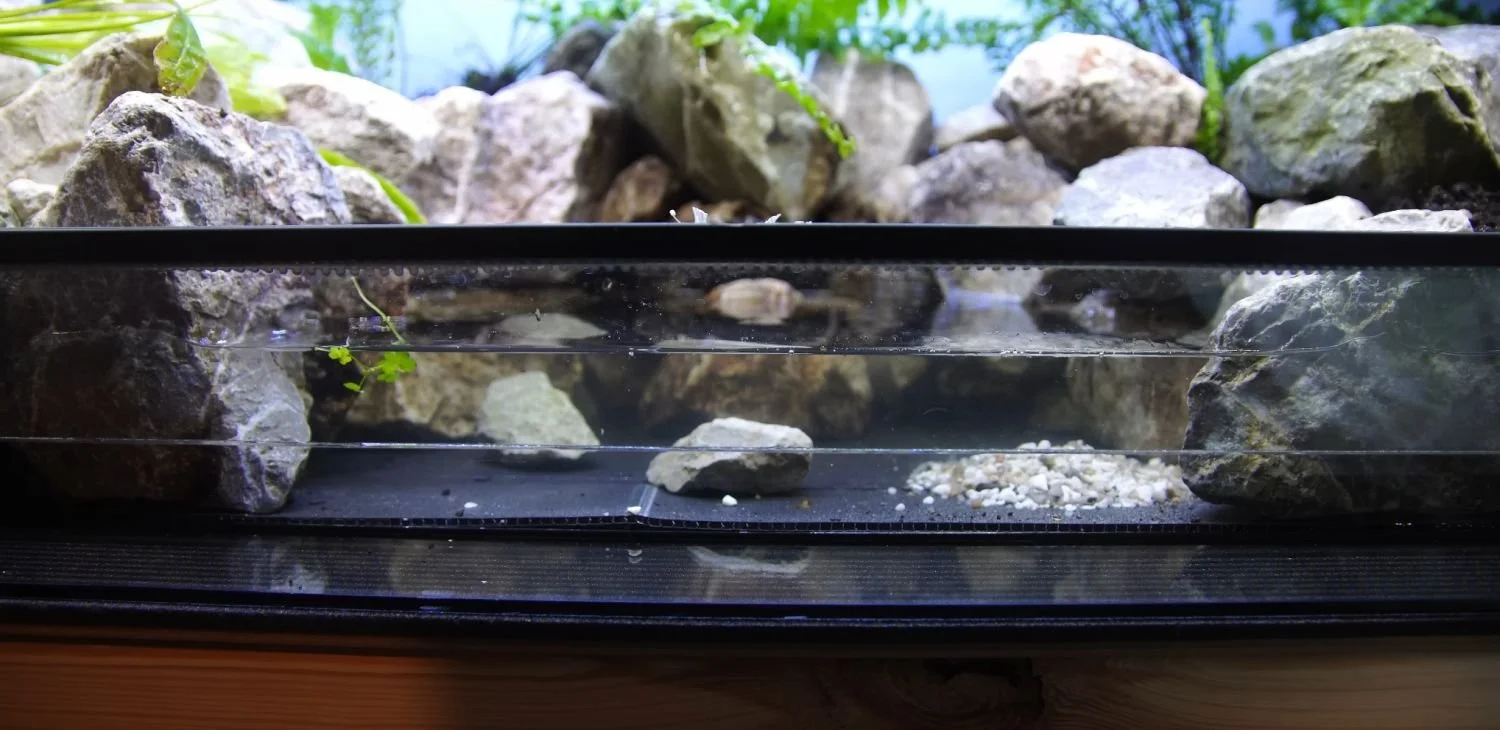
Adding water to a vampire crab ecosystem
Final Touches
Complete the setup by adding a little more moss, sticks, and dead leaves for added detail. I use oak leaves quite often but you can use anything local to your area, just make sure not to use anything that might be a problem.
ADDING A CLEAN-UP CREW
Now that everything is finished, you can add your cleanup crew! This should consist of springtails, isopods, worms and snails. Springtails are the most important aspect as they will deal with waste and mold. Isopods will also help but primarily focus on plant and animal waste rather than mold. Worms are a handy addition and a potential food source if the crabs are lucky enough to catch them.
Over time, your crabs will eat your isopods, so make sure you have a separate colony to draw from. Otherwise, they will go extinct pretty fast.
Introducing the Crabs
Once the habitat is ready, it’s best to wait about a month for the ecosystem to establish and cycle. This means that any mould flare ups will come and go, and the nitrogen cycle in the water will have finished.
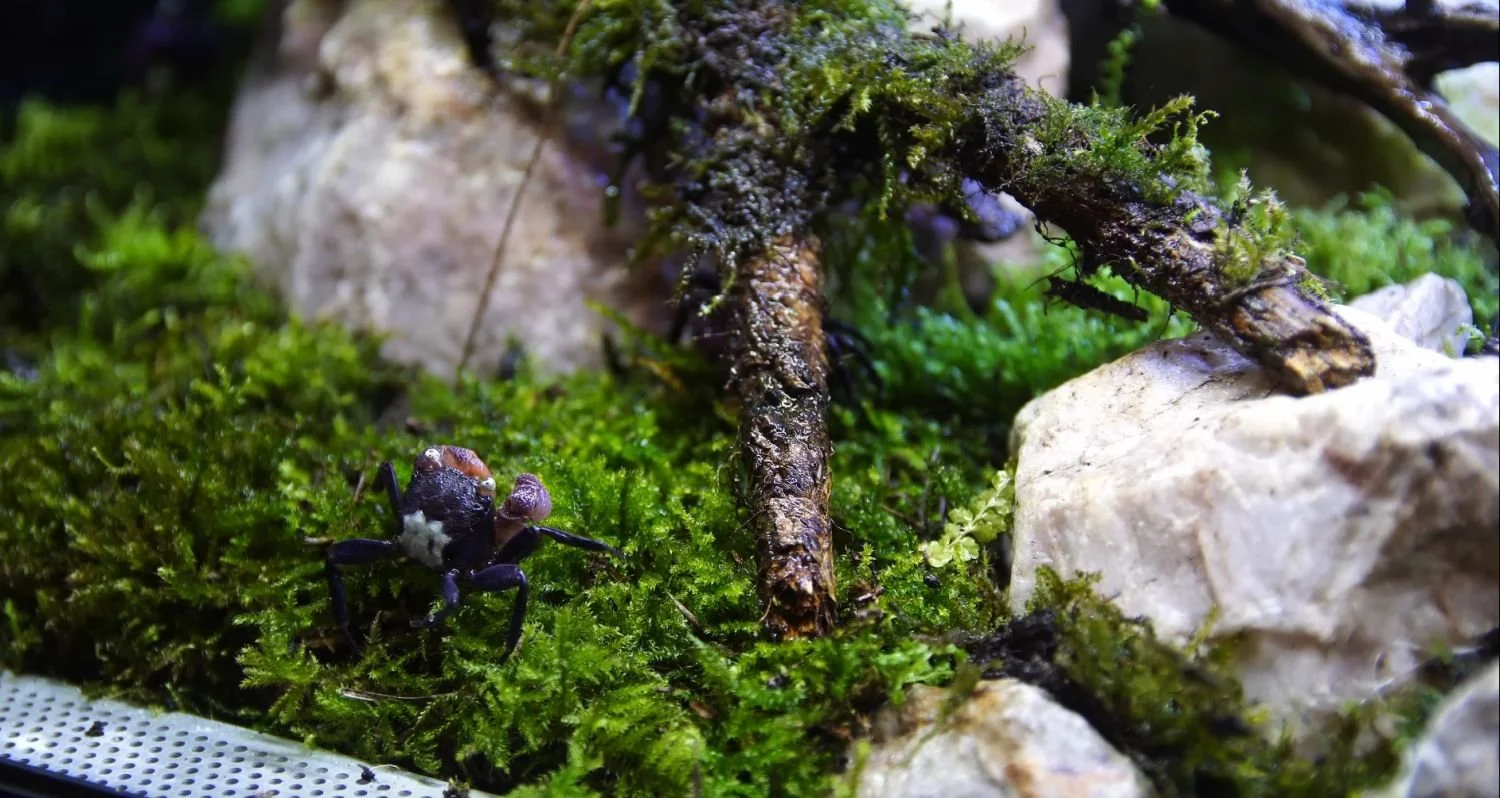
Adding Geosesarma Vampire Crabs to a new paludarium
Ongoing Care
With the paludarium established, ongoing care includes monitoring water quality, maintaining lighting (similar to the previous setup), and providing appropriate food for the crabs. Misting with water every couple of days is also important. And you’ll obviously need to trim the plants from time to time.
Some important information about selecting crabs
Vampire crab paludarium QUESTIONS
If you have any questions feel free to get in touch on Facebook, Instagram or Discord. You may also want to check out our Common Vampire Crab Beginner Mistakes guide < This guide was put together after surveying the community for their most common issues so it’s a gold mine of good information.