
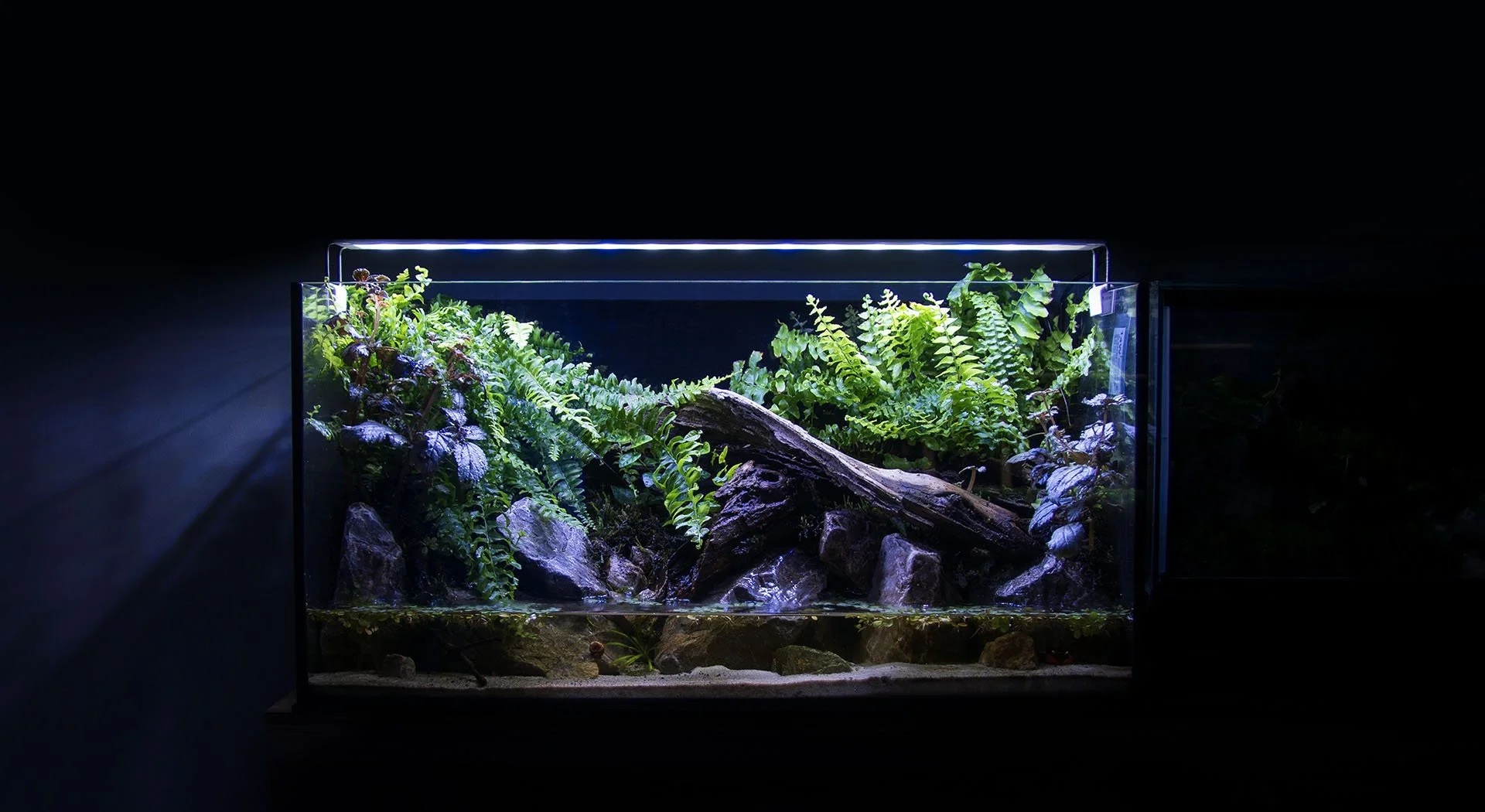
If you are considering keeping Geosesarma Vampire Crabs, choosing the right tank size is one of the most important decisions you will make. An ideal vampire crab paludarium involves much more than basic gallon volume—it dictates burrowing floor space, territorial boundaries, equipment fit, and long-term colony stability.
In this guide, we compare every standard tank size—from 5-gallon (25 L) minimums to beginner-friendly 10-gallon and 20-gallon+ (90 L+) ecosystems and vertical paludariums—so you can match the right enclosure to your space, skill level, and the wellbeing of your crabs. Looking for layout ideas once you choose a size? Jump to our 30+ video paludarium build playlist below.
Frequently Asked Questions
What is the minimum tank size for vampire crabs?
A 5-gallon (25-liter) tank is the absolute minimum size for adult vampire crabs, holding at most 3 crabs (1 male and 2 females). Anything smaller will not work for a full-grown colony.
Jump to: 5-Gallon (25 L) Minimums →What is the best tank size for beginners?
Both 10-gallon (45-liter) and 20-gallon+ (90-liter+) paludariums are beginner-friendly. A 10-gallon setup is the most budget-friendly starting point for 3 crabs (1 male and 2 females), while 20+ gallons offers even greater stability and room for a growing colony.
Jump to: 10-Gallon (45 L) Beginner Guide →How many vampire crabs can you keep in a 10-gallon or 20-gallon tank?
Start with 3 crabs (1 male and 2 females) in a 10-gallon tank so their babies have room to grow. In a 20-gallon (90-liter) or larger tank, starting with a small single-species group allows a self-sustaining community to establish naturally.
Jump to: 20-Gallon+ Ecosystems →Can you keep vampire crabs in a vertical terrarium?
Yes, but vertical tanks are best left to experienced keepers using arboreal species. Poorly planned vertical tanks cause serious territorial fights when climbing crabs descend through another crab's territory to reach water after molting.
Jump to: Vertical Tanks →Vampire Crab Tank Size Comparison
Because vampire crabs are terrestrial burrowers that spend roughly 99% of their time on land, usable horizontal floor space matters far more than raw gallon volume. Use the comparison below to choose the right footprint for your experience level:
| Tank Size | Recommended Stocking | Skill Level | Key Takeaway |
|---|---|---|---|
| 5 Gallons (25 L) | Max 3 crabs (1 ♂ : 2 ♀) | Experienced Keepers | Tight footprint; delicate balance; high aggression risk if poorly scaped. |
| 10 Gallons (45 L) | Start with 3 crabs (1 ♂ : 2 ♀) | Beginner-Friendly (Ideal) | Easier stability, space for heater/filter, room for baby crablets. |
| 20+ Gallons (90+ L) | Small starter colony (1:2+ ratio) | Beginner-Friendly (All Levels) | Most forgiving climate & 80/20 layout freedom; supports a self-sustaining colony; higher cost. |
| Vertical (25–50+ Gal) | Small single-species arboreal group | Experienced Keepers | Saves floor space, but requires multi-level planning to avoid molt-route fights. |
Watch: Vampire Crab Tank Sizes Explained
In this video breakdown, I walk through real-world 5-gallon, 10-gallon, 20-gallon, and vertical vampire crab paludariums so you can see how each footprint behaves in practice:
5-Gallon (25-Liter) Tanks: The Minimum for Vampire Crabs
Starting with the absolute minimum, a 5-gallon (25-liter) tank is the smallest enclosure you should ever consider for adult Geosesarma vampire crabs. While 5-gallon tanks are budget-friendly and easy to fit on a desk or shelf, they demand very high attention to detail.
Vampire crabs are fiercely territorial. In a 5-gallon footprint, crafting enough visual barriers, burrows, and moisture zones to prevent fighting is genuinely challenging. If you choose to run a 5-gallon paludarium, strictly limit the stocking to three crabs (one male and two females)—any more than three is far too crowded.
- Cost-effective to hardscape and plant
- Compact and space-efficient footprint
- Challenging to maintain a balanced microclimate
- Very limited floor space increases territorial risk
- No extra capacity once babies hatch
10-Gallon (45-Liter) Tanks: Ideal for Beginners
Stepping up to a 10-gallon (45-liter) tank hits the sweet spot for comfort, affordability, and ease of care—making it one of the best starting points for anyone new to vampire crabs.
A 10-gallon footprint gives you practical room to hide essential gear like nano filters and paludarium heating equipment without sacrificing valuable land area. Just like a 5-gallon setup, aim to start with three adult crabs (one male and two females) of a single species; the extra floor space dramatically cuts down territorial conflicts and leaves crucial room to accommodate all the future baby crablets your colony will produce.
- Much easier to maintain stable parameters
- Significantly reduced risk of territorial fighting
- User-friendly size for planting, heating, and maintenance
- Extra room for growing juvenile offspring
- Slightly larger footprint and setup budget than 5 gallons
20-Gallon (90-Liter) Tanks & Above: Expansive & Beginner-Friendly
For keepers who want a forgiving, immersive rainforest habitat from day one, 20-gallon (90-liter) tanks and larger are genuinely beginner-friendly and the most rewarding builds overall—the main trade-off is simply a higher initial budget and extra time spent scaping.
Larger enclosures are easier to keep environmentally stable because humidity, temperature, and water quality fluctuate much more slowly. You also get complete freedom to sculpt an authentic 80% land and 20% water paludarium with multiple elevation tiers, driftwood roots, leaf-litter zones, and a generous aquatic section. Starting with a modest single-species group (never mix colors—see why mixed-species tanks fail) lets a self-sustaining community build up organically over time. Make sure the enclosure is densely planted with plenty of hardscape sight-line breaks so crabs stay comfortable and visible.
- Beginner-friendly stability with slower temperature and water swings
- Abundant floor space for a rich, multi-zone ecosystem
- Lowest risk of territorial fighting when densely scaped
- Supports a thriving, multi-generational breeding colony
- Higher total cost for substrate, hardscape, plants, and lighting
- Requires dedicated stand space and more initial build time
Vertical Tanks: A Unique Challenge
Vertical terrariums look dramatic and save valuable shelf footprint, making them tempting for living-room displays. However, creating a functional vertical habitat for vampire crabs requires careful planning and real experience with crab behavior.

The core problem with tall tanks is traffic bottlenecks. When crabs living higher up the background climb down to reach the bottom water section—especially vulnerable individuals seeking water during or right after molting—they are forced to pass directly through the territories of dominant crabs guarding the lower floor. Unless you design elevated water pools, redundant climbing routes, and choose climbing-adapted species from our guide on the best vampire crab species for vertical tanks, aggression can quickly escalate.
- Visually stunning rainforest centerpiece
- Saves horizontal floor and table space
- Complex multi-level planning and hardscaping
- Higher cost for tall lighting, backgrounds, and water features
- Elevated conflict risk when traversing territories to molt or hydrate
Shape, Stocking Density & Escape-Proof Lids
Whichever gallon volume you pick, three structural rules separate thriving paludariums from stressful ones:
- Pick Landscape Proportions Over Tight Cubes: A standard rectangular aquarium or wide landscape terrarium offers far more usable burrowing territory than a narrow cube (for example, avoid cramped 12×12×12 inch cubes for adult colonies).
- Always Use a Tight-Fitting Lid: Vampire crabs are relentless escape artists capable of scaling silicone seams, airline tubing, and plant stems. Whether you use a front-opening terrarium or a glass aquarium with custom plexiglass, seal every gap around heater and filter cords.
- Keep Strictly Single-Species Colonies: Larger tanks do not make it safe to mix different colors. Every color represents a separate species, and mixing them triggers fatal fighting—if you already have aggression issues in an existing build, follow our step-by-step aggression troubleshooting guide.
Build Inspiration: Ecosystem Tanks in Every Size & Shape
Not sure what hardscape layout fits your tank dimensions? Watch our full Vampire Crab Ecosystems YouTube playlist featuring over 30 step-by-step paludarium builds—from 5-gallon nano tanks and beginner 10-gallon setups to massive 1-meter ecosystems and no-spray-foam vertical tanks: