
COMMON BEGINNER MISTAKES WHEN KEEPING VAMPIRE CRABS AND HOW TO AVOID THEM
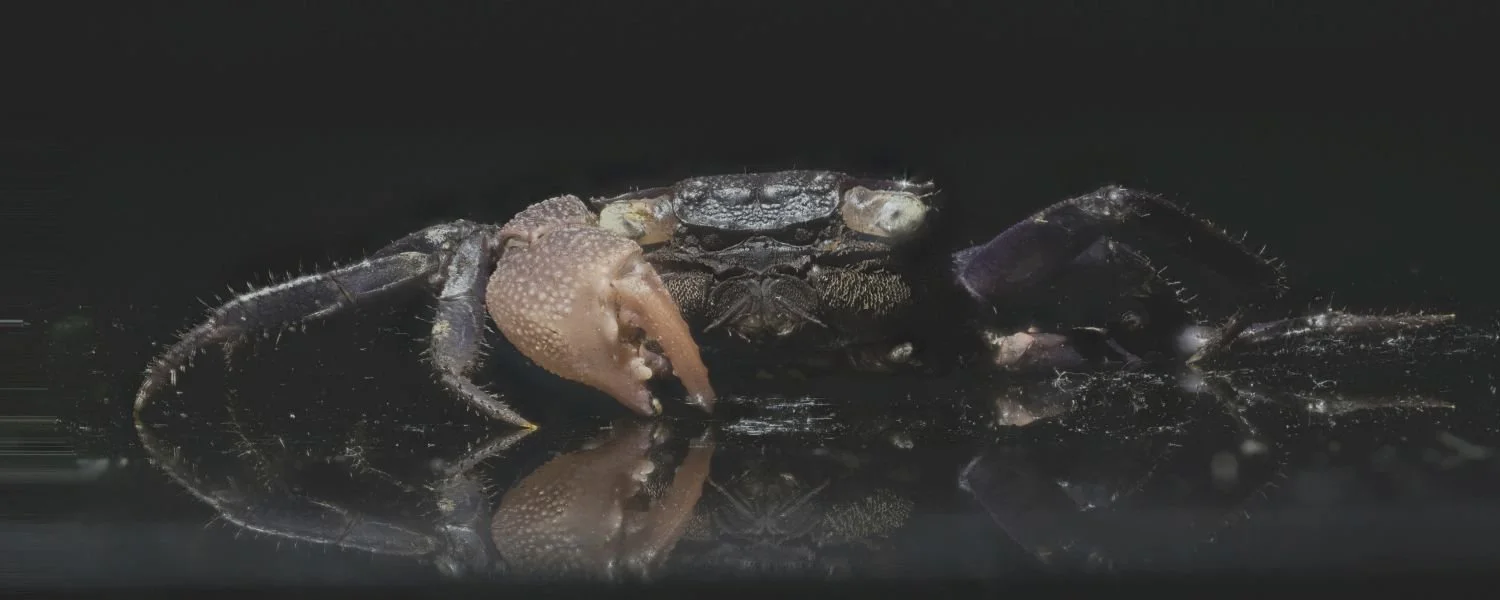
A Geosesarma Dennerle Vampire Crab that died of old age.
Keeping any kind of animal first requires you to put some effort into researching their basic needs and requirements. At least, that’s what I used to think people would do before getting a pet. These days, though, it seems that a good percentage of people buy first and ask questions later, which almost always ends badly!
Then there are the people who do the total opposite; they research for hours or days and get caught off guard by random little things they didn’t expect. Which, to be clear, is 100% normal and happens to everyone! Even today, Vampire Crabs still manage to surprise me sometimes! So, regardless of which kind of person you are, this guide will have plenty to teach you.
Keeping Vampire Crabs: Common Beginner Mistakes
Even the most well-researched person is going to encounter problems along the way but how they deal with them is the most important thing. However, to save you a little bit of time I’ve put together the following list of problems people have encountered when starting their adventure with Vampire Crabs. This list is based on hundreds and hundreds of messages and comments I’ve received over the years, as well as my own experiences, so it should resonate with most people.
A WARNING ABOUT INFORMATION ON SHOP WEBSITES AND THE TOP GOOGLE RESULTS
Since ChatGPT has gone mainstream, most of the top search results for animal care have been replaced with AI-generated content, which is often riddled with bad advice and completely made-up information—especially about vampire crabs. Thankfully, we've got you covered with accurate information, just ignore the occasional typo or spelling mistake!
Trusting the Seller to Give Good Advice
While this list isn’t in any particular order, I’ve made sure to put this one at the top of the list because it is usually where problems start. Sellers, “usually” in local fish shops are generally more interested in making a sale rather than giving you accurate, good advice. That said this is only half the story as just as many people working in these stores don’t have a clue about vampire crabs. Quite often they will just make things up leaving you with major issues when you get home. I think we’ve all been there at some stage.

Mixed species (colours) almost always means a future filled with dead crabs.
So to avoid this make sure you always go in prepared and trust what you’ve researched over what they are saying. For example, I’ve had people messaging me for weeks asking questions, preparing to get their first group of vampire crabs. Then they end up in a store to purchase them and they throw all of the information out the window and listen to the salesperson.
Within a week I get a new message that usually says something like:
“I finally bought 3 crabs and the seller said I could mix the colours, but the purple crab killed all the red ones.. What do I do?
My advice is to research quite a few different sources, then go in prepared and stick to your game plan. Don’t let them persuade you to do something differently. And to stoke my ego a little, any of the information you find here you can take to the BANK! It’s 100% real-world experience. Plus you can always find me somewhere to ask questions.
2. Mixing Different Vampire Crab species (colours)
We covered this a little above but we need to be really clear about this: Mixing different vampire crab colours or subspecies is not a good idea. These crabs are naturally aggressive, even among their own kind. Males will often fight, sometimes to the point of killing each other. And that’s not all — males can also kill females during the mating process, so the aggression is already there without any extra complications.
If you start adding different subspecies or colours into the mix, you’re only increasing the aggression. While it might be possible on rare occasions to create a hybrid by breeding different types, it’s risky. Vampire crabs are expensive, and the chances of them dying are pretty high. So unless you’re specifically looking to create hybrids and you really know what you're doing, it's just not worth the risk.
3. Not Researching pROPERLY
The next major issue is not spending enough time researching. Though I’m assuming if you're here, you’re probably doing more research than most people do so you’re already ahead of the pack! Well done! Go grab yourself a Vampire Crab poster, you deserve it!
But in all seriousness, Vampire Crabs are exotic animals that come from very complex environments so they do require a good understanding to keep them happy and alive. That said! They are also super, super easy to breed and look after once you know all the basics.

A young male Geosesarma Dennerle fighting with an aging male for territory
To make life easy and save you time, I’ve put together this guide that will take you from absolutely no knowledge of Vampire Crabs, to an almost expert level of understanding in under 10 minutes. Though, I highly suggest watching all the videos that go along with it as they expand on each section. Consider it a mini-course on Geosesarma Vampire Crab care.
4. Misidentifying Crab GenderS & Sex Ratios
Gender imbalance in a Vampire crab tank can cause quite a lot of problems, from contact stress and aggression between males, to females dying from mating stress (males mating with them too often). This is why gender ratios are super important with all Geosesarma species.
Ideally, you want to keep 1 male vampire crab with 2 female vampire crabs. This is the golden ratio of crab love stories. They love triangles. The more females the better of course but this ratio will do.
Interesting Note: You can keep an all female Vampire Crab tank if you want to. They don’t really fight and this is a safe option if that’s what you’d prefer.
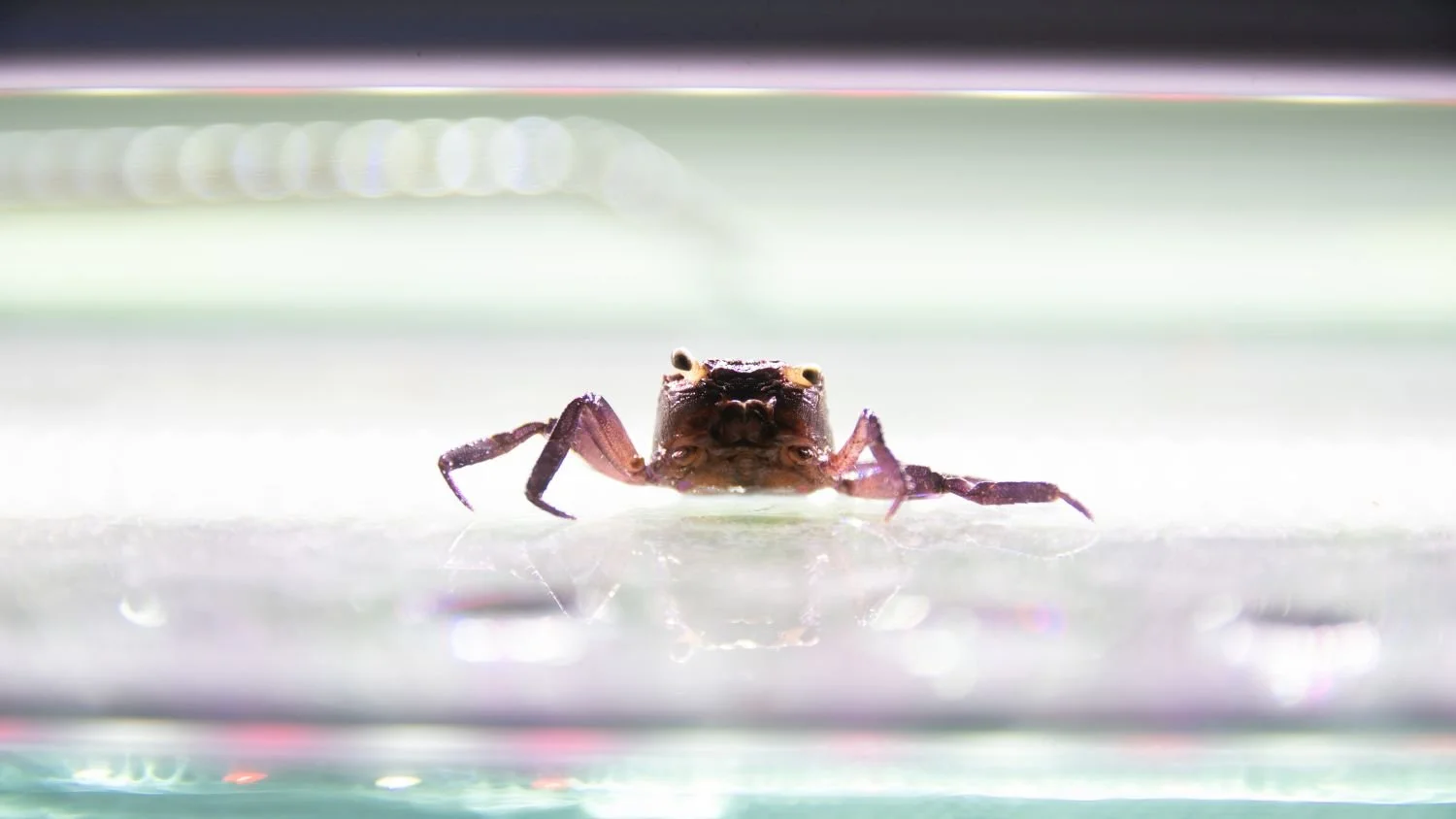
Death by over mating. No claws and 4 missing legs. Females have it rough
Don’t stress too much if you have an even ratio of 1 male to 1 female, it’s not the end of the world. While it’s not ideal you can mitigate the minor imbalance with a well-established tank with lots of complexity and line-of-sight barriers. This will give females a lot of escape options when males are out searching for them. And remember soil/dirt is very important for vampire crabs so make sure you have a deep enough soil bed for them to burrow into.
Identifying male and female crabs is quite easy and there are two different ways you can the difference. Rather than explain it all here, check out this article to see the entire process in great detail.
Important Note: Don’t trust sellers to send you the right ratio of crabs. Most sellers, especially online sellers will send you whatever they have and don't really care what you get. So if you have the option try to get them from a local store where you can sex them yourself before taking them home.
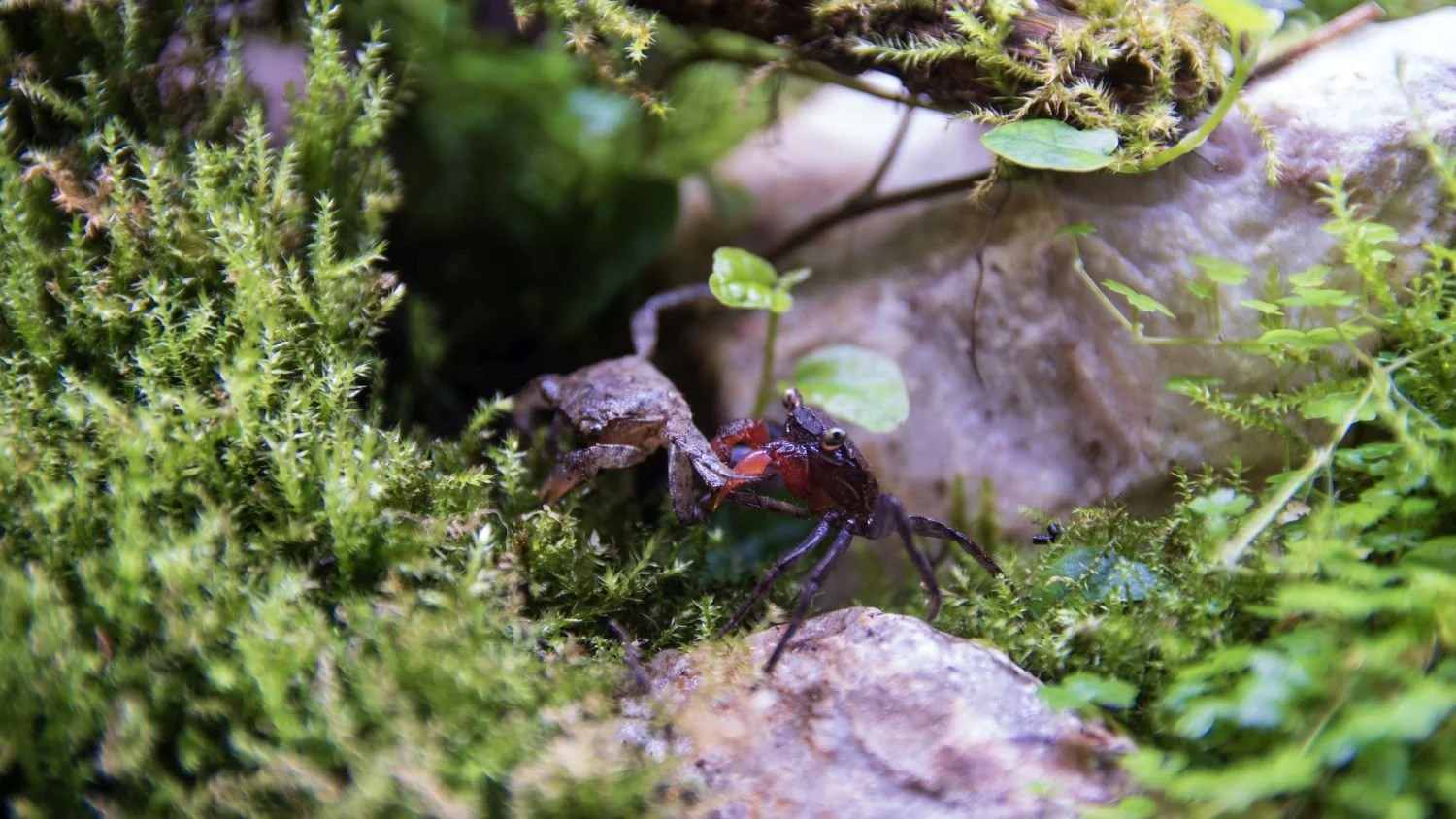
A male vampire crab trying to mate with a female
5. Not Securing the Tank Properly (Vampire Crabs Love to CLimb)
Vampire Crabs are notorious escape artists, I’ve seen babies climb glass, adults climb silicone and even one brave male hook a leg over the top of the tank and lift the lid up just enough to slip out underneath. Whatever you do! Do not underestimate them!
Mistake: Leaving tank cable holes or small openings unblocked. This gives them an easy escape route. Any gap they find, they will exploit!
Solution: Make sure that every gap in the tank—especially cable holes or areas around lids—is securely blocked. If you have to, tape them shut until you find a better alternative. Small mesh ventilation is usually the best solution, especially if you have babies.

A baby vampire crab climbing glass
6. Inadequate Substrate Depth & Type (Soil is REALLY IMPORTANT)
Vampire Crabs need deep, suitable substrate (dirt/soi) for burrowing 5-6cm or about 2” is a good start. But you can go as deep as you want. Avoid using aquasoils, sand and gravel, just good old fashioned dirt is best. There are no maximum depth guidelines.
Not having soil in a Vampire Crab tank is one of the biggest mistakes you can make. It doesn’t matter what species you keep, they will all use the soil and burrow into it at times. Especially females. Even some of the arboreal species of Geosesarma still need soil in their environments.
The number 1 reason you need soil in your vampire crab tank!
7. Overcrowding the Tank
This one isn’t all that common of a problem as Vampire Crabs are usually quite expensive so people usually only start with three. However, I have seen people absolutely crowd their tanks with a lot of crabs on day 1.
Generally, it is best to always get fewer crabs than you intend to have long-term as they breed fairly easily so you will want space for the new babies to grow up in. If you add to many adults from the get-go, you are going to have extremely high cannibalism of the babies. As the adults will always be around to eat them.
It’s a classic example of “less is more”.
While the general rule is 3 crabs per 5 gallons (25 liters) 1 male and 2 females. I highly suggest going 3 crabs per 10 gallons (45 liters) It gives you more flexibility and breeding success chances.
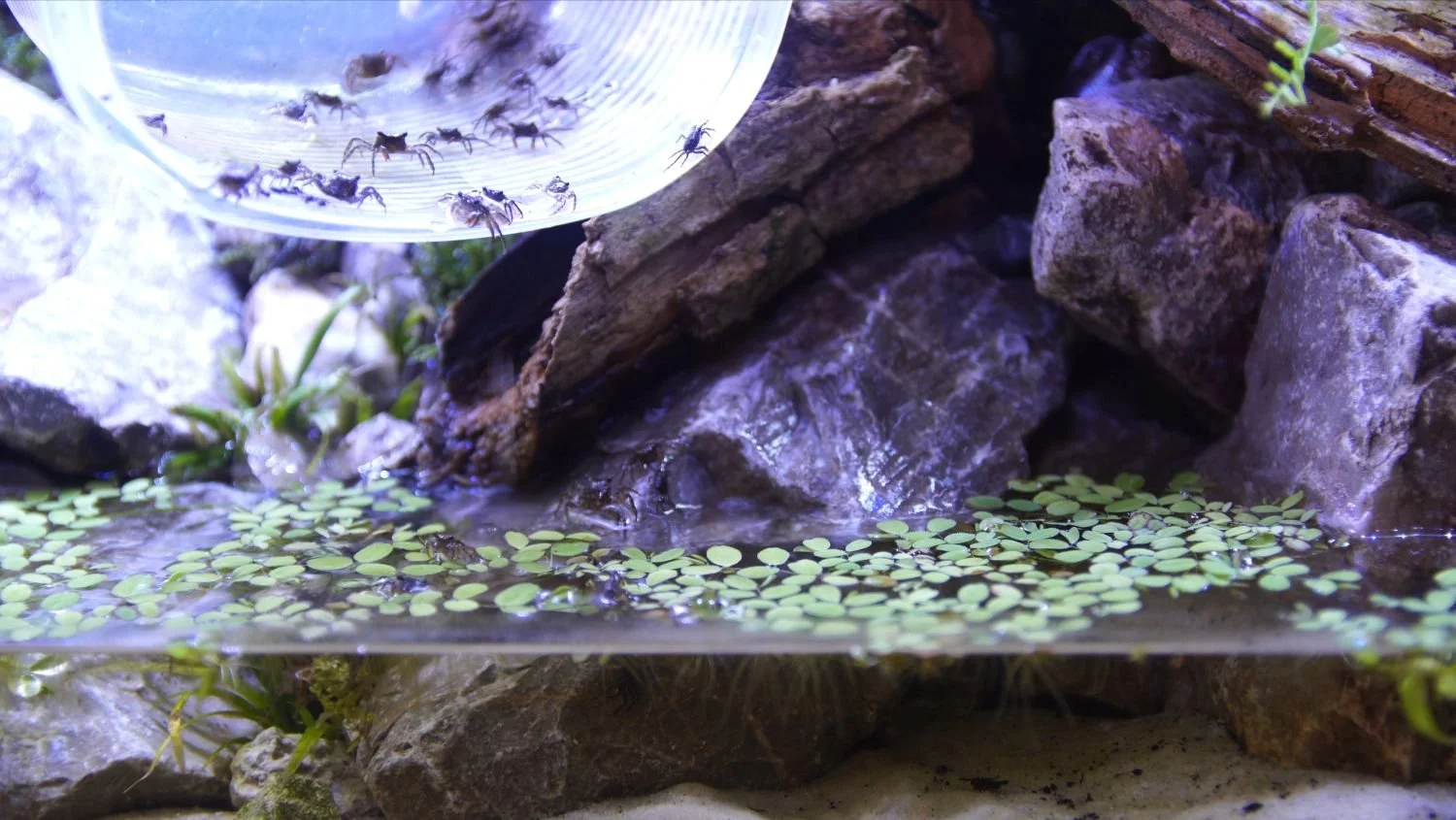
A group of baby vampire crabs being added to a paludarium
8. Ignoring the 80:20 ratio because you’re selfish
If you haven’t already figured it out, Vampire Crabs are terrestrial crabs that spend 99% of their time on land. This is why the common consensus when setting up a paludarium for them is that 80% of their environment be allocated to land and 20% be allocated to water. Thus the golden rule of 80:20.
Here’s where problems arise! People always want to add fish to their tanks as well, so they swap out the golden ratio for something that works for them and their visual desires. Now! Don’t get me wrong! You can certainly add fish and have both in a paludarium. BUT! You can’t do this if you have a small tank. There’s a good chance this triggered some people, so hear me out!
If you don’t provide enough land space (dirt) for your crabs, they will fight over territory.
If you don’t provide enough water space for your fish, your crabs will eat your fish.
This is why I highly suggest skipping vampire crab and fish combos unless you have a tank bigger than 20 gallons (100 liters)
This is because you need to meet both species requirements properly and nearly all fish need more than 5 gallons (25 liters) of pure, usable swimming space. Not a huge length of 1 inch deep water….
Shrimp and snails are far better options than fish. Not only will they keep your tank clean and provide a sustainable food source but they are also super low maintenance and really damn interesting to watch. Shrimp are also way too fast for Vampire Crabs to catch so rarely end up on the menu.
9. Not Understanding Crab Behavior
Most people who get Vampire Crabs have probably seen one of my videos at some stage where I’m hand-feeding my crabs or filming them up really close. Which I do admit paints a rather different picture of the reality of things.
The reality is that Vampire Crabs are actually super shy, skittish, nocturnal animals that spend 99% of their time hiding. So you’re probably wondering why mine seem so different?! Well, there are a couple of reasons for this. Most of mine are 2nd or 3rd generation captive breed crabs which I have raised myself which means they aren’t scared of me being around the tank. I’ve been part of their environment since they were born and the same for the parents before them.

Hand feeding Vampire Crabs Mealworms
In comparison, wild vampire-caught crabs, which are 99% of the ones in the hobby are super paranoid, instinct-driven critters. They are worried about getting picked off by a bird or rodent. So they usually only come out and night and will dart away as soon as they see movement.
The good news is that vampire crabs breed fairly easily so you can have your own active crabs as well but only if you respect their requirements and set up their ecosystem properly.
The other really important behavioural trait is that they love to FIGHT! And I mean LOVE IT! Males will fight day and night and will quite often lose claws and legs during battle. This is unavoidable but it is reduced dramatically in a well crafted tank with the right population levels so make sure you prepare for this when you create your Vampire Crab Ecosystem.
How to build a Vampire Crab Biotope Ecosystem
10. Feeding an Inappropriate Diet
This one is pretty damn straightforward, to be honest. Crabs require a varied diet, and feeding them only one type of food will lead to nutritional deficiencies. Which usually starts with loss of colouration and failed molts. Basically, the crab doesn’t have enough minerals in its diet to grow and molt correctly, which eventually leads to its untimely death.
So make sure you’re feeding your crab a lot of different things. They need a very mixed diet to stay healthy. Thankfully, because I’m super prepared, I’ve already written a guide for you.

A vampire Crab that has failed to molt properly and died as a result
11. rushing tank set up and neglecting Tank Maintenance
This is another common issue that comes up and usually comes out of sheer excitement! We’ve all been there! I know the feeling! BUT! I’m going to ask you to slooooooow down! Take your time and plan things well before starting.
Most importantly once you have finished setting up your new Vampire Crab Ecosystem try to wait at least 4 weeks for the system to establish and cycle. This is really important as it will allow the nitrogen cycle to complete (water section) and the mold cycle to complete (land section)
The clean-up crew in your water section (snails) and the clean-up crew on the land section (springtails) will get straight to work making sure everything is ready for the arrival of your crabs. While 4 weeks is the minimum, you can wait as long as you like. The longer the better.

Your springtail clean up crew will make short work of any mold outbreaks
12. How to Tell the Difference between a Dead Vampire Crab and a Molt
In order for Geosesarma Vampire Crabs to grow, they must shed their exoskeleton in a process called molting. This occurs throughout their entire lifespan and also allows them to regenerate any missing claws or legs. However, they cannot regenerate their eyes, and eye injuries often result in death. Molting is very frequent early in their lives but slows down as the crabs grow larger and approach their full size. Once a crab reaches adulthood, it generally will not molt again unless it needs to regenerate a missing limb.
When a Vampire Crab molts, it will spend more time than usual in the water to soften up. This process can take a few days, and minor colour changes often occur as well. When the crab is ready to molt, the back of its exoskeleton will open, and it will shimmy out the back as a soft, raw piece of flesh. For the next 5-7 days, the crab will avoid any conflict or danger, as it is highly vulnerable and can be easily killed. Therefore, it's important to have plenty of hiding spots in the tank. Freshly molted crabs can experience dramatic colour changes, sometimes resembling an entirely different species, but they will return to their normal colour after a while. Molts also don’t stink and can be left in the water as they will be consumed by the crabs for a nutrient and mineral boost.
So how do you tell the difference between a dead crab and a molt? It’s all in the eyes. Molts have a semi-transparent appearance and the eye sockets will be empty and almost clear. The image below is a fresh molt.
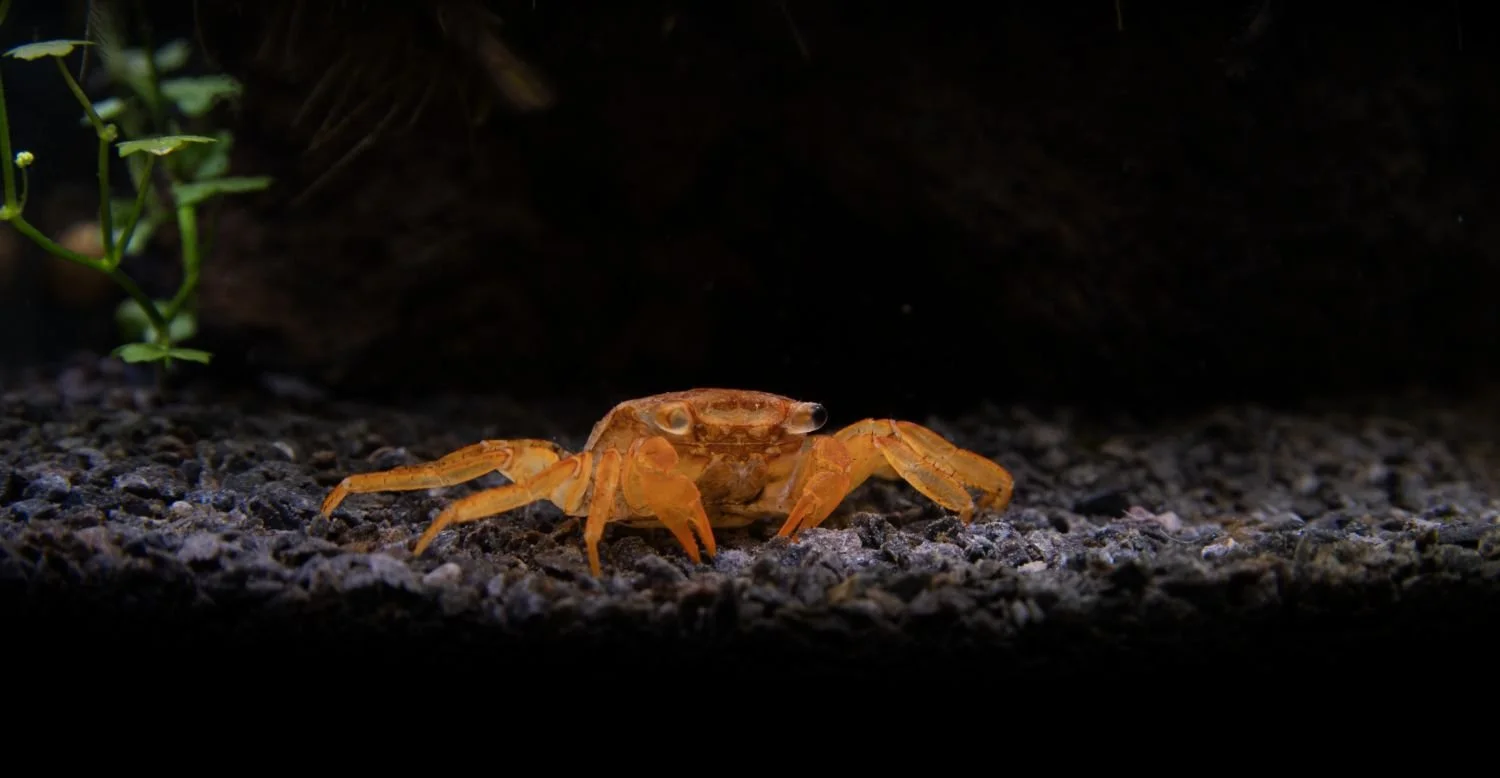
Vampire Crab molt - Notice the clear empty eye sockets
Whereas dead crabs will be solid and off-coloured. like the example shown below.

Dead vampire crab - Notice the eye sockets are full