
GEOSESARMA HYBRIDS: CROSS BREEDING VAMPIRE CRAB SPECIES

Geosesarma sp Dengen (Hybrid)
Geosesarma Vampire Crabs are a group of land-dwelling freshwater crabs known for their vast range of colours and unique ecological adaptations. While species within the genus are quite common in the pet hobby a large portion of them are yet to be officially described by science. And there is growing evidence that some species can interbreed under certain conditions. Especially when kept in captivity.
Can vampire crabs cross breed?
Hybridization, though uncommon in the wild due to geographical and behavioural barriers, has been observed in captivity, where different species are often kept together. This raises intriguing questions about species boundaries, genetic compatibility, and the potential impact of hybridization on conservation efforts and the pet trade.
While I firmly believe that hybridization outside of natural circumstances isn’t ideal, it has become an unavoidable reality in the pet trade. This is largely due to the way these crabs are collected and transported multiple species are often mixed together in the same containers for extended periods. During this time, males frequently mate with females of different species. Once in captivity, these fertilized females often go on to release their offspring, leading to unintended hybridization.
The Ethical Problems with Vampire Crab Hybrids
The biggest issue with hybridization is that for it to occur, two different Geosesarma species must be kept together for an extended period something known to cause significant stress for all species in the genus. More often than not, males from one species are more likely to fight and kill other species rather than mate with them, though exceptions do exist. This is one of the key reasons why different species should never be housed together (a topic we frequently discuss). For instance, if someone attempts to crossbreed Geosesarma species, they might lose ten females to aggression before achieving a single successful mating. Personally, I don’t believe this is a responsible practice and I have an entire guide dedicated to not mixing Vampire Crab species here. I highly suggest reading it as well.
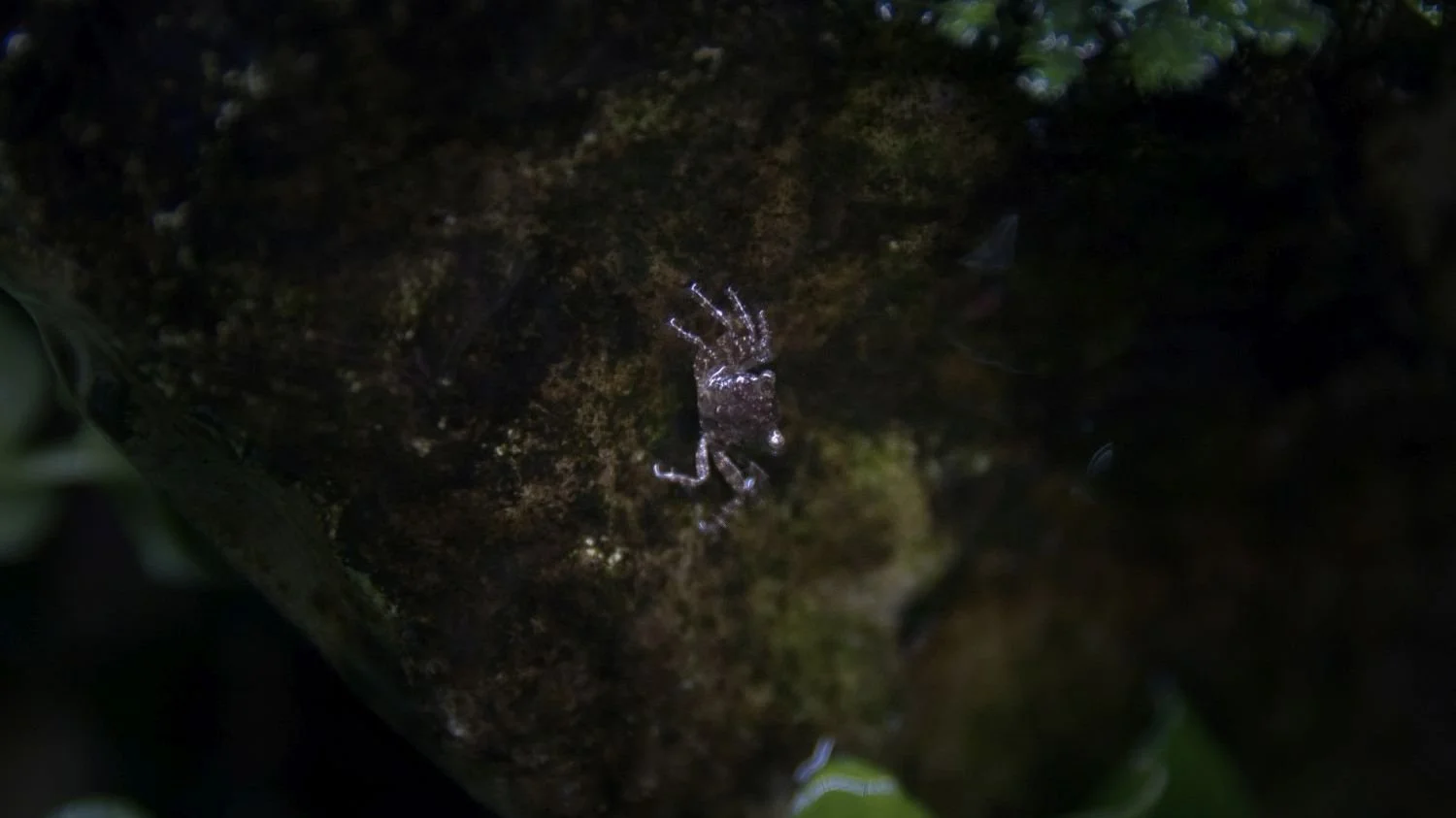
A baby Geosesarma Vampire Crab
What do Hybrid Vampire Crabs Look Like?
Depending on the species of Vampire Crabs that have mixed colours and traits can vary dramatically though most traits seem to get watered down into less than desirable states. Colours for example are usually less vivid and will appear to be washed out. Below is an example of the offspring born from a Male Geosesarma Hagen and a female Geosesarma Dennerle. I’ve come to classify this species as Geosesarma sp Dengen (Hybrid)
These specimens are ones that I raised myself after collecting a group of Vampire Crabs from a hobbyist who no longer wanted to keep them. She was keeping one Male G Hagen with three female Dennerle for 6 months which resulted in the following offspring being born in my care.
As you can see, the hybrids display distinct differences from either parent species. Their backs have an orange hue rather than yellow, and their claws are an unusual mix of purple and red that doesn’t look quite right. Additionally, their eye colour is white instead of the typical yellow, though yellow eyes is also possible but less common.

First confirmed Vampire Crab Cross Breed (Hybrid)
Hybrid Viability & Fertility
One important question when discussing Geosesarma hybrids is whether they are fertile. In some hybrid cases across the animal kingdom, offspring are sterile (unable to reproduce), while in others, hybrids can breed further, potentially creating new generations of mixed genetics.
From observations, Geosesarma hybrids appear to have varying levels of fertility depending on the species involved. Some hybrids may be capable of producing offspring when paired with one of the original parent species, while others seem to struggle with reproduction. This inconsistency suggests that genetic compatibility between species is not absolute and that some pairings may result in dead-end lineages.
If hybrids are fertile, it raises concerns about their long-term impact on captive populations. If they can breed with pure species, it may lead to further dilution of distinct species in the pet trade, making it harder to maintain true bloodlines.
So far from what I have observed from the colony of Geosesarma Dengen that I have raised, they are capable of breeding without issues. But there isn't really a way to tell if there are any major downsides to this hybridisation. For example, genetic weakness, shorter lifespans etc. Only time will tell.
Impact on the Pet Trade & Conservation
Hybridization presents several challenges in the pet trade, especially for hobbyists who value pure species. Because Geosesarma species already suffer from poor documentation and identification, hybrids make things even more complicated. Mislabeling is common, and accidental hybrids can easily be mistaken for new or rare species. And if hybrids are introduced into wild populations and areas things will only get worse…
This confusion can have a significant impact on conservation. Some Geosesarma species are still being discovered and scientifically classified, and if hybrids are introduced into wild populations either by accident or due to intentional releases it could lead to genetic pollution. Pure wild populations may be at risk if they interbreed with introduced hybrids, potentially weakening natural adaptations that have evolved over time.
For those in the hobby, understanding and maintaining pure bloodlines is essential. Ethical breeders and sellers should take extra care to prevent accidental hybridization and ensure that Vampire Crabs being sold are correctly identified.
Behavioural Differences in Hybrids
Hybrid Vampire Crabs do not just exhibit physical differences; they may also behave differently from their parent species. While research and observations are still limited, a few key behavioural traits have been noted:
Aggression Levels: Some hybrids may inherit the aggressive tendencies of one parent species, making them more prone to fighting. Others may show reduced aggression, potentially due to genetic mismatches that make them less dominant.
Activity Patterns: Certain Geosesarma species are more active during specific times of the day, and hybrids could display unpredictable activity levels compared to their parents.
Mating Behaviour: Since different species of Geosesarma have distinct courtship rituals, hybrids may have difficulty successfully pairing with pure species or even with other hybrids.
Understanding these behaviours is crucial for proper care, as keeping hybrids may require different tank setups or social structures compared to pure species.
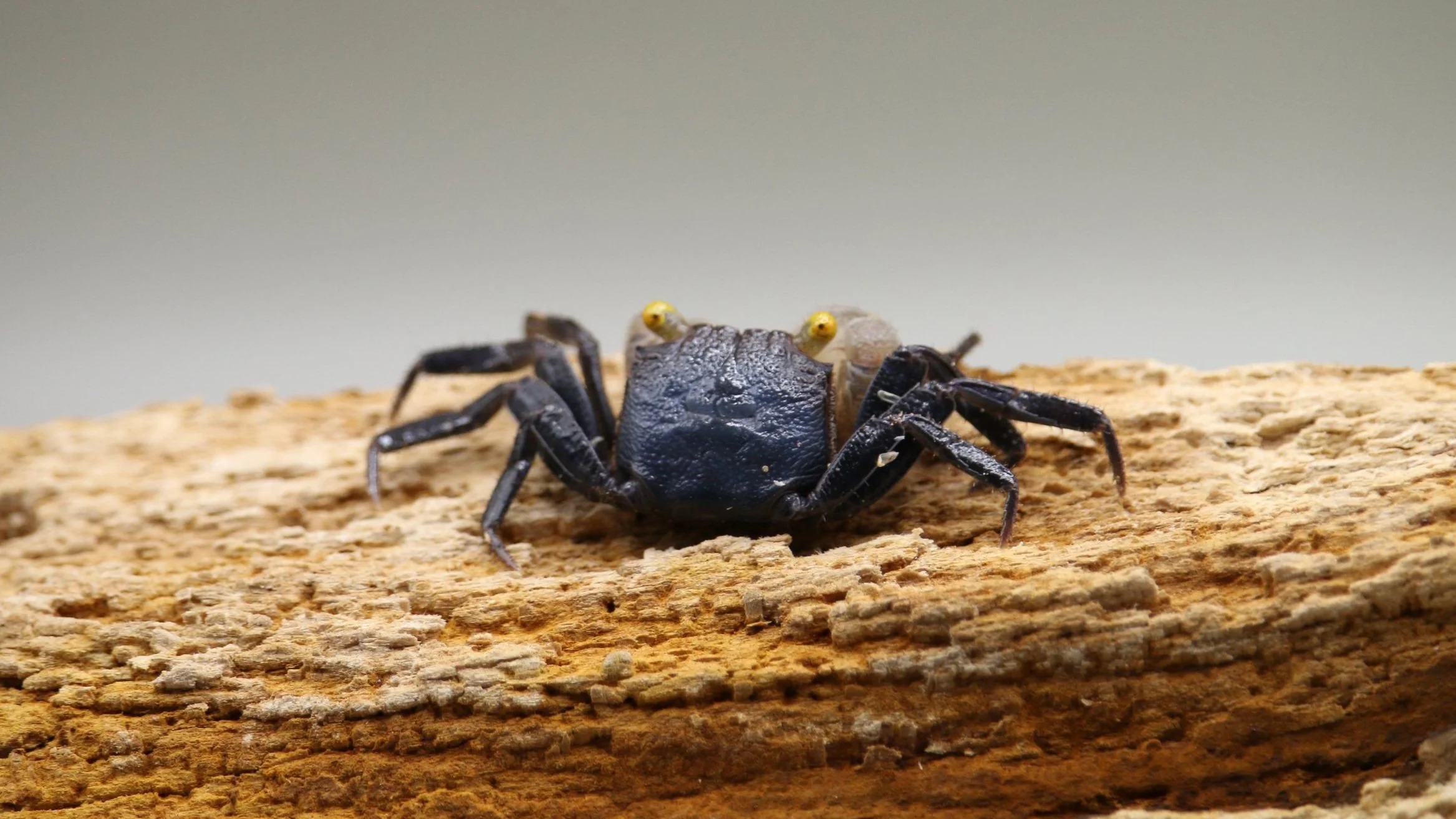
Geosesarma sp Yellow Eyes - Source: Millennium Snakes
Ethical Considerations for Hobbyists
For those who keep Vampire Crabs, hybridization raises ethical questions about responsible ownership and breeding practices. Some key considerations include:
Preventing Accidental Hybridization: If multiple Geosesarma species are being kept, they should be housed separately to prevent crossbreeding. Even if hybridization is unintended, it can happen quickly when species are mixed.
Selling & Distributing Hybrids: If hybrids are bred, should they be sold? Some argue that hybrids should be kept separate from the trade to prevent further confusion. Others believe they offer unique colourations and should have a place in the hobby, as long as they are clearly labeled and not misrepresented.
The Role of Hobbyists in Conservation: Since Vampire Crabs are still poorly studied in the wild, responsible hobbyists play a role in maintaining pure species. By prioritizing careful breeding practices, they can help ensure that distinct species remain available for future study and conservation efforts.
Ultimately, while hybridization may be an unavoidable reality in captivity, responsible care and breeding choices can help mitigate its negative impacts.
Expensive Geosesarma Hybrid Colours on the Horizon?
Sadly it won’t be long before the market is flooded with hybrids of all sorts of colours as people try to breed unique colour variations they can sell for stupid amounts of money… It has happened with just about every animal species to date and will continue with many more to come. The worst part about this process is that Geosesarma species usually kill each other before a successful mating process occurs so a lot of crabs will die in order for designer crabs to be created. Money always beats ethics though…

Geosesarma Notophorum
Visual Comparisons: Hybrid vs. Pure Species
A major challenge in identifying hybrids is that their traits do not always follow predictable patterns. Some offspring may look very similar to one parent species, while others have more obvious mixed characteristics.
For example, in the case of the Geosesarma Hagen x Geosesarma Dennerle hybrid, notable differences include:
Carapace Colour: Hybrid offspring display an orange tint rather than the bright yellow seen in pure Dennerle.
Claws: Instead of a uniform purple or red, hybrids show a mismatched blend of both colours.
Eye Colour: Rather than the distinct yellow of pure Dennerle, hybrids have white or pale eyes.
A side-by-side photo comparison would be useful in highlighting these traits, especially for those trying to identify potential hybrids in their own collections.
CAN GEOSESARMA SPECIES THAT MOLT ON LAND CROSS BREED WITH ONES THAT MOLT IN WATER?
Geosesarma species molt in two distinct ways: in the water and on land. This raises an important question: can species with different molting processes interbreed? While I’m only speculating, I believe this could pose a potential barrier to successful crossbreeding. However, this is just a hypothesis, and I’m sure that scientists will eventually provide more definitive answers to this question.
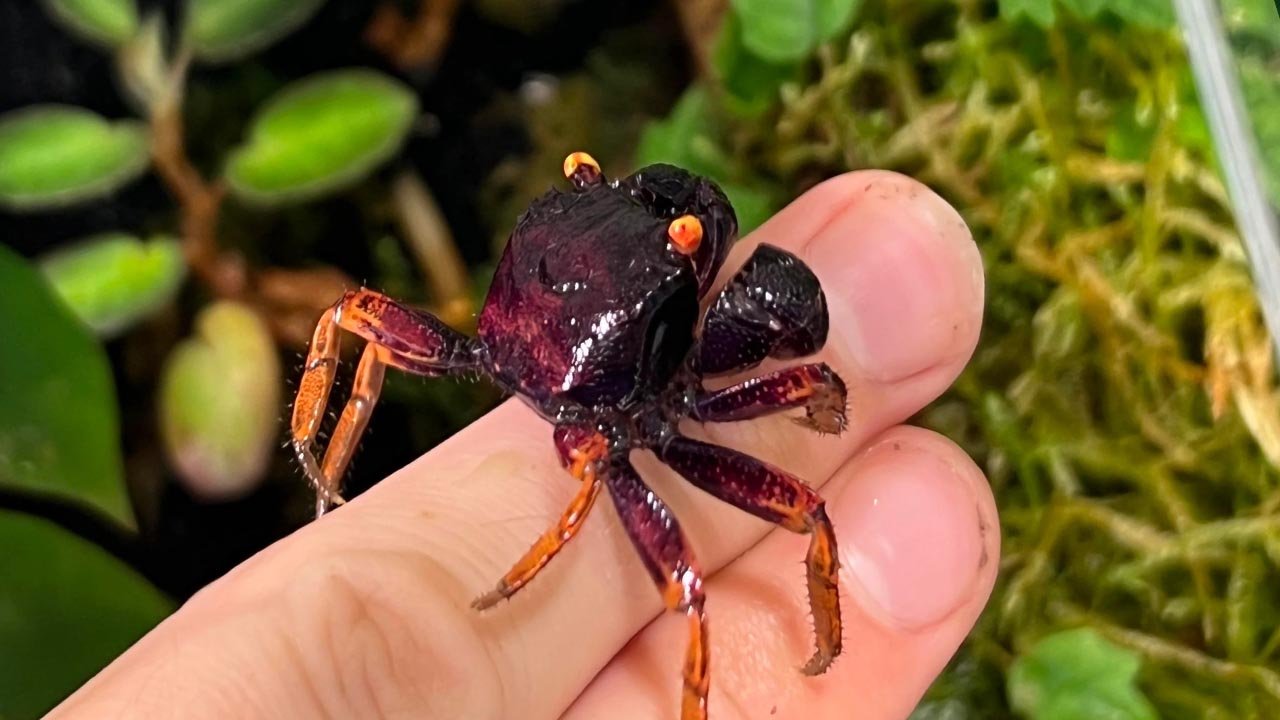
Geosesarma sp Daredevil