
GEOSESARMA HAGEN (RED DEVIL VAMPIRE CRAB)

Red Devil Vampire Crab
Scientific Classification
Scientific Name: Geosesarma hagen
Common Names: Red Devil, Devil, Red Vampire Crab
Discoverer: Ng, Schubart & Lukhaup, 2015
Scientifically Described: Yes
Availability in Trade: Very popular (as of 02.2025)
Identification & Characteristics
Geosesarma hagen is a small, semi-terrestrial crab species, native to the forests of Central Java, Indonesia, typically found near freshwater sources.
Carapace: Typically a two-color division of brown/black on the underside and red/orange on their top, some individuals have a mottled pattern (red/orange/brown).
Legs: Dark brown to black or mottled brown/cream. Sometimes they will have a purple hue.
Claws: Bright red to orange.
Eyes: Bright yellow or off-white yellow; captive-bred specimens sometimes have white eyes.
Size: Body: 0.8–1 inch (2–2.5 cm) including legs: 2.5–3 inches (6–7 cm)
Distribution & Habitat
Native to: North of Cilacap City, Central Java, Indonesia
Habitat: These crabs thrive in tropical rainforest environments and are commonly found close to freshwater streams. However, they have also been observed in dense forests away from direct water sources.
Habitat Preferences
Prefer a terrestrial lifestyle but require access to high humidity.
Burrow near streams and ponds to maintain necessary moisture levels.
They are excellent climbers and can escape enclosures if not properly secured.
Can endure slight dryness but thrive best in a humid environment.
Forest Floor Burrows: These crabs create burrows close to streams or ponds to maintain necessary moisture levels.
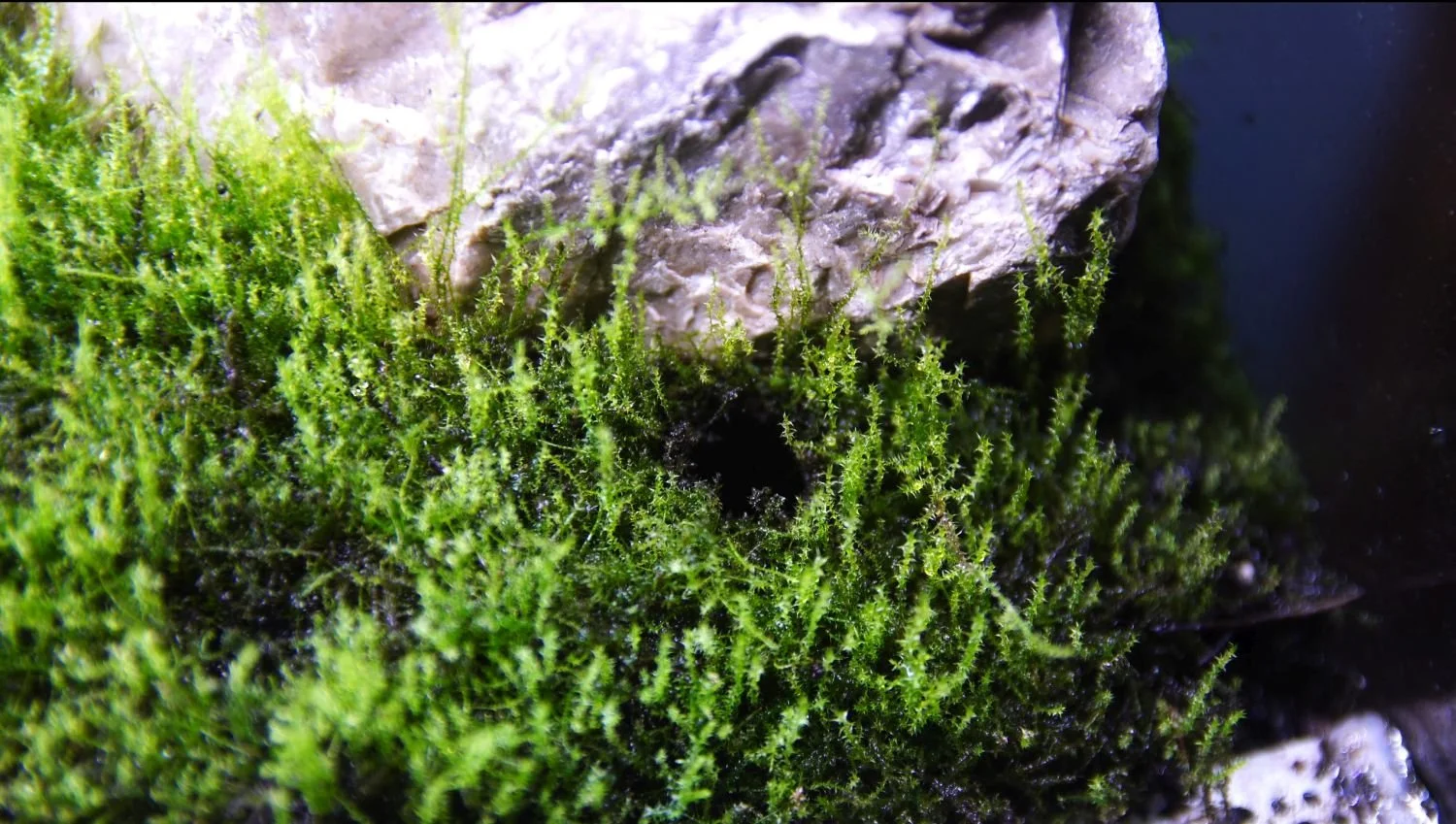
A small vampire crab burrow
Climbing Behavior: While primarily ground-dwellers, Geosesarma hagen amazing climbers and are known for escaping from enclosures without secure lids or doors. They will test any size gap!
Social Structure: Semi-social creatures, they do well in groups but, males can be aggressive toward each other, particularly in disputes over territory. Females are generally more focused on burrowing and staying away from conflict but can turn aggressive if protecting eggs or young. Males will kill each other during brawls sometimes. Older males usually succumb to young males looking to take control.
When kept in captivity
They need a warm, humid environment, with a humidity level of 75% or higher. A humidifier can be used to increase the humidity, or you can mist the enclosure regularly with a water bottle.
WATER SECTION RULES:
Water temperature: 22–25°C (71–78°F)
PH: Between 7.5–8.0
KH (carbonate hardness): Between 0–10
GH (general hardness) Between 4–16
Ammonia: 0
Nitrite: 0
Nitrate: Lower than 20 ppm
Air Temperature: 22–28°C (71–82°F)
Humidity: Above 75%
Overnight lows and daily highs are normal, so if your tank goes from 20–30c over a 24-hour period (slowly) that is perfectly fine. This is very similar to what happens in nature. However, you will need a heater for your tank during the colder months of the year.
Diet
Red Devil Vampire Crabs are omnivores, feeding on a diverse range of plant materials and small invertebrates. In captivity, they are not picky and will consume most commonly available crab foods, making their diet easy to manage. In the wild, they scavenge the forest floor for food and will actively hunt small insects, fish, snails etc.
Behaviour & Social Dynamics
Males: Known for their territorial instincts, male Geosesarma hagen will often fight, especially as they mature. Claw-locking during disputes is common. Sometimes it can last hours.
Females: Females tend to avoid confrontation, preferring to burrow deep into the substrate to create a safe environment for themselves and their offspring.
Cathemeral/Nocturnal: Both males and females are primarily nocturnal but will sometimes come out during the day to forage. During observation, when and why is hard to predict; it seems fairly random.
IMPORTANT: If you plan on keeping them in captivity, you cannot mix multiple species (colours) they will kill each other pretty quickly.
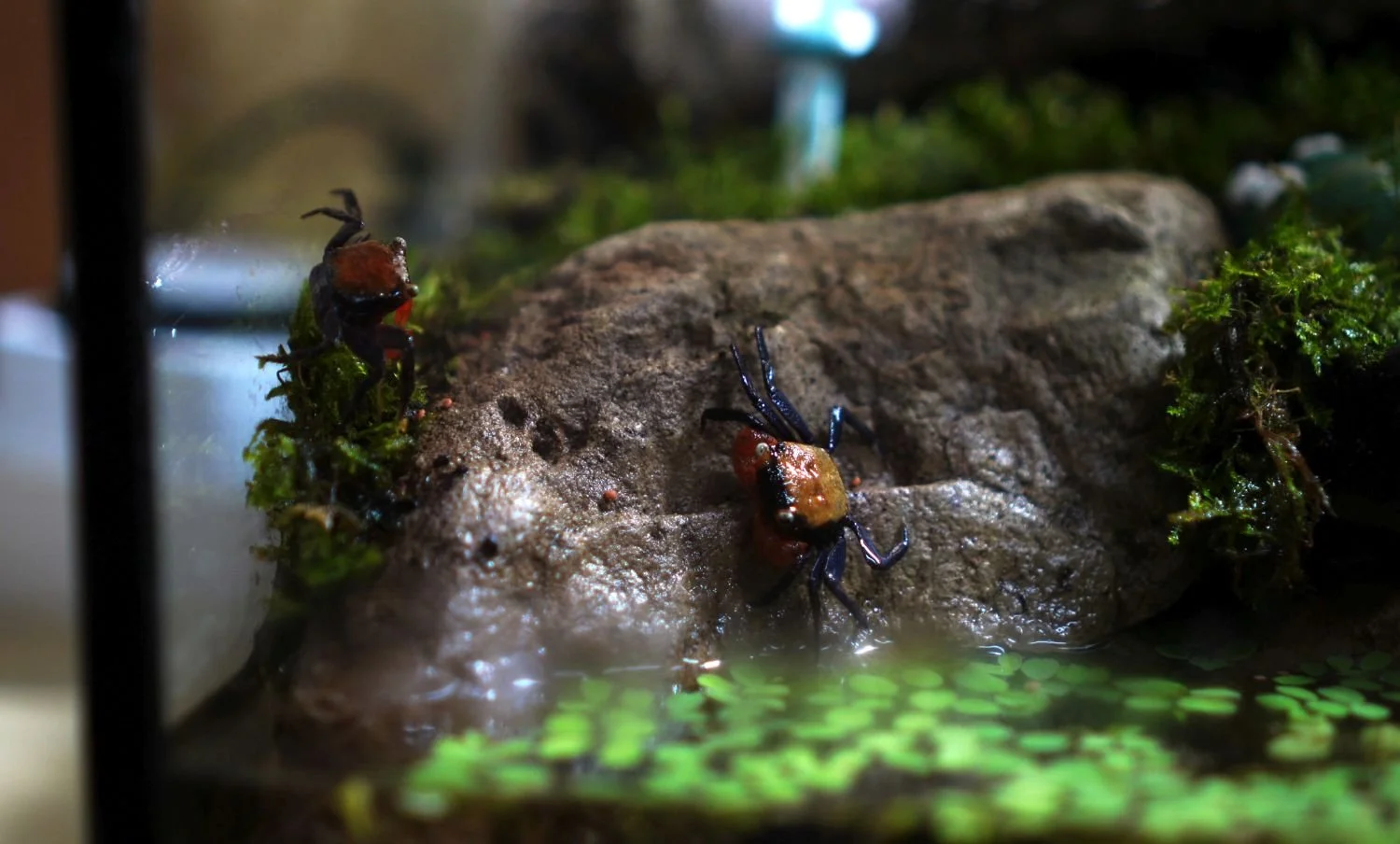
Vampire Crabs about to fight
Breeding Cycle
The breeding behaviour of the Red Devil Vampire Crab is intense and can be dangerous for the females. Males often forcefully mate, sometimes causing injury or death. Females carry their eggs under their abdomen, and after a 45-60 day incubation period, the young drop as fully formed mini crabs, bypassing a larval stage. The mother releases the juveniles near water, and they are left to fend for themselves, facing threats from predators and even their own parents or siblings.
As they grow, the juveniles molt frequently and stay close to water for the first few months. By 8-9 months, they begin developing adult colours and territorial behaviours. By 12 months, they are fully grown and start their own breeding cycles.

A batch of captive bred baby vampire crabs
Conservation Status
Like other Geosesarma species, Geosesarma hagen faces pressure from habitat loss and over-collection for the pet trade, putting wild populations at risk.
Interesting Facts
Geosesarma hagen was introduced to the aquarium hobby before it was known to science officially. Along with Geosesarma Dennerle
These crabs do best in paludarium setups that provide both land and water, closely mimicking their natural environment.
If you want to keep and breed vampire crabs in captivity make sure you check out this guide.