
GEOSESARMA NOTOPHORUM (WHITE MANDARIN VAMPIRE CRAB)

Geosesarma Notophorum @milleniumsnakes
Scientific Classification
Scientific Name: Geosesarma notophorum
Common Names: White Mandarin Vampire Crab, Mandarin Crab, Geosesarma pontianak (often misidentified species)
Discoverer: Ng & C. G. S. Tan, 1995
Scientifically Described: Yes
Availability in Trade: Very rare (as of February 2025)
Difficulty Level: Advanced/Master
Note: There is ongoing confusion regarding the naming of this species, as it is often mislabeled as Geosesarma pontianak. This guide follows the naming system from the Geosesarma Guide Book by Martin Hohle and Dr. Martin Singheiser (2016).
Identification & Characteristics
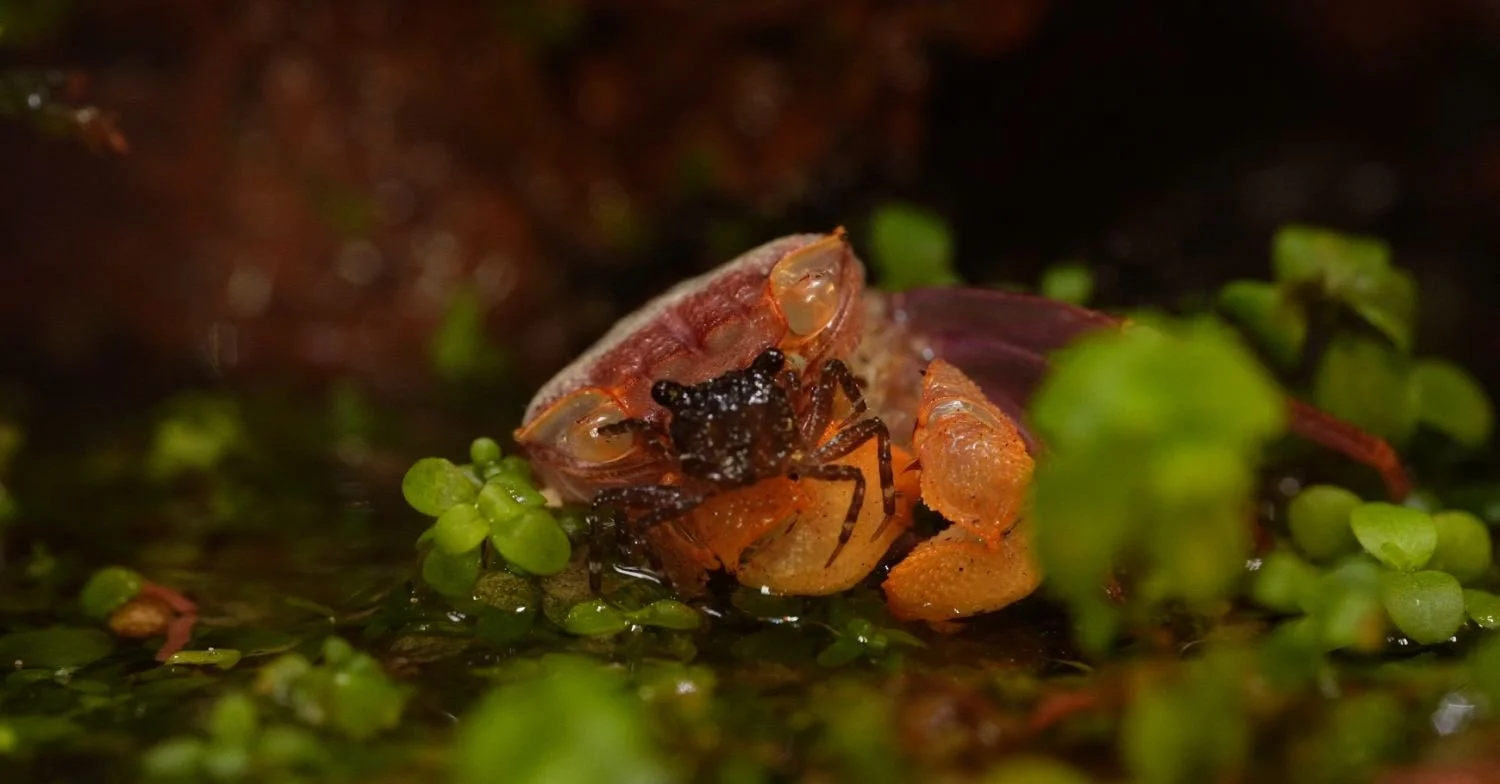
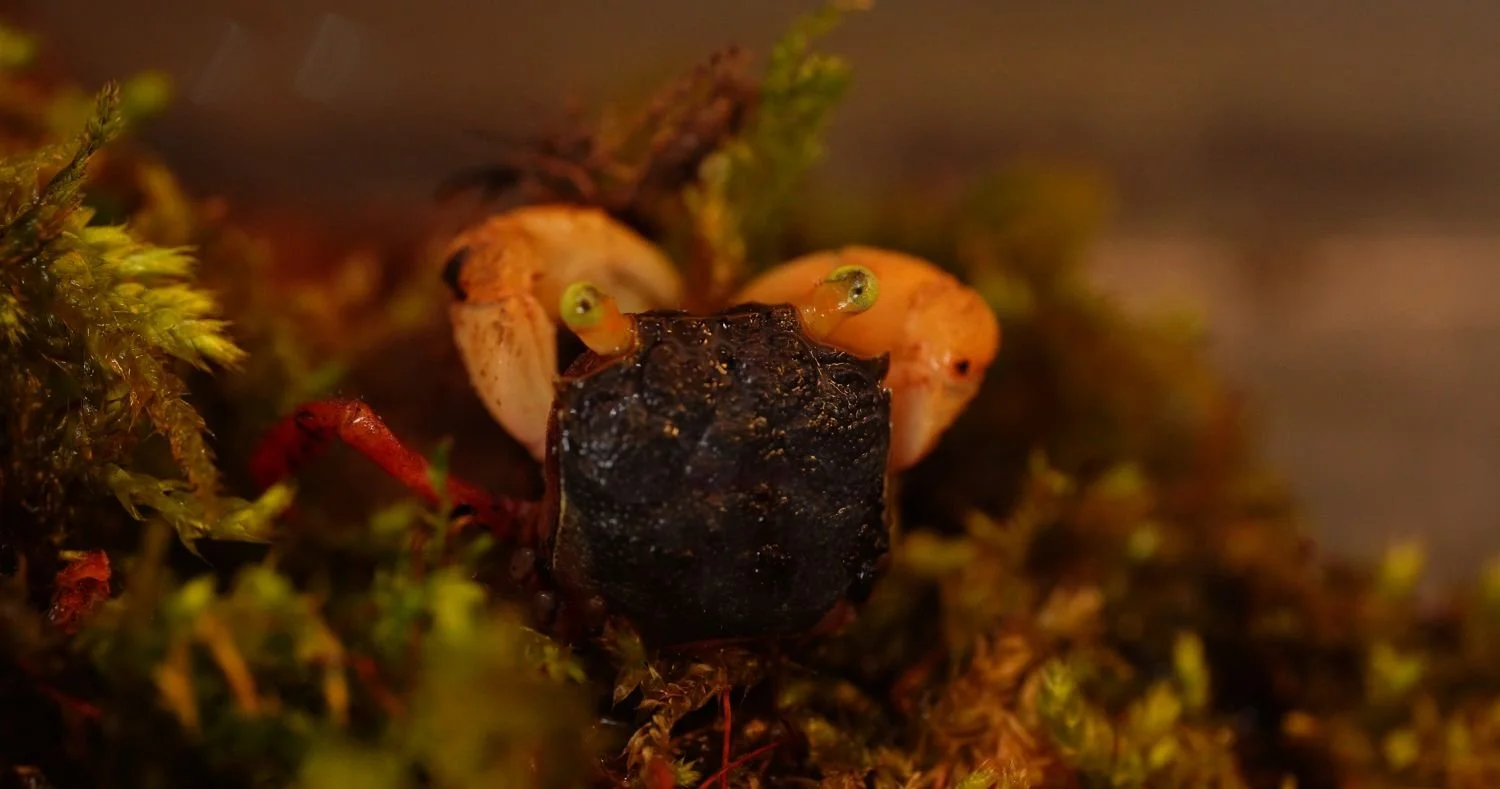
Geosesarma notophorum is a small, semi-terrestrial crab species with distinct white claws, commonly referred to as the White Mandarin Vampire Crab. This species is often confused with Geosesarma Pontianak (Mandarin Vampire Crab), making identification and proper labelling a little tricky. Especially when you are searching for images as they are always mixed up.
APPEARANCE
Carapace: Subtle blue on the back and mostly red on the underside.
Legs: Bright red legs
Claws: White, a pale yellow or light orange
Eyes: Light green or yellowish. Usually not as bright yellow as other Vampire Crab species.
Underside: Reddish brown.
Size: 2-2.5 inches across, slightly bigger than the average vampire crab.
Activity: Mostly crepuscular and nocturnal, though they are observed to be more active during the day compared to other species.
Aggression: Highly aggressive, particularly among males. They require at least twice the space of other species to minimise male fighting. An 80x30x30 cm enclosure or larger is recommended. Use a vertical-style enclosure for maximum comfort. If they don’t have enough space, they will rip each other apart.
Distribution & Habitat
While the exact locality of Geosesarma notophorum is not fully confirmed, they are believed to be native to Pulau Lingga, Indonesia.
Habitat Preferences: Unlike many other Geosesarma species, White Mandarins rarely visit the water section of their habitat. They molt on land and prefer to spend time in the canopy, making them perfect for taller enclosures. They may thrive in vivariums rather than paludariums, provided they have small water pools to keep their gills moist.

A large vertical-style enclosure like this Exo-Terra 45×45×90cm is best.
Diet
White Mandarins are omnivores and accept a wide range of foods.
Food Preferences: While they consume most commercial fish foods, they particularly enjoy hunting live foods such as isopods, crickets, springtails, fruitflies, and worms. The more dietary choices you give them the better especially small live insects they can hunt and eat.
Behaviour & Social Dynamics
Males: Highly aggressive, especially in confined spaces, which increases the likelihood of fights. Providing a larger enclosure is the only way to minimize conflicts. Quite often fights will end in death if they don’t have enough space to escape battle.
Females: Less is documented about female behaviour, but like males, they likely benefit from spacious environments to reduce stress.
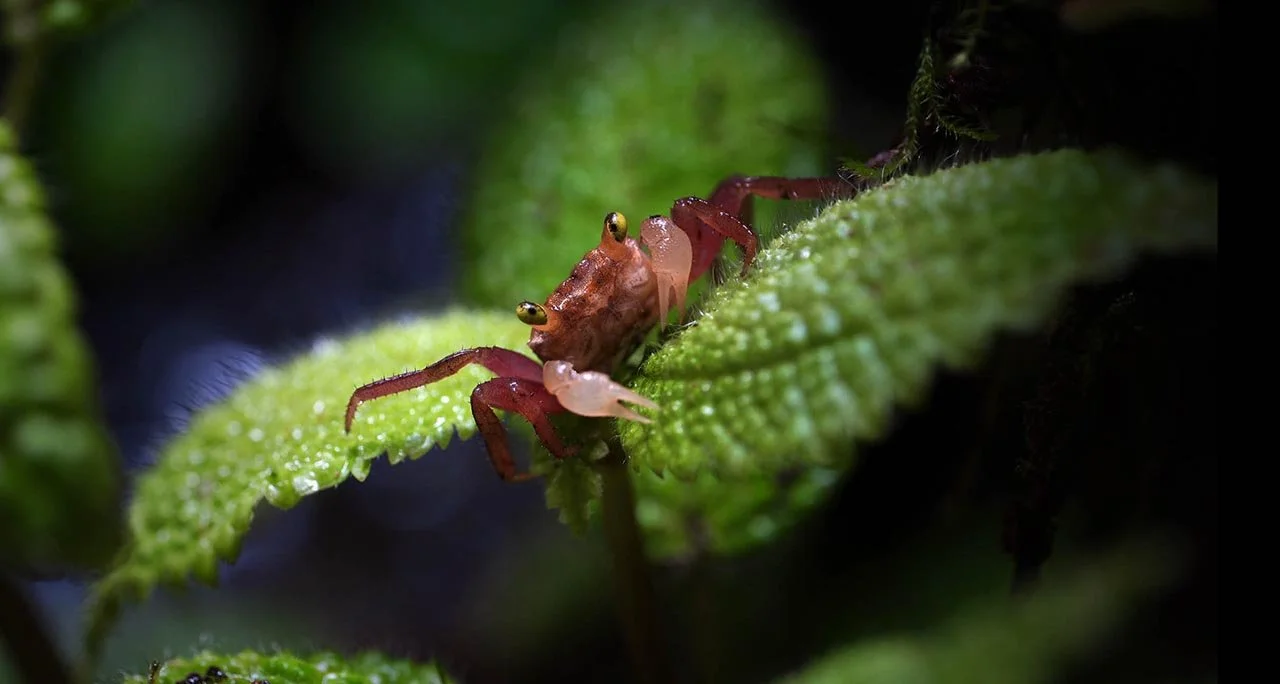
Female Geosesarma Notophorum
geosesarma Notophorum Molt on Land
Unlike most other Geosesamra species Geosesarma Notophorum molts on land and not in the water, though there are rare instances where they have been known to molt in water. However, this seems like something they do out of desperation.

Geosesarma Notophorum molt on land
GEOSESARMA NOTOPHORUM BREEDING
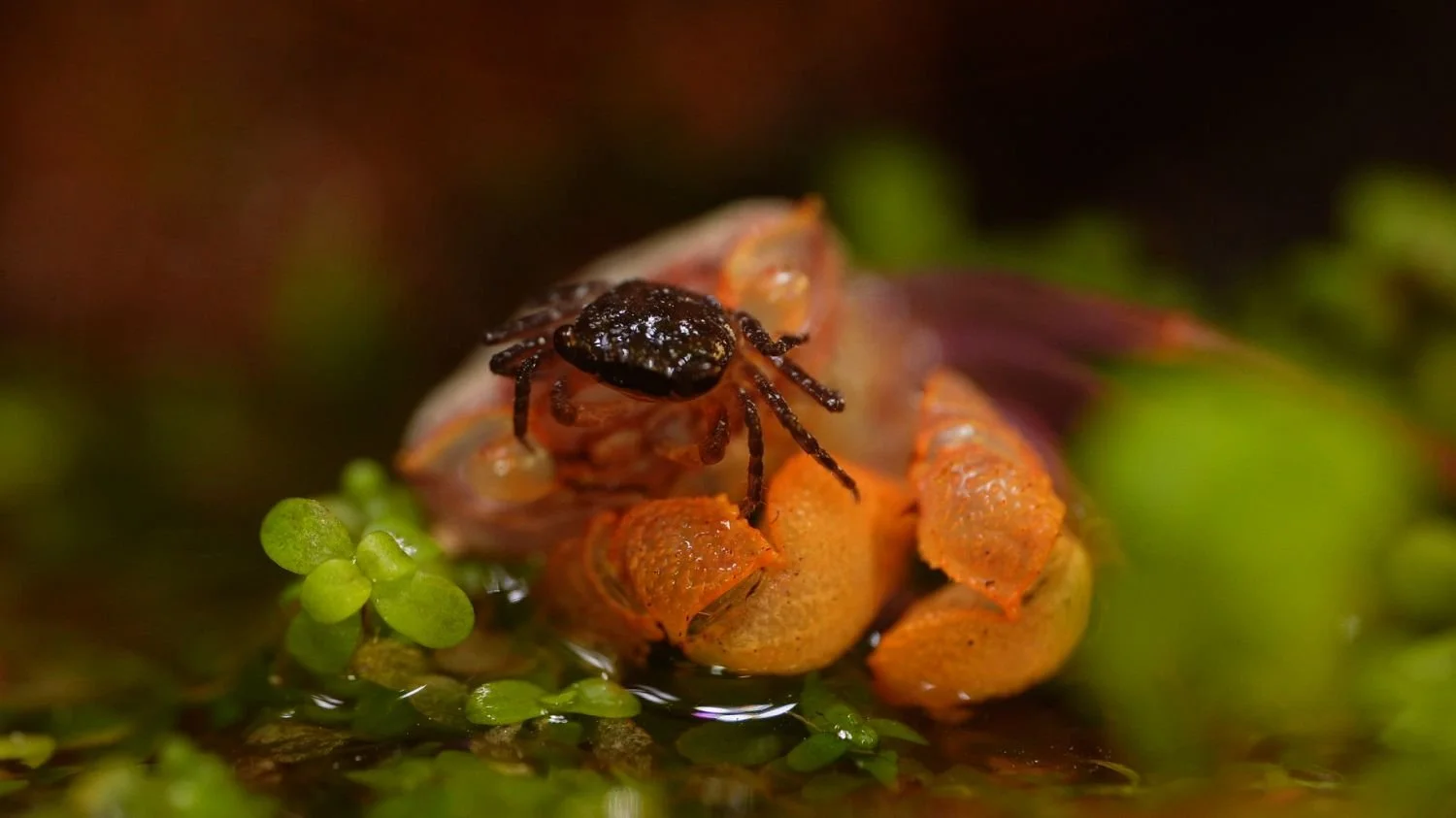
Whilst their molting processes are different, their breeding process is quite similar to all other Geosesarma species. However, females don’t spend as much time hiding in burrows in the soil. Female Geosesarma Notophorum also don’t carry their babies on their underside instead they are carried on their backs in a similar way that some species of spiders and scorpions do. A rough estimate from mating to babies becoming free-roaming is around 95-100 days. Give or take a week.
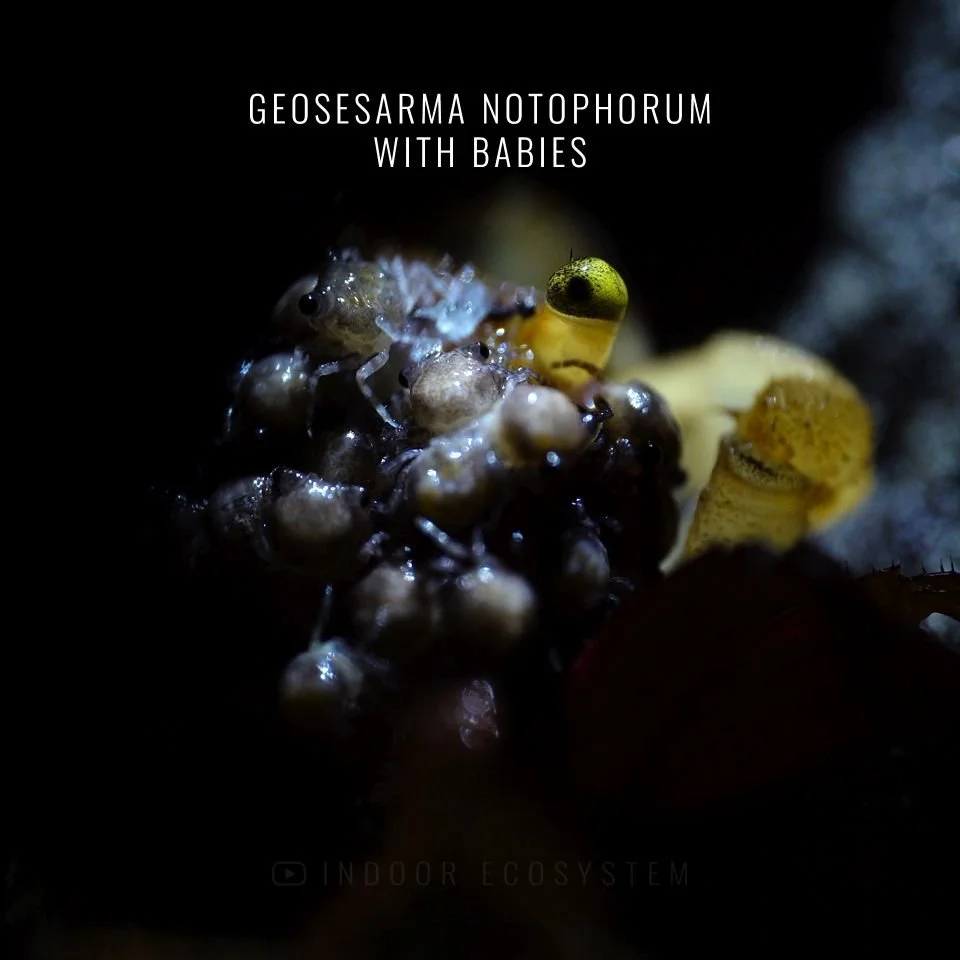
Geosesarma Notophorum carrying babies on her back
Here is a short video of what it looks like. The babies move around quite a lot, it’s actually a little bit gross, creepy, and interesting all at the same time.
Challenges in Captivity
If you’re planning on keeping Vampire Crabs you’ll need to read this care guide. It covers the general requirements and rules for all Geosesarma species. However, for Geosesarma Notophorum, it’s best to get a large vertical tank to keep them in.
Fragility: Geosesarma notophorum is considered one of the most delicate species within the hobby. They suffer from a very high mortality rate during shipping, with up to 95% dying within the first 4-6 weeks after shipping. Due to their poor survival rate, this species is not recommended for novice keepers.
Important: If you're new to vampire crabs, it’s best to avoid Geosesarma notophorum as your first choice.
ENVIRONMENTAL PARAMETERS
Air Temperature: 22–28°C (71–82°F)
Overnight lows and daily highs are normal, so if your tank goes from 20–30c over a 24-hour period (slowly) that is perfectly fine. This is very similar to what happens in nature. Though you will need a heater for your tank during the colder months of the year.
WATER SECTION RULES:
While they don’t use the water all that often if at all the below are the required parameters all other Geosesarma species require. Which is also suitable for Geosesarma Notophorum.
Water temperature: 22–25°C (71–78°F)
PH: Between 7.5–8.0
KH (carbonate hardness): Between 0–10
GH (general hardness) Between 4–16
Ammonia: 0
Nitrite: 0
Nitrate: Lower than 20 ppm
There’s a lot more to keeping Geosesarma species so make sure you read read this guide as well if you are planning to keep them.
Tank Design is Really Important
Include Bromeliads: These crabs love to utilise the small water reservoirs that naturally form in bromeliads. It's a great way to provide extra hydration opportunities and create a more enriching environment.
Provide Multiple Water Sources: Adding a second small water dish on the opposite side of the tank ensures they don’t have to congregate in one place to drink. This helps reduce tension and makes hydration more accessible.
Minimise Aggression Through Layout: Geosesarma notophorum are, by far, the most aggressive species I’ve kept. To prevent fights, avoid creating areas where they’re likely to cluster. Spread out hides, water sources, and climbing areas to keep them moving and separate.
Feed in Multiple Locations: When feeding, distribute food in several areas of the tank. This minimises competition and aggression during feeding time, giving all individuals a fair chance to eat.

Conservation Status
There is limited information on the conservation status of Geosesarma notophorum, but like many other species in the hobby, habitat loss and over-collection may be potential concerns.
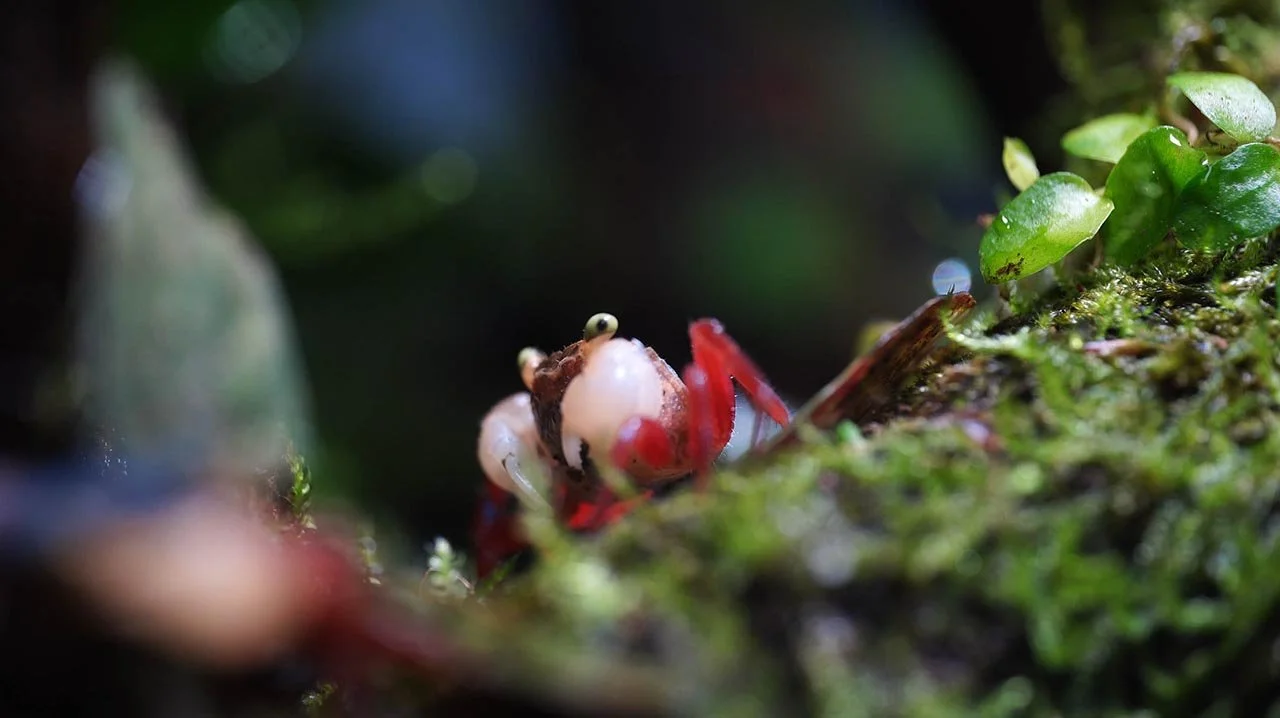
Male Geosesarma Notophorum (White Mandarin Vampire Crab)
Interesting Facts
Geosesarma notophorum prefers tall environments due to its canopy-dwelling behaviour, making it a good candidate for more vertically oriented enclosures. When I first introduce them to my tanks, the males almost always go up and the females almost always go down. After a few days though they spread out across the terrain. Though the upper portions of the tank are the most populated.
There is ongoing debate about whether these crabs should be housed in vivariums rather than paludariums, as they rarely enter the water. Personally, I think this is a viable option, so long as you still feature adequate water sources. Below is an update of my tank, where I implemented some of these changes.