
HOW TO STOP VAMPIRE CRABS FROM FIGHTING
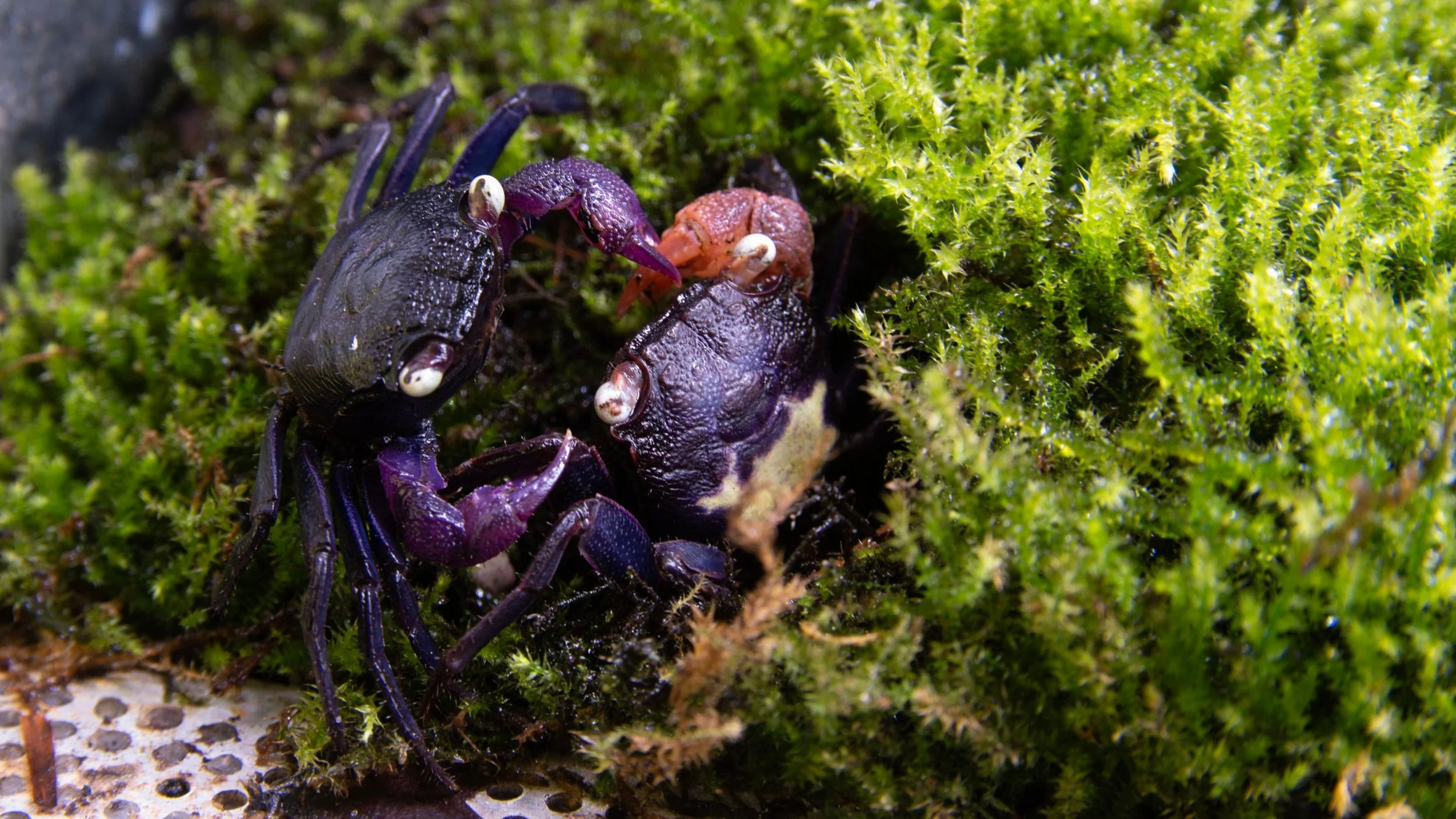
Male Vampire Crabs Fighting
Vampire crabs (Geosesarma species) are naturally territorial and aggressive, especially in confined spaces when kept in captivity. While you may not be able to completely stop their aggressive tendencies, you can significantly reduce their chances of fighting by following the steps below.
Maintain the Right Male-to-Female Ratio
One of the key ways to reduce fighting among vampire crabs is to maintain a proper male-to-female ratio. Ideally, you should keep one male for every two or more females. The more females in the tank, the less likely the males will become overly aggressive.
Increase Environmental Complexity
Tank design plays the most critical role in preventing fights. You should provide plenty of hiding spots and obstacles to break the crabs' line of sight. The more complex the environment, the better. Consider adding:
Caves and crevices
Dense plants and moss
Rocks and driftwood
Sticks and branches
These elements create separate territories and reduce the chances of direct confrontation.

Choose the right tank for your vampire crabs
Keep Only One Species Per Tank
Never mix different Geosesarma species (colour variations) in the same tank. Keeping mixed species together increases aggression levels significantly by ten times or more. To ensure a peaceful environment, only house a single species in each tank.
Why Mixing Vampire Crab Species is a BAD IDEA!
Maintain Optimal Temperature
Temperature plays a crucial role in the behavior of vampire crabs. Higher temperatures can make them more aggressive and also reduce their lifespan. Try to keep the temperature below 27°C (80°F) as much as possible to minimize stress and aggression.
Additional Factors to Consider
Tank Size Matters: Make sure the tank is large enough to prevent overcrowding. A minimum of 10 gallons for a small group (3-5 crabs) is recommended, but bigger is always better to reduce territorial disputes.
Feeding Strategy: Competition over food can lead to aggression. Make sure food is spread out in different areas rather than in one pile. Offer a varied diet (insects, pellets, plant matter) to ensure all crabs get their share.
Molting Safety: Vampire crabs become vulnerable when molting. If they don’t have safe hiding spots, other crabs might attack them. Providing soft, damp substrate for burrowing can help protect molting individuals.
Observing and Separating Aggressive Individuals: Some crabs may be naturally more aggressive. If fights continue despite all precautions, temporarily separating the aggressive crab into another tank may be necessary.