
HOW TO KEEP YOUR AQUARIUM COOL DURING HEAT WAVES
Hot weather can be dangerous for aquarium fish and creatures that live in paludariums and terrariums, especially during sudden summer heat waves. Most aquarium species are sensitive to temperature swings, and even tropical fish that are used to warmer will suffer and die if temperatures get too high and stay too high for too long. The good news is that there are several safe, practical ways to keep your aquarium cooler when temperatures rise. Most of these methods are also fairly cheap which is always good to hear!
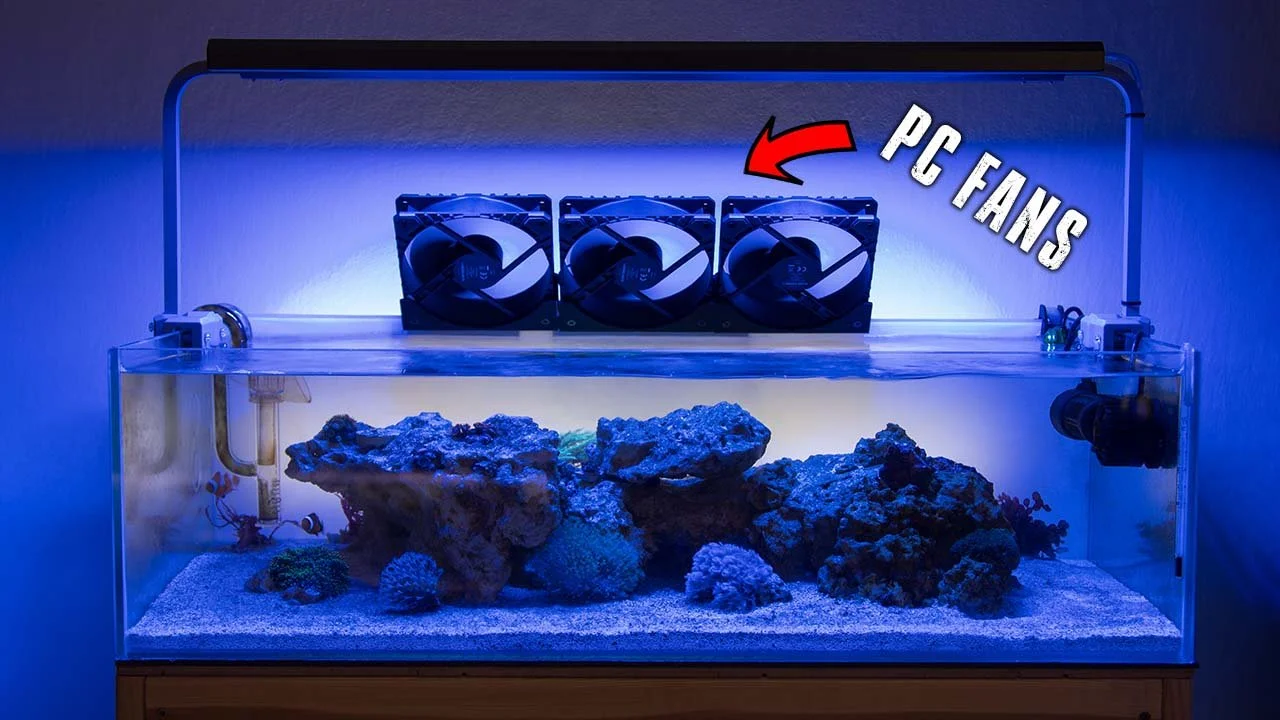
Here’s a guide to a mini DIY cooling system I have set up for 1 of my tanks.
How to cool an aquarium safely
There are a ton of different methods you can use and I’ve listed all of the ones that I use regularly or have used in the past. Most people should have easy access to the materials required as well which makes life super easy.
Turn off heat sources
Start by switching off the aquarium heater if it is still running. I know they have regulators inside of them that keeps temps stable but just switch them off for the period of the heat wave. Just don’t forget to turn it back on after the hot period has finished.
TURN OFF YOUR TANK LIGHTS
When things start to heat up turn off your aquarium lights. Lights put a fair bit of heat into a tank, especially if it is close to the waters surface or inside of a lid/hood. Everything in your tank will be fine for a week or so. If you need to run it for longer, flip the cycle so that it runs at night when things are cooler. When the hot spell passes switch back to the normal routine.

AQUARIUM LIDS & DIRECT SUNLIGHT
If you have an aquarium with a lid or a hood with poor ventilation, or direct sunlight hitting the tank, close blinds to reduce sunlight hitting the tank. If you can take the lid off your tank and replace it with some kind of mesh covering to allow heat to escape. If you don’t have access to a mesh cover, lower the water in your tank so that fish can’t jump out and leave the lid off.
INCREASE VENTILATION
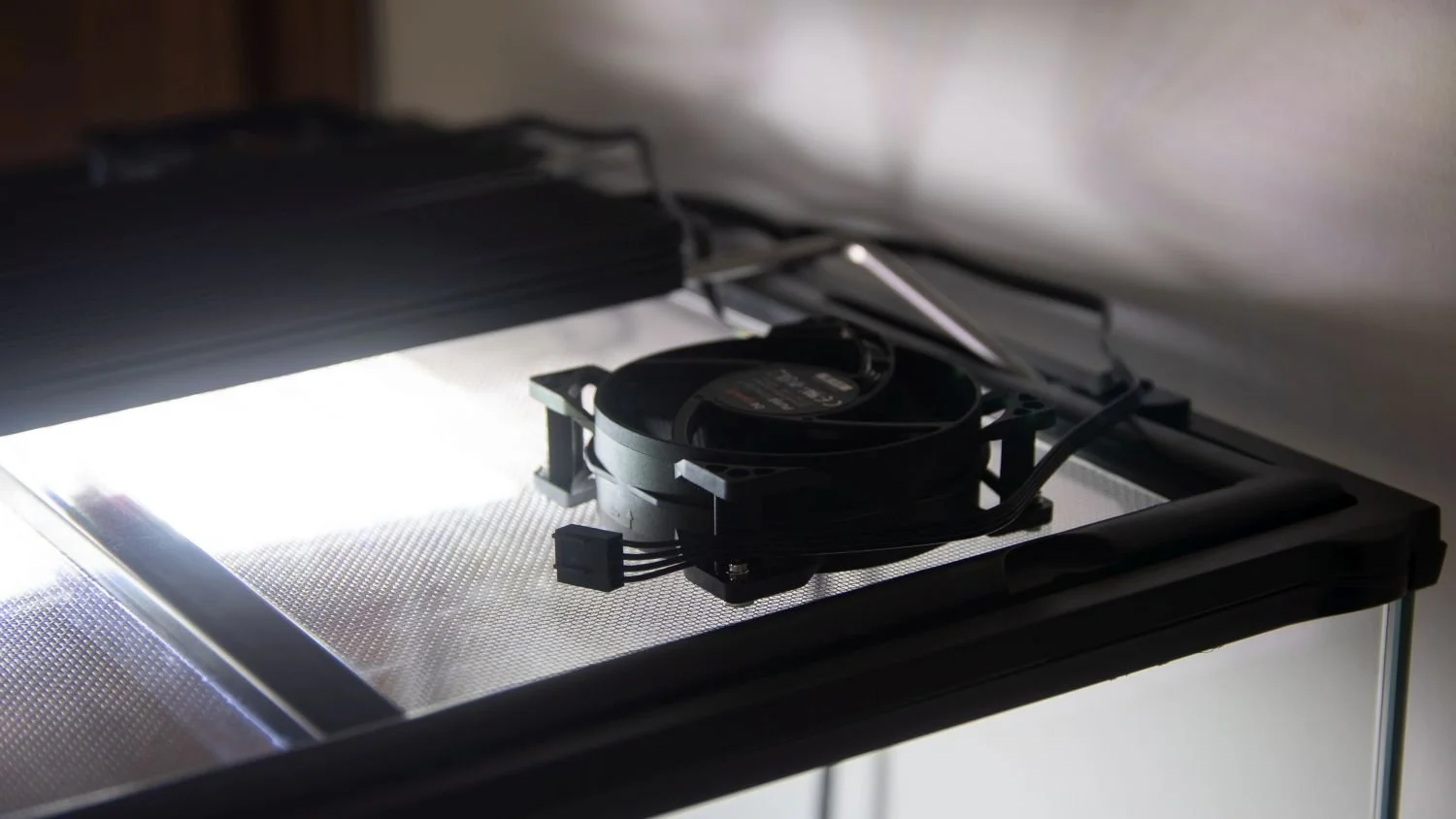
In paludariums and terrariums it’s a good idea to increase ventilation, if you have things fairly closed up to keep humidity high, now’s the time to open things up so that airflow takes priority. If you have the option to place a small fan near the tank to help move air through the vents that’s a great idea. While doing this you will need to mist the tank a bit more often so be prepared to spray things down more often than you normally would.
Increase surface movement
One of the easiest and safest ways to help fish during a heat wave is to boost oxygen exchange. Add an air stone, raise the filter output so it disturbs the surface more, or use a small circulation pump. This will not dramatically lower the temperature, but it can make a major difference by increasing oxygen levels in warm water. It will increase evaporation a bit so be prepared to top up the tank a bit more often.
Use a fan over the water surface
A simple clip on or desk fan blowing across the aquarium can cool the water through evaporation. This is one of the most effective low cost methods for short heat waves. If you do this, monitor water levels closely because evaporation will increase. Top up with dechlorinated water as needed. I’ve got a guide here for making your own DIY cooling system that using computer fans.This system lowered the temperature in a 55 liter (15 gal) tank by 7°C. Evaporation was really high but I avoided any fish losses.
Note: This is the best method to cool paludariums and terrariums in my experience. Get two fans and set one to push air in, and one to pull air out. This works best with a fogger or misting system as it will prevent plants and mosses drying out.
Float cool water bottles carefully
You can float a sealed bottle of chilled water in the tank or sump to bring the temperature down gradually. Never dump ice directly into the aquarium, and do not make the water temperature drop too quickly. The goal is a slow, controlled reduction, not a shock. The best thing to do is get an empty plastic bottle, fill it with water (not too full) then freeze it. Once it’s frozen solid, you can float it in your tank to slowly lower the water temps. Make a few different sized ones and rotate them in and out of your take as required.
This works exceptionally well and is basically free!
Note: If you are doing this in a reef tank make sure the bottles won’t leak because you don’t want to have a leaky bottle changing the salinity of your water.
Avoid overfeeding
Fish often eat less in extreme heat, and excess food quickly pollutes warm water. Feed lightly and remove uneaten food. Cleaner water means less stress and better oxygen conditions. Fish are perfectly fine without eating for a few days anyway, it’s actually good for their digestive systems.
USE AN AQUARIUM CHILLER
If you live in a hot climate, keep sensitive species, or regularly struggle with high tank temperatures, an aquarium chiller can be one of the best long term investments. Chillers are designed to keep the water at a set temperature by actively cooling it as needed. They are especially useful for marine aquariums, reef systems, axolotl tanks, and large freshwater setups where fans alone may not be enough.
Chillers are way more expensive than other cooling methods, but they offer the most reliable temperature control during prolonged heat waves. If your aquarium repeatedly climbs above the safe range every summer, a chiller may be the safest option.
You can actually buy units that have built in heaters and chillers now which is super handy. But they are pretty damn expensive…
What not to do
Do not make sudden temperature changes. Avoid adding ice cubes directly to the tank, replacing large amounts of water with very cold water, or moving fish unless absolutely necessary. Rapid shifts can stress fish as much as the heat itself.