
WHAT DO VAMPIRE CRABS EAT? HOW OFTEN DO YOU FEED VAMPIRE CRABS?
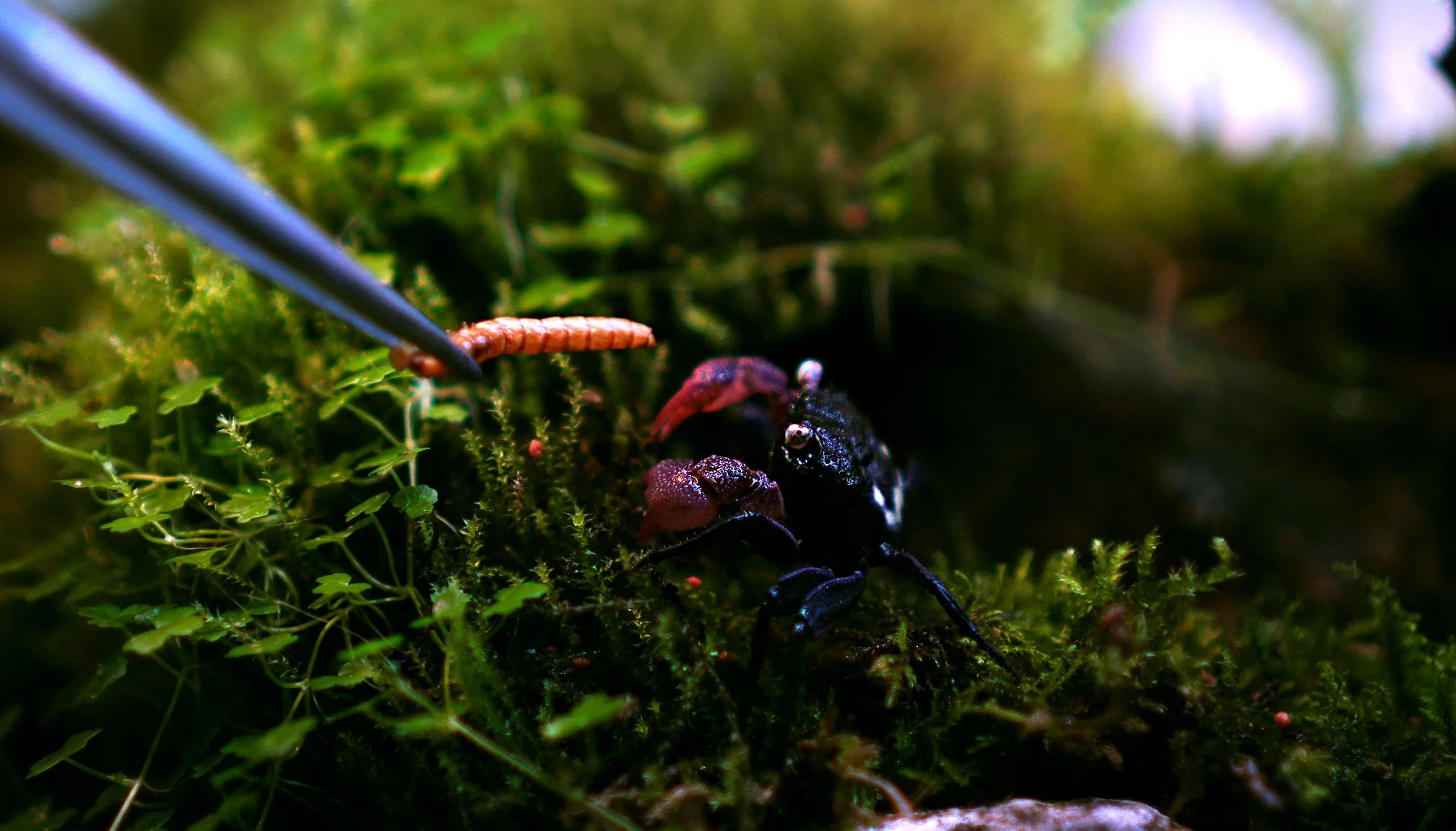
Hand feeding my Vampire Crabs
Vampire Crabs are really interesting little crabs that are quite active hunters, whilst at the same time enjoying a detritivore lifestyle. This makes them highly adaptable to a range of different food sources. So what do you feed vampire crabs and how often do you feed them?
VAMPIRE CRAB DIET | What do vampire crabs eat?
First, you need to understand the basics of Vampire Crab life. These little crabs will eat just about anything and will spend almost all of their time doing three things, mating, fighting and feasting. They graze all day and night on microfauna in their environment which is why it is super important to set up a bioactive ecosystem for them.
This gives them a plentiful source of food to eat while they roam around the tank. Things like springtails, aquatic snails, isopods earthworms, moss, and other decaying elements in their range. While this is super convenient making them fairly easy to care for, you also need to substitute their diet with extra nutrients. If they don’t have a very mixed diet they will lose their colour, and eventually die from a failed molt (not being able to shed their old shell).
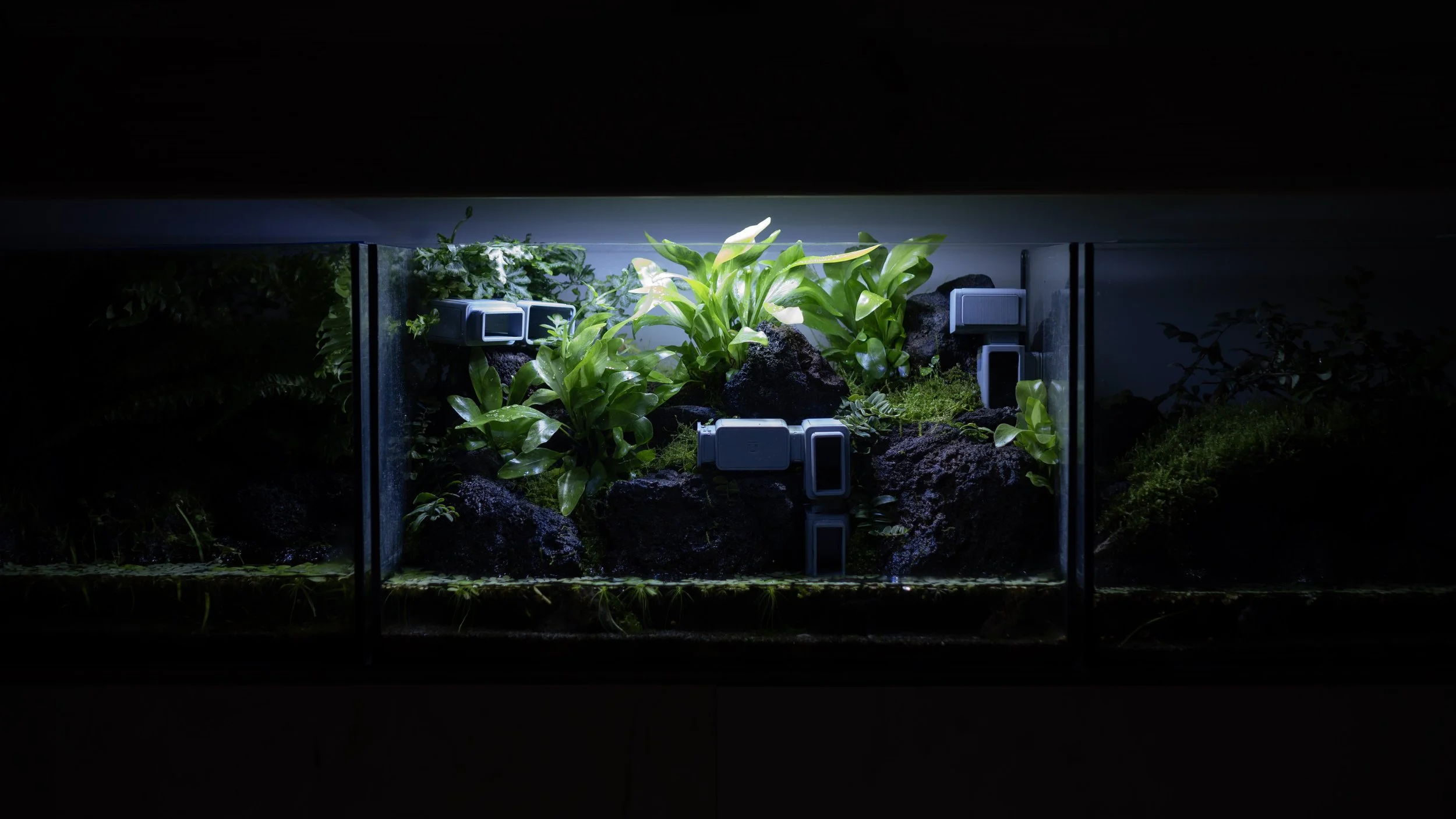
A well established paludarium will provide plenty of food options (Don't forget your lid)
How Often Do You Feed Vampire Crabs?
Depending on your crabs you can usually get away with feeding them about 3 times a week. The most important thing is that you feed them something different on each of the days you feed them. I generally feed my crabs on Monday, Wednesday, and Friday to keep things simple. One day I feed some kind of store-bought fish food, either a flake or granule type food. The next time I feed some boiled vegetables such as broccoli or zucchini, and on the third day I will feed something meaty, like frozen fish, blood worms, frozen crickets, etc.
Then as the weeks roll on I will continue that method rotating through food types. This gives them the most natural and best diet available it’s also super simple and quite cheap. Whenever you’re preparing dinner just leave a slice of zucchini, broccoli, etc to the side for your crabs.
What to Feed Vampire Crabs
There are tons and tons of things you can feed vampire crabs and most store-bought fish and crab foods work really well. Just make sure they aren’t the only thing you feed them.
Below is a list of the primary things that I feed my Geosesarma Vampire Crabs. This is a pretty basic list but it is enough to keep them happy. You can certainly explore different options as well. Variety is the objective!
Fish Foods
Cory granules
Nano fish pellets
Betta fish flakes
Pleco wafters
Bug bites
Crab Cuisine
Tropical fish flakes
Insect Flakes
Dried foods
Mealworms
Crickets
Springtails (hard to find)
Roaches
Shrimp
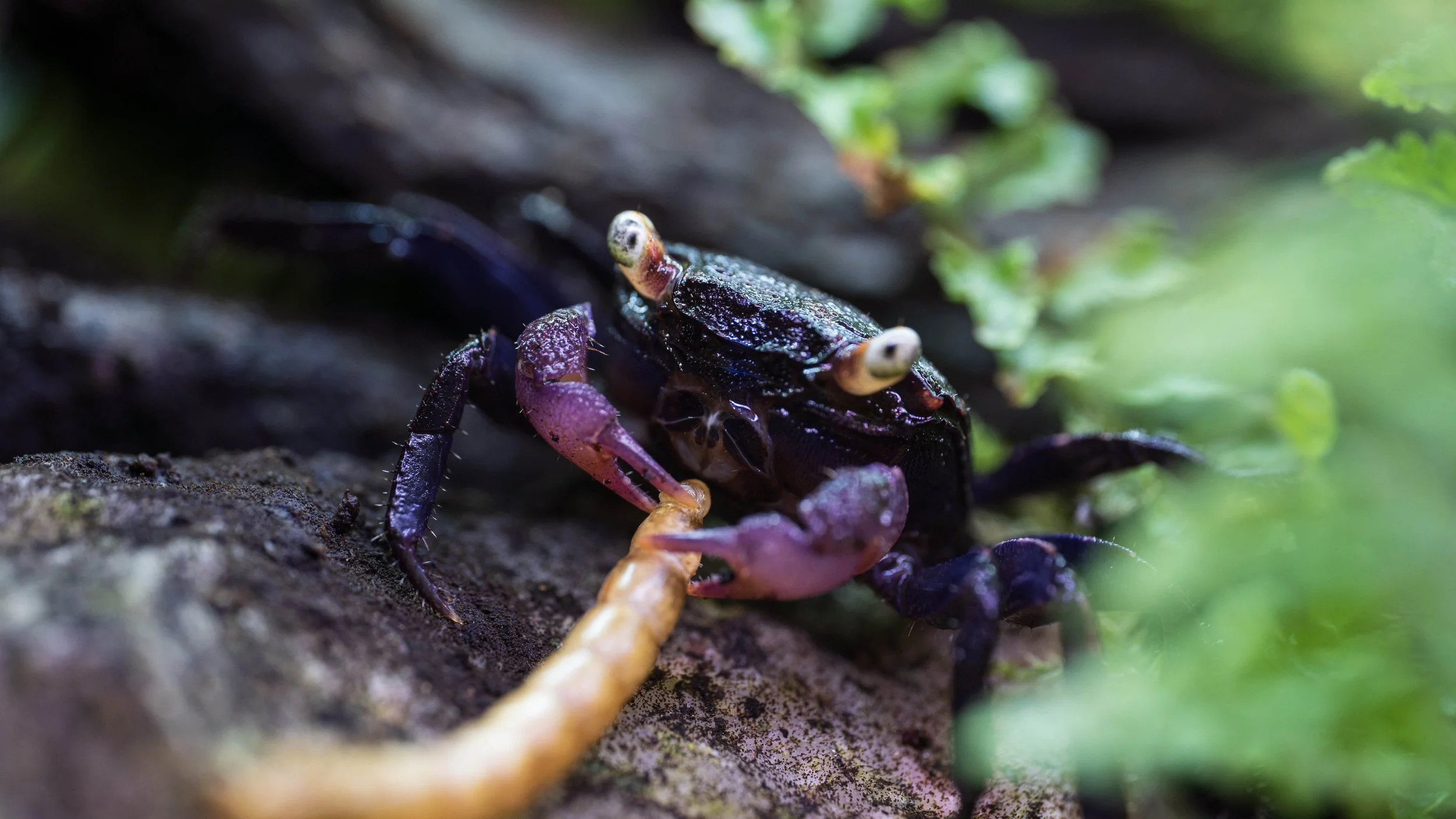
A Vampire Crab eating dried meal worms
Fresh foods (FRESH or boiled)
Chop them up into small pieces. This will make it easier for crabs to eat them and drag them away to a quiet spot to eat.
Apples: Apples are a good source of vitamin C.
Cucumbers: Cucumbers are a good source of Vitamin K.
Squash: Squash is a good source of vitamin A and potassium.
Zucchini: Zucchini is also a good source of vitamin A and potassium.
Carrots: Carrots are a good source of fiber.
Spinach: Spinach is a good source of calcium and iron.
Kale: Kale is a good source of calcium, vitamin C, and iron.
Collards: Collards are a good source of calcium and potassium.
Sweet potatoes: Sweet potatoes are a good source of vitamin A and fiber.
Pumpkin: Pumpkin is a good source of vitamin A and potassium.
Stinging Nettle Leaves (boiled): Stinging nettle leaves are rich in iron, calcium, and vitamins A and C.
Broccoli: Broccoli is a great source of vitamins C, K, and fibre.
Peas: Peas are a good source of protein, fibre, and vitamins A and C.
Beans: Beans are high in protein, fibre, and essential minerals.
Lettuce: Lettuce provides fibre and is a good source of vitamins A and K.
Cabbage: Cabbage is packed with vitamin C, fibre, and antioxidants.
Potato: Potatoes are rich in potassium and a good source of vitamins B6 and C.
Oranges: Oranges are a good source of vitamin C.
Tomatoes: Tomatoes are also a good source of vitamin C.
Live Foods
Mealworms (crush their heads)
Crickets (small ones)
Earthworms
Blood worms
Isopods
Springtails
Wingless Fruitflies
Shrimp
Snails (aquatic)
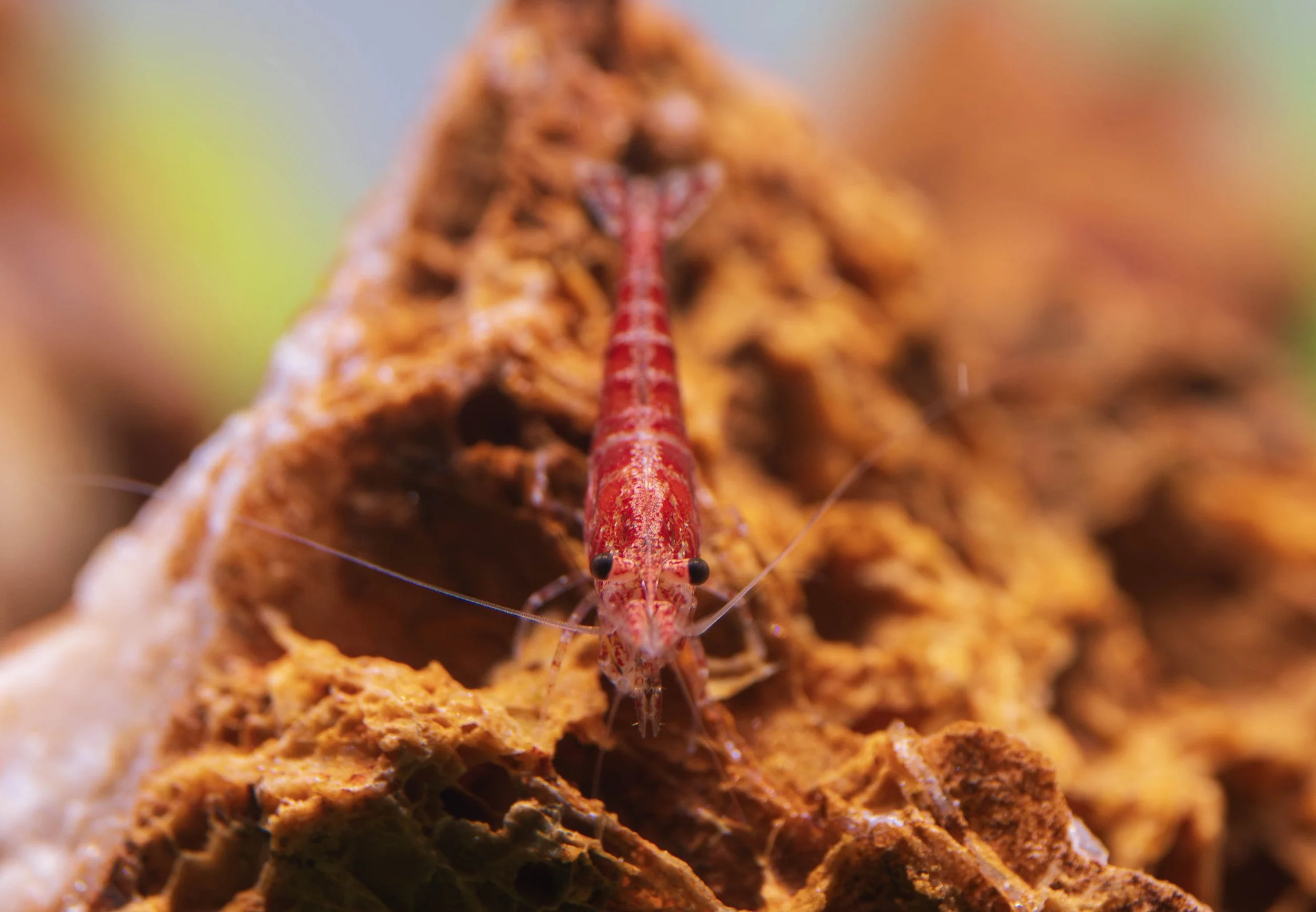
Cherry Shrimp make great live food sources in a Vampire Crab ecosystem
LIVE PLANTS
Salvinia
Duckweed
Feeding Vampire Crabs When You Go on Holidays?
Generally, if you aren’t going for more than 3 weeks Vampire Crabs will be fine feeding off of the food in their environment. Just make sure that you feed them well before you leave and when you get back. I generally like to drop some extra live foods in the tank on the day I leave. Extra isopods, crickets, worms etc. I also put a small leaf of raw cabbage or lettuce into the tank. Both of these are highly resistant to mold and the crabs will pick at it over time.
How to Deal with Food Going Moldy When Feeding Vampire Crabs
This topic is quite an important one so I highly suggest checking out this guide specifically dedicated to it. Or watch the video below. It will go into a lot more detail on the issue of mold.
Conclusion
Vampire Crabs are pretty carefree eaters but need a varied diet. They naturally graze on microfauna in their environment, so it's super important to give them a bioactive habitat that includes organisms like springtails and aquatic snails. While they can and will forage within their paludarium, supplementing their diet with things like fish foods, fresh vegetables, and live prey is a must to ensure they get the nutrients they need to maintain their vibrant coloration and health. Feeding them around three times a week with a rotating variety of foods helps mimic their natural feeding habits.