
TERRATHELPHUSA (BANANA CRAB) CARE GUIDE
Author: Albomita
Terrathelphusa is a little-known genus of freshwater crab native to the tropical island of Java, Indonesia. These crabs inhabit stream banks and lowland freshwater systems, likely thriving in leaf litter and rocky environments. Despite their relative availability in the U.S. pet trade, they remain understudied and underappreciated, primarily because so little information is available about their care.
While Terrathelphusa chilensis is occasionally found through exotic sellers and importers, many hobbyists shy away from purchasing them due to the lack of established husbandry protocols. However, anecdotal experience from keepers suggests they are hardier than expected, making them a compelling genus for those interested in trailblazing care standards.
Common Names
Terrathelphusa is also commonly known as:
Banana Crab
Lemon Crab
Gold Crab
Members of the species
Terrathelphusa chilensis (Currently the only documented species in the pet trade)
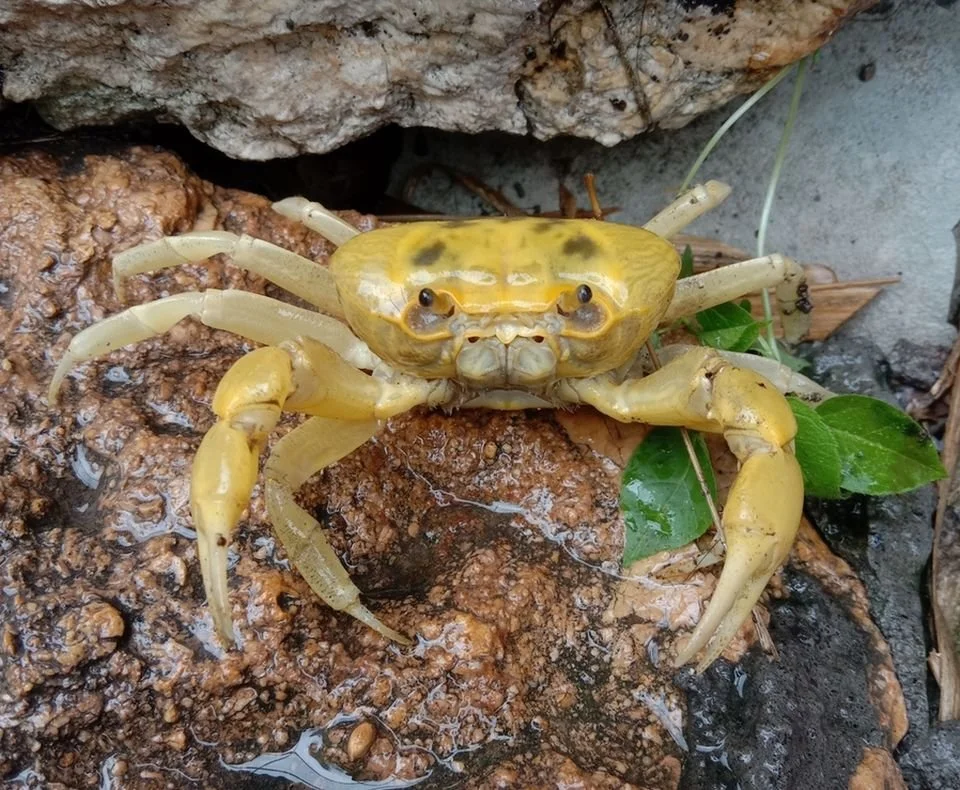
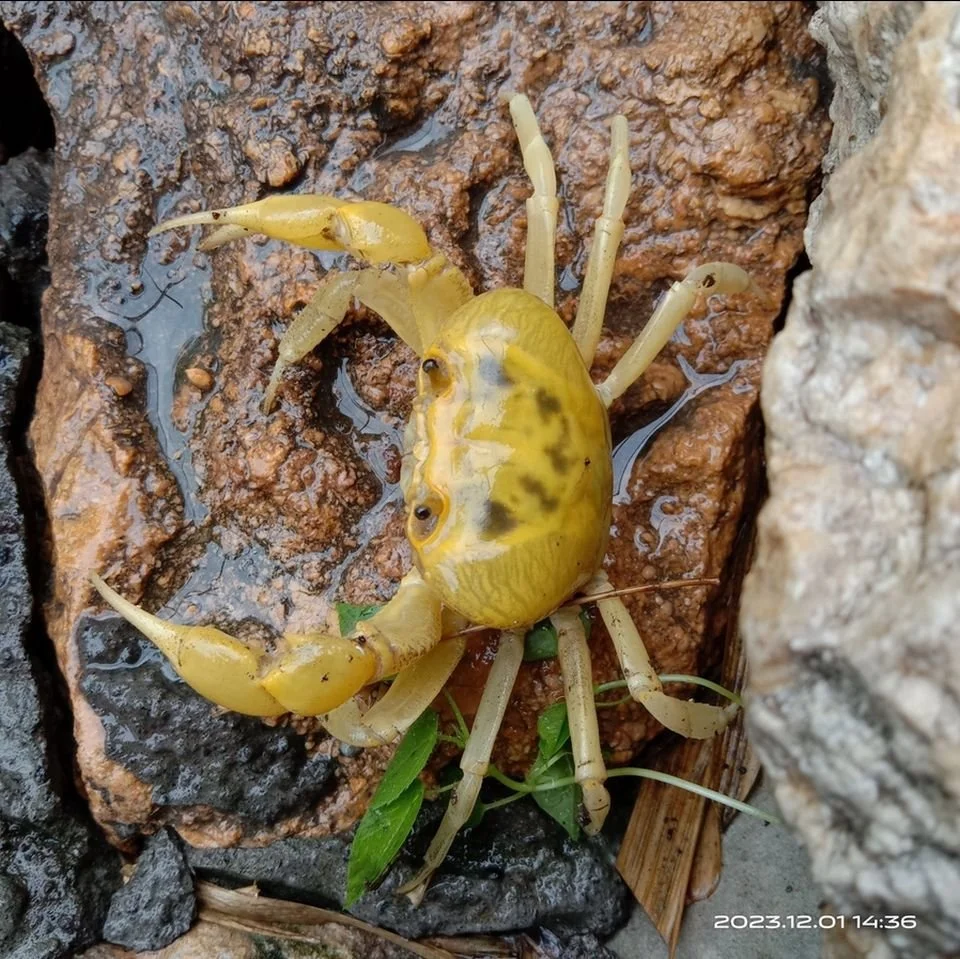
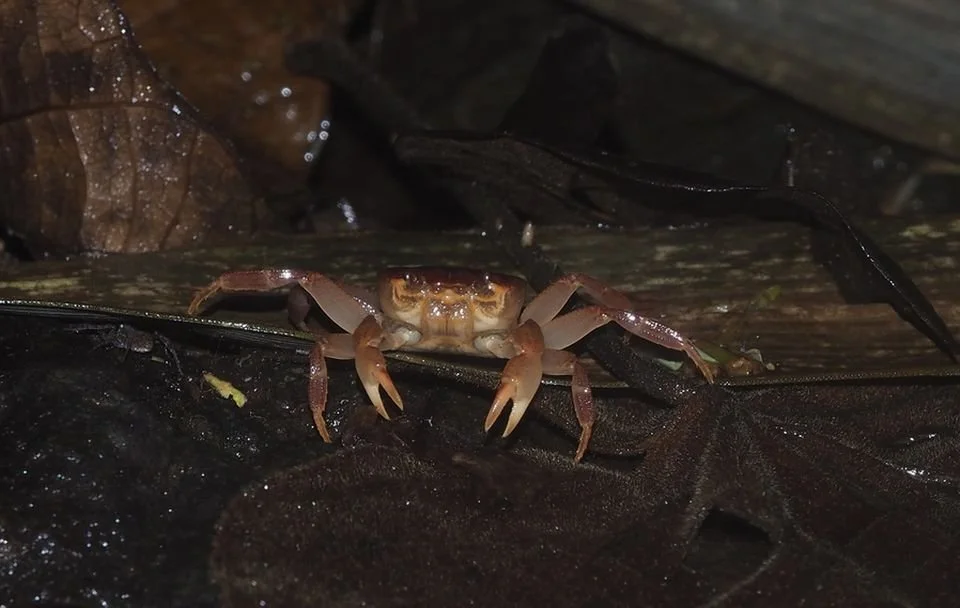
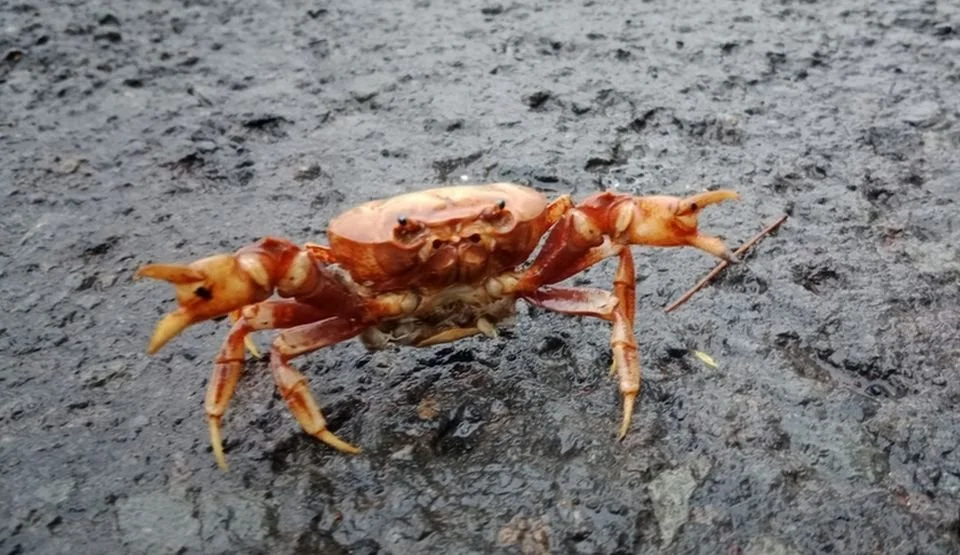
Conservation level
Unknown – There is little data available about wild populations. As wild-caught imports remain the only source, ethical sourcing and responsible keeping are crucial.
Care level
Dark method: Medium (Trials are being run)
Love method: Expert.
The Dark vs Love Methods Explained
Enclosure and Environment
Much about Terrathelphusa care remains anecdotal, but there are several foundational observations:
These crabs are primarily aquatic but must be provided a branch, rock, or platform to climb out of the water if needed.
They show surprising tolerance to water quality, appearing indifferent to modest ammonia or nitrate spikes though this should not be interpreted as a license to neglect water maintenance.
A crushed coral or cuttlebone addition to the tank is recommended to raise water hardness, aiding shell health.
General Parameters:
Temperature: 27°C / 80°F
Humidity: N/A (fully aquatic, but ambient room humidity shouldn’t be too dry if land is exposed)
Minimum Tank Size: 10+ gallons per crab is a safe starting point (At least x3 times the size of the crab at an absolute minimum)
Water Access: Full aquatic base with shallow exit points
Lighting: Provide a natural day-night cycle.
Provide hides for molting and comfort caves, coconut shells, or stacked stones work well.
Substrate
Use medium or small-sized gravel as the substrate. It should be inert and easy to clean. Avoid sharp-edged or brightly dyed substrates, as these may cause stress or physical harm.
Cohabitation
Early indications suggest this genus may tolerate cohabitation, but this is unproven and should be monitored carefully.
Suggested Ratios: m/f/f or m/f/f/f
Space: The more crabs, the more space and hides you’ll need
Keep a backup tank or divider ready in case of aggression.
Diet
Hikari crab cuisine, fish pellets, and vegetables.
Data Source
The information in this guide was kindly researched and provided by the team at Crustacean Council.