
PARATHELPHUSA CARE GUIDE
Author: Albomita
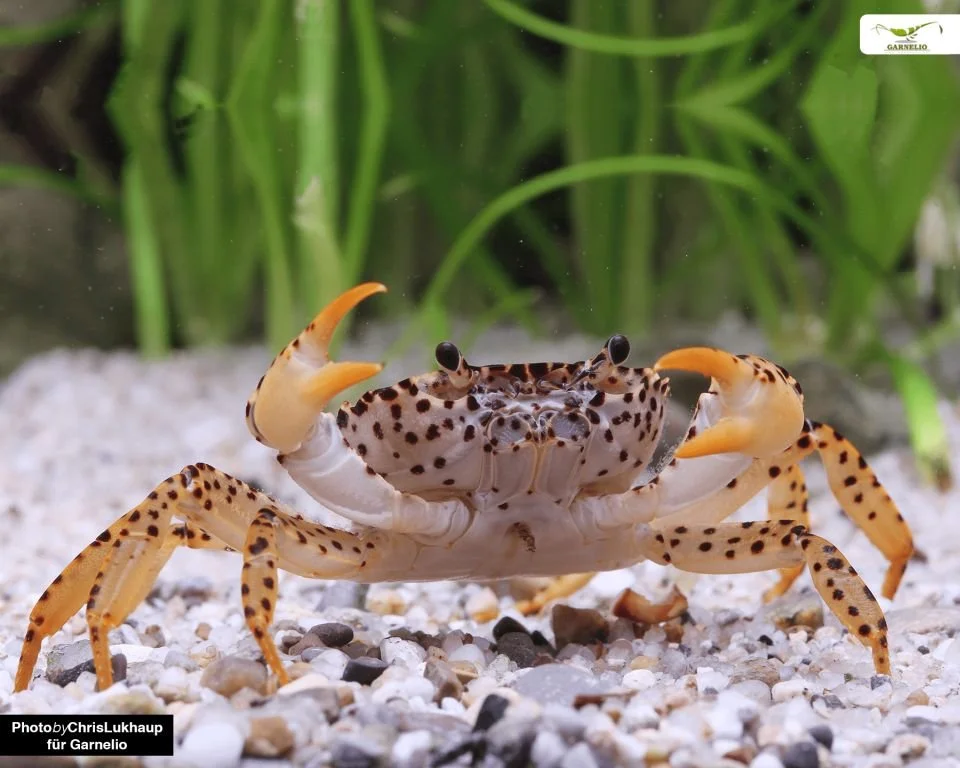
Parathelphusa pantherina is a highly sought-after species of freshwater crab known for its stunning pattern and coloration, often compared to the markings of a panther. Native to Indonesia, this species is listed as Endangered, and unfortunately, every individual currently available in the aquarium trade is wild caught.
Despite its endangered status, P. pantherina remains readily available through various exotic pet retailers. This popularity poses a serious ethical dilemma: while hobbyist interest can help drive captive breeding efforts, overharvesting from the wild places natural populations at greater risk. If you cannot source a captive-bred individual, it is strongly advised that you do not purchase this species.
Common Names
Parathelphusa pantherina is also commonly known as:
Panther crab
Freshwater panther crab
Lake Matano crab
Members of the species
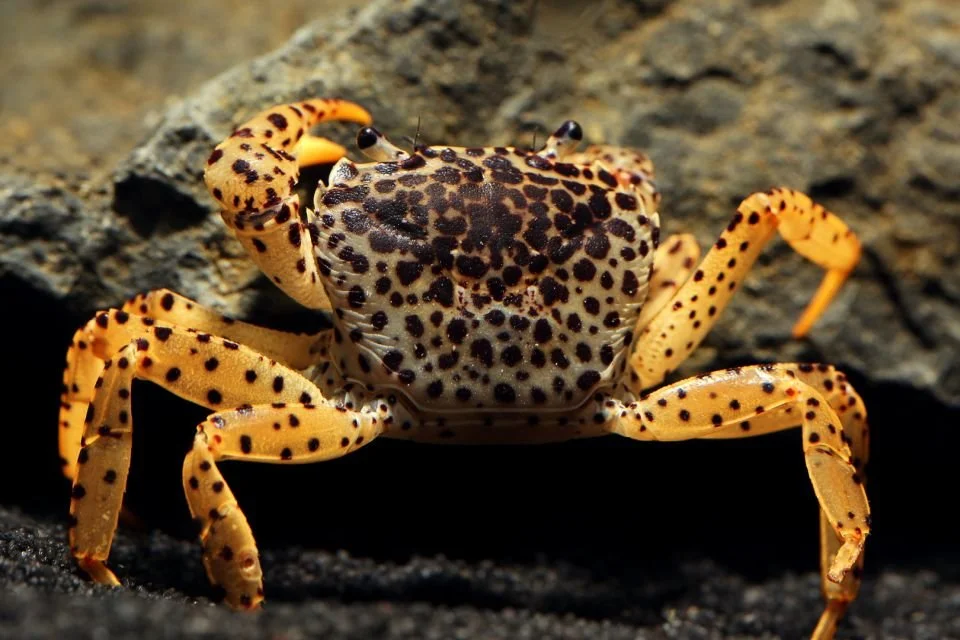
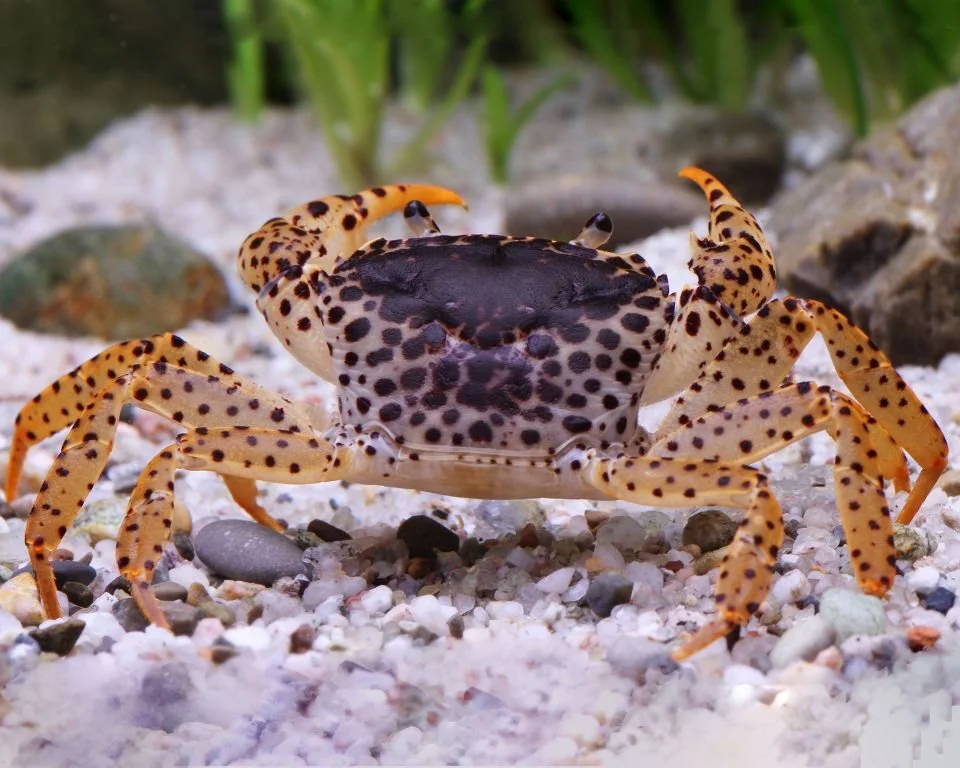
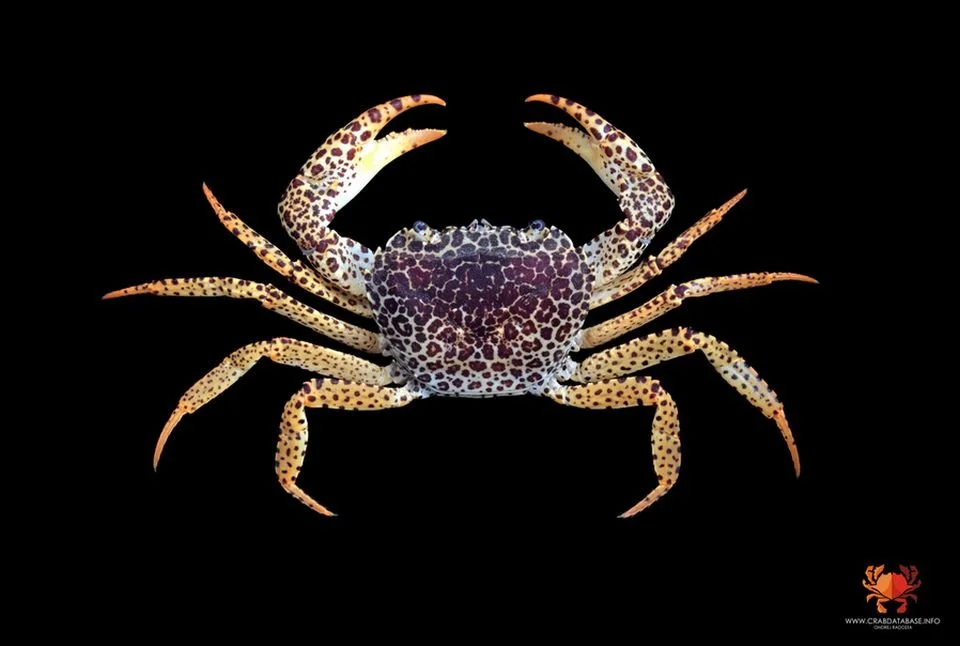
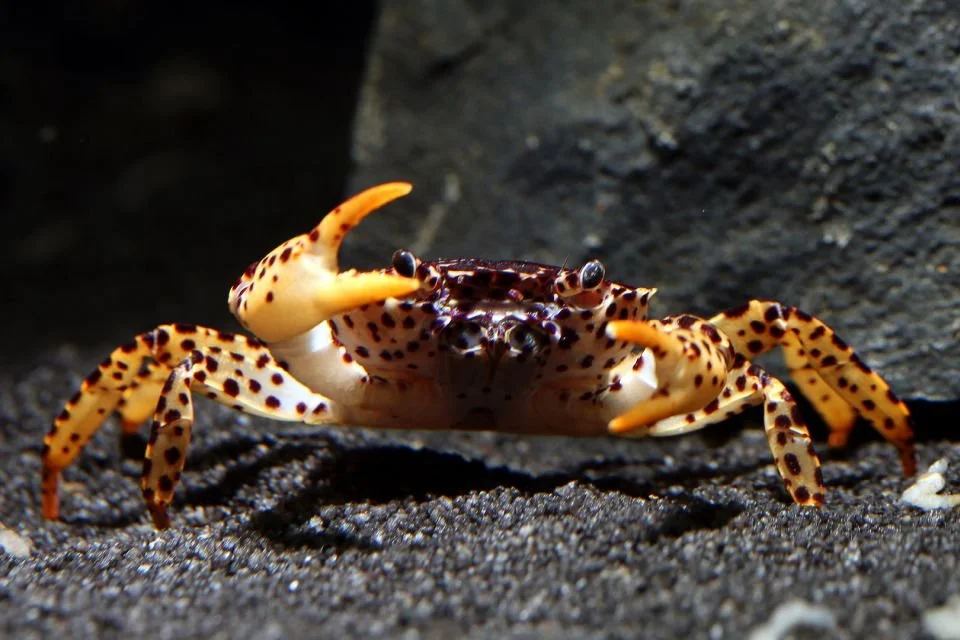
Conservation level
Endangered
All individuals in the trade are currently wild-caught. Captive breeding is possible in theory, but remains largely undocumented.
Care level
Intermediate
This species is not difficult in terms of environmental parameters, but ethical considerations and behavioural needs elevate its complexity. It requires attentive feeding, space, and secure hiding areas to thrive.
Enclosure and Environment
In terms of setup, P. pantherina behaves much like a crayfish, territorial, destructive to plants, and eager to remodel its environment. It’s important to provide a simple, secure layout with stable water quality. Make sure you give them the ability to leave the water if they want to.
Minimum Tank Size: 10-20 gallons per individual. (Bigger is always better)
Ideal Setup for Pairing/Breeding: 50 gallons may work, but 75 and above is best. To breed them, you will also need a land area.
Temperature: 23-31°C | 74-88°F These crabs live in quite warm water in the wild
Water Access: Fully aquatic setup preferred, but allow access to land or structures to leave the water if desired
Lighting: Provide a natural day-night cycle.
Substrate
These crabs will dig, rearrange substrate, and are known to eat most aquatic plants. Some success has been reported with hardy floating plants like Riccia fluitans, which they may leave alone.
Cohabitation
Cohabitation is possible but challenging:
These crabs are territorial and will fight if overcrowded
A breeding pair (m/f) can potentially coexist in a minimum 50-gallon tank, but I would highly suggest using a 75-gallon or bigger tank to make the chances of success a lot higher.
Provide ample hiding spots, visual barriers, and caves to reduce aggression
Monitor closely during molts or territorial displays
Diet
P. pantherina is a voracious carnivore with omnivorous tendencies. They require a high-protein, diverse diet for optimal health and colour. A staple diet of live or frozen prey combined with vegetables is essential.
Live Food (should always be available):
Guppies
Endlers
Ramshorn or bladder snails
Protein Sources:
Frozen or live shrimp
Worms (earthworms, bloodworms)
Scuds and small aquatic invertebrates
Vegetables (feed every other day):
Zucchini
Kale
Broccoli
Carrots
Green beans
⚠️ Avoid feeding only one type of food. Variety is essential to prevent nutritional deficiencies. This is basic for all animals, really.
Data Source
The information in this guide was kindly researched and provided by the team at Crustacean Council.