
GEOSESARMA TIOMANICUM (DISCO VAMPIRE CRAB)
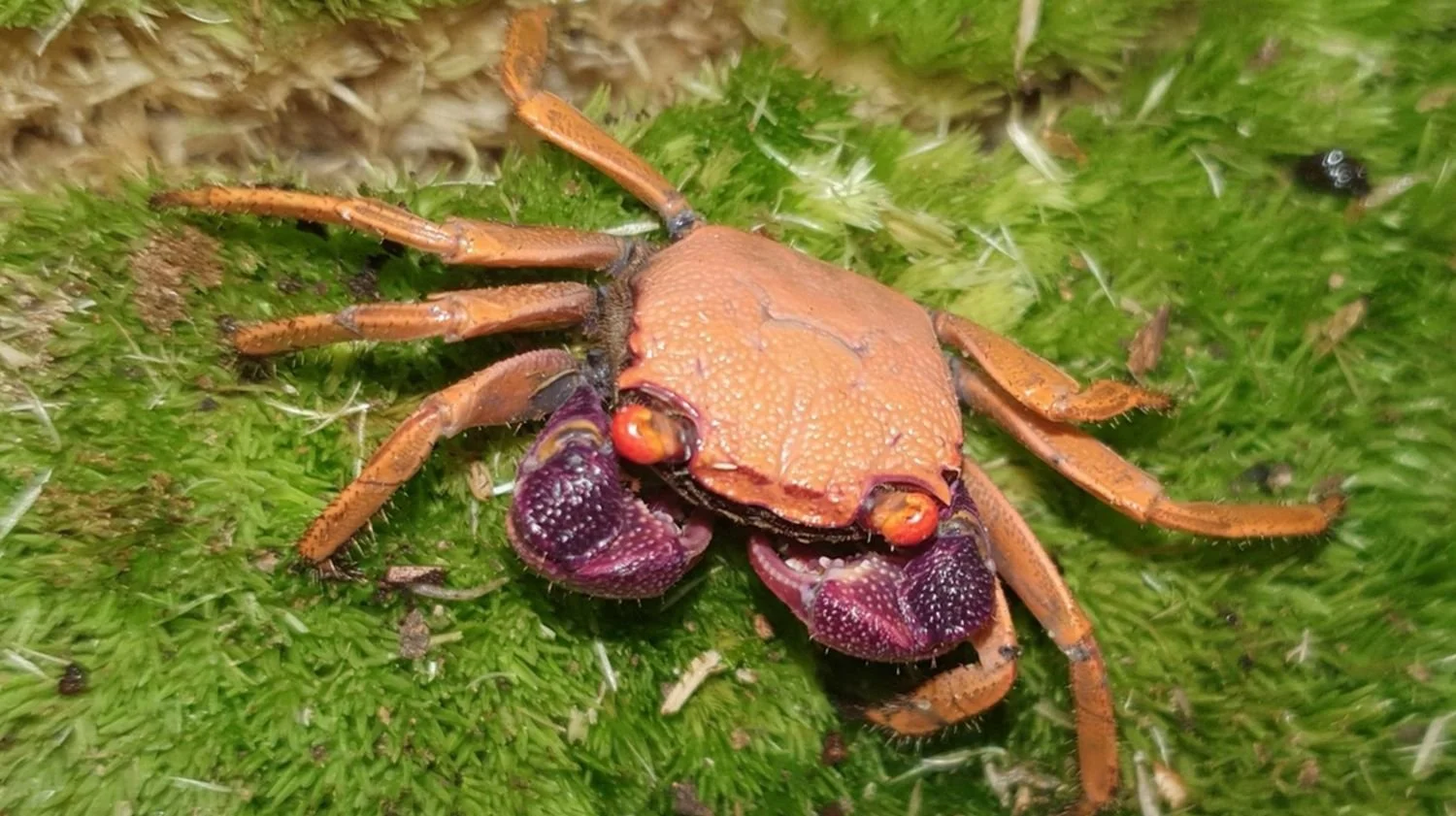
Geosesarma Tiomanicum - Disco Vampire Crab
Scientific Classification
Scientific Name: Geosesarma tiomanicum
Common Names: Disco Vampire Crab, Disco Crab, Carnaval, Red Carnaval, Disco Orange
Discoverer: P.K.L. Ng, 1986
Distribution: Pulau Tioman, Malaysia
Scientifically Described: Yes
Availability in Trade: Popular (as of February 2025)
Identification & Characteristics
Geosesarma Tiomanicum is one of the largest known species within the Geosesarma genus and is renowned for its aggressive behaviour. These crabs have purple claws with bright orange eyes. Quite often, they are so orange they almost look fake.
Carapace: Orange-salmon in colour.
Legs: Orange-salmon, sometimes dark grey.
Claws: Purple.
Eyes: Bright orange/red.
Underside: Brown, black, or purple.
Size: Geosesarma tiomanicum was the largest species within the Geosesarma genus until Geosesarma tagbanua was discovered. Though I’m not personally convinced Tagbanua is a Geosesarma species. It looks a little too different from all the others.
Activity: Mostly crepuscular and nocturnal, though captive-bred individuals may be less shy and more active during the day.
Aggression: Known for their aggressive nature, especially among males. It is best to keep them with at least double the space compared to other Geosesarma species to minimise fighting. A tank of at least 10-12 gallons (38-45 liters) is a good start, but bigger is always better. If they don’t have enough space and hides, males will rip each other to bits.
Note: Quite often it is mixed up and confused with Geosesarma albomita. A lot of people assumed it was a colour morph of the same species, but G. Albomita and G. Tiomanicum are in fact different species and should not be mixed with each other, even though they both come from the same small island and probably have overlap in the wild (Gunung Kajang, Pulau Tioman, Malaysia). To make it more confusing both are called “Disco” in the hobby.
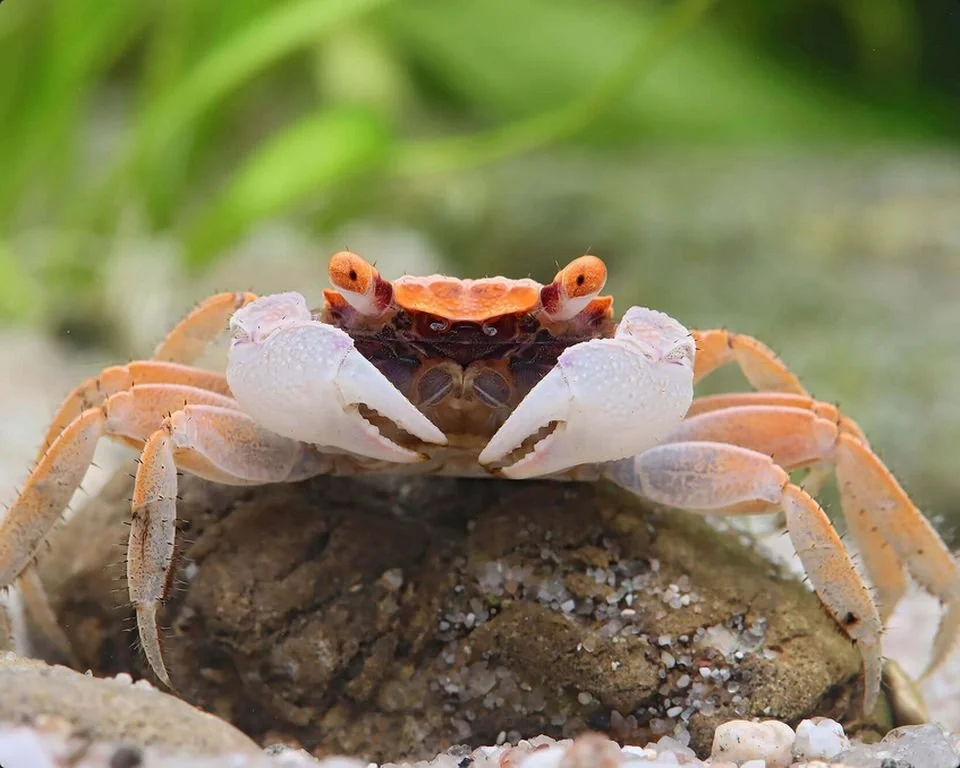
Geosesarma albomita commonly confused with Tiomanicum (both called Disco in the hobby)
Distribution & Habitat
Distribution Area/Locality: Pulau Tioman, Malaysia
Habitat Preferences: Geosesarma Tiomanicum typically inhabits the forest floor, residing in burrows near bodies of water and streams. They are also capable climbers and may utilize vertical space within their environment. Though this is just while they are looking for mates and food. When hiding and hunkering down burrows in the soil is their preference.
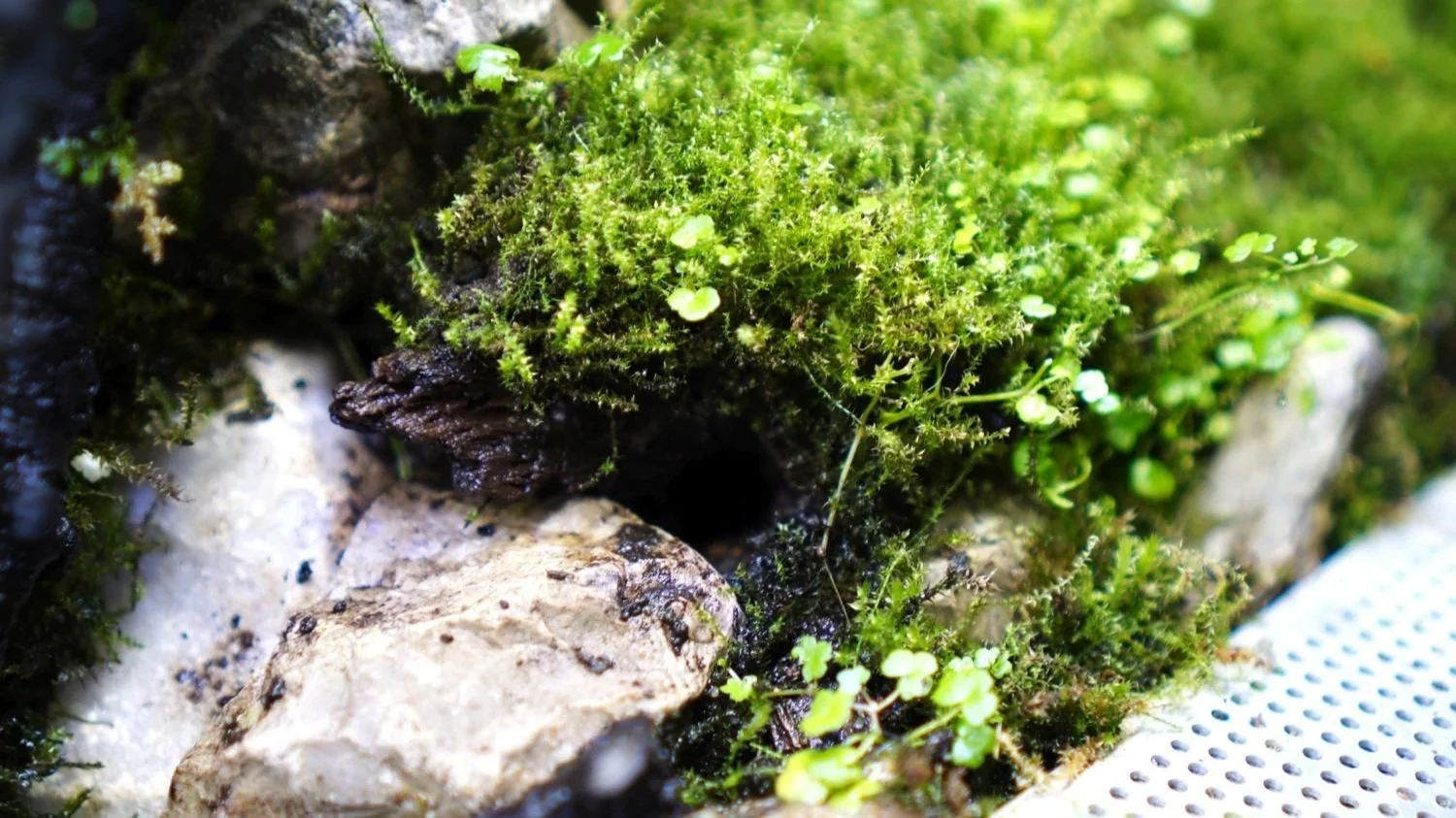
A typical Geosesarma Vampire Crab burrow
When kept in captivity
They need a warm, humid environment, with a humidity level of 75% or higher. A humidifier can be used to increase the humidity, or you can mist the enclosure regularly with a water bottle.
WATER SECTION RULES:
Water temperature: 22–25°C (71–78°F)
PH: Between 7.5–8.0
KH (carbonate hardness): Between 0–10
GH (general hardness) Between 4–16
Ammonia: 0
Nitrite: 0
Nitrate: Lower than 20 ppm
Air Temperature: 22–28°C (71–82°F)
Overnight lows and daily highs are normal, so if your tank goes from 20–30c over a 24-hour period (slowly) that is perfectly fine. This is very similar to what happens in nature. However, you will need a heater for your tank during the colder months of the year.
Tank ideas for keeping Disco Vampire Crabs
Diet
This species is an omnivore with a strong preference for live foods.
Food Preferences: Enjoys a variety of live foods but will accept most commercial fish foods as well. Mine absolutely love demolishing live isopods and small crickets. But they’ll eat earthworms, mealworms and most other readily available reptile foods.
Behaviour & Social Dynamics
Social Behavior: While Geosesarma Tiomanicum can be semi-social in larger groups, male aggression can lead to conflicts, particularly in confined spaces. because of this, it is really important to provide adequate space to reduce stress and fighting.
Breeding & Lifespan
Geosesarma sp. tiomanicum is among the more shy species within the Geosesarma family, exhibiting nocturnal tendencies. However, individuals bred in captivity tend to be less timid and may show daytime activity.
Generally, their lifespan is 2 - 2.5 years old but there have been reports of individuals living up to 4 years in captivity, more than double the typical lifespan recorded for other Geosesarma species.
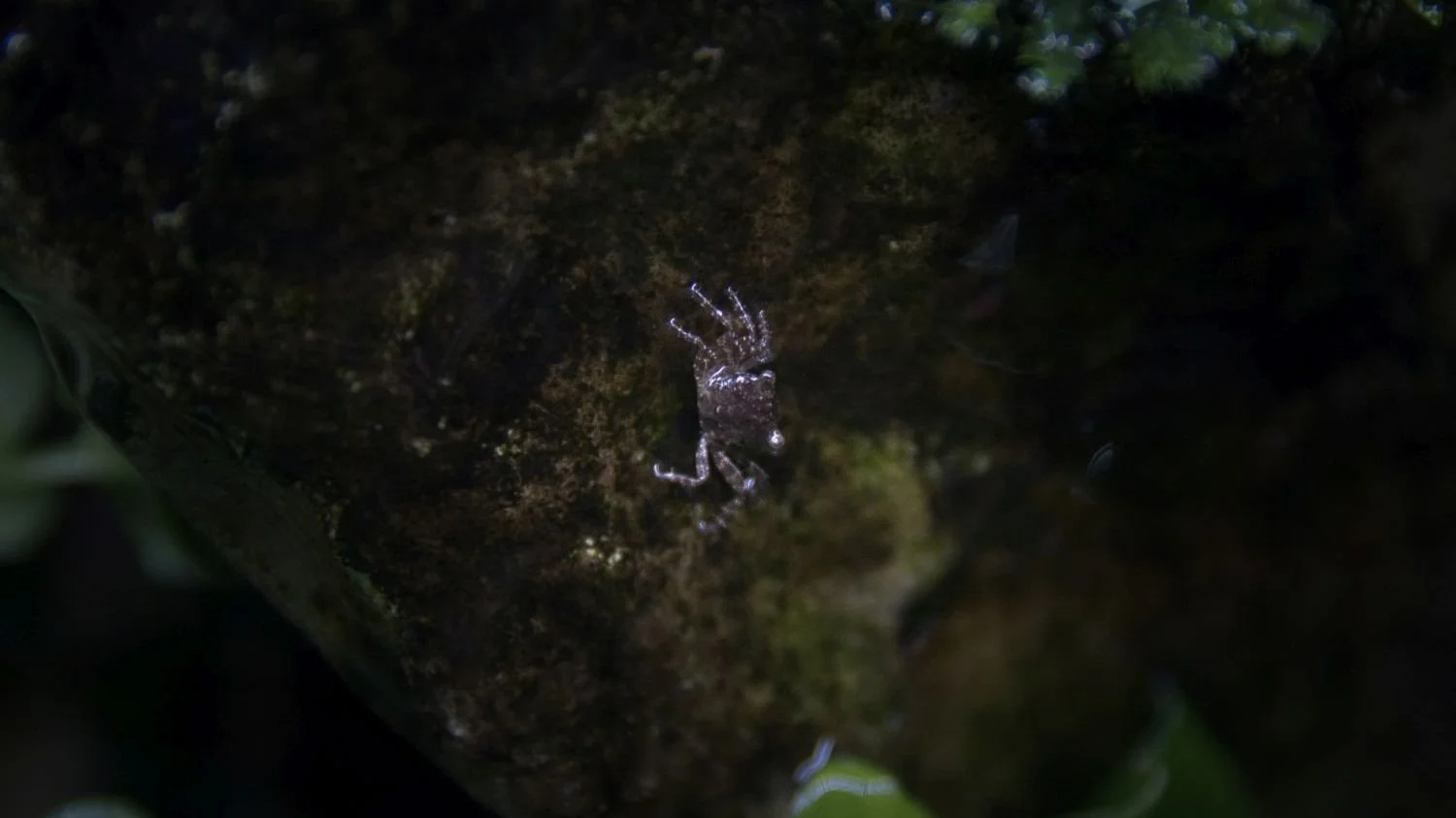
Baby Vampire Crab clinging to a rock
Challenges in Captivity
While considered easier to keep than some other Geosesarma species, care must be taken to manage their aggression and social dynamics effectively.
Difficulty Level: Easy
Important Note: Give them space and lots of complexity in their ecosystem.
Conservation Status
Information regarding the conservation status of Geosesarma sp. tiomanicum is limited, but habitat destruction and collection pressures may pose risks.
Interesting Facts
Geosesarma sp. tiomanicum is one of the largest known Geosesarma species and exhibits one of the most aggressive behaviours in the genus.
They are also one of the easier species to breed in captivity.

Density and complexity makes for great vampire crab breeding success