
LEPIDOTHELPHUSA MENNERI CARE GUIDE - BORNEO CRAB CARE
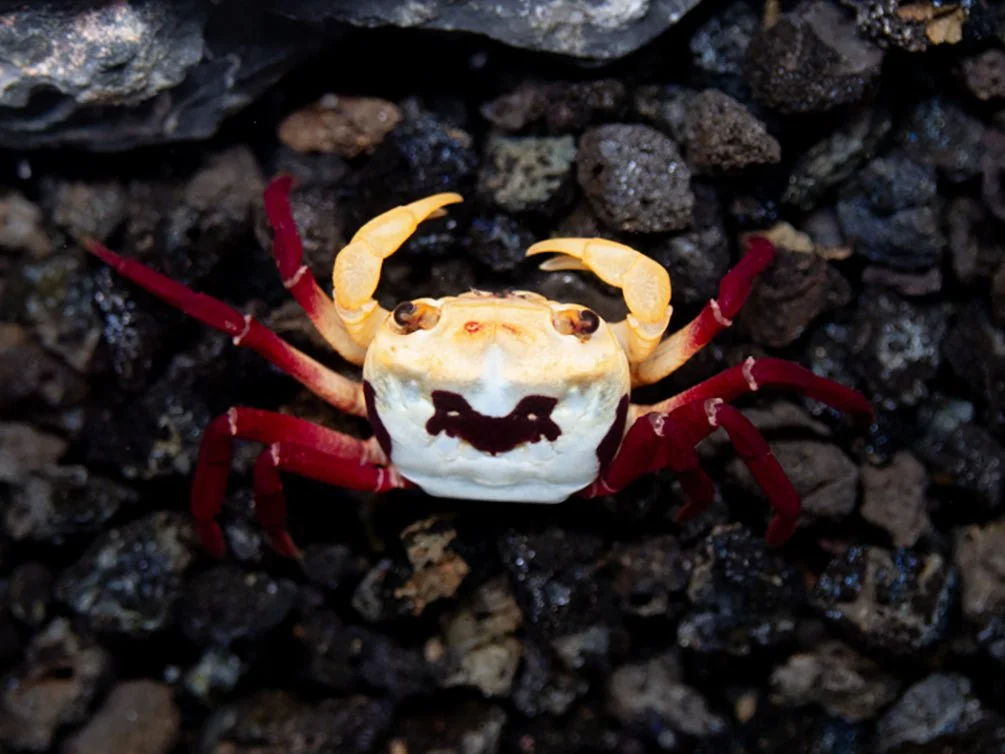
Lepidothelphusa menneri
Borneo Tricolour / Rainbow Crab
Lepidothelphusa menneri is one of the most beautiful, fully freshwater crabs available for hobbyists. Endemic to the rainforests of Borneo, this species occupies a narrow ecological niche that combines cool, mineral-rich freshwater with access to land, leaf litter, and dense vegetation. While often grouped together with other Lepidothelphusa species under the general label “Borneo Crabs,” L. menneri deserves species-specific consideration due to its behaviour, tolerance levels, and husbandry requirements.
This guide aims to provide a complete, practical, and ethical overview of how to keep Lepidothelphusa menneri successfully in captivity.
Table of Contents
Species Overview
Natural Distribution and Habitat
Physical Description and Identification
Behaviour and Temperament
Paludarium vs Aquarium: Ethical Housing
Tank Size and Layout
Environmental Conditions and Water Parameters
Substrate, Hardscape, and Flow
Feeding and Nutrition
Social Structure and Group Size
Compatible Tank Mates
Molting and Growth
Breeding Behaviour and Reproduction
Raising Juveniles
Plants for Lepidothelphusa menneri
Health, Sensitivity, and Common Issues
Purchasing, Ethics, and Availability
1. Species Overview
Scientific name: Lepidothelphusa menneri
Common names: Tricolour Crab, Rainbow Crab, Borneo Crab
Lepidothelphusa menneri is a small, semi-terrestrial freshwater crab belonging to a genus that is still being actively studied and described. Among the known Lepidothelphusa species, L. menneri is often regarded as one of the more forgiving and socially tolerant members of the group, though it remains far more sensitive than commonly kept crabs such as Geosesarma (Vampire Crabs). While this guide is specifically focusing on L. menneri, all the other Borneo Crab Species can be kept very similarly.
This species is best suited to intermediate keepers who already understand water quality management and the importance of stable environmental conditions.
Note: This species needs to be kept in a paludarium, not an aquarium.
2. Natural Distribution and Habitat
Lepidothelphusa menneri is native to Kalimantan, Borneo, where it inhabits tropical rainforest regions characterised by karstic geology. These crabs are most often found near clean, flowing freshwater systems such as streams, seepages, and small waterfalls. The surrounding environment is typically shaded, humid, and rich in leaf litter and clay soils.
In the wild, L. menneri lives at the interface between land and water. Individuals shelter among foliage, burrow into soft banks, and frequently move between aquatic and terrestrial zones. This dual lifestyle is central to understanding their care in captivity. They should never be kept in a fully aquatic environment or a fully terrestrial one. Their tank needs to have the right balance of both.
3. Physical Description and Identification
Lepidothelphusa menneri is a small crab, reaching an adult carapace width of approximately 3–4 cm. The species is best known for its unique colouration, which often includes a pale to yellowish carapace and claws combined with red legs and vivid accent colours such as purple, blue, or iridescent tones. Some individuals display distinct tricolour patterns, giving rise to the common name “Tricolour Crab.”
Distinguishing Lepidothelphusa species from one another based on appearance is less complicated than Geosesarma species. Accurate identification often relies on collection locality and subtle morphological traits, meaning many crabs in the hobby are best identified at the genus level rather than with complete certainty at the species level. Thankfully, in the case of L. menneri, it’s super unique and easy to spot!
4. Behaviour and Temperament
Compared to many other freshwater crabs, Lepidothelphusa menneri is relatively peaceful and social. In the wild and in captivity, individuals are frequently observed in loose groups, particularly near water edges. While minor territorial disputes do occur, most often between males, serious aggression is uncommon when adequate space and hiding places are provided.
This species is noticeably less aggressive and less cannibalistic than Vampire Crabs, making group housing not only possible but recommended.
5. Paludarium vs Aquarium: Ethical Housing
Although Lepidothelphusa menneri are capable of surviving fully submerged, a fully aquatic environment is not an appropriate long-term enclosure. These crabs regularly leave the water in their native environments as they live in and around pristine forest streams.
Keeping them in aquariums or small fish bowls, a tragic social media trend, robs them of their natural behaviour and will also prevent them from breeding. For ethical and practical reasons, a paludarium with both land and water sections is non-negotiable.
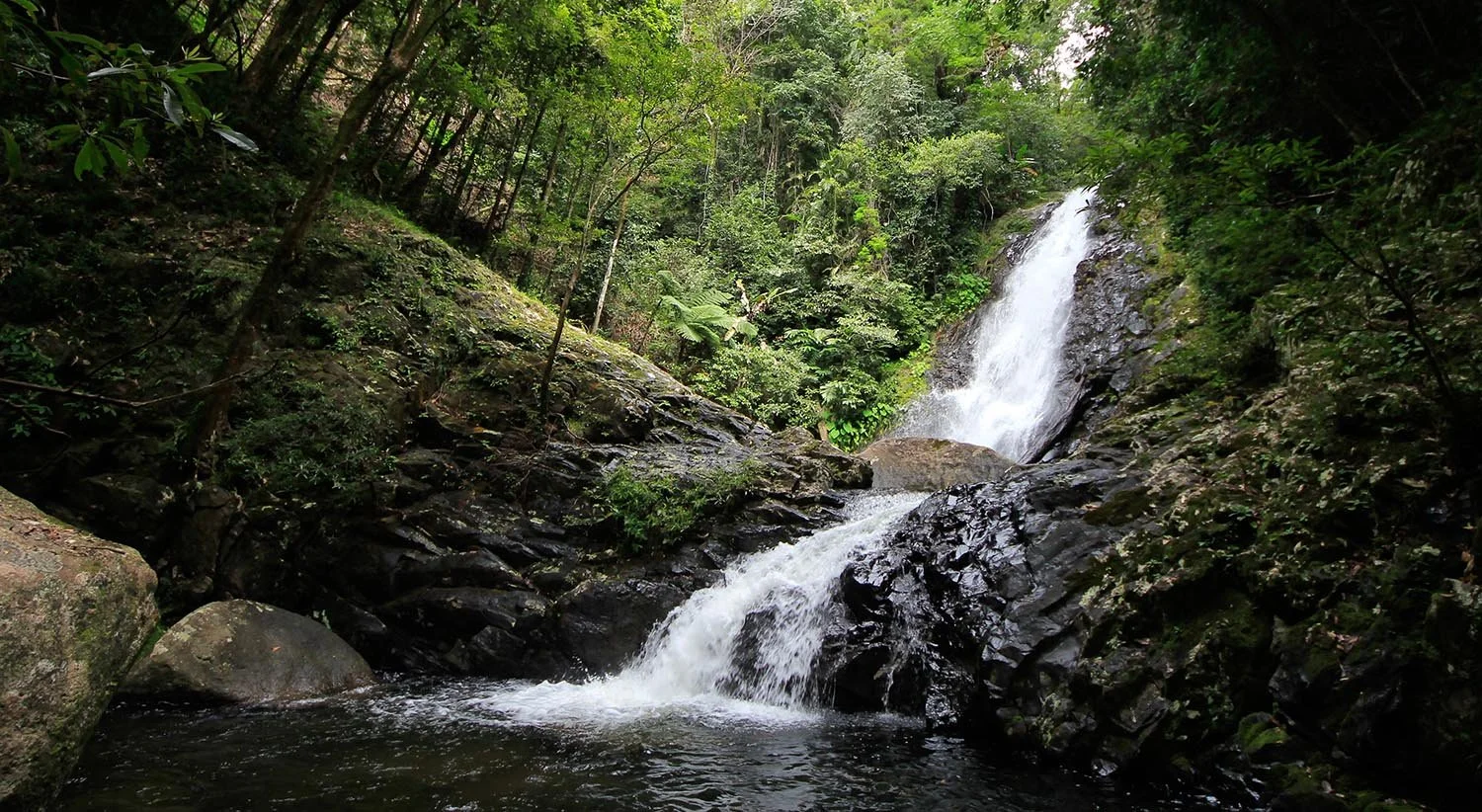
Borneo Crabs like Lepidothelphusa menneri live in and around pristine rain forest streams.
6. Tank Size and Layout
Tank size should be chosen with both horizontal space and group living in mind.
A group of 5 crabs requires at least 60 × 30 × 30 cm (2 males, 3 females). The more males you have, the more fighting you will have. So if you have a lot of males, get a bigger tank. The general rule is 1 male for every 2 females.
Unlike arboreal species, height is less important than floor space. Crowding increases stress, aggression, and the likelihood of cannibalism.
7. Environmental Conditions and Water Parameters
Lepidothelphusa menneri originates from tropical regions but is surprisingly intolerant of prolonged high water temperatures.
Air conditions:
Temperature: 23–28 °C
Humidity: consistently above 75%
Water conditions:
Temperature: 22–25 °C
pH: 7.5–8.0
GH: 4–16
KH: 0–10
Nitrates: below 20 ppm
Water must be clean, oxygenated, and gently moving. Stagnant water is a common cause of long-term health decline.
A tight-fitting lid is mandatory, as these crabs are excellent climbers.
8. Substrate, Hardscape, and Flow
Soft, diggable substrates are extremely important. Clay-rich soils are strongly recommended, particularly along the land-water boundary, as they allow crabs to create burrows and retreats. Leaf litter, wood, rocks, and moss should be used liberally to break line of sight and provide security.
Water flow should be noticeable but not forceful, mimicking slow streams rather than torrents.
9. Feeding and Nutrition
Lepidothelphusa menneri is omnivorous but strongly biased toward protein-rich, fresh foods. While commercial pellets can be used as supplements, the best results are achieved with raw or live foods.
Commonly accepted foods include fish, shrimp, clams, snails, insects, worms, and crustaceans. Food should be scattered in multiple locations to reduce competition and ensure all individuals eat.
10. Social Structure and Group Size
These crabs thrive in groups. A minimum of five individuals is recommended, with a male-to-female ratio of approximately 1:2 where possible. Groups smaller than this often result in shy behaviour and reduced activity.
11. Compatible Tank Mates
Springtails and isopods are required for waste management and form part of the crabs’ natural food web. In the water section, shrimp, snails, and fast-moving, cool-water fish are suitable.
Only one species of crab should ever be kept in the same enclosure.
12. Molting and Growth
Molting occurs in water and is followed by a period of hiding while the new exoskeleton hardens. During this time, crabs are vulnerable and should not be disturbed. Lost limbs are typically regenerated over subsequent molts.
13. Breeding Behaviour and Reproduction
Breeding occurs readily under stable conditions but can be physically rough. Males flip females during mating, and injuries are possible. After mating, females retreat into burrows or secluded areas before eventually returning to the water to release their young. It’s very similar to the process for Geosesarma Vampire Crabs, baby borneo crabs only survive in very well-established tanks. So if you are hoping to breed these crabs, a tank that has been set up for at least 6 months to a year is a must! Without a stable biome with lots of microfauna, the baby crabs usually starve to death.
14. Raising Juveniles
Juveniles develop slowly, taking six months or more to mature. Early life stages spend significant time in the water and feed on microfauna such as springtails and copepods. Survival rates are highest when adults are well fed or separated, and as mentioned before, the tank has been running for a long time.
15. Plants for Lepidothelphusa menneri
A heavily planted environment helps maintain humidity and reduces stress. Ferns, mosses, Fittonia, Tradescantia, Peperomia, and other terrarium plants thrive in these conditions. Aquatic plants of all kinds are suitable, provided water quality remains high. Here’s a list of plants you can check out. It’s a work in progress, so more will be added in the future.
16. Health, Sensitivity, and Common Issues
While L. menneri is the least sensitive of the Borneo crabs, it remains intolerant of poor water quality, high temperatures, and unstable conditions. Most long-term losses can be traced back to inadequate filtration, lack of flow, or overheating.
17. Purchasing, Ethics, and Availability
Availability is limited, and losses during shipping are common. International purchases carry legal, ethical, and health risks. Whenever possible, sourcing from local breeders or sellers is strongly recommended. Avoid sellers offering mixed “rainbow packs,” as these often involve incompatible species.