
HOW TO GET VAMPIRE CRABS TO EAT
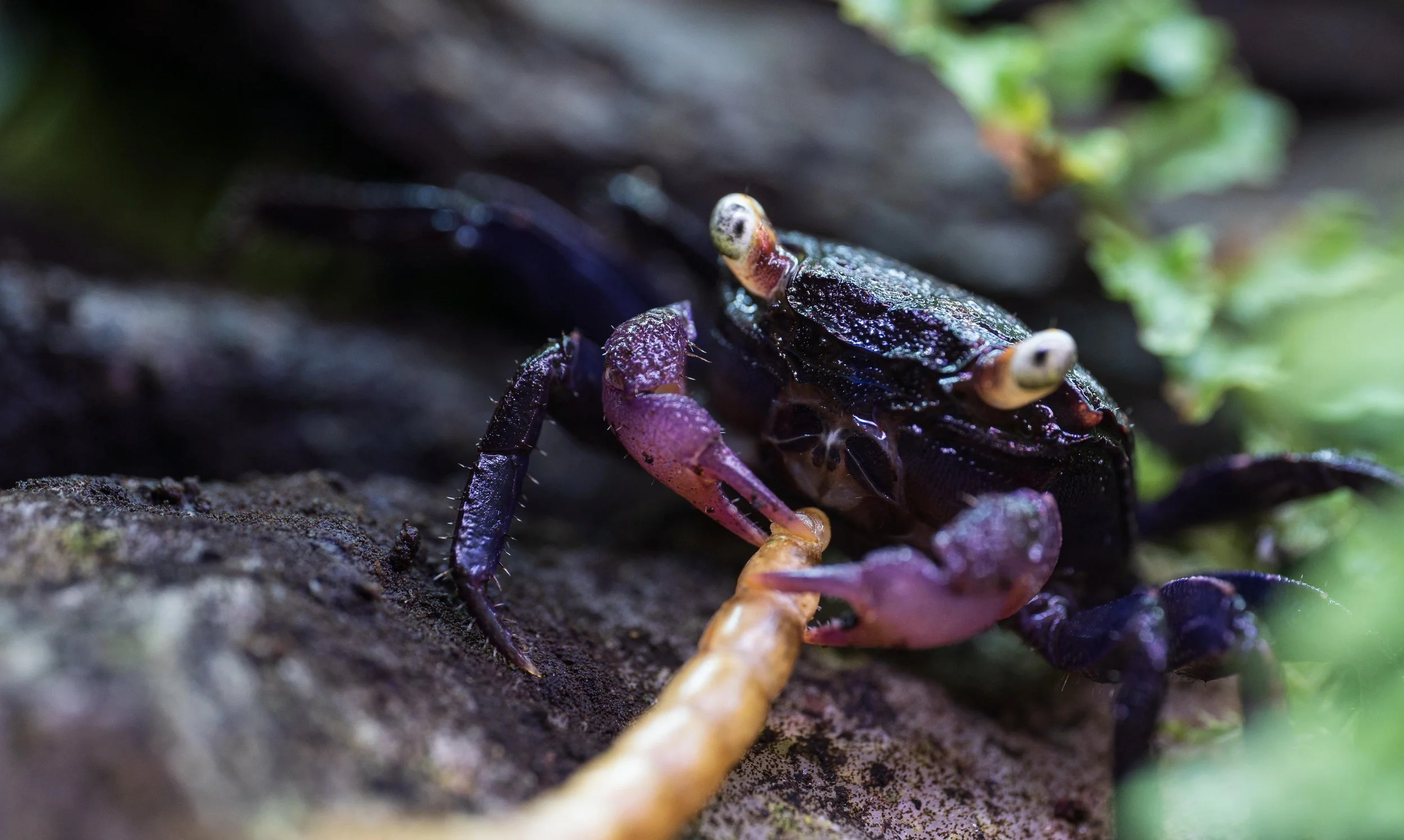
How to Get Vampire Crabs to Eat?
Geosesarma Vampire Crabs are super easy to care for creatures that come from the tropical forests of Southeast Asia. They also eat a ton of different things, commercial fish foods, boiled vegetables, and a range of dried foods. So what is the best way to feed them? How often should you feed them, and how often should they be eating? Thankfully, these are all super simple questions to answer, as it really just comes down to understanding the basic behaviour of Vampire Crabs.
Vampire Crab FEEDING Behaviour
Understanding vampire crab behaviour will help you better understand why you aren’t seeing your vampire crabs eating. So don’t be alarmed if you put food in your tank and don’t see them eating anything.
TIP: If you want to see your crabs at night, use a red light.
They Are Nocturnal
Since vampire crabs are nocturnal, 90-99% of their foraging will be done at night under the cover of darkness. This is how they behave in the wild, and this behaviour carries over into captivity.
Wild-caught specimens are mostly active at night.
Captive-bred, tank-born vampire crabs may be slightly more active during daylight hours, depending on individual personality.
If you don’t see your crabs out and about eating all of the food you have laid out for them, there’s no need to worry. This is perfectly normal.
They Graze Like Cattle
Vampire Crab feeding behaviour is similar to that of grazing animals such as cattle or sheep. They roam around their environment picking at everything in their surroundings. They do this constantly as they move around the tank.
Primary food in the wild: wood litter, leaves, debris.
Supplementary food: worms, small insects, lizards, geckos, fish, shrimp, snails.
They are scavengers and micro predators, attempting to eat anything they can grab.
More info: Here’s a research paper on the natural diet of two species
How Often Do You Feed Vampire Crabs?
Depending on your crabs, you can usually feed them about 3 times a week.
Feed something different each day.
Example schedule:
Monday: Store-bought fish food (flakes or granules)
Wednesday: Boiled vegetables (broccoli, zucchini)
Friday: Meaty foods (frozen fish, bloodworms, frozen crickets)
Rotate through different food types each week to provide a natural, balanced, and inexpensive diet. You can also save scraps from your own meals, such as a slice of zucchini or broccoli, for your crabs.
THE BEST WAY TO FEED VAMPIRE CRABS
From my experience, the best way to feed Vampire Crabs is to scatter food around the tank in several different locations. If you have multiple crabs, this will prevent them from all gathering in a single spot and fighting over food. When scattering food, make sure not to place it on plants, as it can cause mold outbreaks that may kill some plant species. Aim to place the food on rocks, wood, or other hard surfaces. You can also add some food to the water section, as the crabs will find it easily. The snails in your water area will eat any leftovers.
What to Feed Vampire Crabs
There are many options for feeding Vampire Crabs. Most store-bought fish and crab foods work well, but variety is key.
Fish Foods
Cory granules
Nano fish pellets
Betta fish flakes
Pleco wafers
Bug bites
Crab Cuisine
Tropical fish flakes
Insect flakes
Dried Foods
Mealworms
Crickets
Springtails (hard to find)
Roaches
Shrimp
Fresh or Boiled Foods
Chop fresh foods into small pieces to make them easier to eat and drag to a quiet spot.
Apples (vitamin C)
Cucumbers (vitamin K)
Squash (vitamin A, potassium)
Zucchini (vitamin A, potassium)
Carrots (fiber)
Spinach (calcium, iron)
Kale (calcium, vitamin C, iron)
Collards (calcium, potassium)
Sweet potatoes (vitamin A, fiber)
Pumpkin (vitamin A, potassium)
Stinging nettle leaves, boiled (iron, calcium, vitamins A & C)
Broccoli (vitamins C, K, fiber)
Peas (protein, fiber, vitamins A & C)
Beans (protein, fiber, essential minerals)
Lettuce (fiber, vitamins A & K)
Cabbage (vitamin C, fiber, antioxidants)
Potato (potassium, vitamins B6 & C)
Oranges (vitamin C)
Tomatoes (vitamin C)
Live Foods
Mealworms (crush heads)
Crickets (small)
Earthworms
Bloodworms
Isopods
Springtails
Wingless fruitflies
Shrimp
Snails (aquatic)
Feeding Vampire Crabs When You Go on Holidays
If you are away for less than three weeks, Vampire Crabs can survive off food in their environment.
Feed well before leaving.
Leave extra live foods (isopods, crickets, worms).
Add a small leaf of raw cabbage or lettuce. Both resist mold and can be picked at over time.
WHAT ABOUT LEFTOVER FOOD?
If you have set up your paludarium correctly, your cleanup crew should take care of almost all the food waste left behind. Springtails, isopods, worms, and all the other naturally occurring microfauna should clean up any food scraps fairly quickly. However, if you have a large patch of food that they can’t remove within a few days, you will need to remove it manually. The guide below will help if you are dealing with mold outbreaks caused by leftover food or other environmental issues.