
BIRGUS LATRO CARE GUIDE - COCONUT CRAB CARE GUIDE
Author: EdentistomaLover
Birgus latro, more commonly known as the coconut crab, is the world’s largest land arthropod. As the only species within its genus, this impressive crab inhabits coastal areas across Southeast Asia, East Africa, and Oceania. These crabs begin their lives using shells like hermit crabs before outgrowing the need for one at about a year old or 10mm carapace length. Known for their strength and longevity (often exceeding 50 years), coconut crabs can grow to the size of a small dog, reaching up to a 1-meter (3 ft) legspan.
IMPORTANT:
This is not a pet to impulse buy. Birgus latro, also known as the coconut crab, is a long-lived, highly demanding species. It can live for over 60 years, grows to the size of a small dog, and will likely outlive you. If you’re not prepared to eventually provide a dedicated room-sized habitat or make long-term arrangements for its care after your death, this is not the pet for you.
Even more importantly, this species is under serious ecological pressure. Though it may be legal in some regions to keep coconut crabs, doing so contributes to their decline unless you are participating in verified conservation breeding. The IUCN lists Birgus latro as “Vulnerable”, but that category doesn’t fully reflect the rapid losses happening on the ground. The species is vanishing from many parts of its native range. In areas where coconut crabs once thrived, they have already disappeared entirely.
Common Names
Coconut crab
Robber crab
Members of the Species


Conservation Level
Not specified in this guide; however, populations are known to be declining in some areas due to overharvesting and habitat loss. Captive care may contribute to conservation knowledge.
Care Level
Intermediate
Requires precise environmental control and very clean conditions
Likely to outlive its keeper
KEEPING COCONUT CRABS IN CAPTIVITY
There are two different methods you can use to keep certain species of crabs. The Dark Method and the Love Method. Some species do better in love method tanks and some species can only be kept using the dark method. Birgus latro can be kept in either, but you need to understand how to create each environment correctly. If you want a deeper dive into the Dark vs Love method, check out this guide. Otherwise, read through the Dark and Love methods for Birgus Latro below.
THE Dark Method
Humidity: 80–95%
Temperature: 77–90°F
Diet: Highly varied; includes popcorn, dead mice, bone marrow, fruits, seafood, and sweet potatoes
Feeding: Replace food when it spoils
Water: There should be one bowl of freshwater and one saltwater
Salinity: 1.022-1.026 SG is best, or 30-35 ppt.
Enrichment: Essential mirrors, cheerios, hanging coconuts, dead mice in puzzle feeders, etc.
Ventilation: Minimal
Substrate Depth: 1 inch
Enclosure and Environment
This is the most basic method and the easiest method


Tank Size:
Minimum: 3–4 times the crab’s body size
Adults: Require large enclosures to accommodate growth and movement
Juvenile: The same as for adults
Temperature:
77–90°F Must remain stable
Water Type:
Freshwater bowl (shallow)
Saltwater bowl with salinity of 1.022–1.026 SG (30–35 ppt)
Must never allow full submersion depth (risk of drowning)
Water Flow:
None: bowls only, no standing or flowing water areas in the enclosure
Lighting:
A natural day/night cycle is sufficient
Avoid high-heat or overly bright lighting, as crabs are sensitive to drying out
Behaviour:
Solitary, strong, and intelligent
Capable of complex behaviours such as puzzle-solving
May self-amputate if stressed or in unsanitary conditions
Refuse food in poor enclosure conditions
Note:
Ventilation should be kept minimal to maintain humidity
Cleanliness is absolutely critical; poor hygiene may lead to stress, disease, or self-harm
Substrate
Type: Crushed coral + leaf litter or Coconut chips.
Some organic material is acceptable
Depth: Strictly 1 inch unless using the Love Method
Must be kept meticulously clean, as dirty substrate is linked to refusal to eat and limb amputation
Bioactive option: Strongly recommended or required in lieu of frequent manual cleaning
Cohabitation
Not recommended
Highly territorial and potentially aggressive toward tankmates
Diet (Complex)
Fruits (2-3 times a week)
Mango
Papaya
Apple
Banana (as a treat)
Watermelon
Coconut (shredded is best)
Vegetables (Daily or every second day)
Leafy greens (Dandelions, mustard, kale, collards)
Zucchini, squash, sweet potato (steamed or parboiled)
Cucumber
Carrot
Animal-based Protein sources
Unseasoned cooked fish
Unseasoned cooked chicken (Skin off)
Shrimp (cooked)
Meal worms
Silk worms
Roaches
Canned wet cat food (offer rarely as a treat)
Plant-based Proteins
Cooked lentils
Cooked beans (sometimes)
Almonds
walnuts
Peanuts (unsalted)
Calcium Sources (Make sure they are always available in their enclosure)
Cuttlebone (whole or grated)
Crushed oyster shells
Boiled and crushed eggshells
Leaf litter and decaying plant material
Whole cooked crab and shrimp shells
Enrichment Diet Items (per San Diego Zoo):
Popcorn (in husk or inside enrichment toys)
Raw corn
Whole nuts in shells (walnuts and almonds)
Bone marrow (in bone)
Cooked oatmeal with fruit/coconut
Ripe mango, papaya, apple, orange, lettuce
Raw beef, cooked chicken
Dead mice (enrichment use)
Favourite: African cycad fruit
Foods Toxic to Coconut Crabs (Birgus Latro)
Citrus fruits
Avocado
Chocolate
Onion
Garlic
Alcohol
Caffeine
Seasons meats
Chips
Sugarly foods
Bread
Crackers
Peanut butter and other high-fat products
Time between feedings:
Just replace it when the food goes bad.
THE Love Method
Difficulty level: Intermediate-advanced
Humidity: 80–95%
Temperature: 77–90°F
Water: There should be one bowl of freshwater and one of saltwater
Salinity: 1.022-1.026 SG is best, or 30-35 ppt.
Lighting: A natural day/night cycle is sufficient. Avoid high-heat or overly bright lighting, as crabs are sensitive to drying out
Ventilation: Minimal
Enclosure and Environment (Love Method)
The following is based on how the San Diego Zoo does its love method


Cage size:
6.5ft (L) x 8.5ft (W) x 12ft (H) glass enclosure for 1 adult (they are NOT communal AT ALL).
For a juvenile (fist-sized): 25-35g tanks (95-130L)
Substrate mix:
Play sand, loamex organic soil amendment mixed with coco peat (shredded coconut husk, formed into bricks that expand in water).
Substrate depth:
Keep the substrate 1–2 inches shallower than the crab’s carapace length to prevent them from fully submerging and choosing to molt there. This is why an artificial burrow is essential, it provides a controlled space that mimics their natural molting behaviour while ensuring safety.
Like the dark method, you want to avoid letting them molt directly on the substrate. Deep substrate molting often leads to losses, so the artificial burrow plays a key role in preventing that.
Decor:
They will need MANY climbing spaces. Look to the third section of this care sheet to see a few images of a properly made enclosure. They will also need to have a specialised hide. They need one area of saltwater and one for freshwater. Do NOT make it deep enough for them to submerge in, as they will drown.
Cohabitation
Not recommended
Highly territorial and potentially aggressive toward tankmates
Diet (Complex)
Fruits (2-3 times a week)
Mango
Papaya
Apple
Banana (as a treat)
Watermelon
Coconut (shredded is best)
Vegetables (Daily or every second day)
Leafy greens (Dandelions, mustard, kale, collards)
Zucchini, squash, sweet potato (steamed or parboiled)
Cucumber
Carrot
Animal-based Protein sources
Unseasoned cooked fish
Unseasoned cooked chicken (Skin off)
Shrimp (cooked)
Meal worms
Silk worms
Roaches
Canned wet cat food (offer rarely as a treat)
Plant-based Proteins
Cooked lentils
Cooked beans (sometimes)
Almonds
walnuts
Peanuts (unsalted)
Calcium Sources (Make sure they are always available in their enclosure)
Cuttlebone (whole or grated)
Crushed oyster shells
Boiled and crushed eggshells
Leaf litter and decaying plant material
Whole cooked crab and shrimp shells
Enrichment Diet Items (per San Diego Zoo):
Popcorn (in husk or inside enrichment toys)
Raw corn
Whole nuts in shells (walnuts and almonds)
Bone marrow (in bone)
Cooked oatmeal with fruit/coconut
Ripe mango, papaya, apple, orange, lettuce
Raw beef, cooked chicken
Dead mice (enrichment use)
Favourite: African cycad fruit
Foods Toxic to Coconut Crabs (Birgus Latro)
Citrus fruits
Avocado
Chocolate
Onion
Garlic
Alcohol
Caffeine
Seasons meats
Chips
Sugarly foods
Bread
Crackers
Peanut butter and other high-fat products
Time between feedings:
Just replace it when the food goes bad.
Specialised care requirements:
They need a small amount of ventilation and enrichment. The enrichment that the San Diego zoo uses for their coconut crabs includes Mirrors, bone marrow (left inside the bone), bread, Cheerios, hallowed out coconut filled with popcorn, hanging from a high branch, a straw basket intertwined with popcorn and one dead adult mouse placed inside a small metal cage. They will need a specialised hide.
Burrow size:
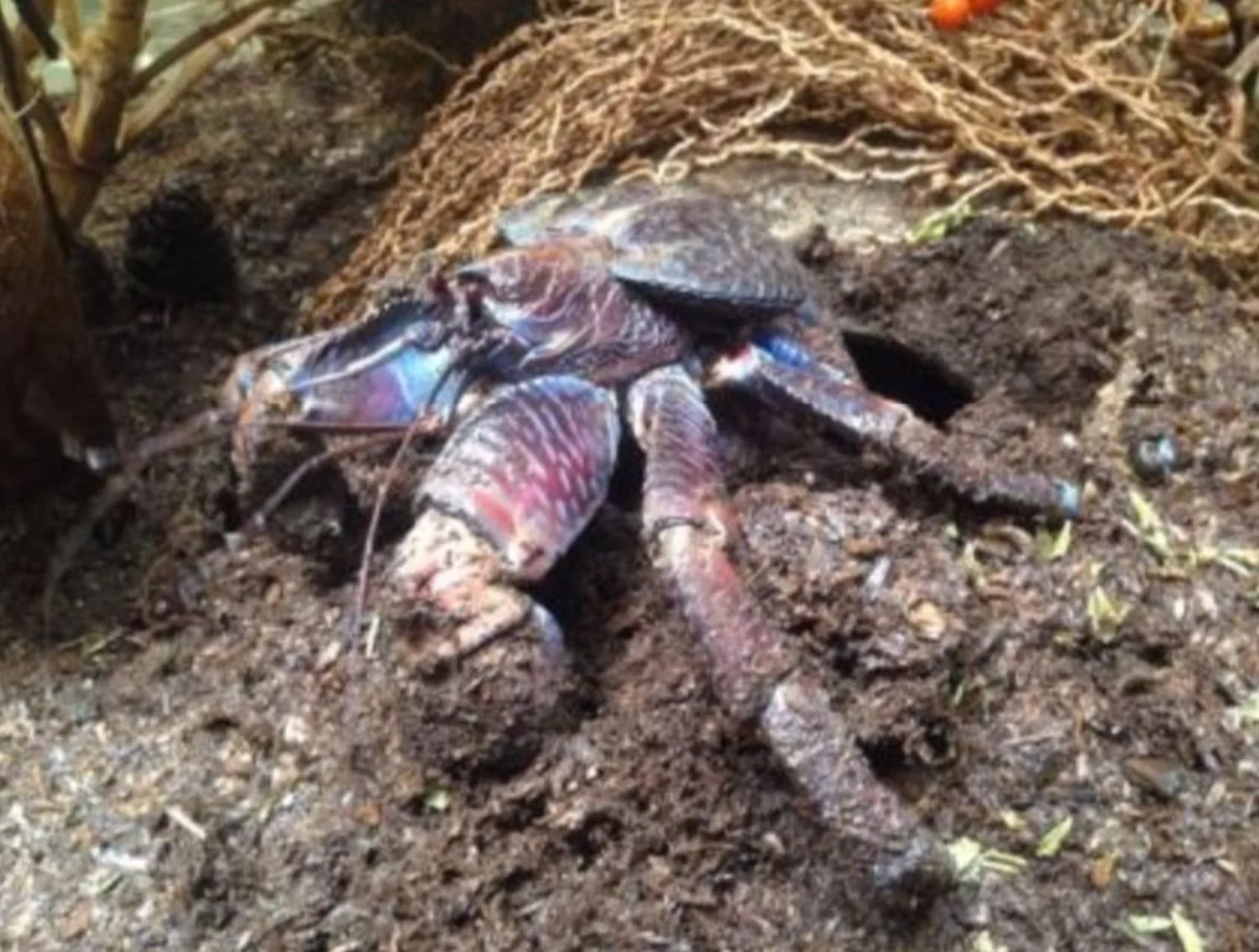
30 inches (L), 30 inches (W), and the entrance should be 10 inches wide. You can use a fake stone for this. They will close up the burrow when molting. Go bigger depending on the size of the crab. However, it can be even bigger or smaller depending on the crab. Below is an example of a burrow.
Note: You can use a fake stone to make the burrow.

Breeding
Feasibility:
Not impossible, but unfeasible for most keepers
Requires specific conditions, a very large enclosure, and a deep substrate
Egg Development:
Exact time unknown, likely several months
Captive Breeding:
Rare but has been accomplished
The Love Method is more suitable for breeding setups
Data Source
The information in this guide was kindly researched and compiled by the team at Crustacean Council, based on community-sourced knowledge from crustacean enthusiasts, including @albomita and @EdentistomaLover, as well as care examples from Frognose Exotics and the San Diego Zoo.