
SOMANNIATHELPHUSA SINENSIS CARE GUIDE - YELLOW GREEN SAMURAI CRAB CARE
Author: Albomita
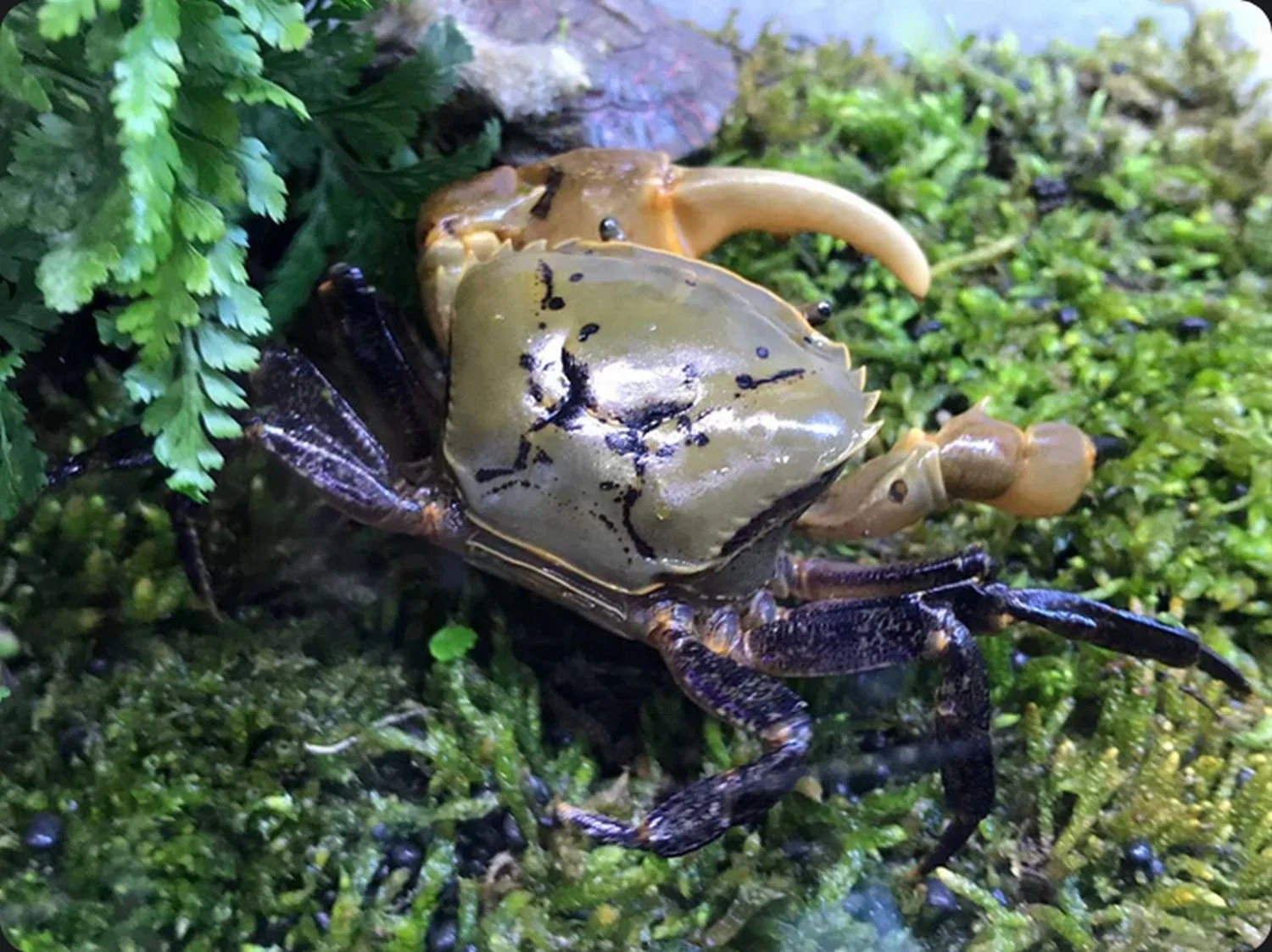
The Yellow Green Samurai Crab, Somanniathelphusa sinensis, is a species of freshwater crab native to Southeast Asia, primarily found in Vietnam and Thailand. While rare in Western pet markets, it is a common sight in Asian aquarium communities. These crabs are known for their, ease of care and engaging behaviours, making them an excellent choice for new crab keepers with some aquatic experience. Even though they are classed as an intermediate species, if you’ve kept aquariums before, they won’t be all that hard to keep.
Common Names:
Yellow Green Samurai Crab
Samurai Crab
Vietnamese Freshwater Crab
Members of the Species:
Somanniathelphusa sinensis (primary focus)

Other Somanniathelphusa spp. (limited in the pet trade)
Conservation Level:
Information on wild populations is scarce, and more research is needed to assess their conservation status.
Care Level:
Beginner to Intermediate
Enclosure and Environment
Add a secure lid to prevent escape. Use driftwood, rocks, and stacked hiding spaces. Provide land areas or floating islands for molting/resting
Tank Size: Minimum: 20 gallons for a pair, larger if housing multiple males due to territoriality
Temperature: Optimal: 23–27°C (74–80°F) Tolerated Range: 20–32°C (68–89.6°F)
Water Type: Freshwater, slight brackish is unnecessary and not recommended
Water Flow: Moderate flow to still water. Ensure oxygenation, but avoid strong currents
Lighting: Ambient room lighting is sufficient, but a natural daylight cycle is best. Simulate dusk/dawn behaviours
Behaviour: Mostly aquatic but requires access to land for molting and potential breeding. Territorial males; aggressive interactions may occur. Females are shy and reclusive during egg-carrying. Very active and enjoyable to observe
Substrate:
Any aquatic-safe substrate (fine gravel or sand preferred)
Include leaf litter or moss for enrichment
Substrate should support hiding but not deep burrowing
Cohabitation:
Not well-documented; proceed cautiously
Best kept solo or in male-to-female ratios of 1:1 or 1:2
Watch for aggression; separate if needed
Juveniles must be separated from adults and from each other due to cannibalism risk
Diet:
Omnivorous
Feed a wide, rotating variety including:
Vegetables: Sprouts, zucchini, leafy greens
Fruits: Apple, banana, pear
Meats/Protein: Mosquito larvae, chopped earthworms, sardines, tuna, mussels
Dry Foods: Fish flakes, shrimp pellets, dried algae
Calcium: Cuttlebone, crushed eggshells
Feeding Frequency:
Daily or every other day
Remove uneaten food to maintain water quality
Breeding:
Possible in captivity under the right conditions
Fully freshwater lifecycle—no marine larval stage
Molting and mating behaviors occur underwater
Females rarely emerge while gravid
Eggs hatch into miniature crabs (no zoea stage)
Important:
Separate babies and adults immediately
Also separate juveniles from each other or offer dense hiding space to reduce cannibalism
Breeding is possible but challenging
Data Source:
The information in this guide was kindly researched and compiled by the team at Crustacean Council, using firsthand care reports and community-sourced observations from Asian aquatic hobbyists.