
VIETORIENTALIA CARE GUIDE
Author: Albomita
Vietorientalia is a genus of freshwater crabs known for their unique colouration and hardy nature. These crabs have grown increasingly popular in the exotic pet trade due to their adaptability and primarily aquatic lifestyle. While they remain a bit of a mystery in terms of captive breeding, they present an exciting opportunity for aquarists interested in experimental breeding projects. Although they can theoretically reproduce in freshwater, no documented successes have been recorded to date. The author of this guide is currently exploring the potential for freshwater breeding, with findings to be shared in experimental journals.
Common Names
Vietorientalia is also commonly known as:
Pirate crab
Red pirate crab
Blue pirate crab
Yellow pirate crab
Rubrum
Vietorintalia (a misspelling)
Interesting Information
The species is extremely confusing.
Vietorientalia rubra is not yet fully understood.
Formerly classified under two different genera:
Hainanpotamon rubra
Orientalia rubra
In 2012, it was placed in its own genus for unclear reasons.
The genus contains one other member:
Vietorientalia glabra
Known in taxonomy and on multiple official taxa browsers.
Full species description not available.
Scientific documents on rubra are also not found, possibly due to genus reassignments.
Three colour morphs mentioned: red, orange, and blue.
Theory: The orange and blue morphs might be separate, undescribed species, not just colour variants.
Justification: Crabs typically don’t display such a wide range of colours.
Members of the species


Vietorientalia glabra
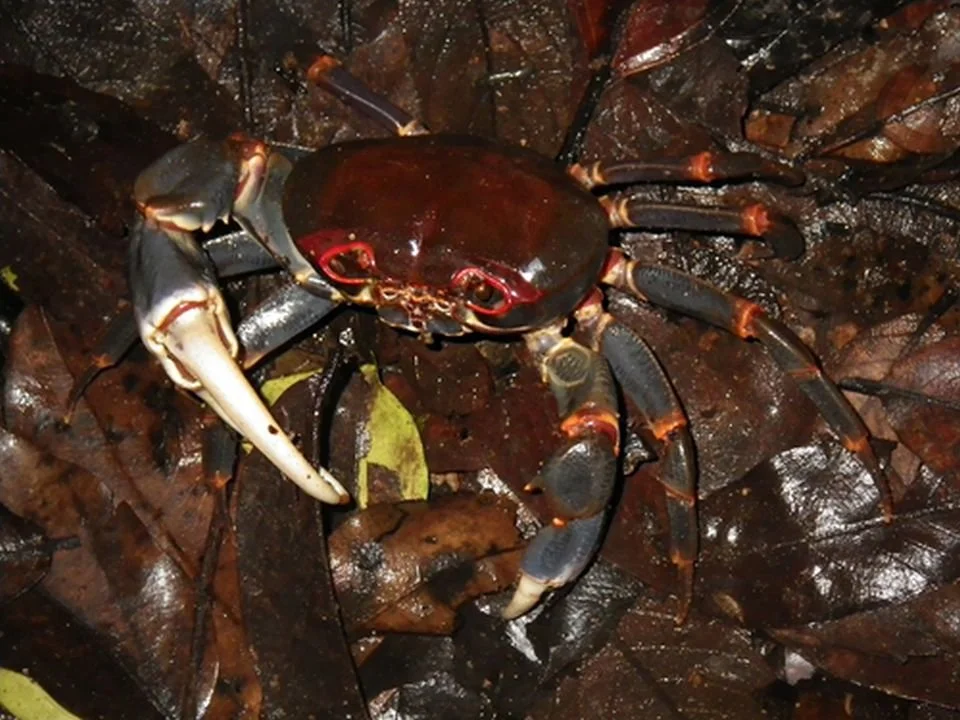
Conservation level
Unknown – There is limited data on wild populations, so sustainable and ethical sourcing is recommended. Supporting reputable sellers who follow responsible collection practices is important to minimise environmental impact.
Reputable sellers
Care Level
Dark Method: Beginner, Suitable for those who follow the "dark method" of keeping crabs.
Love Method: Expert (as of 5/30/2025) Creating a visually rich, interactive habitat that supports more observed behavior requires advanced knowledge and stability in tank conditions.
The Dark vs Love Methods Explained
Enclosure and Environment
Vietorientalia crabs are highly aquatic but still require a land area to fully thrive. A sloped setup is ideal, where the majority of the tank is shallow water with a gravel incline leading to a land section. This setup supports their natural semi-aquatic behaviour.
Tank Size: Minimum 20x15 cm (8x6 inches) for one crab. Larger is recommended for cohabitation.
Temperature: 70°F (21°C) or above.
Humidity: 80%
Filtration: Optional, but still water should be changed every 2–3 weeks. Avoid dramatic water chemistry fluctuations.
Lighting: A natural day-night cycle is best, and any aquarium light will be enough to keep them happy.
Substrate
This genus prefers coarse, stable substrates that do not cloud the water.
Recommended:
Gravel (smooth, aquarium-safe)
Crushed coral (beneficial for calcium, but monitor pH)
Cohabitation
Vietorientalia crabs can cohabitate peacefully under proper conditions. To reduce stress and competition:
Best combinations: Male/Female or Male/Female/Female
Ensure sufficient space, hides, and feeding areas to avoid territorial conflict.
Monitor interactions regularly, especially after molting periods.
Diet
These crabs are primarily carnivorous and require a protein-rich diet to support shell development, growth, and overall health.
Protein Sources:
Live or frozen insects (e.g., bloodworms, crickets)
Shrimp (fresh or freeze-dried)
Fish food pellets, sinking wafers
Vegetable Supplements:
Blanched zucchini, spinach, or algae wafers
Offered 1–2 times per week to support variety
Data Source
The information in this guide was kindly researched and provided by the team at Crustacean Council & Frognose Exotics