
NEOTIWARIPOTAMON CARE GUIDE
Author: Albomita
Neotiwaripotamon is a genus of freshwater crabs native to China, specifically found on Hainan Island. Although commonly distributed in the Asian crab trade, they are considered a rarity in the American pet market, with only occasional appearances in specialty collections or online importers. These crabs are particularly noteworthy because they are among the few species that can successfully breed in freshwater conditions, making them desirable for more advanced keepers or breeding enthusiasts. They are categorised as a T5 crab, indicating a more terrestrial lifestyle with occasional aquatic activity.
Common Names
Neotiwaripotamon is also commonly known as:
Lightning Crab
Red Lightning Crab
White Hand Lightning Crab
Members of the species


Neotiwaripotamon Vietnamicum
Conservation level: Data Deficient
There is currently not enough information about wild populations to assess their risk of extinction. Captive populations should be managed responsibly to help reduce pressure on wild collection.
Care level
Dark Method: Beginner, Suitable for those who follow the "dark method" of keeping crabs.


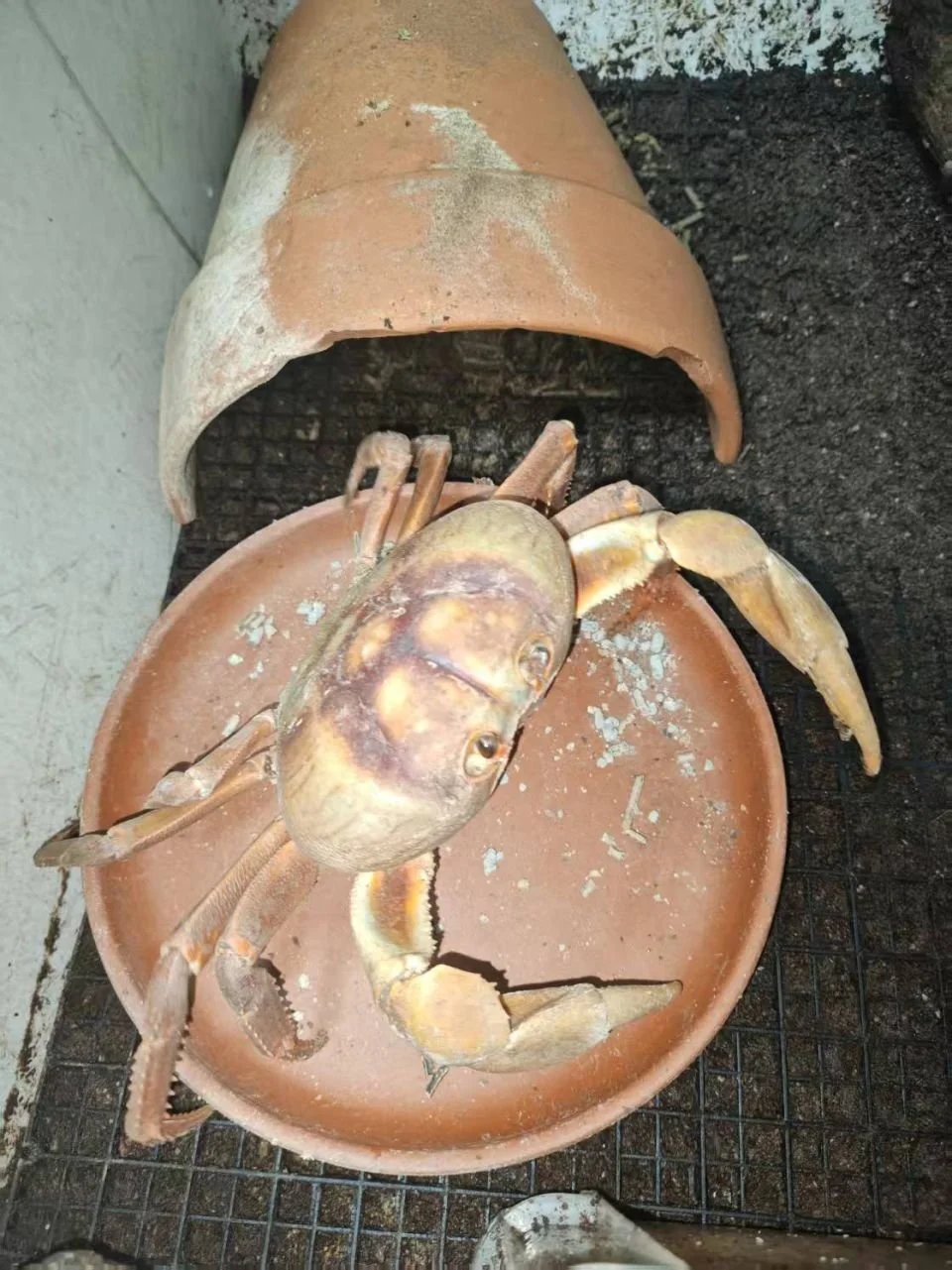
Love Method: Intermediate, For keepers who prefer a more interactive and aesthetically designed setup, with lighting and visible landscaping. This method requires a better understanding of crab behavior to prevent stress.


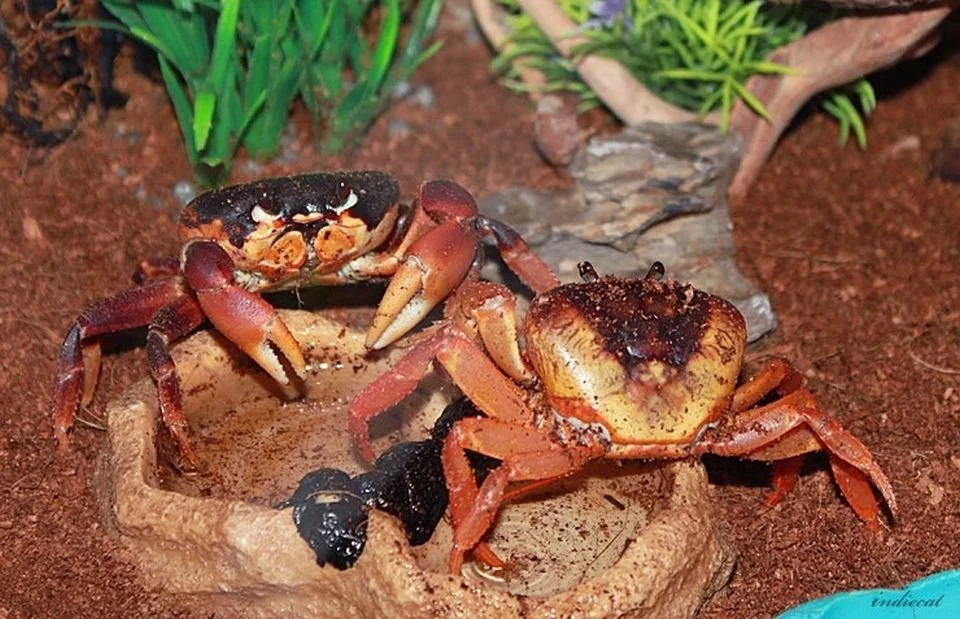
The Dark vs Love Methods Explained
Enclosure and Environment
Proper housing is super important for the health and longevity of Neotiwaripotamon crabs. These crabs require a semi-aquatic environment with ample land area and access to clean, shallow water. The enclosure should include multiple hiding spots to allow for stress-free molting. Hides such as coconut halves, cork bark, stacked rocks, or PVC caves work well.
Temperature: 75–85°F (24–29°C)
Humidity: 80–90% – A tightly sealed lid or frequent misting helps maintain proper humidity.
Minimum Tank Size: 45x30x32cm (18x12x12.5 inches) for a single specimen. Vertical space is especially important for climbing and exploration.
Lighting: A natural day-night cycle is best, and any aquarium light will be enough to keep them happy.
Substrate
Substrate plays a crucial role in mimicking their natural habitat. Use an inert, aquarium-safe substrate that won’t affect water chemistry.
Recommended Options:
Aquasoil for planted sections
Medium gravel or river stones
Cohabitation
While not inherently aggressive, Neotiwaripotamon crabs are territorial and can become defensive without enough space.
For pairs or small groups: Minimum tank size should be 60x45x45cm (24x18x18 inches).
Optimal size: 90x45x45cm (36x18x18 inches) or larger to reduce conflict and allow for complex environmental enrichment.
Always monitor for aggression and provide multiple hiding spaces and visual barriers..
Diet
These crabs are primarily carnivorous omnivores. A varied diet is essential for shell health, colouration, and energy.
Staples:
Snails (live or pre-killed)
Freeze-dried shrimp or krill
High-quality fish pellets or sinking wafers
Alder cones and bark (often consumed before molting)
Feed small amounts once per day or every other day. Remove uneaten food promptly to maintain water quality.
Data Source
The information in this guide was kindly researched and provided by the team at Crustacean Council.