
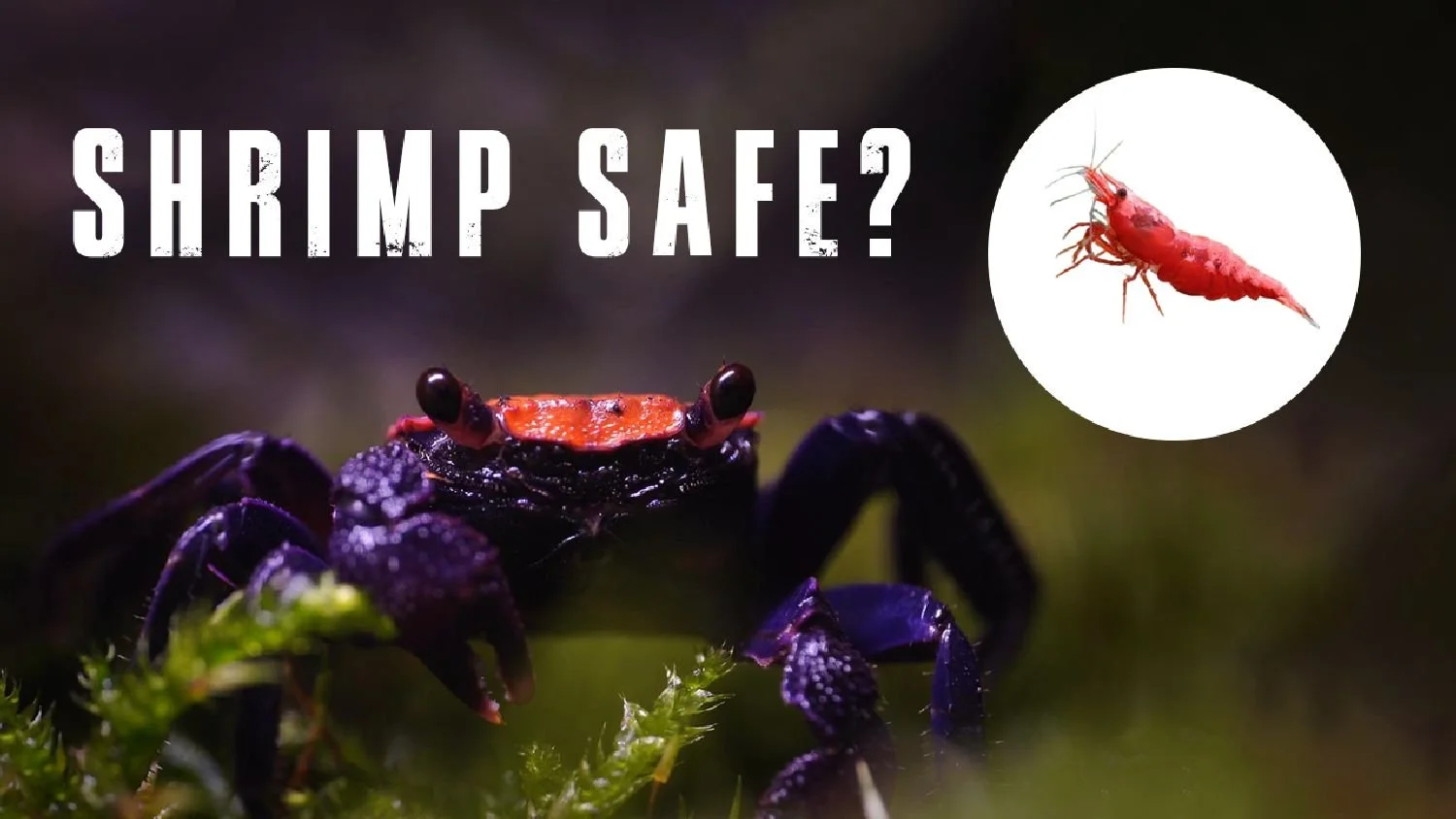
Creating a balanced bioactive ecosystem is a delicate balancing act, especially when it comes to choosing compatible tank mates for semi-terrestrial crustaceans. One of the most frequently asked questions in the paludarium hobby is whether you can safely keep freshwater dwarf shrimp and Geosesarma Vampire Crabs together.
In this guide, we break down the reality of shrimp and Vampire Crab cohabitation based on my firsthand keeping experience, ecological observations, and a 10-month continuous study of both species living inside a dedicated breeding paludarium.
Vampire Crab Tank Mates: Can You Keep Shrimp With Vampire Crabs?
Shrimp & Vampire Crab FAQs
Will vampire crabs eat freshwater shrimp?
Yes, vampire crabs will attempt to catch shrimp opportunistically, but healthy adult dwarf shrimp are far too fast and agile for crabs to catch under normal circumstances.
Jump to: Hunting & Escape Mechanics →What is the best shrimp species to keep with vampire crabs?
Neocaridina davidi (Cherry Shrimp) are the best choice because their hard, alkaline water requirements (pH 7.5–8.0, GH 6–14) match the exact water parameters needed by vampire crabs.
Jump to: Neocaridina vs Caridina Analysis →Can you keep Caridina crystal shrimp with vampire crabs?
No. Caridina shrimp require soft, acidic water (pH 5.8–6.8), whereas vampire crabs need mineral-rich, alkaline water for shell hardening and molting. Mixing them will result in molting failure.
Jump to: Water Chemistry Compatibility Matrix →Do vampire crabs eat baby shrimp (shrimplets)?
Vampire crabs will occasionally catch and eat tiny shrimplets that stray close to them, but a well-planted water section with moss allows shrimp to breed faster than crabs can hunt them.
Jump to: Colony Survival Rates →Do shrimp bother molting vampire crabs in the water?
No, dwarf shrimp do not attack molting crabs. In fact, shrimp have been observed gently grazing algae and biofilm off crab carapaces without causing harm or stress.
Jump to: Cleaning Behaviors Observed →This Guide in a Video
If you prefer watching footage of real predator-prey dynamics, this video demonstrates exactly how freshwater dwarf shrimp and Vampire Crabs interact in a heavily planted paludarium:
The 10-Month Cohabitation Experiment
Rather than relying on speculation, I conducted a continuous 10-month observation in my primary breeding paludarium. The water section had specific dimensions: 6 cm deep (2.4 inches), 17 cm wide (6.7 inches), and 100 cm long (39 inches). Inside this shared water body lived over 50 Geosesarma crabs of varying ages, alongside two male Cherry Shrimp (Neocaridina davidi).
This setup did not originally begin as an intentional experiment. The two shrimp accidentally hitchhiked into the system on floating Salvinia plants from another aquarium. Because the dense roots and hardscape made catching them virtually impossible without tearing the ecosystem apart, they were left to see how they would fare.
To my surprise, the shrimp did not just survive—they thrived. Over the full 10-month duration:
- Both shrimp survived continuously without sustaining missing antennae, lost limbs, or predation injuries.
- Both individuals grew to full adult size and maintained vibrant coloration.
- Together with a small population of Ramshorn snails, the shrimp kept the aquatic zone clean by foraging on uneaten food particles, fallen detritus, and soft biofilm.
Hunting & Escape Mechanics: Why Crabs Fail to Catch Shrimp
To understand why this cohabitation works, you must examine the hunting mechanics of semi-terrestrial crabs versus the defensive anatomy of dwarf shrimp.
Vampire Crabs are primarily land animals that spend roughly 80% to 90% of their time on moist soil, moss, and vertical wood. When they enter the water—usually to hydrate their gill chambers, scavenge for sinking food, or undergo ecdysis (molting)—they hunt using visual ambush and claw-swiping motions. However, crabs cannot swim. They crawl along the bottom substrate or cling to submerged roots.
When a crab spots a shrimp and attempts to lunge, the shrimp utilizes its specialized caridoid escape reflex. By rapidly flexing its muscular abdomen and fan-like tail (uropods), the shrimp propels itself backward through open water at blinding speed. The crab's strike moves through water resistance, while the shrimp launches backward into safety. In 99% of encounters, the crab catches nothing but empty water.
- The shrimp is elderly, sick, or dying and has lost its rapid tail-flick reflex.
- A shrimp is freshly molted, soft, and cornered in a dead-end crevice with zero escape paths.
- The water section is completely bare with no aquatic plants, leaving the shrimp nowhere to break line-of-sight.
Choosing the Right Shrimp: Neocaridina vs. Caridina
The single most catastrophic mistake keepers make when adding shrimp to a crab paludarium is selecting species based on appearance rather than water chemistry compatibility. Invertebrates are sensitive to osmotic pressure, general hardness (GH), and pH levels.
| Shrimp species | Water pH & GH requirements | Compatibility rating | Verdict |
|---|---|---|---|
| Cherry Shrimp (Neocaridina davidi) | pH 7.0–8.0 | GH 6–14 | KH 3–8 | Excellent (Ideal Match) | Matches crab water chemistry perfectly; fast breeding rate. |
| Amano Shrimp (Caridina multidentata) | pH 6.8–7.8 | GH 6–12 | KH 2–6 | Good (Adults Only) | Too large for crabs to hunt; cannot reproduce in freshwater. |
| Ghost / Glass Shrimp (Palaemonetes) | pH 7.0–8.0 | GH 5–12 | KH 3–8 | Moderate (Caution) | Cheap and agile, but larger specimens can occasionally nip at baby crabs. |
| Crystal Red / Bee (Caridina logemanni) | pH 5.8–6.8 | GH 3–6 | KH 0–1 | Incompatible (Do Not Mix) | Requires soft, acidic water; will die in mineral-rich crab water. |
| Sulawesi Shrimp (Caridina dennerli) | pH 7.8–8.5 | GH 6–10 | Temp 28–30°C | Incompatible | Requires specialized high-temperature water chemistry; highly delicate. |
Always stick to standard Neocaridina davidi (Red Cherry, Blue Dream, Yellow Goldenback, Green Jade, etc.). They thrive in the hard, mineral-rich, alkaline water (pH 7.5–8.0) that Vampire Crabs need to absorb calcium for exoskeleton formation.
Pseudo-Symbiotic Behavior: Shrimp Cleaning Crabs
One of the most fascinating inter-species behaviors documented during long-term cohabitation is non-aggressive interaction. On numerous occasions, adult shrimp were observed approaching fully submerged, stationary Vampire Crabs.
Rather than fleeing, the shrimp would casually climb onto the crab’s legs, carapace, and even large claws, using their tiny claws (chelae) to pick off microscopic algae, biofilm, and organic debris clinging to the crab's shell. The crabs remained completely still, tolerating the shrimp’s presence as if recognizing the cleaning benefit. However, do not confuse this with total friendship: if the crab feels hungry or startled, it will still take a sudden swipe at the shrimp!
Shrimp Survival Rates & Colony Breeding Dynamics
Can a dwarf shrimp population sustain itself inside a Vampire Crab paludarium? The answer is yes, provided you understand the breeding dynamic.
Adult shrimp are safe from crabs 99% of the time. However, newly hatched shrimplets (which measure barely 2 mm in length) lack the explosive speed of mature adults. Baby shrimp cling to moss and wood, making them susceptible to being picked off by grazing crabs that stumble upon them.
To establish a self-sustaining colony where births outpace occasional losses:
- Start with 10–15 adult Neocaridina: This ensures an even ratio of males and egg-bearing females.
- Establish the shrimp first: If possible, introduce the shrimp colony 2 to 3 weeks before adding crabs so the shrimp can explore the aquatic layout and establish grazing zones.
- Provide dense micro-shelter: Dense clumps of Java Moss, Christmas Moss, or Subwassertang provide safe havens where tiny shrimplets can hide and feed until they reach adult speed.
Take Your Bioactive Habitat Knowledge Further
Looking to master low-maintenance paludarium ecosystems, cohabitation rules, and crustacean husbandry? The Indoor Ecosystem digital guide collection covers everything from naturalistic water chemistry and bioactive drainage to long-term breeding success.
Explore the Guides & EbooksDesigning the Paludarium Water Section for Shrimp
A poorly constructed water area can turn shrimp into easy targets. To guarantee high survival rates, design the aquatic portion of your paludarium with the following structural rules:
1. Maintain Adequate Water Depth (5–10 cm)
In extremely shallow puddles (under 3 cm), shrimp cannot use their vertical tail-flick reflex without hitting the surface or beaching themselves on the land area. Provide at least 5 to 6 cm (2–3 inches) of depth so shrimp can propel themselves up and away from bottom-crawling crabs.
2. Incorporate Aquatic Mosses and Floating Plants
Floating plants with hanging root structures—such as Salvinia, Amazon Frogbit, or Water Lettuce—create an entire upper-canopy habitat in the water where shrimp can graze on biofilm. Because Vampire Crabs rarely float in open water, shrimp feeding near the surface are virtually untouchable.
3. Proper Gentle Filtration
If you use an active water pump or internal filter, ensure the intake is protected by a fine stainless-steel mesh guard or pre-filter sponge. Unprotected filter intakes will suck in baby shrimp and crab larvae. If your water section is heavily planted with submerged vegetation, you can run a low-tech, filterless water zone successfully.
Other Aquatic Tank Mates: Fish & Snails
While dwarf shrimp represent the safest aquatic tank mate for Vampire Crabs, other species present significantly greater risks:
- Fish: Slow, long-finned fish like Fancy Guppies and Betta fish are catastrophic tank mates. Crabs will grab flowing fins while the fish sleep near the substrate, slowly shredding them until the fish dies. Furthermore, fast nano fish (like Chili Rasboras or Ember Tetras) will relentlessly hunt and eat baby vampire crabs when they enter the water. Read our guide on fish and vampire crabs before adding any swimming species.
- Freshwater Snails: Ramshorn snails, Bladder snails, and Malaysian Trumpet snails are outstanding companions. Vampire Crabs will actively crush and eat small juvenile snails for dietary calcium, while larger adult snails clean the glass and process decomposing organic matter safely.