

Source: iNaturalist - Sino_Dipper
This guide will prepare you for keeping Lepidothelphusa 'aka' Borneo Crabs properly. If you've kept Geosesarma Vampire Crabs before, they are kind of similar in a lot of ways, but there are also quite a few key differences that you need to understand before you set up a tank and get your crabs.
Can You Keep Borneo Crabs in an Aquarium or Fish Bowl?
Lepidothelphusa Borneo Crab FAQs
Can you keep Borneo Crabs in an aquarium or fish bowl?
No. While they won't die staying fully underwater, this isn't ethical. They need access to land in a paludarium.
Jump to: Aquarium Warning Details →What land-to-water ratio do Lepidothelphusa crabs need?
Unlike Vampire Crabs, Lepidothelphusa crabs need 60% to 70% water and 30% to 40% land.
Jump to: Paludarium Requirements →What size tank is needed for Borneo Crabs?
At least 10–15 gallons of horizontal space (minimum 60x30x30cm) for a group of 5 crabs.
Jump to: Tank Size Guide →What temperature is best for Lepidothelphusa?
Water temperature should stay between 22–25°C. Prolonged water temps above 25°C are dangerous.
Jump to: Temperature & Parameters →Why do baby Lepidothelphusa crabs need an aged tank with mulm to survive?
Baby Lepidothelphusa emerge as tiny 1–2 mm crablets that cannot eat commercial pellets. They are microbial grazers that rely on mulm, biological biofilm on decaying leaves, and organic debris caught in aquatic mosses to avoid starvation.
Jump to: Baby Crab Survival Secrets →Can you mix different species of Lepidothelphusa?
No! Mixing species causes fighting and death. Only keep one species per tank.
Jump to: Mixing Species Advice →Everything You Need to Know About Borneo Crabs (Lepidothelphusa)
- Scientific name: Lepidothelphusa (multiple species)
- Common name: White scissor crab, Sarawak land crab, skull crab, Borneo Crab, Panda crab. Though there are a few different varieties with different common names.
- Difficulty level: Intermediate | Expert
- Origin/Distribution: Borneo / Sarawak / Indonesia
- Colouration: Carapace and claws white to yellowish, legs and eyes purple to black, blue bodies, and rainbow colours.
- Age expectancy: 2–3 years (estimates)
- Parameters: GH 6 to 25, KH 3 to 20, temperature 22 to 25 °C (water)
- Size of the Paludarium: from 60x30x30cm | 23x11.8x11.8in for a group of five crabs, water part (freshwater) of at least 60–70%, 10–15 gallons of horizontal space. Not a vertical enclosure.
Lepidothelphusa crab species care guide
- Food: Frozen food, freeze-dried insects and crustaceans, fish meat, special food for crabs, vegetables, green food, and fruit. All the same stuff standard Vampire Crabs eat. Though you will have better results with live and fresh foods.
- Reproduction: Direct development. Babies will spend more time in the water as they grow up as well.
- Behaviour: Mostly peaceful, group animal, 5 or more.
- Coinhabitants: Shrimps, snails, springtails, and isopods.
Currently Known Species (Though More Will Certainly Pop Up)
- Lepidothelphusa cognettii
- Lepidothelphusa flavochela
- Lepidothelphusa limau
- Lepidothelphusa loi
- Lepidothelphusa menneri
- Lepidothelphusa padawan
- Lepidothelphusa sangon
Related: EVERYTHING YOU NEED TO KNOW ABOUT VAMPIRE CRABS | Geosesarma SP
Appearance
The White Scissor Crab (Lepidothelphusa) has a carapace and claws that are white to yellowish, while the legs and eyes are purple to black. Though there are quite a few other different colour variations. It is a small crab, reaching a carapace diameter of 3–4 cm. Some species are also vibrant orange, blue, and fiery red.
Habitat
It is found in karstic hilly areas with hard water in the Borneo rainforest, particularly in accumulations of foliage near streams and waterfalls. It can live both on land and in water, but needs both to survive. Pristine, flowing water is a must when keeping these crabs in captivity.
Paludarium Requirements & Tank Size
Unlike Geosesarma species (Vampire Crabs), Lepidothelphusa species crabs require an environment that is 30–40% land and 60–70% water. These crabs come from tropical rainforest areas with pristine water, waterfalls, and flowing streams. This means that water quality and filtration need to be a high priority when keeping these crabs.
While Vampire Crabs can be kept in setups with small water dishes, these crabs should be kept in at least 10–15 gallons to provide an adequate land and water ratio as well as support a healthy population of at least 5 crabs. When choosing a tank, length is far more important than height!
Lepidothelphusa tank setup guide · For a detailed step-by-step written tutorial, read our guide on how to build a paludarium for Lepidothelphusa crabs.
Temperature and Water Parameters
| Parameter | Recommended range |
|---|---|
| Air Temperature | 23 — 28 °C |
| Water Temperature | 22 — 25 °C (max 25°C) |
| Humidity | Above 75% |
| pH | 7.5 — 8.0 (acidic water is bad) |
| KH (carbonate hardness) | 0 — 10 (tolerates up to 20) |
| GH (general hardness) | 4 — 16 (tolerates up to 25) |
| Nitrate | Lower than 20 ppm |
| Water movement | Flowing / Moving water |
Super Important: Lepidothelphusa crabs come from shaded highland streams, so they are vulnerable to high water temperatures. Water temperatures should not spend prolonged times above 25 °C.
Important: The Paludarium must have a tight-fitting closure or glass lid to prevent escapes.
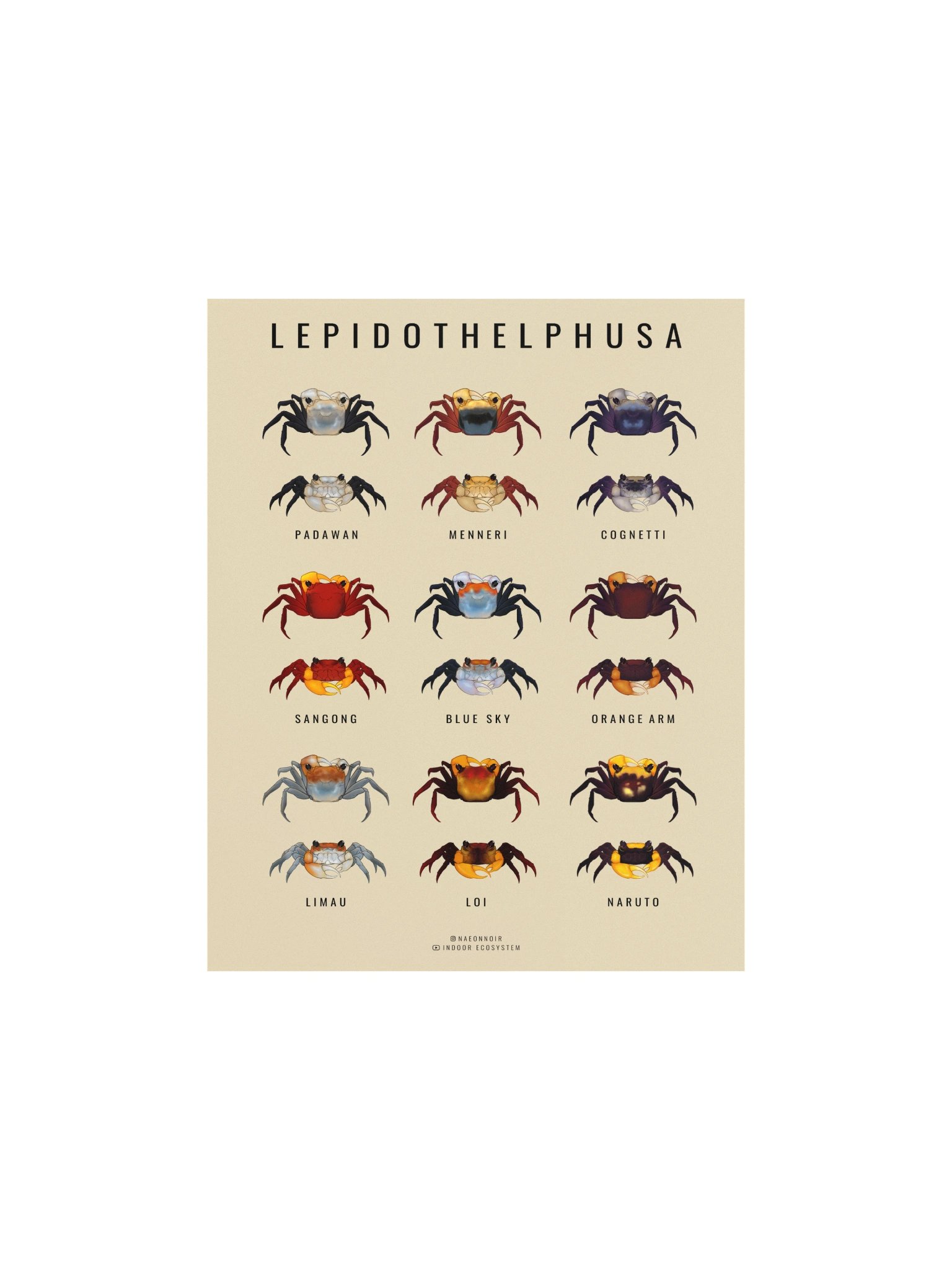
Support our work and grab yourself a Borneo Crab poster!
Illustrated by a real human artist featuring 9 of the most iconic Lepidothelphusa species in the hobby. Printed on thick, durable museum-quality paper to help support our habitat field research.
Get the Borneo Crab PosterPopulation: How Many Lepidothelphusa Crabs Per Tank?
It is recommended to keep Lepidothelphusa crabs in groups. A group of 10 animals can be kept in an 80x30x30 cm paludarium, while a group of 5 animals can be kept in a 60x30x30 cm tank. As with Vampire Crabs, you should keep the male-to-female ratio at 1 male to 2 females, where possible, to prevent excessive territorial pressure.
These crabs are far more social than vampire crabs, so it's highly recommended to keep them in a group of 5 or more. While they aren't as aggressive as Geosesarma, males will still squabble over females and prized hiding spots if space is restricted.
Can You Mix Lepidothelphusa Crabs?
Just like with Vampire Crabs, it's not possible to mix different Lepidothelphusa species without major issues with fighting. Never house different species together in the same tank. Always keep a single-species biotope. To learn more about managing crustacean conflict, check out our guide on how to stop crabs from fighting.
Feeding | Foods
Lepidothelphusa crabs are omnivorous detritivores but prefer a high-protein diet of fresh and raw food rather than dried or processed commercial flakes. Meaty proteins are a key part of their nutrition:
- Fresh or frozen fish meat
- Freshwater shrimp and krill
- Clams and mussels
- Pest snails (crushed)
- Small crickets and fruit flies
- Most other small feeder bugs
- High-calcium shrimp pellets and crustacean sinking wafers
They will also hunt any live worms and isopods they encounter in the enclosure. Sprinkle nano fish pellets and mineral food across multiple locations in the tank to avoid food competition. For complete feeding routines, see our breakdown on what crabs eat and feeding schedules.
Breeding Lepidothelphusa Crabs (Breeding Borneo Crabs)
These crabs breed fairly easily in a well-established paludarium. However, mating can be quite rough for the females. Males will flip females onto their backs or pin them face-to-face to mate. While injuries during mating are somewhat less common than with aggressive vampire crabs, limb loss can still occur if the female struggles.
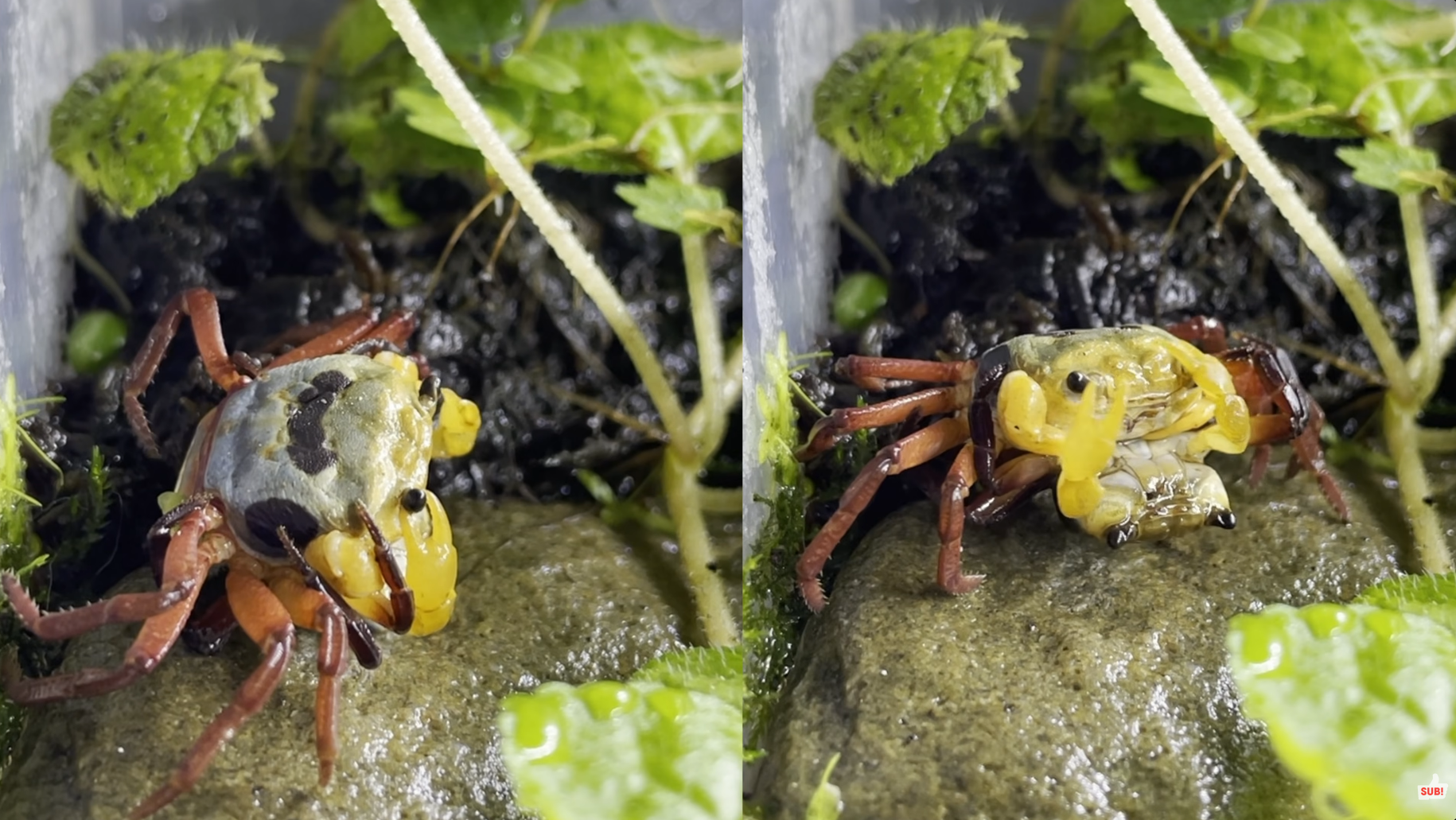
Picture: A pair of Lepidothelphusa menneri (Borneo Rainbow / Tricolour Crab) mating along the water-land transition line. Photo by AP.
Once the female has been mated, she will usually go into hiding. They prefer burrows for this, so having soft soil or clay along the riverbank is best, along with deep stone crevices where other crabs cannot squeeze in to harass her. This is one of the times when Lepidothelphusa crabs spend considerable time on land before finally heading back to the shallow water to release their hatchlings.
Cannibalism & Vulnerability in the Colony
Adult Lepidothelphusa crabs will opportunistically prey upon their young or cannibalize newly molted colony members if protein is scarce or hiding places are limited. While they are naturally more social than vampire crabs, soft crabs and miniature crablets emit biochemical scent cues that hungry adults find irresistible.
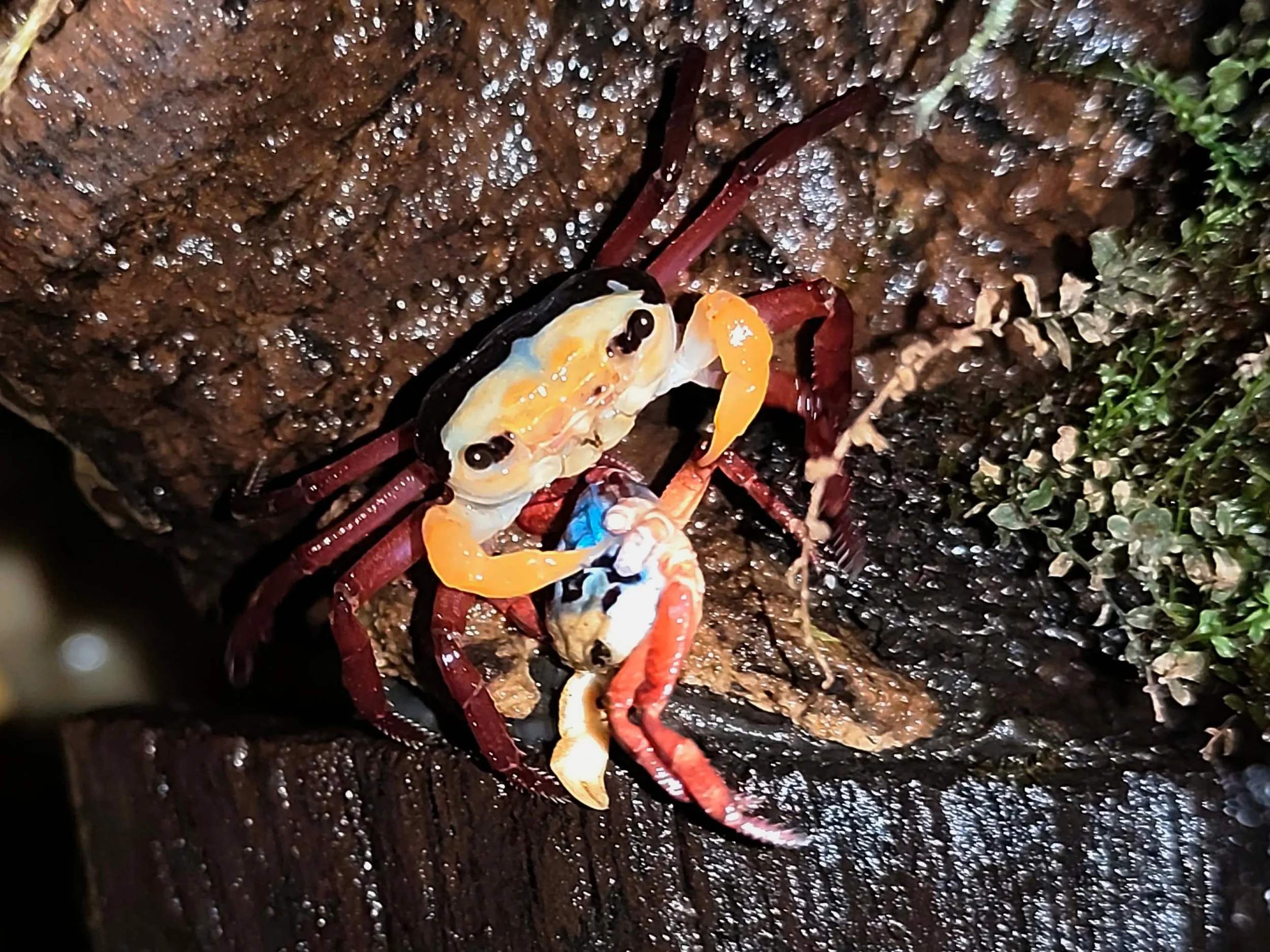
Picture: Lepidothelphusa menneri cannibalism—a stark reminder of how vulnerable soft, newly molted crabs are without protective hides. Photo by AP.

Picture: Lepidothelphusa menneri scavenging and consuming another crab. Keeping the colony well-fed with high-protein food and providing dense aquatic cover drastically reduces opportunistic attacks. Photo by AP.
8. The Secret to Baby Crab Survival: Tank Maturity, Mulm & Aquatic Moss
One of the most rewarding milestones in keeping Lepidothelphusa is witnessing a gravid female release a clutch of direct-developed miniature crablets. Getting adult Borneo crabs to mate and lay eggs is actually fairly straightforward once water quality, temperature, and diet are dialed in.
However, the single biggest hurdle in keeping Borneo crabs is crablet survival. Many keepers celebrate seeing dozens of tiny babies crawl along the waterline, only to find zero survivors a month later. The reason is rarely adult predation or water toxicity alone; it almost always comes down to tank age and biological maturity.
Why "Pristine, Sterile" New Tanks Starve Baby Crabs
When baby Lepidothelphusa hatch, they emerge as fully formed miniature replicas of their parents, just 1 to 2 millimeters across. Unlike larger crablets, their tiny mouthparts and delicate chelae are physically incapable of tearing apart commercial sinking pellets or frozen bloodworms. They cannot survive on standard prepared feeds.
Instead, newly hatched Borneo crabs are microbial grazers. In the wild mountain streams of Sarawak, they feed on microscopic infusoria, protozoans, micro-algae, and the biological matrix of decomposing rainforest leaves. In a freshly built, spotless tank, this microscopic food web does not exist, and the crablets quietly starve to death within their first few molts.
The Life-Saving Value of Mulm & Seasoned Aquatic Biomes:
- Tank Stability & Age: To reliably raise baby Borneo crabs, your paludarium needs to be seasoned for at least 3 to 6 months before expecting high survival rates. An aged tank possesses a fully stabilized biological biome where nitrifying bacteria and microfauna thrive in every crevice.
- Embrace the Mulm: While standard aquarium hobbyists often strive to vacuum away every speck of brown debris, mulm is pure gold for baby crabs. The settled organic detritus that gathers between stones and along the riverbed is loaded with digestible microorganisms, beneficial bacteria, and rich fungal hyphae that sustain young crablets 24/7.
- Biological Botanicals in the Water Basin: Submerge small pieces of dried Catappa (Indian Almond) leaves, alder cones, and guava leaves in the aquatic zone. As these botanicals break down underwater, they release gentle protective tannins and form a dense coat of nutritious biological biofilm that baby crabs graze on continuously.
Aquatic Mosses: The Ultimate Catch-Net & Nursery
If you want maximum baby survival, aquatic mosses are non-negotiable. Planting dense patches of Java Moss (Taxiphyllum barbieri), Christmas Moss (Vesicularia montagnei), or weeping moss throughout the aquatic section performs two critical functions:
- Particulate Food Traps: The fine, feathery fronds of aquatic moss act like a mechanical biological net. As water flows through the tank, the moss catches floating micro-particles, detritus, and organic debris, concentrating a continuous smorgasbord of microscopic nutrition directly in the water column where babies congregate.
- Anti-Predation Shelter: While adult Lepidothelphusa are far less aggressive than vampire crabs, hungry adults will opportunistically snack on a soft, newly hatched baby. Dense moss cushions create an impenetrable thicket where adult crabs cannot reach, allowing the crablets to graze, molt, and grow in total safety until they are large enough to wander the open sand.
Baby Lepidothelphusa Crab Growth Rates
Babies take a long time to mature—at least 6 months to reach sub-adulthood—and will hang around the water section for at least the first 2 months as they molt frequently.
From birth, baby Lepidothelphusa crabs live off microscopic organisms already established in the tank. Primarily, things like springtails, copepods, rotifers, and biofilm. That said, as they grow, you should also offer finely powdered spirulina, bacter AE, and tiny bits of crushed meaty food to accelerate healthy development.
Baby Borneo crabs are social and hang around with each other in small groups near the water edge, so if you're trying to see if you have babies yet, that's the first place to start searching. They are also remarkably good climbers early on.
Babies can be raised in smaller rearing tanks starting at 2–5 gallons, provided the water is well-filtered, oxygenated, and seasoned with mature botanicals and moss.
Coinhabitants With Lepidothelphusa Crabs
Springtails and Isopods are a must-have in a crabarium as they are an essential part of the terrestrial bioactive clean-up crew. Any leftover food and crab waste on land will be processed by these critters. For the water section, freshwater shrimp (like Neocaridina), pest snails, and peaceful nano fish work well.
Avoid betta fish, as the cooler water temperatures required for Borneo crabs (22–25°C) are lower than what Bettas need to thrive.
Molting & Shell Shedding
Crabs shed their exoskeleton periodically to grow and regenerate damaged or lost limbs. Lepidothelphusa will almost always molt in or immediately beside the water, so ensure they have effortless ramps out of the water basin and fine, soft sand to bury into.
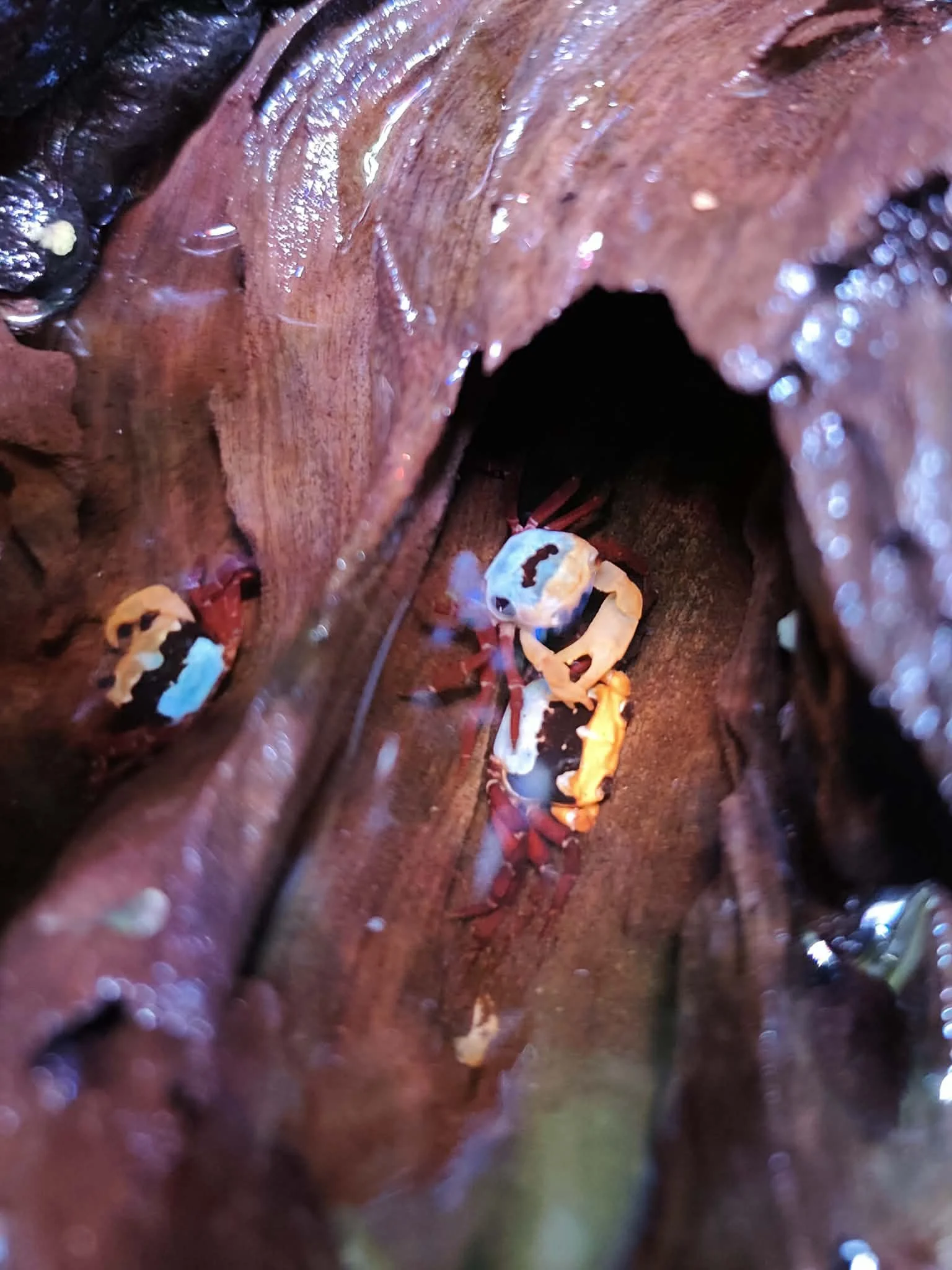
Picture: Lepidothelphusa menneri mid-ecdysis, slowly backing out of its old exoskeleton through the rear carapace suture line. Photo by AP.
Once they shed their shell, they will usually stay hidden in a dark burrow for several days to a week while their soft new cuticle absorbs minerals and hardens. Their coloration will also appear fresh and slightly altered during this period.
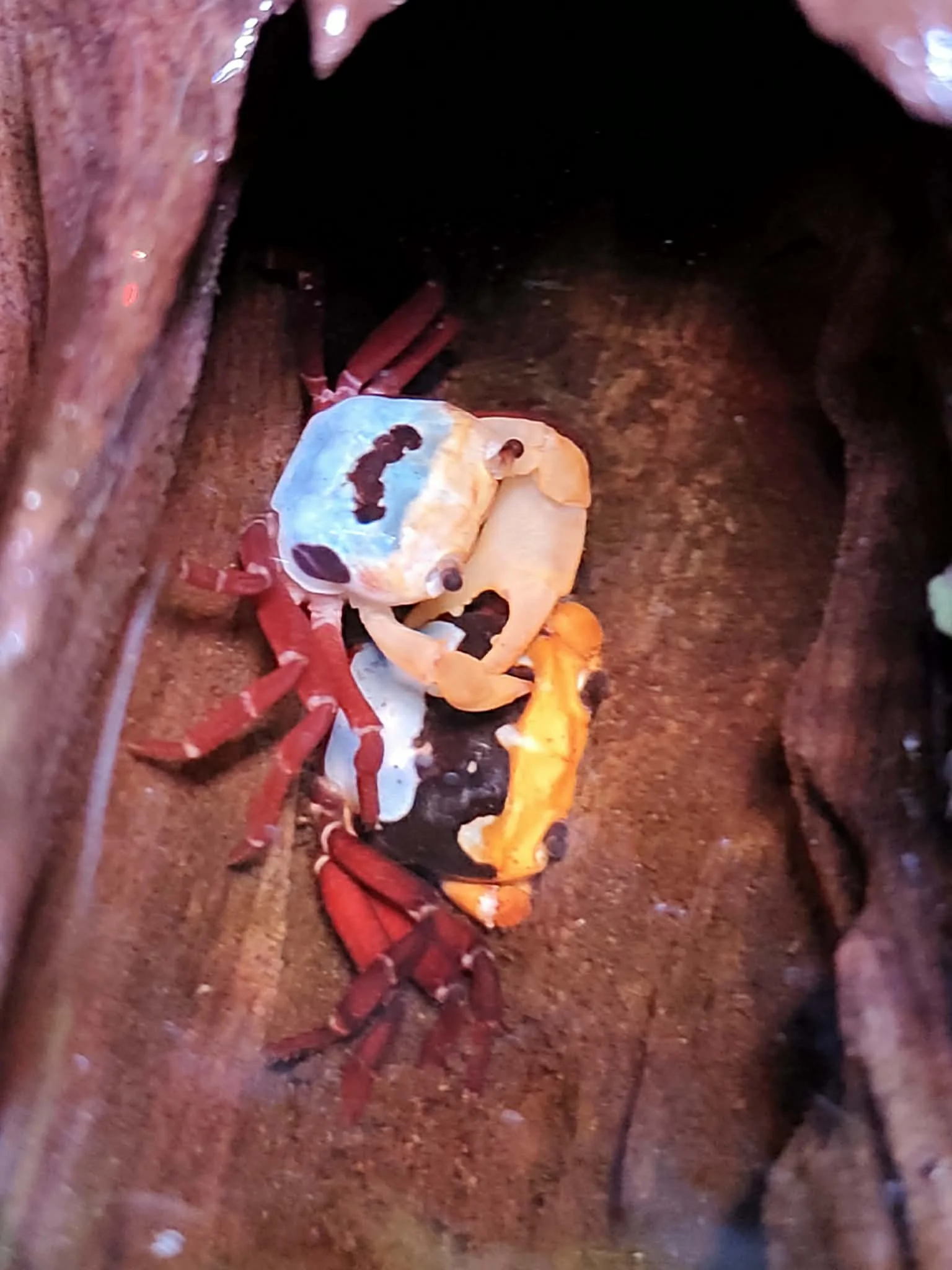
Picture: Lepidothelphusa menneri resting safely alongside its cast exuvia. Leaving the empty shell in the tank allows the crab to reabsorb essential calcium. Photo by AP.
You can easily distinguish a cast molt from a dead crab: a discarded molt is lightweight, translucent, and features an open rear hatch with empty eye sockets. Molts also do not have a foul odor. For more on diagnosing molting health, read our guide on why crabs die and how to fix failed molts.
Suggested Plants for Lepidothelphusa Crabs
Suggested Plants (LAND) for Lepidothelphusa Crabs
- Pilea peperomioides and Pilea depressa
- Hypoestes phyllostachya (Polka Dot Plant)
- Climbing Ivy (Ficus pumila)
- Asparagus ferns
- Peace lily (Spathiphyllum)
- Peperomia verticillata
- Tradescantia
- Fittonia (Nerve plants)
- Nephrolepis (Boston and sword ferns)
- Adiantum (Maidenhair ferns)
- All types of terrestrial sheet mosses (Java moss, weeping moss, sphagnum)
Any plants commonly used in tropical terrarium builds will work well, provided they tolerate high humidity. Live mosses are a non-negotiable part of any Lepidothelphusa ecosystem.
Suggested Plants (WATER) for Lepidothelphusa Crabs
All hardy aquarium plants work well for these crabs: Bucephalandra, Anubias nana Petite, Java Fern, and floating plants like Salvinia auriculata and Phyllanthus fluitans. Floating plants are particularly beneficial as their trailing roots absorb excess nitrates, provide grazing cover, and help shade the water.
I highly suggest you check out this scientific survey blog by Jungle Mikey for detailed environmental and botanical data from the wild streams of Sarawak.
Buying Lepidothelphusa Crabs Online & Shipping
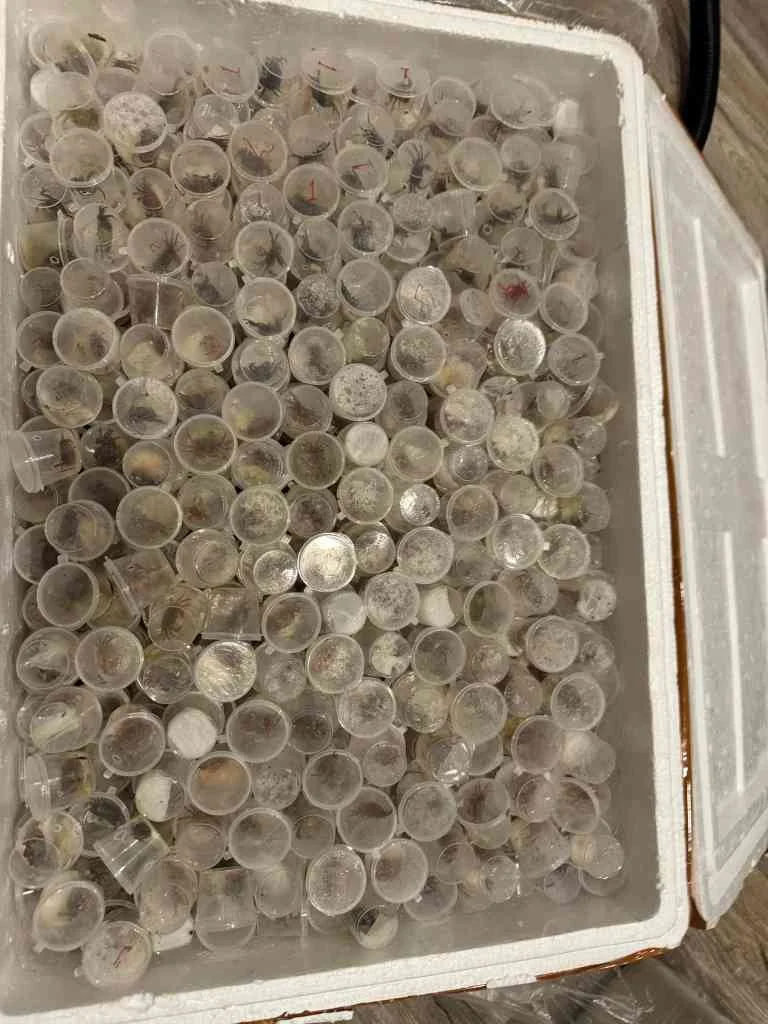
Picture: Safe invertebrate shipping packaging. Minimizing transit duration is critical for survival. Picture @milleniumsnakes
Purchasing Lepidothelphusa crabs is challenging. Most online sellers are frequently sold out with unpredictable restocking times, which often pushes hobbyists toward international importers.
The problem with international orders is extended transit time, which dramatically increases mortality. In addition, international sellers often fail to meet strict customs and biosecurity regulations, leaving buyers liable for fines. Wild-caught imports may also carry parasites or disease.
Even with domestic shipping, crabs face severe transit stress. Whenever possible, seek out local breeders or specialized invertebrate shops within driving distance so you can hand-inspect the crabs. Finally, steer clear of vendors offering "rainbow crab mixes"—reputable breeders know never to mix distinct species!