
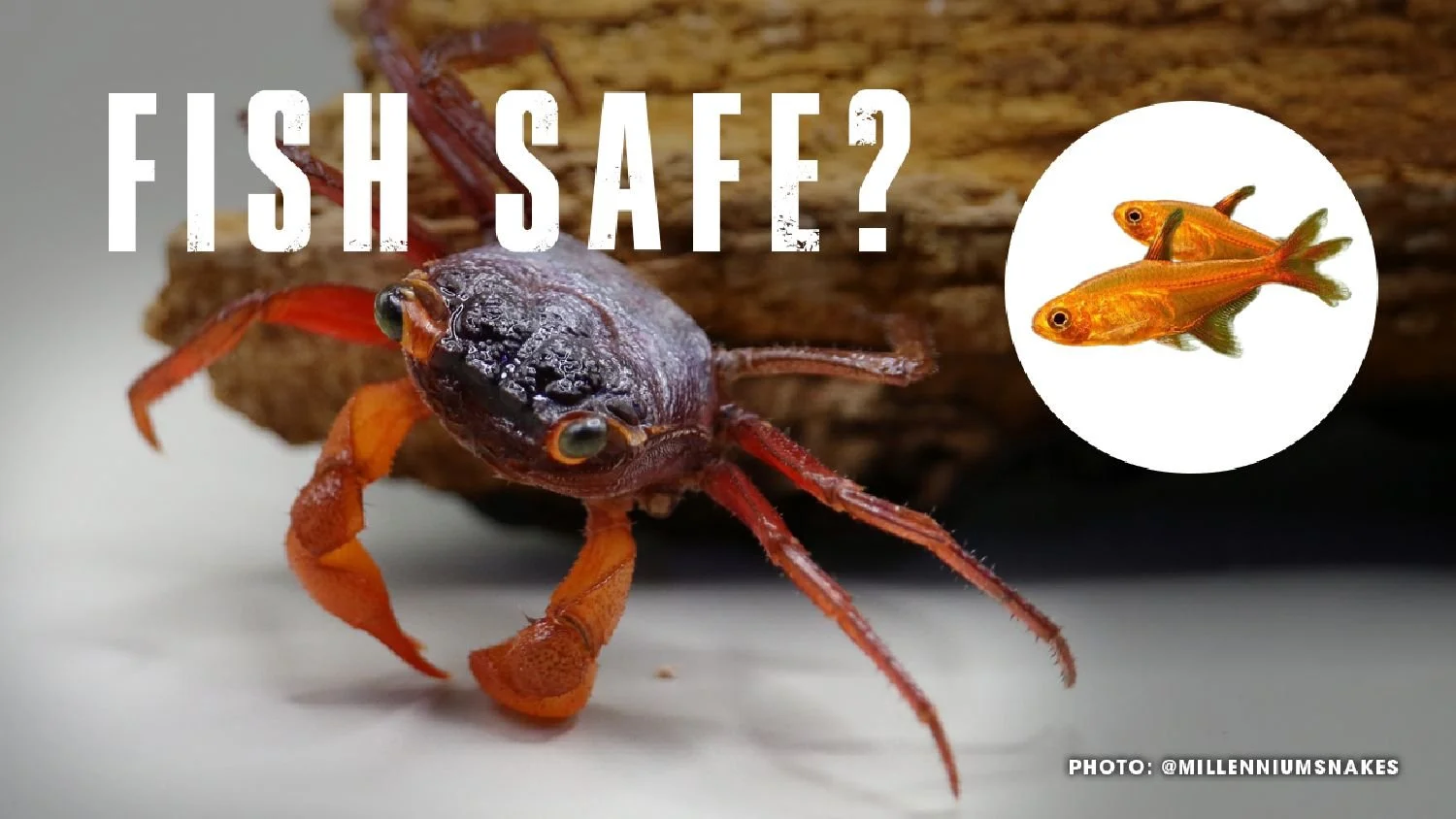
A lot of people who keep Geosesarma Vampire Crabs also want to keep fish with them. It is easy to see the appeal: combining land crabs with swimming fish creates a multi-layered slice of nature. But there are some really important things you need to take into account before adding any kind of fish species to your Vampire Crab tank.
While keeping fish with any species of Vampire Crab is possible, there are genuine risks to both the fish and the crabs. In this guide, we examine the practical risks, the water volume math you must get right, and a detailed profile of the best nano fish species that can cohabit successfully.
Vampire Crab Tank Mates: Can You Keep Fish With Vampire Crabs?
Fish & Vampire Crab FAQs
Can you keep fish with vampire crabs?
Yes, but only in large paludariums with at least 5 to 10 gallons of dedicated swimming water volume and only using small, fast-swimming nano fish species.
Jump to: Swimming Volume Rules →Will fish eat baby vampire crabs?
Yes! Newly hatched baby vampire crabs are only 1 to 2 millimeters in size and spend most of their time at the water's edge, making them easy prey for virtually any fish species.
Jump to: Baby Crab Predation Risks →Can you keep Betta fish with vampire crabs?
No. Betta fish are slow swimmers with flowing fins that sleep near the bottom or on submerged leaves at night. Vampire crabs will readily ambush them and shred their fins.
Jump to: Fish Species to Avoid →What is the best fish species to keep with vampire crabs?
Chili Rasboras and Ember Tetras are the top choices because they are tiny, fast, agile upper-water column dwellers that share the same tropical temperature and water chemistry parameters.
Jump to: Top Recommended Nano Fish →Can you keep bottom-dwelling fish like Corydoras or Plecos with crabs?
No. Bottom-dwellers inhabit the exact benthic floor zone where crabs scavenge and molt, leading to territorial claw attacks, fin damage, and extreme stress for both animals.
Jump to: Why Bottom-Dwellers Fail →This Guide in a Video
If you prefer watching and listening, this video breaks down the real behavioral dynamics of keeping fish with Vampire Crabs, including footage of ambush attempts and habitat design:
The Risks of Keeping Fish With Vampire Crabs
First and foremost, let us address the primary concern when housing fish and Vampire Crabs together: predation. This is not a one-way street; there are serious biological risks to both species.
1. Fish Preying on Baby Vampire Crabs
The most significant challenge lies in the fact that fish tend to prey on baby Vampire Crabs. How? Well, it is simple really: baby Vampire Crabs spend 99% of their time near the water's edge during their early life stages.
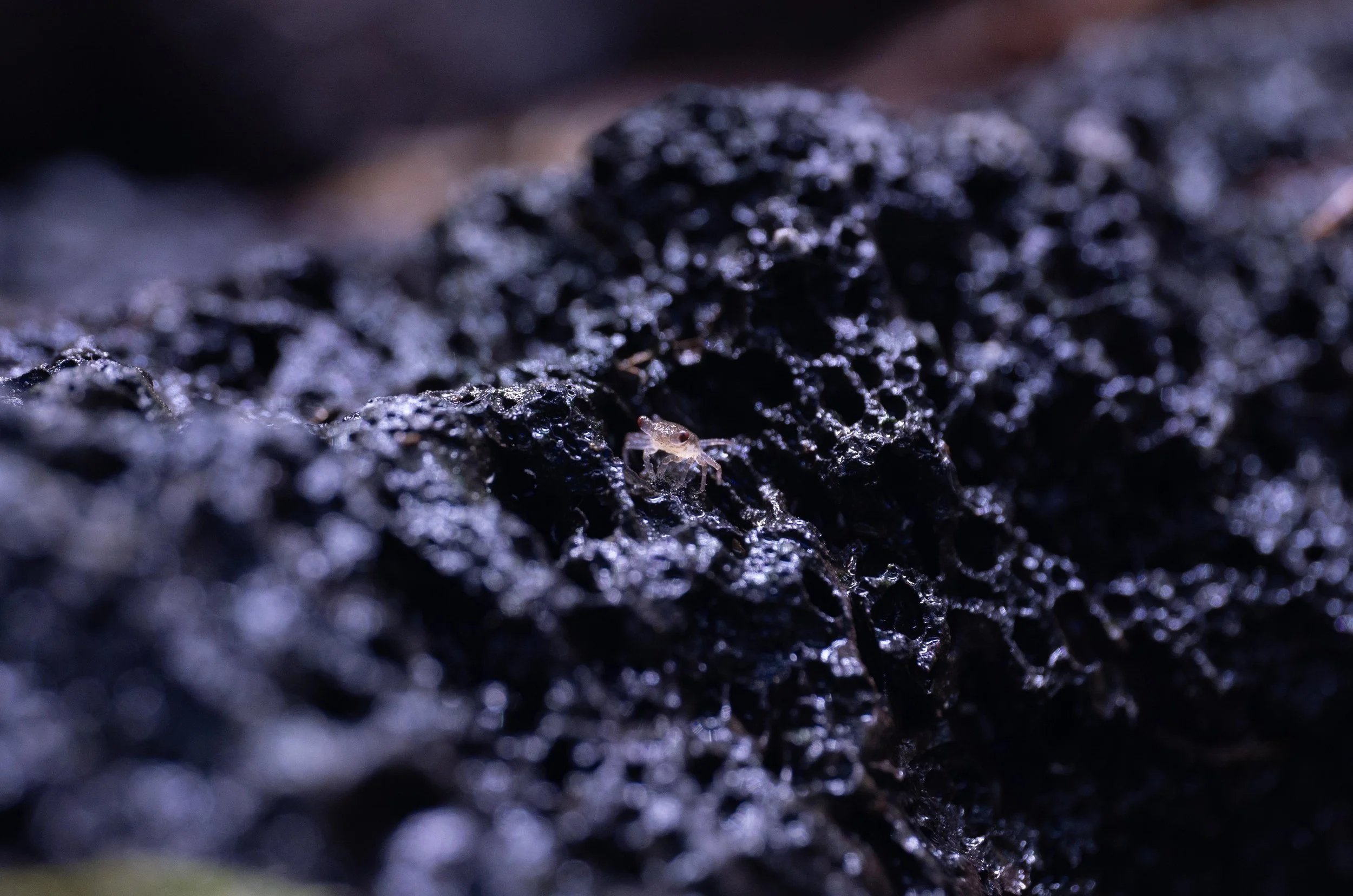
Picture: A baby vampire crab newly hatched. At only a few millimeters across, they spend 99% of their time near the water's edge and are easily eaten by fish.
When baby crabs hatch, they are extremely small—barely a few millimeters across. They are small enough to be easily consumed by even the tiniest of fish species, including nano fish. Consequently, any fish that encounters them along the shoreline will readily view them as prey.
To further complicate matters, baby Vampire Crabs take several months to mature. They spend the first 3 to 4 months molting frequently right at the water's edge, providing ample time for fish to continuously prey on them during this vulnerable developmental period.
2. Crabs Hunting Fish
It is not only the baby crabs that are at risk, though. Any fish species kept with Vampire Crabs is constantly at risk of being eaten. Vampire Crabs are really good hunters and will try their very best to catch and eat any fish in their environment.
Crabs are opportunistic ambush predators. They sit patiently along root banks, shoreline rocks, and submerged plants. When fish rest near the substrate or hover motionlessly at night, crabs will lunge and pin them with their sharp claws. If you do not provide enough swimming space and depth for your fish, your crabs will eventually catch them.
Swimming Volume Requirements: The Paludarium Math
If you are planning to keep fish with Geosesarma species, you need to make sure you have plenty of usable space for your fish. You need absolutely no less than 5 gallons (25 liters) of pure swimming space, but you should be meeting your chosen fish's specific requirements, most of which require more space than that.
What Fish Species Can Live With Vampire Crabs?
If you are comfortable with the predation risks, have enough pure swimming space, and select fish with identical tropical water parameters (pH 7.5–8.0, 22–25°C), these are the best fish species to consider:
1. Ember Tetras (Hyphessobrycon amandae)
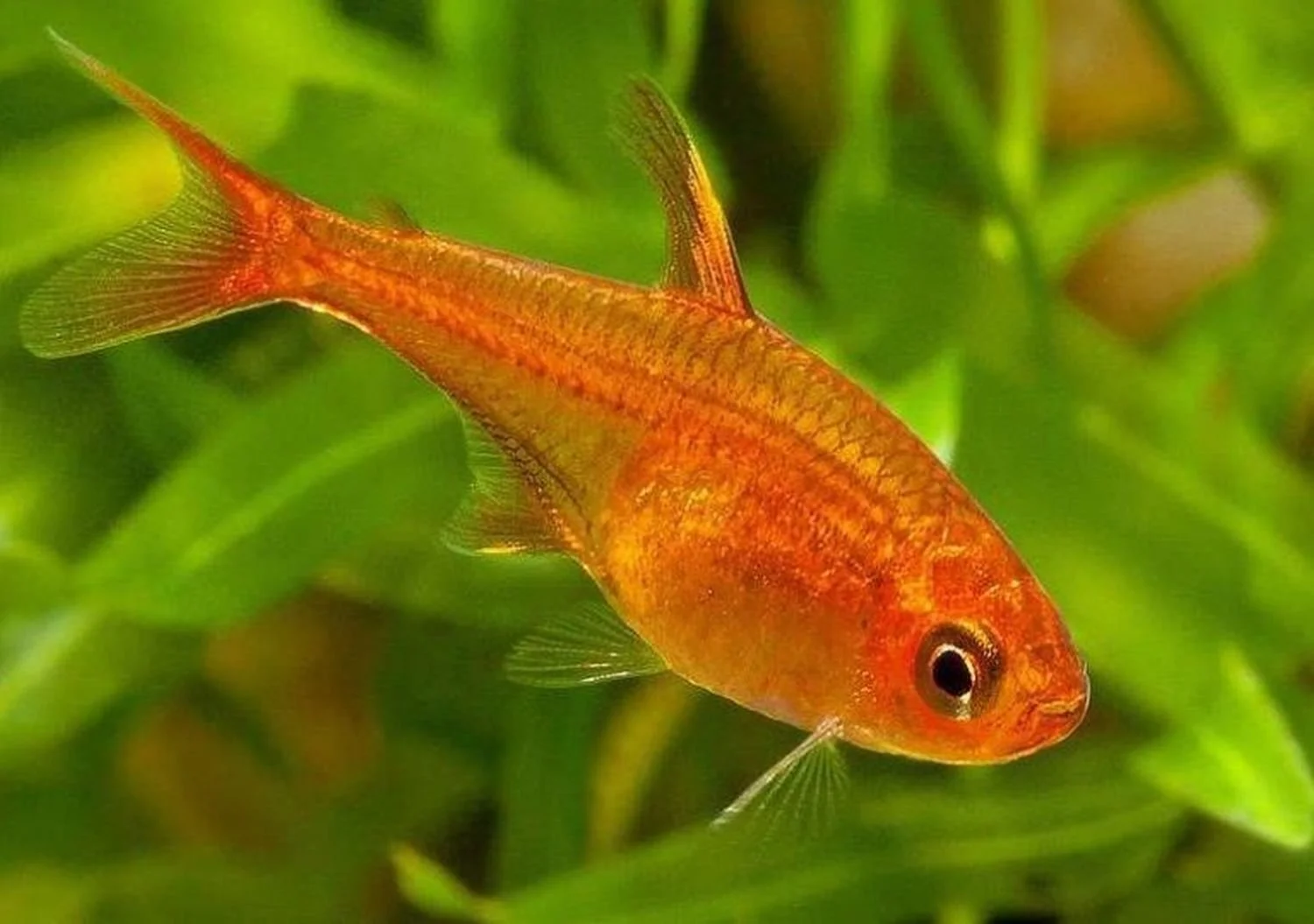
Picture: Ember Tetras are small, fast, and agile, making them one of the best nano fish to cohabit with vampire crabs.
These fish are a common tetra found in Brazil that are super tough, colorful, and only grow up to 0.8 inches (2 cm). They are also super fast and very agile.
Ember Tetras are quite a skittish fish, which makes them hyper-aware of their surroundings. This nervous alertness gives them a strong survival advantage against prowling Vampire Crabs. They eat the same kinds of foods you will be feeding your crabs and live comfortably in identical water parameters. While they are tiny, keep in mind that baby Vampire Crabs will still be on the menu if spotted.
2. Chili Rasboras (Boraras brigittae)
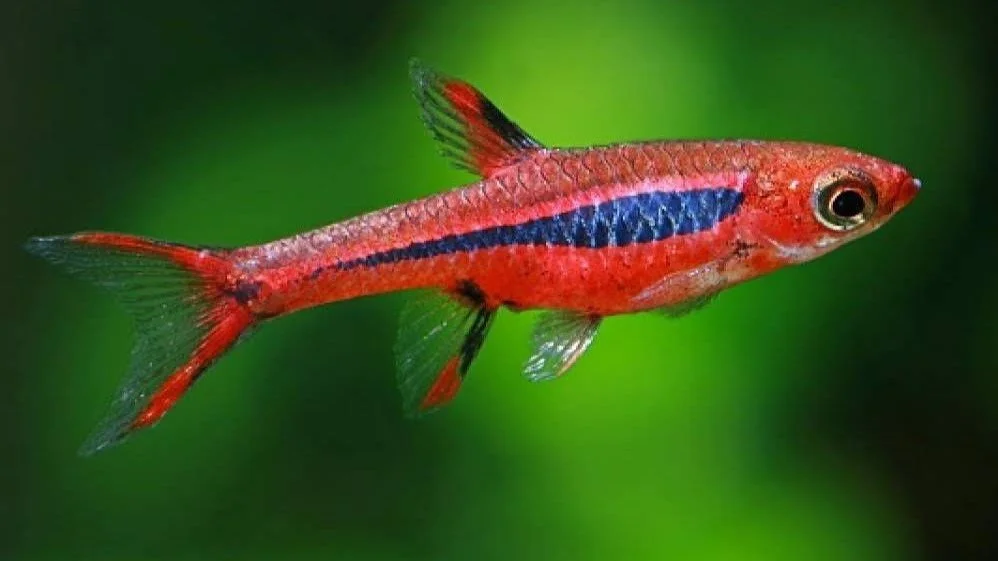
Picture: Chili Rasboras share the same wild Southeast Asian rainforest habitat as vampire crabs, making them an ideal biotope match.
Chili Rasboras are native to the rainforest streams of Borneo and Indonesia. This makes them an exceptional biotope choice for keeping with Vampire Crabs, as they essentially come from the same geographic region and wild forest climate—quite possibly the exact same environments in some locations.
They are one of the smallest fish species in the aquarium hobby, rarely exceeding 0.7 inches (1.8 cm). Because of their micro-sized mouths, they pose the lowest predation risk to baby Vampire Crabs of any fish on this list. They share identical water requirements, so you do not have to alter your water chemistry. However, they are slightly less agile than Ember Tetras, so they require plenty of plant density to feel secure.
3. Green Neon Rasboras (Microdevario kubotai)
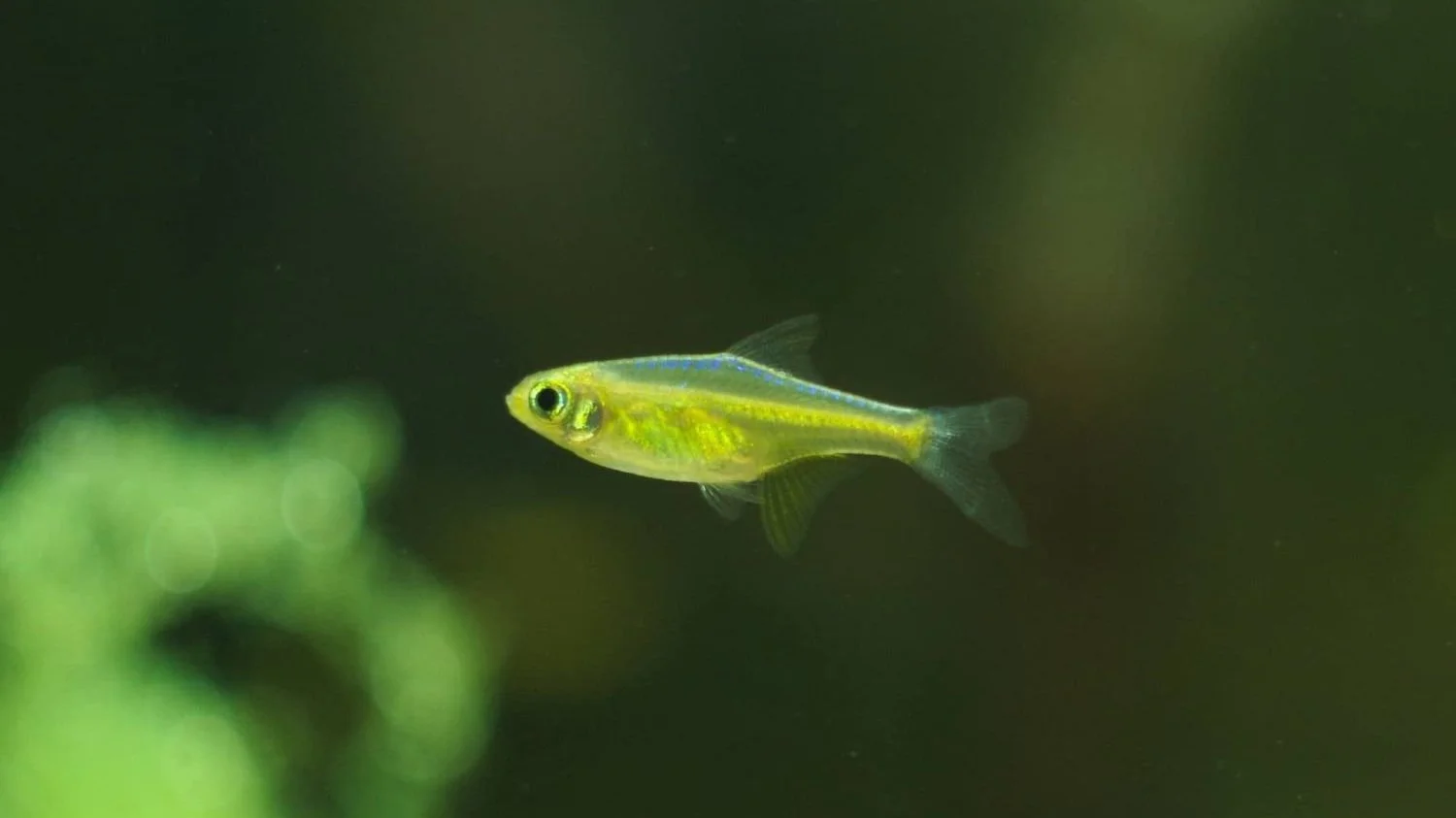
Picture: Green Neon Rasboras are active open-water sprinters that stay in the upper water column well away from crabs.
Microdevario kubotai originate from the Ranong and Phang Nga provinces of Thailand, meaning they share very similar tropical water requirements with Southeast Asian crabs. Known for their striking neon-green shimmer, they are active schooling fish that occupy the upper water column.
They are similar in size and behavior to Ember Tetras, staying on the move and swimming fast enough to stay well out of reach of bottom-dwelling crabs. They eat standard omnivore fare, but like all nano fish, they will still opportunistically eat tiny newborn crab hatchlings.
4. Celestial Pearl Danios (Danio margaritatus)
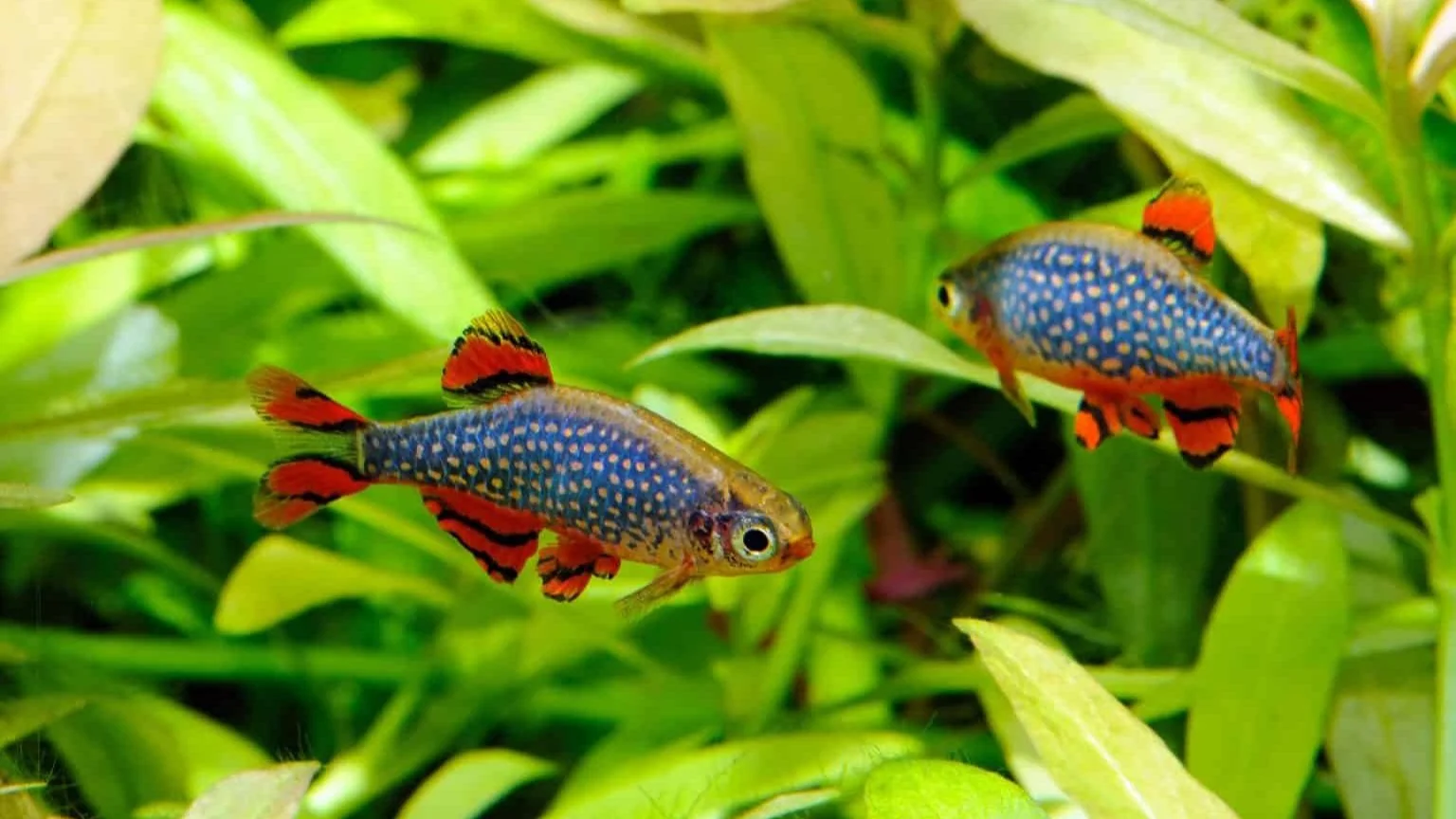
Picture: Celestial Pearl Danios are agile enough to evade crabs, but are active micro-hunters that will readily eat baby crabs.
Celestial Pearl Danios (CPDs) are one of the prettiest nano fish in the hobby, but they have specific considerations. They are super fast and agile, making them great at evading adult crabs. However, they are one of the most active micro-hunters in the hobby. If you keep CPDs, baby crab survival is pretty much out of the question.
They also prefer cooler tropical water. CPDs do best between 23°C and 27°C (73–80°F). While they will tolerate temperatures up to 30°C (86°F) for brief periods, extended heat will kill them. Furthermore, they require at least 15 to 20 cm (6–8 inches) of water depth with floating plants to thrive. If your water feature is shallow, give CPDs a miss.
5. Endler's Livebearers (Poecilia wingei) — The Live Food Exception
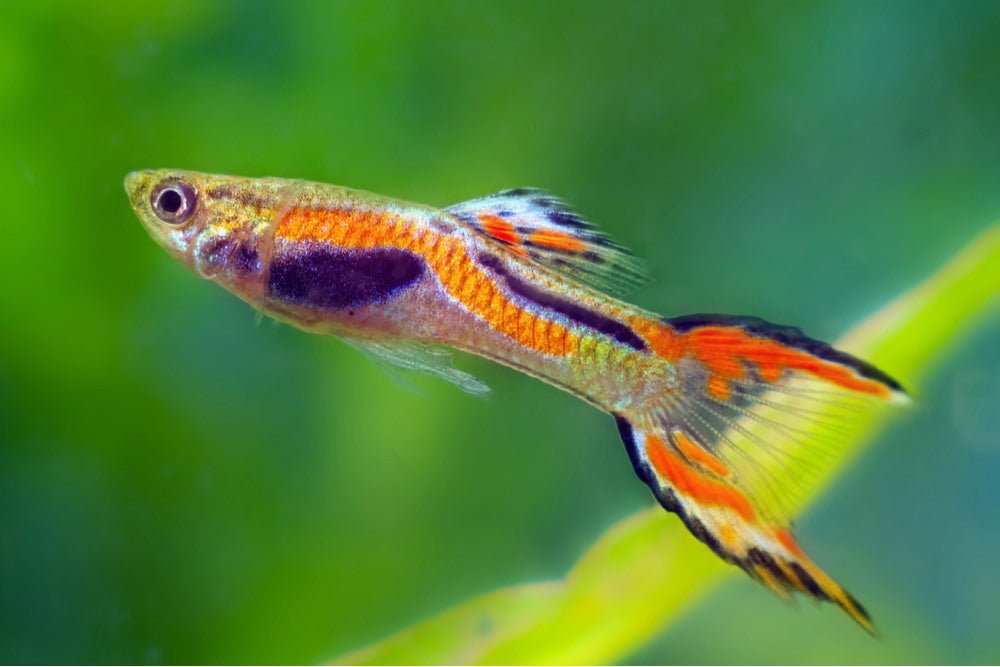
Picture: Endlers and wild-type guppies reproduce rapidly enough to establish sustainable colonies alongside hunting crabs.
There is an interesting exception to the rule of fast-moving fish: livebearers. Endlers are a viable option to keep with Vampire Crabs, though for completely different reasons than all the other fish on this list.
Because Endlers are relatively slow, curious, and clueless, they are fairly easy targets for Vampire Crabs compared to tetras. However, they breed exceptionally fast. In a well-sized water section, Endlers will almost always reproduce faster than your crabs can hunt them. They serve as natural predatory enrichment and a sustainable live food source for your crabs, while their shared water parameters make them very easy to maintain.
Fish Species Compatibility Matrix
| Fish species | Swimming zone | Threat to baby crabs | Compatibility rating |
|---|---|---|---|
| Chili Rasbora (Boraras brigittae) | Top / Midwater | Low (Small mouth) | Excellent (Best Match) |
| Ember Tetra (Hyphessobrycon amandae) | Middle Column | Moderate (Fast strike) | Very Good |
| Green Neon Rasbora (M. kubotai) | Upper Column | Moderate | Very Good |
| Celestial Pearl Danio (D. margaritatus) | Middle / Dense Plants | High (Active hunter) | Moderate (Adults safe) |
| Endler's Livebearer (P. wingei) | All Levels | Moderate (Eats fry) | Live Food / Self-Stocking |
| Betta Fish (Betta splendens) | Surface & Substrate Rest | High | Incompatible (Fins shredded) |
| Corydoras / Otocinclus | Substrate Floor | Zero (Peaceful) | Incompatible (Territorial clash) |
Fish Species You Must Avoid
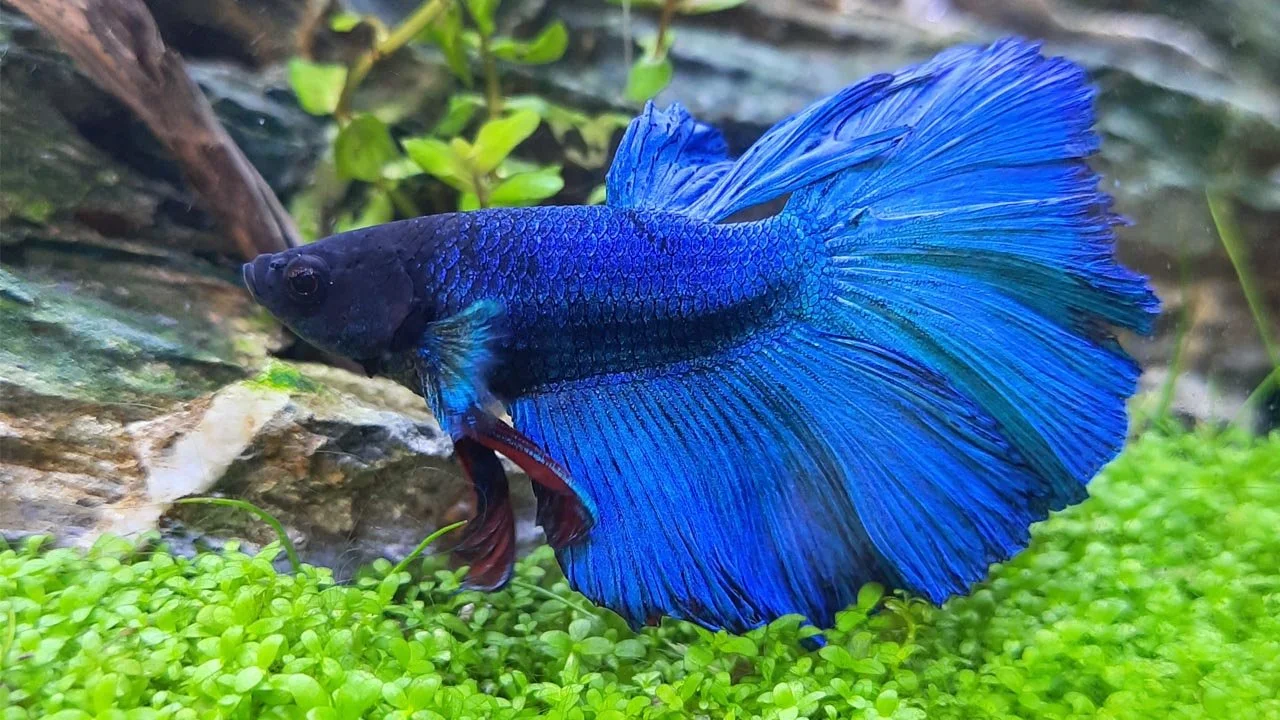
Picture: Betta fish have long flowing fins and rest near the substrate at night, making them easy targets for nocturnal crabs.
Not all fish can handle sharing an enclosure with semi-terrestrial crustaceans. You should steer completely clear of the following species:
- Betta Fish: Betta fish are slow-moving and possess long, flowing fins that make them easy prey for Vampire Crabs. Crabs will systematically grab their fins while the betta rests at night, wearing the fish down until it dies. We have a complete breakdown on why Betta fish and Vampire Crabs cannot be kept together here.
- Bottom Dwellers (Corydoras, Plecos, Loaches): Bottom-dwelling fish occupy the exact same benthic floor where crabs walk, forage, and molt. Crabs will pinch their fins, while spiny catfish can injure soft molting crabs.
- Large or Aggressive Fish (Cichlids, Barbs): Any fish large enough to view an adult crab as food will tear them apart, especially during their vulnerable molting window.
- Cold-Water Fish (Goldfish, White Cloud Mountain Minnows): Vampire Crabs are tropical animals requiring water temperatures between 22°C and 25°C (71–78°F). Mixing cold-water fish with tropical crabs creates chronic stress and disease.
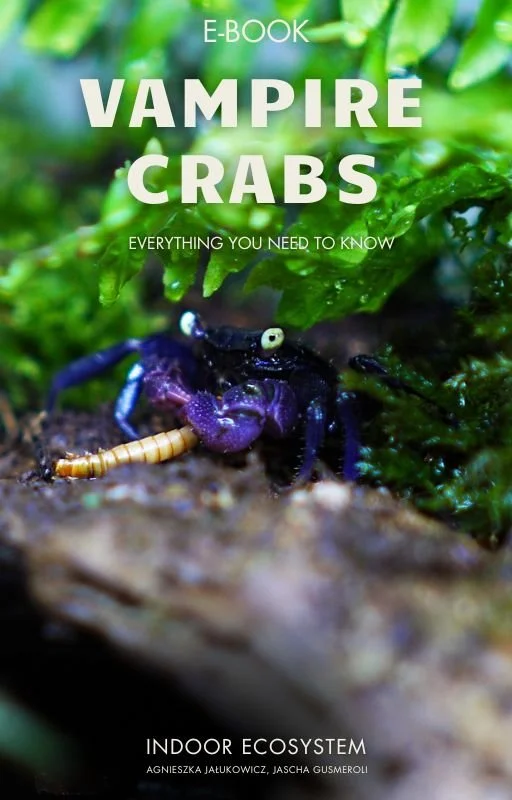
Take Your Bioactive Habitat Knowledge Further
Looking to master low-maintenance paludarium ecosystems, cohabitation rules, and crustacean husbandry? The Indoor Ecosystem digital guide collection covers everything from naturalistic water chemistry and bioactive drainage to long-term breeding success.
Explore the Guides & EbooksDesigning the Aquatic Section for Fish and Crabs
If you choose to keep nano fish with your crabs, you cannot rely on stagnant, unfiltered puddles. You must design the aquatic section with proper biological infrastructure:
1. Do You Need a Filter or Pump?
If you are only keeping crabs with shrimp and snails, filters are completely optional provided you have heavy aquatic plant growth. However, if you plan on adding fish, adding a filter is strongly recommended. Fish produce significantly more dissolved waste and require stable water parameters. Read our full guide on pumps and filters for Vampire Crabs to choose the right setup.
2. The Power of Floating Plants
If you keep fish, floating plants like Salvinia are essential. Their dense root systems absorb nitrates, help keep the water clean, and provide upper-level shelter where nano fish can safely rest at night away from bottom-hunting crabs.
3. Plant Dense Moss Shorelines
If you want any chance of baby crabs surviving with fish in the tank, pack your shoreline with thick mats of Java Moss or Subwassertang. This creates micro-tunnels that 2 mm baby crabs can use to forage without swimming into open water where fish hunt.
Final Verdict: Fish vs. Shrimp as Tank Mates
While keeping nano fish in a Vampire Crab paludarium is an exciting visual project, freshwater dwarf shrimp and snails remain far superior tank mates:
- Shrimp do not eat baby Vampire Crabs.
- Shrimp thrive in shallow water depths (5–6 cm) that are too small for fish.
- Shrimp actively clean the water by eating leftover crab food, biofilm, and algae.
- Shrimp have an explosive tail-flick reflex that lets them evade adult crabs 99% of the time.
If you have a large custom paludarium with 10+ gallons of actual swimming water, adding a school of Ember Tetras or Chili Rasboras creates an incredible biotope display. But if you want to breed your crabs and raise baby hatchlings successfully, leave the fish out and stick to shrimp and snails!