
CAN YOU MIX VAMPIRE CRAB SPECIES (COLOURS)

Can you mix vampire crab colours & species?
Mixing Vampire Crab Species: Why It's a Bad Idea!
Today, I wanted to address a topic that I’ve been getting a lot of questions about: mixing vampire crab species (colours). There seems to be a misconception floating around that you can mix different colours of these crabs without any issues. This confusion might be fueled by certain retailers offering "Skittle mixes" or "party packs" for vampire crabs, where you get various colours all jumbled together.
I’ve even seen retailers doing this with all male crabs – which, honestly, is just a disaster waiting to happen. If you come across a seller offering this, my advice is to avoid them altogether. They clearly don’t know what they’re doing, and selling mixed crabs like this is just bad practice. While males fight the most, it’s also not possible to mix females either. They fight less but still fight.
Why Mixing Vampire Crabs is a Bad Idea
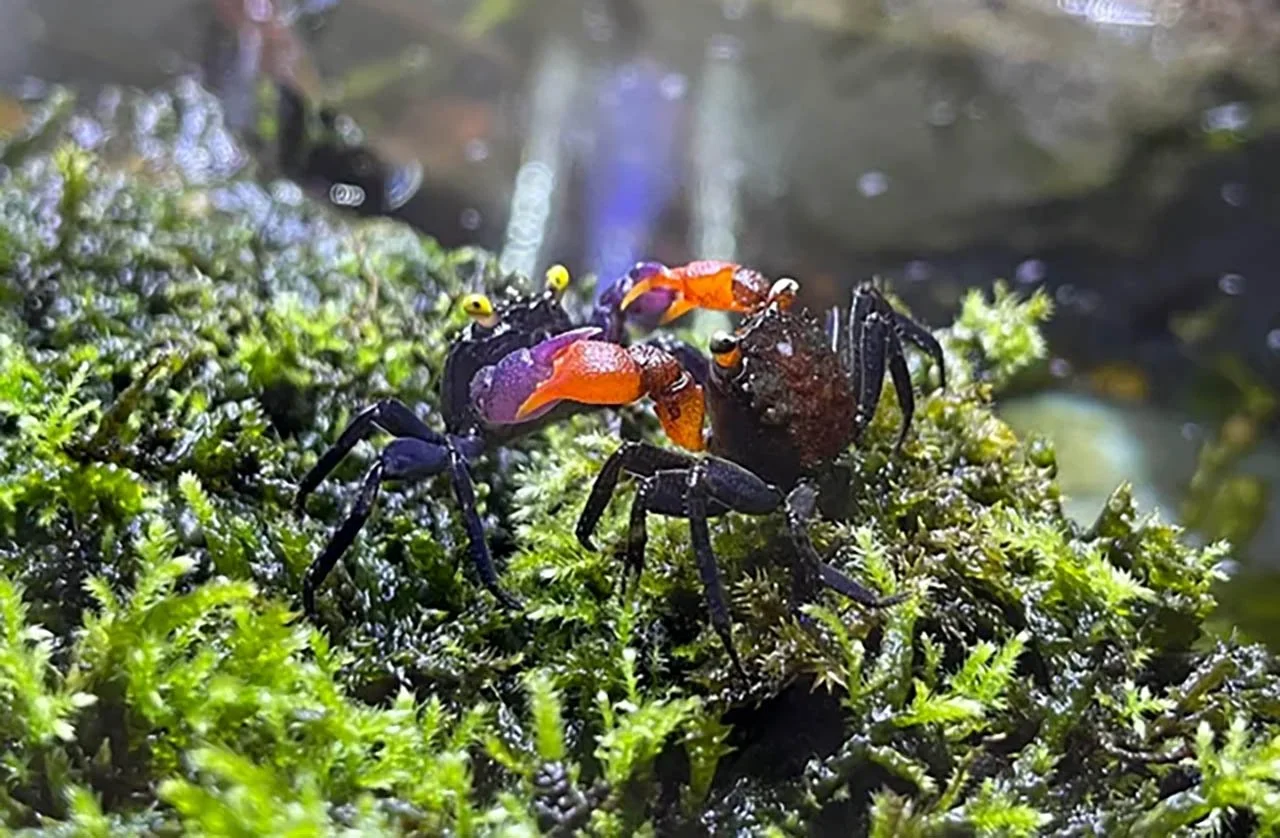
One of these crabs is going to die. Sooner or later....
First off, let’s be clear: mixing different vampire crab colours or subspecies is not a good idea. These crabs are naturally aggressive, even among their own kind. Males will often fight, sometimes to the point of killing each other. And that’s not all — males can also kill females during the mating process, so the aggression is already there without any extra complications.
If you start adding different subspecies or colours into the mix, you’re only increasing the aggression. While it might be possible on rare occasions to create a hybrid by breeding different types, it’s risky. Vampire crabs are expensive, and the chances of them dying are pretty high. So unless you’re specifically looking to create hybrids and you really know what you're doing, it's just not worth the risk.
The Dominance Issue
Aside from aggression, let’s talk about what happens in a mixed tank. If you think you’ll see crabs of different colours wandering around your tank, think again. When vampire crabs are mixed together, they tend to fight for dominance. Whichever crab becomes dominant will be the only one you'll see walking around, patrolling its territory. The rest of the crabs will be in hiding 99% of the time.
And when the others do come out — whether to molt or grab some food — that dominant crab is likely to track them down and attack them. Again, this is why mixing different types of vampire crabs is a recipe for disaster.
How to Minimize Aggression

Crab Cribs from SymbioticGlass on Etsy
If you’re trying to keep vampire crabs, avoid mixing colours altogether. But there's more to it than that. You should also keep the male-to-female ratio balanced. A good rule of thumb is two females for every male. This applies across all subspecies and colour variants. Having this ratio helps reduce aggression, giving the females some time to relax without the males constantly chasing them.
🏷️Crab Cribs: Symbiotic Glass
In addition, providing plenty of hiding spots and soft substrate for burrowing is essential. Line-of-sight barriers are great for giving crabs a chance to escape if they’re being chased. And climbing spaces are also really helpful. From what I’ve observed, female crabs often climb to higher spots to avoid males patrolling the bottom of the tank. While males might follow them up occasionally, they generally stay near the bottom, which gives the females a break.
Final Thoughts
In short, don’t mix vampire crab species or colours if you want to avoid problems. As tempting as it might be to create a colourful tank with different types of crabs, it’s just not worth the headache. Not only will you likely end up with dead crabs, but it’s also bad practice for the species.
Why you should never mix Vampire Crab species
MESSING UP GENETICS AND RUINING SPECIES
Loss of Pure Genetic Lines: Hybridization can dilute the distinct traits and genetic identity of individual species, making it challenging to preserve or identify pure species.
Reproductive Challenges: Hybrids may be sterile, and have deformities and muted colours, usually brown. All of this impacts long-term population sustainability.
Ecological Concerns: In natural settings, hybrid offspring may disrupt the ecosystem by outcompeting or interbreeding with wild populations, altering ecological balances.
Conservation Implications: Geosesarma species are often rare, and hybridizing them could hinder conservation efforts by reducing the genetic diversity of pure populations.