
HOW TO GET RID OF DINOFLAGELLATES AND CYANOBACTERIA (STEP-BY-STEP GUIDE)

A bad outbreak of Dinoflagellates
Below you will find the steps and items you need to beat Dinoflagellates and cyanobacteria in your marine aquarium. Rather than finding out which exact Dino type you have, I found it easier to just go with a blanket approach that deals with any and all types.
How to Beat DINOFLAGELLATES fast!
Dosing Ingredients
Nitrate (NO3)
Phosphate (PO4)
Microbacter 7
Liquid Phytoplankton
Hardware
UV Sterilizer
Attack of the dinoflagellates
The Step-by-Step Process for Getting Rid of Dinoflagellates
Initial Setup
Begin by stopping any cleaning of the filter and other components in the tank. This helps in maintaining higher nutrient levels.
Remove some macroalgae if present, as it can excessively absorb nutrients.
Dosing Regimen
Dose the tank with the following ingredients daily for a period of 6 weeks:
NO3: Keep nitrate levels at approximately 20 ppm.
PO4: Maintain phosphate levels at about 0.10 ppm.
Microbacter 7: Add according to the recommended dosage of the product.
Liquid Phytoplankton: Add as per the product instructions.
Temperature Adjustment
Gradually increase the water temperature to 27.5°C over a span of 3 weeks. This slow increase helps in managing the tank environment and controlling the unwanted microorganisms.
Once the desired temperature is reached, maintain it as consistently as possible until the end of the 6-week period.
UV Sterilizer Operation
Operate the UV sterilizer during the opposite hours of the tank’s light cycle. This maximizes its effectiveness in reducing harmful microorganisms without affecting beneficial ones that rely on light.
Ongoing Maintenance
Current Status (Week 7)
At week 7, the tank is clear of cyanobacteria and dinoflagellates, with only normal algae present.
Plan to continue the same dosing and maintenance procedure for an additional 2 months.
Future Adjustments
Gradually reduce the tank temperature back to 25°C over the course of the next 2 months, ensuring a stable and healthy tank environment.
Notes & Observations
Tank Condition: The tank remains clean apart from the presence of normal algae, indicating the success of the treatment against cyanobacteria and dinoflagellates.
Dosing Strategy: Consistent daily dosing and nutrient management appear to be effective in maintaining water quality and preventing the return of these two super annoying pests!

Dinos are quite common in newly set up tanks one the nitrogen cycle bottoms out.
WHAT ARE DINOFLAGELLATES? AND WHY ARE THEY SO HARD TO GET RID OF?
Dinoflagellates are not typically pests; most play essential roles in reef ecosystems, such as those in coral tissues (Symbiodium spp.) or as part of phytoplankton. They are neither true algae nor bacteria but a distinct group, with around 2,400 species known. Most are mobile due to two flagella that enable rotation in water.
Presence in Aquariums
Dinoflagellates are common in marine aquariums, especially with corals. While most are beneficial, species like Ostreopsis and Gambierdiscus can cause issues when they overpopulate. This often happens in tanks with imbalanced water chemistry, particularly if the species can produce toxins, which can harm aquarium inhabitants. This is why it is super important to get rid of them before they take hold and really start to cause damage.
Identification
Using a microscope, dinoflagellates can be identified, and distinguished by their movement or refractive cell walls. Non-toxic species like expelled zooxanthellae don’t rapidly colonize or emit strong odours.
Autotrophic Dinoflagellates
Autotrophic dinoflagellates produce their own food and thrive even in low-nutrient conditions, often covering surfaces with slimy deposits. They can persist in darkness through cyst formation and quickly repopulate once conditions improve.
Heterotrophic Dinoflagellates
Heterotrophic dinoflagellates feed on organic material or other algae. Generally harmless, some species even consume problematic dinoflagellates, helping control populations.
Signs of Infestation
Signs of dinoflagellate infestations include brown or gold coatings on surfaces, avoidance by invertebrates, and increased snail mortality. Affected tanks may emit a dull, chemical odour, and corals retract their polyps.
Prevention and Control
To confirm an infestation, microscopic examination is needed to rule out other algae. UV-C sterilization after a dark phase can control some species. An ICP analysis helps detect nutrient imbalances that may have triggered the outbreak. The only problem with this is that most people don’t generally have a microscope at their disposal so a blanket approach like the one above is easiest. It covers all of the bases at the same time.
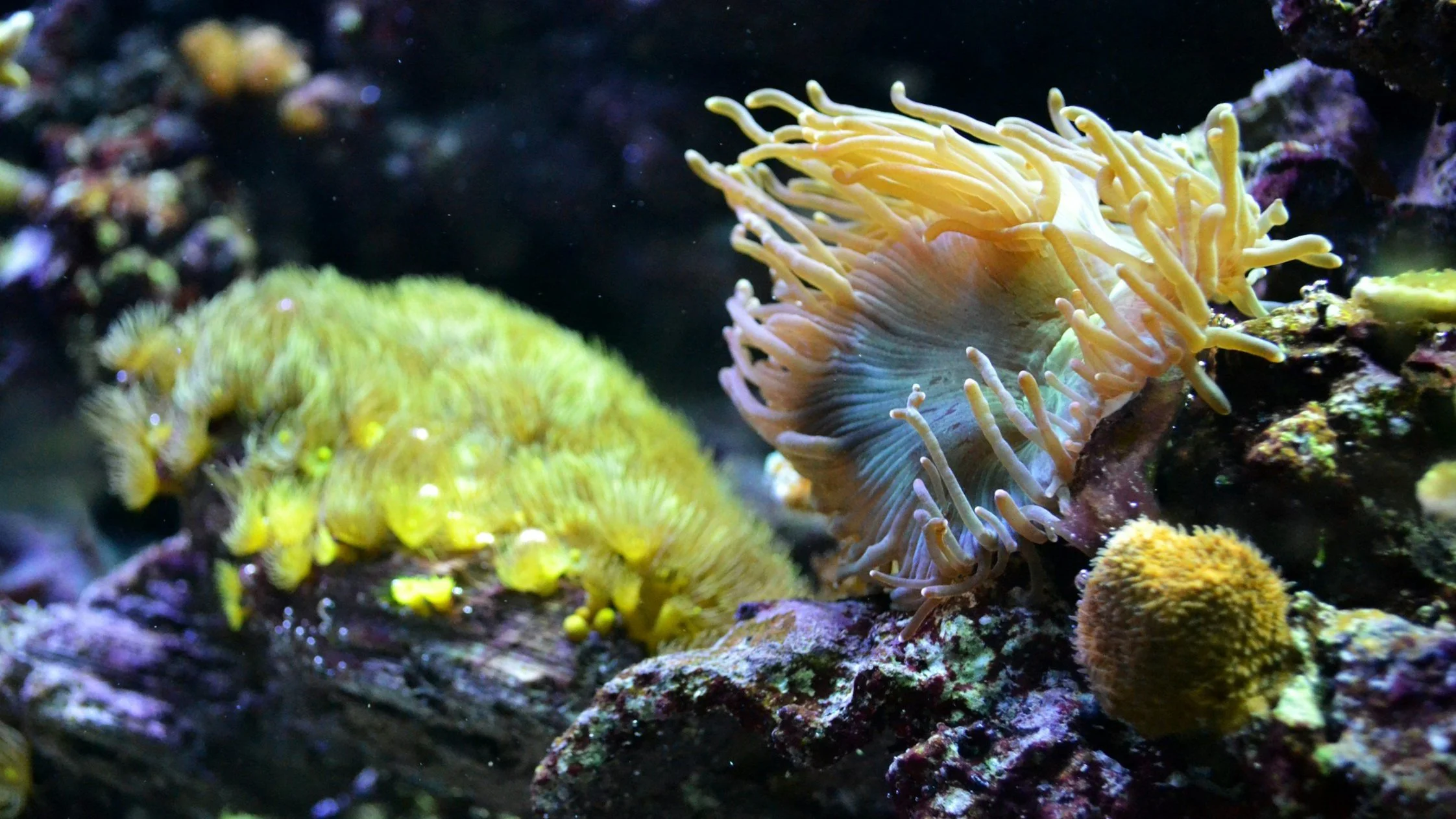
A marine aquarium that's well aged.