
GEOSESARMA VAMPIRE CRAB BREEDING PROCESS & BREEDING CYCLE

Image from MilleniumSnakes
In this short article, we’re going to be taking a look at the mating and breeding process of Geosesarma Vampire Crabs (all species). While there are over 50 different species of Vampire Crab the mating process for all of them is pretty much the same. At least from what we have been able to observe so far.
Vampire crab Breeding Cycle and Mating Behavior.
Vampire crab mating behaviour is rough! Brutal! And always dangerous! When male Geosesarma Vampire Crabs aren’t looking for food, they are looking for females and when they find them they pounce on them as quickly as possible. The aim is to flip them over so that they can mate with them. There is no courtship process or any niceties, they are very forceful and will happily rip legs and claws off females to mate with them. It’s also quite common for female Vampire Crabs to die during or shortly after mating. I’ve seen this happen several times. Below is a great video of the process in action.
Egg Laying (They don’t!)
After mating, the female carries the fertilized eggs under her abdomen, where they are protected by her abdomen apron. Unlike many other crab species, Vampire Crabs do not release their eggs into the water. Instead, the female carries them until they hatch. They also do not lay them in the sand which is something ChatGPT seems to love quoting…. This process takes quite a long time, usually between 45-60 days from what I’ve observed during captive breeding. Though it’s always quite hard to pin down the exact date of fertilization.
During this time female vampire crabs spend 90% of their time hiding in burrows in the ground, which is why having a soil-based substrate is super important for vampire crab breeding. Without soil, you will have far less success breeding vampire crabs.
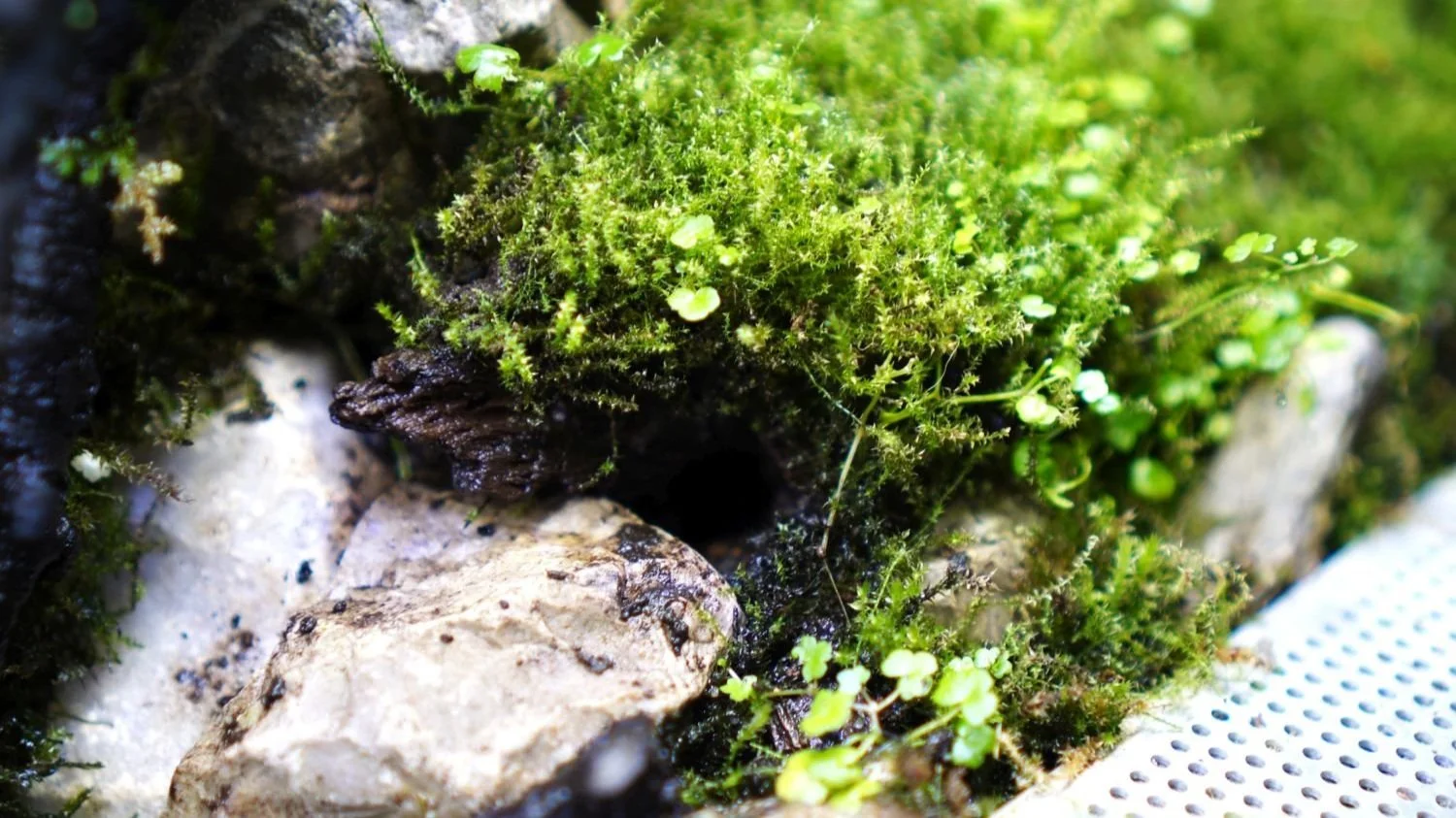
A burrow excavated by a female vampire crab
Development Stages
Vampire Crabs exhibit direct development, meaning their offspring do not go through a larval stage. The embryos develop inside the eggs while attached to the mother, and when they hatch, they emerge as fully formed miniature crabs rather than larvae. If you are lucky enough to see a female crab just before she releases the babies you can see this in action sometimes. It reminds me a lot of how some spiders carry their young.
Hatching (Not really)
When the time is right, the female will venture down to the nearest patch of water and release the baby crabs. These juveniles resemble tiny versions of adult crabs and are independent from birth. They will then hide and begin to grow on their own, molting frequently as they develop. They are also very delicious snacks for their parents! And it’s quite common for female vampire crabs to feast on their young.

Female vampire crab eating a baby
Parental Care - ABSOLUTELY NONE!
After hatching, the female doesn't provide further care to the young. The juveniles fend for themselves from the moment of birth, foraging for food and seeking out hiding places to avoid predators. They will eat just about anything but are very fond of hunting microfauna like springtails. They are also highly cannibalistic from birth as well and will happily eat any of their siblings that aren’t strong enough or quick enough to escape. So if you are trying to breed them in good numbers in captivity it’s important to make sure you feed them well. Otherwise, one crab can eat quite a few of his brothers and sisters. The image below is a tiny baby 12-hour-old vampire crab shot with a 2x macro lens.
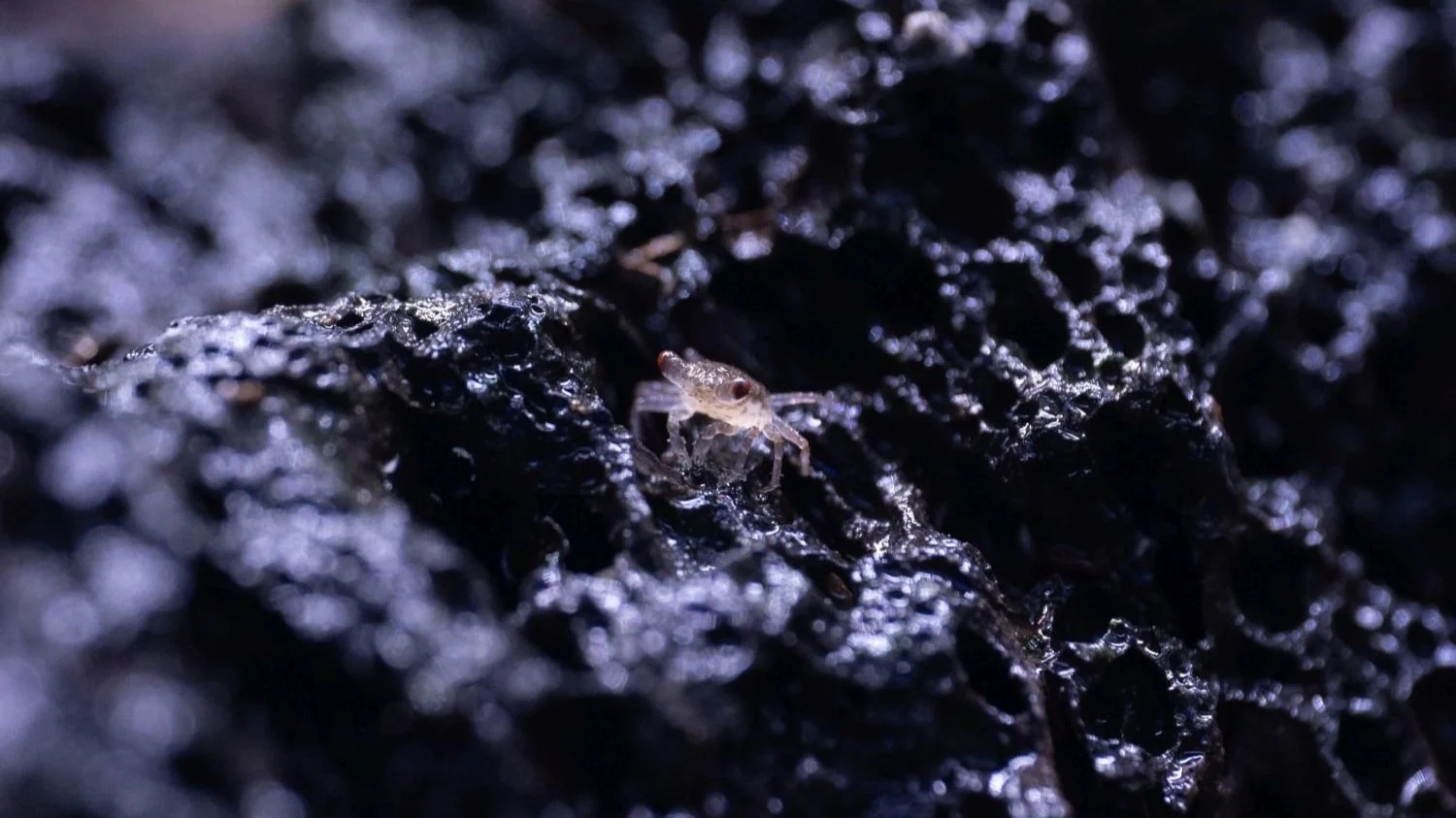
A newly born baby vampire crab
WHAT HAPPENS NEXT? RAISING BABY VAMPIRE CRABS
The second that baby vampire crabs hit the ground/water they will forage and eat just like their adult parents, however, they will spend the first 3-4 months almost exclusively along the water’s edge. Why? Because they molt extremely often as they grow and being close to the water’s edge makes the process quick and easy.
IMPORTANT: At any stage during the first 4 or so months they can also scale/climb glass so you need to make sure you have a really good lid.

A baby vampire crab climbing glass using the moisture
If you are keeping fish with your vampire crabs here’s where things take a dark twist. The fish in your tank will more than likely eat every single one of the baby crabs in your tank. As babies are super small and spend months at the water’s edge, your fish have all the time in the world to hunt them down and eat them, especially if they have just recently molted and are a nice fresh piece of meat. Some fish are less risky than others but no fish is safe. During this entire period, they are also competing against each other as cannibalism is part of their culture. Any crabs that get a size advantage will start to hunt down the smaller ones.
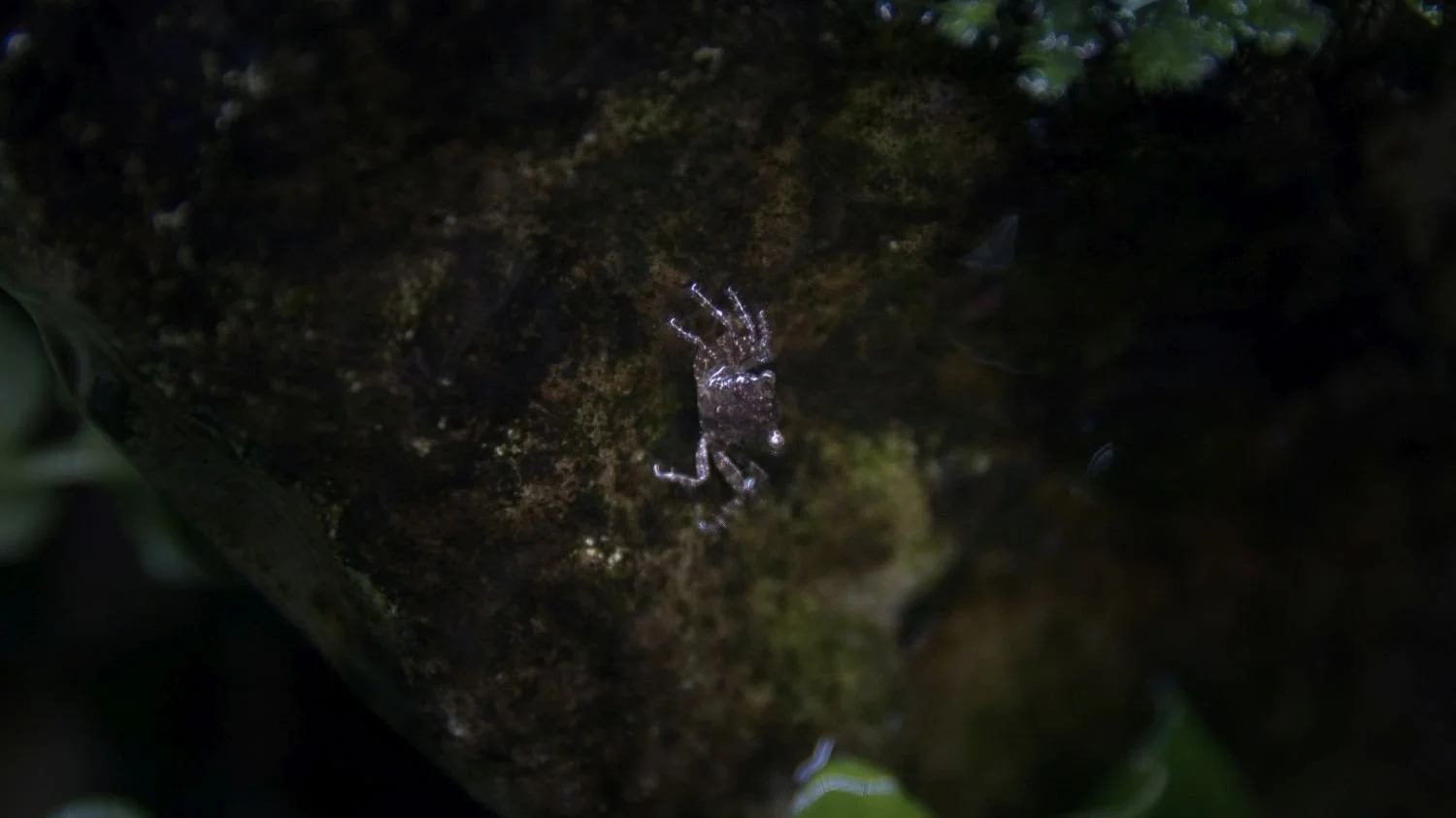
A 1 month old baby vampire crab
WHEN DO BABY VAMPIRE CRABS START TO GET COLOUR AND BECOME AGGRESSIVE?
From about 8-9 months of age baby vampire crabs will start to get their adult colours, though it slowly creeps in over time and by the time they are 12 months they should be almost fully coloured up. During this time they will also start to get more aggressive and begin to look for their own territories. If you have any older adults in your tank they will be the first crabs to be put under pressure as the new younglings will be looking to stake their claim! It’s part of the natural process so unless you move crabs to new tanks there’s not much you can do about this. At this point, that’s pretty much the end of the cycle. Now it simply starts all over again.
It’s also really important to keep adding new blood into your bloodlines as well because inbreeding can become an issue over time, you’ll get weaker crabs with more problems so switch in some new males and females when you can. Even if you just swap with other keepers in your area.
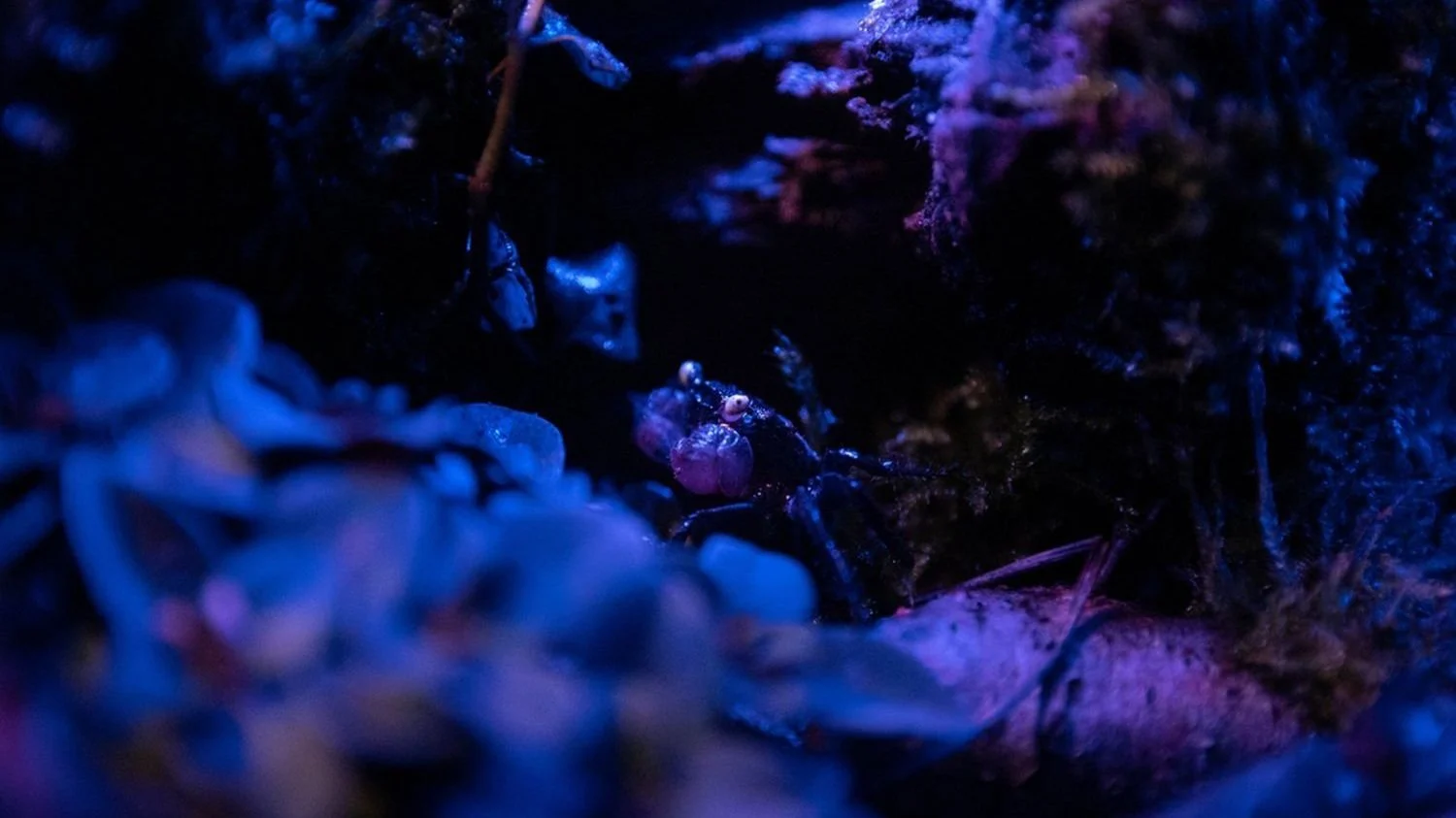
Geosesarma Dennerle hunting at night