
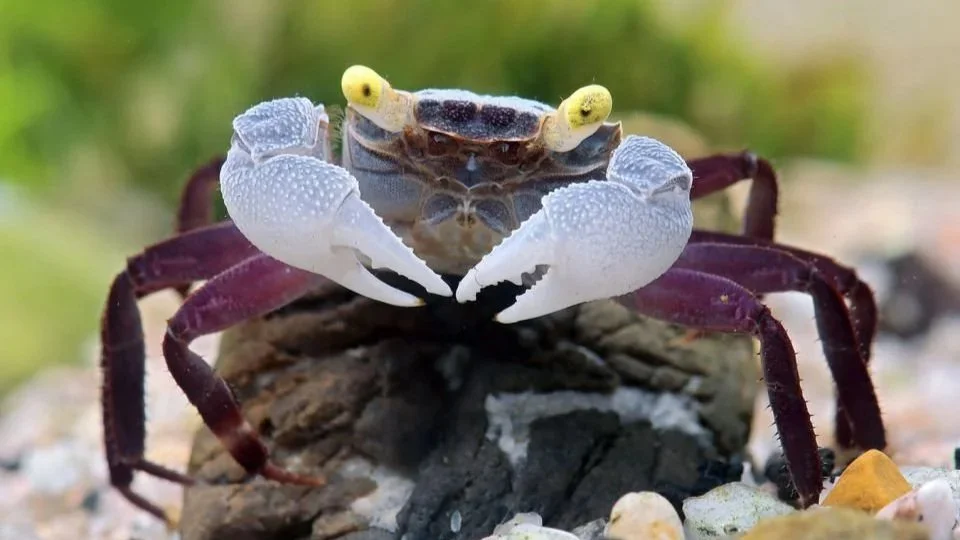
Geosesarma sp Purple Haze - Source: Chris Lukhaup
Scientific Classification
Scientific Name: Geosesarma sp. Purple Haze
Common Names: Purple Haze, Buricak, Graphite Grey, Grey Star, Gray Star
Discoverer: N/A
Scientifically Described: No
Availability in Trade: Usually very rare | Sometimes seems seasonal
Difficulty Level: Easy
Interesting fact: Female Purple Haze crabs are quite often far bigger than males.
Identification & Characteristics
Geosesarma sp. Purple Haze is a small, predominantly terrestrial crab species originating from Bukit Dewa Kebumen, Central Java, Indonesia. This species is an excellent climber and needs to be kept in paludariums. It does not damage live plants and is known to live comfortably in groups, displaying semi-social behaviour, which is uncommon in many crab species.
Based on observed behaviour and morphology, this species prefers spending most of its time on land rather than in water, but some keepers have actually observed the complete opposite, which hints at tank design playing a major role in what to expect while keeping them in captivity.
One of the most notable characteristics is that Purple Haze Vampire Crabs molt on land, which is not commonly observed among Geosesarma species. However! While they primarily molt on land, it’s not unheard of for them to molt in the water if they are desperate or suffering some kind of physical emergency.

Geosesarma sp Purple Haze - Source: Chris Lukhaup
APPEARANCE
Carapace: Blue-grey. There is a fair bit of variation sometimes.
Legs: Purple, and probably the longest of any Geosesarma species. They are very spider-like.
Claws: White-blue-gray
Eyes: Yellow
Underside: Grey
Size: 7-8cms or about 3 inches
Activity: Quite shy
Aggression: Mild to Moderate - Aggression usually occurs between males; a lot of the time, it’s personality and territory-based.


Distribution & Habitat
Distribution Area / Locality:
Bukit Dewa Kebumen, Central Java, IndonesiaHabitat Preferences:
Tropical forest floor, near streams and water sources. This species prefers a terrestrial lifestyle and is often found near moisture-rich areas. It enjoys burrowing and utilises natural cover on the forest floor.
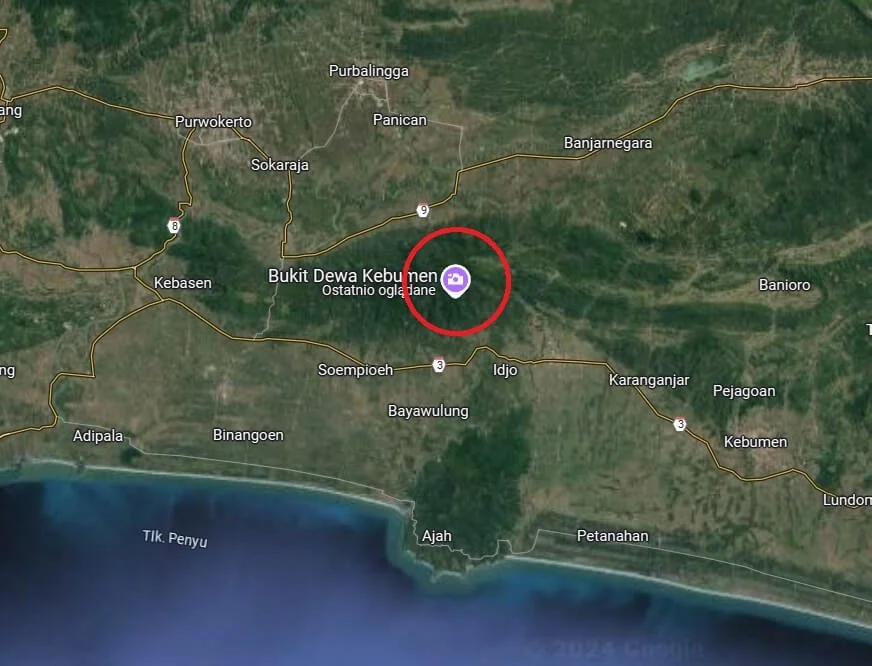
Geosesarma sp Purple Haze wild location
Diet
Geosesarma sp. Purple Haze is considered an omnivorous species.
Food Preferences: While they consume most commercial fish foods, they particularly enjoy hunting live foods such as isopods, crickets, springtails, fruitflies, and worms. The more dietary choices you give them, the better, especially small live insects they can hunt and eat. If they have access to live shrimp in water bodies, they will happily hunt shrimp.
Behaviour & Social Dynamics
Males: Semi-aggressive, usually between other males, especially in confined spaces, which increases the likelihood of fights. Providing a larger enclosure is the only way to minimise conflicts. Quite often, fights will end in death if they don’t have enough space to escape battle. In higher population densities, “economic defendability” plays a role in social behaviour.
Females: Less is documented about female behaviour, but like males, they likely benefit from spacious environments to reduce stress.
Notcturnal: Geosesarma sp Purple Haze are almost entirely nocturnal, with most people keeping them long term, stating that they almost never come out of hiding until the room is completely dark. Babies and small crabs are a little less nocturnal, but as a general rule, it’s safe to assume you will probably never see this species out during the daytime unless they are really hungry, eating freshly added food. Captive-bred specimens are a little less shy, but again, they won’t be very active while the lights are on. If you would like to view them at night while the lights are off, you can use red light.
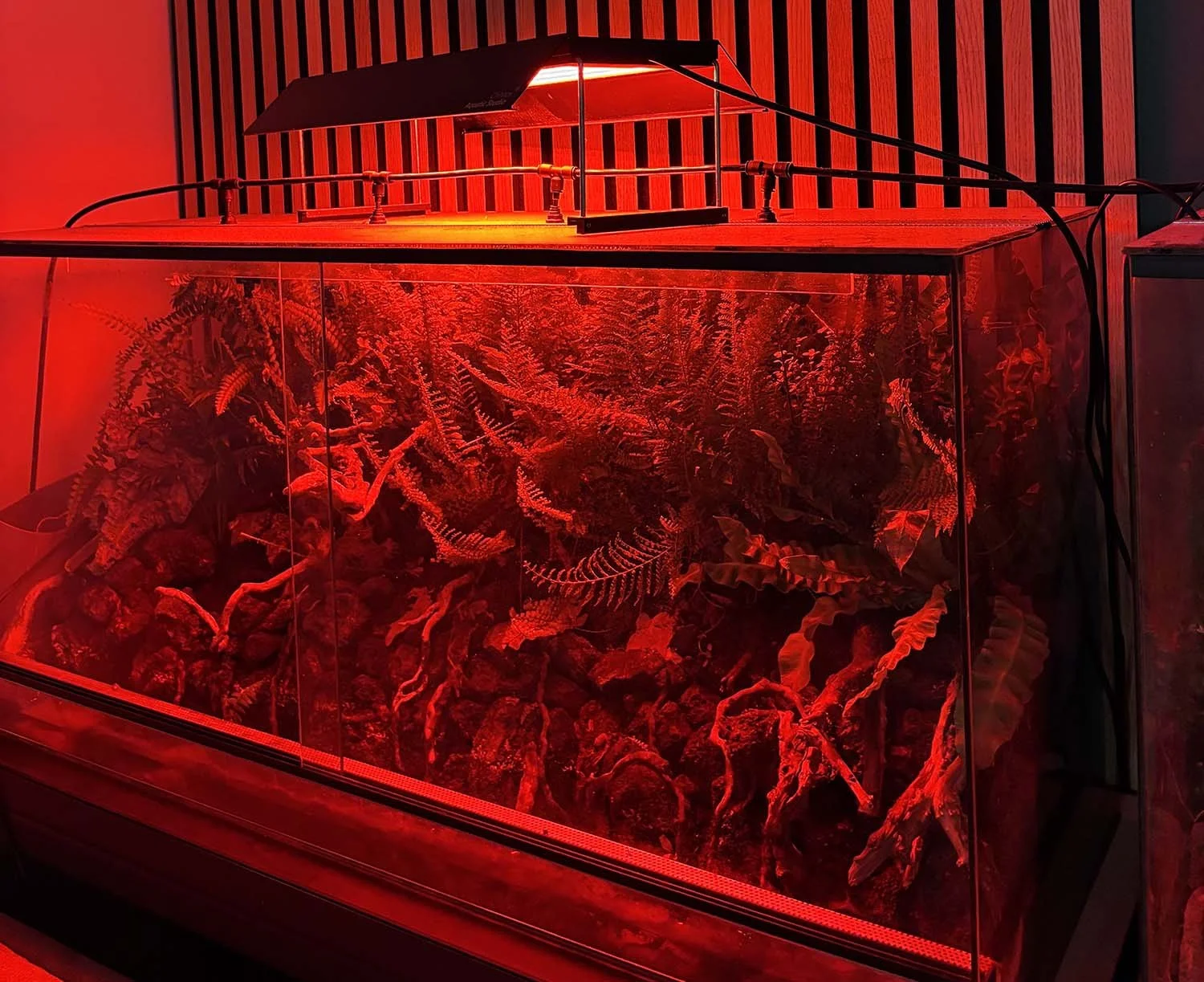
Tomile’s Geosesarma Dennerle tank under pure red lighting
Molting Behaviour
Geosesarma sp. Purple Haze molts on land, a trait that is not commonly observed among Geosesarma species. Most Geosesarma species molt in the water. However, this doesn’t mean you shouldn’t have water in your paludarium set up. Thanks to Bartek for providing these pictures to show exactly what Purple Haze molts look like.
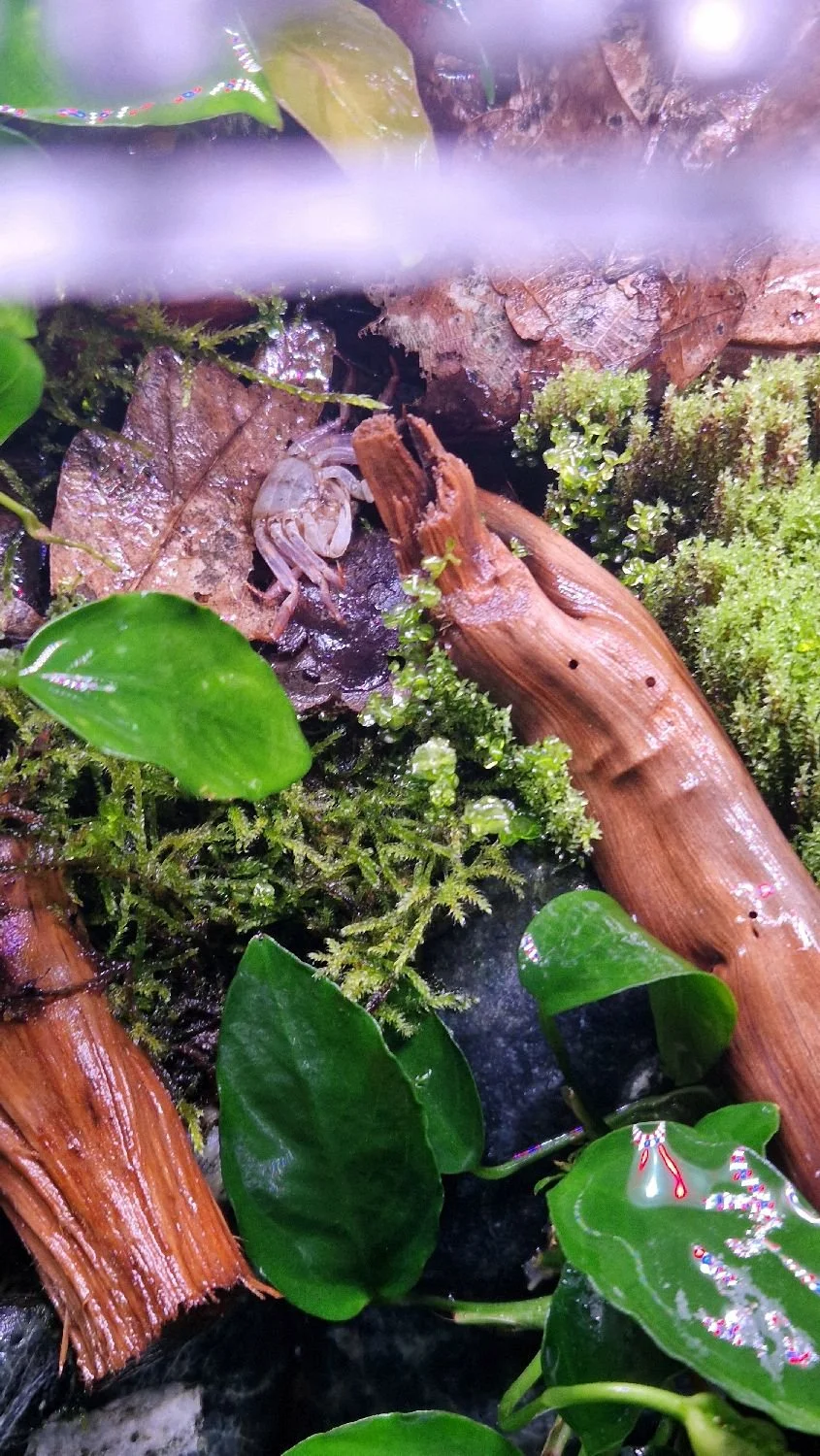
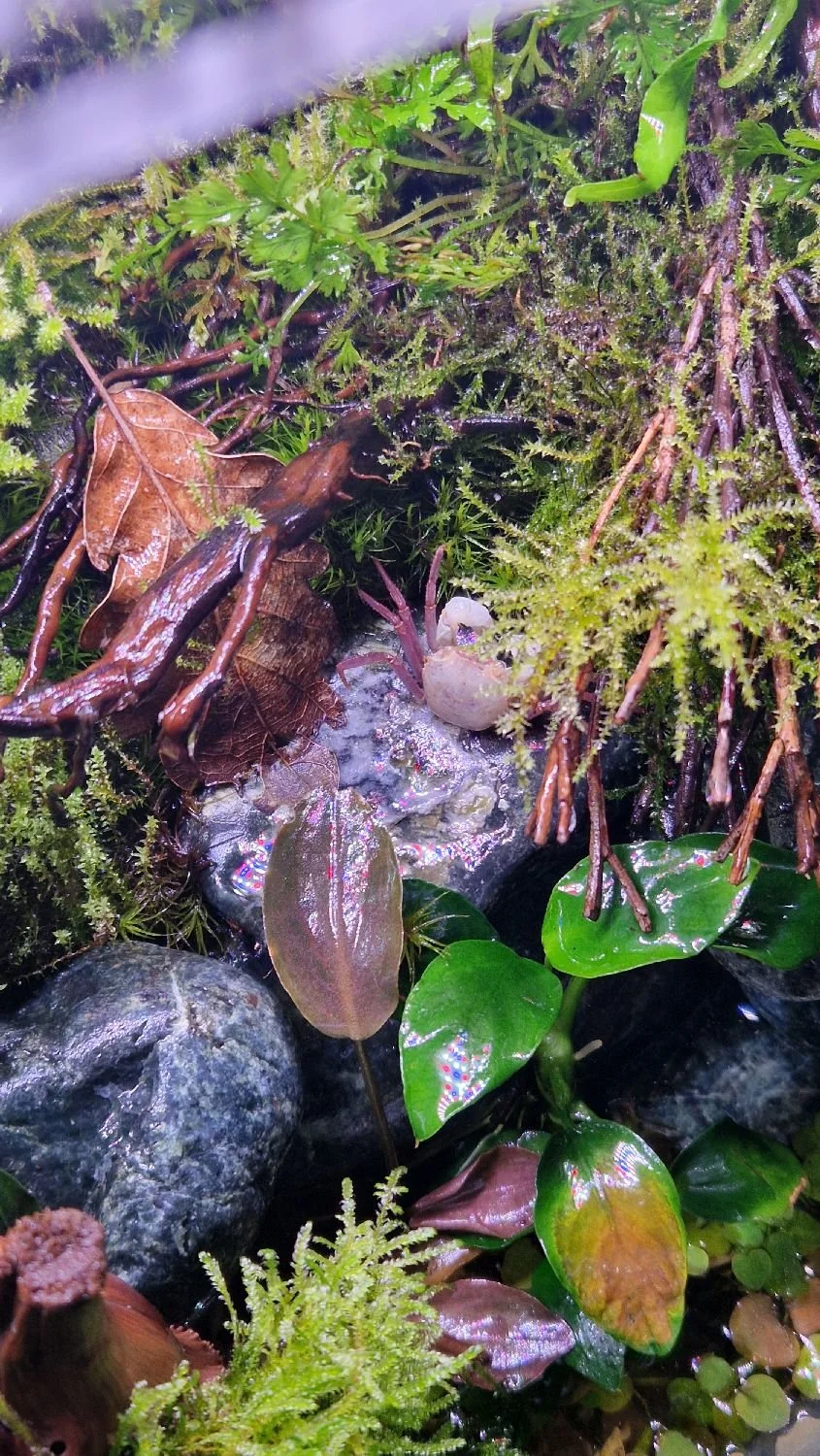
GEOSESARMA SP. PURPLE HAZE BREEDING
The breeding behaviour of Purple Haze Vampire Crabs is aggressive and can be dangerous, particularly for females. Males mate forcibly, which can result in injury or, in some cases, death. After mating, females carry the fertilised eggs beneath their abdomen rather than releasing them into the water like some other species of crab. The incubation period lasts approximately 45–60 days, during which females typically remain hidden in burrows.
Development occurs entirely on the female crab, and they grow into fully formed miniature crabs, bypassing a free-swimming larval stage that some crab species have.
Once released, the mother usually drops them off near a water source and provides no further parental care. The juveniles, which closely resemble tiny adults with white claws, face significant risks from predators, including adult crabs and even their own siblings due to cannibalistic behaviour. They grow rapidly, and the babies will molt on land just like their parents.
Interesting Fact: Baby Purple Haze Vampire Crabs start out with completely white claws. Most other geosesarma species start out completely brown.

Baby Vampire Crab climbing glass
Between 3–5 months of age, the crabs begin to develop their adult colouration and start showing territorial behaviour. By around 6-8 months, they are usually fully coloured and capable of breeding themselves. In captivity, maintaining genetic diversity by introducing new bloodlines is important to reduce the risk of inbreeding over successive generations.
ENVIRONMENTAL PARAMETERS
Air Temperature: 22–28°C (71–82°F)
Overnight lows and daily highs are normal, so if your tank goes from 20–30c over a 24-hour period (slowly) that is perfectly fine. This is very similar to what happens in nature. Though you will need a heater for your tank during the colder months of the year.
WATER SECTION RULES:
While they don’t use the water all that often, if at all in some cases, the following are the required parameter ranges to stick as close to as possible.
Water temperature: 22–25°C (71–78°F)
PH: Between 7.5–8.0
KH (carbonate hardness): Between 0–10
GH (general hardness) Between 4–16
Ammonia: 0
Nitrite: 0
Nitrate: Lower than 20 ppm
There’s a lot more to keeping Geosesarma species, so make sure you read this guide as well if you are planning to keep them.
Tank Design is Really Important
The general rule for keeping Vampire Crabs is to provide them with a tank that is at least 5 gallons ( 25 liters). However, small tanks like this are harder to get perfect, so it’s highly suggested to start with at 10 gallon tank (50 liters). This will make building the tank a lot easier, and the crabs will have more room to find their own spaces. And since Purple Haze Vampire Crabs are a bit bigger than most geosesarma species, I’d seriously stick with a 10-gallon or bigger, regardless of how experienced you are at making ecosystems.
Below are some good guidelines to follow.
Incorporate Bromeliads: These crabs make excellent use of the small water pools that naturally collect in bromeliads. They provide additional hydration points and look great!
Offer Multiple Water Sources: Placing more than one small water dish in different areas of the tank prevents crabs from gathering in a single spot to hydrate. This reduces tension and ensures easier access to water for all individuals.
Reduce Aggression Through Smart Layout: Geosesarma sp Purple Haze aren’t the most aggressive species of Geosesarma, but you still want to limit conflict, so avoid designing areas that encourage clustering. Instead, spread hides, water sources, and climbing structures throughout the enclosure to keep individuals dispersed and constantly moving just to be on the safe side. Especially if you have multiple males in a smaller-sized tank.
Feed in Several Locations: Distributing food across multiple areas of the tank helps reduce competition during feeding time. This significantly lowers aggression and ensures every crab has a fair opportunity to eat.
While this tank was designed for Geosesarma Notophorum it will work perfectly for Geosesarma Purple so Haze too.
Things get quite interesting when comparing experiences with Purple Haze Vampire Crabs in different tank sizes. In larger, vertical-style tanks, these crabs tend to spend much more time in the canopy, away from large water bodies, often hydrating from small water pockets in plants like bromeliads. They also spread out more and rarely congregate unless coming together to a common food source. In contrast, in smaller tanks, like the one shown below, their behaviour is noticeably different. This clearly shows that tank design, size, and layout can significantly influence how these crabs interact and behave overall.
Tank 45x27x30cm (36L | 10gal) 3 Crabs - 1 Male 2 Females
100% nocturnal and very shy, only becoming active in complete darkness. They preferred staying at the water’s edge, often partially submerged, and showed strong aquatic tendencies compared to other species, though they always molt on land. Despite their reclusive nature, they are peaceful, often resting close together without any aggression. They also exhibit impressive hiding skills, using their environment to camouflage effectively.
“It may not be something extraordinary for crabs but they have some extra sense of hiding skills. They can use leaves and environment to hide like they have some sense of space around them and will hide always like that you cannot see them on any angle. Definitely much more shy than the hagen or dennerle.
As I am used to shyness of crabs this is something that I was not prepared and to be honest I was disappointed at the beginning with almost 0 activity as this is my only tank with crabs at the moment but now I started to enjoy solving mysteries of those weird crabs.”
- Bartek
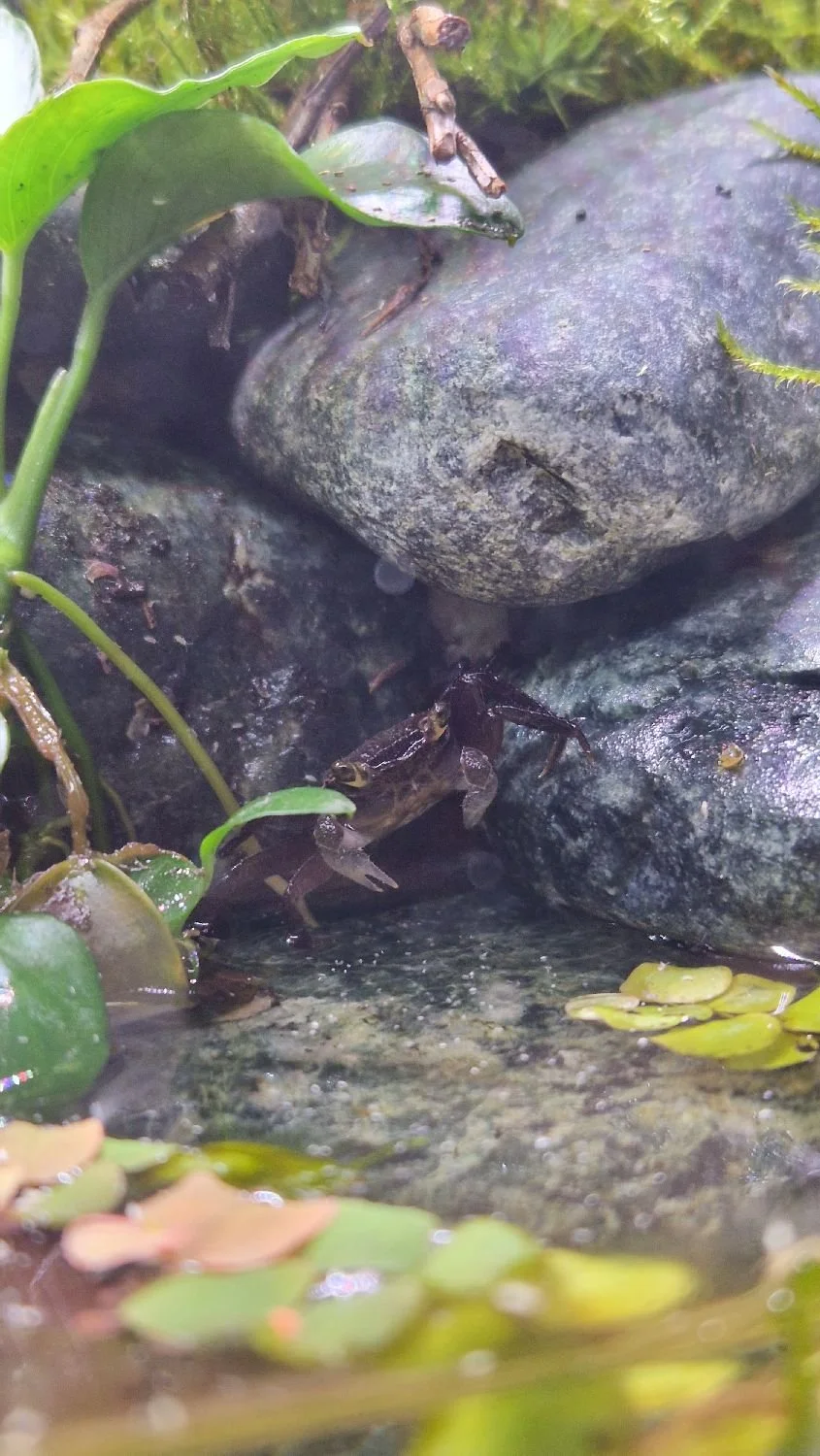
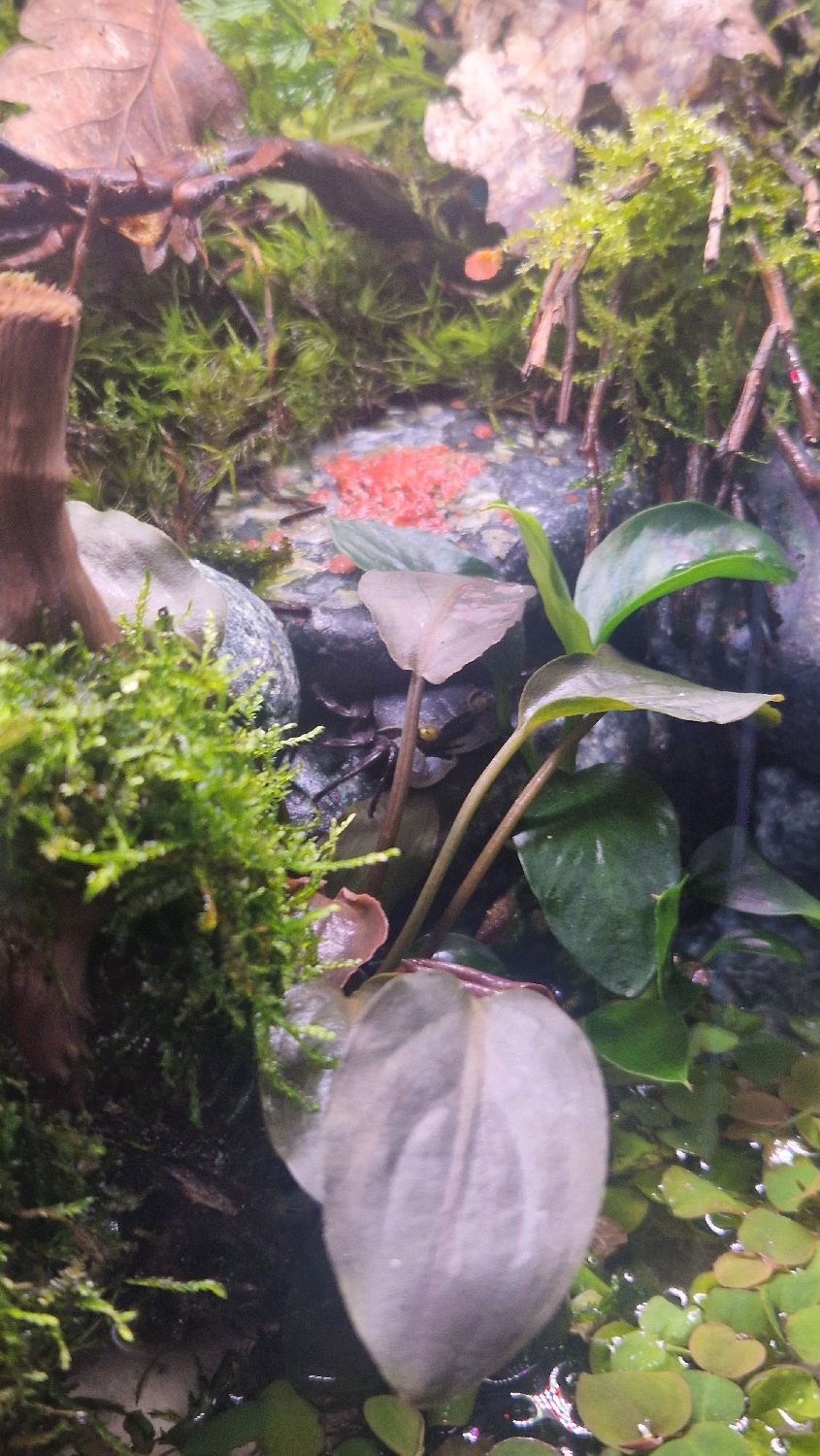
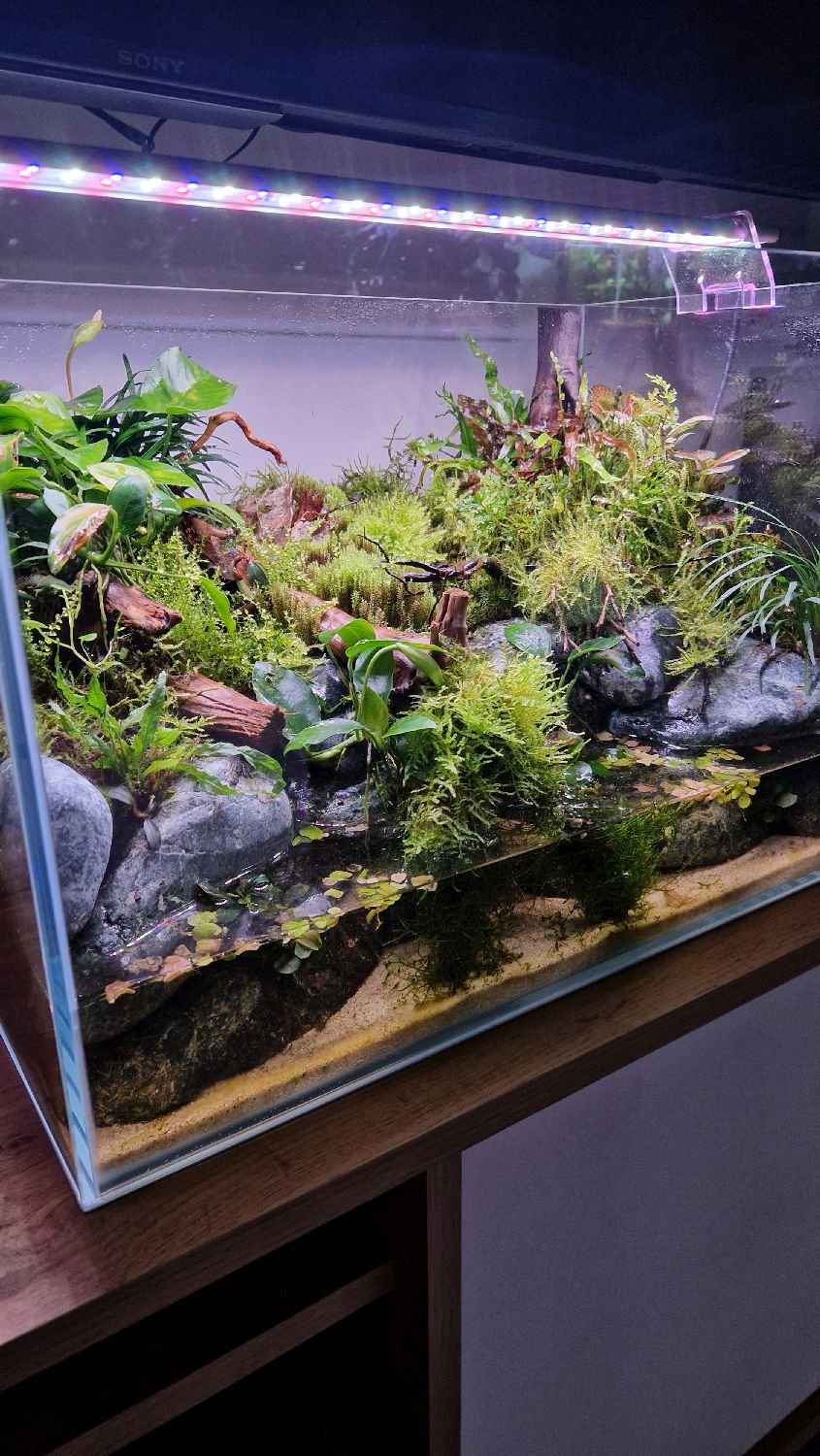
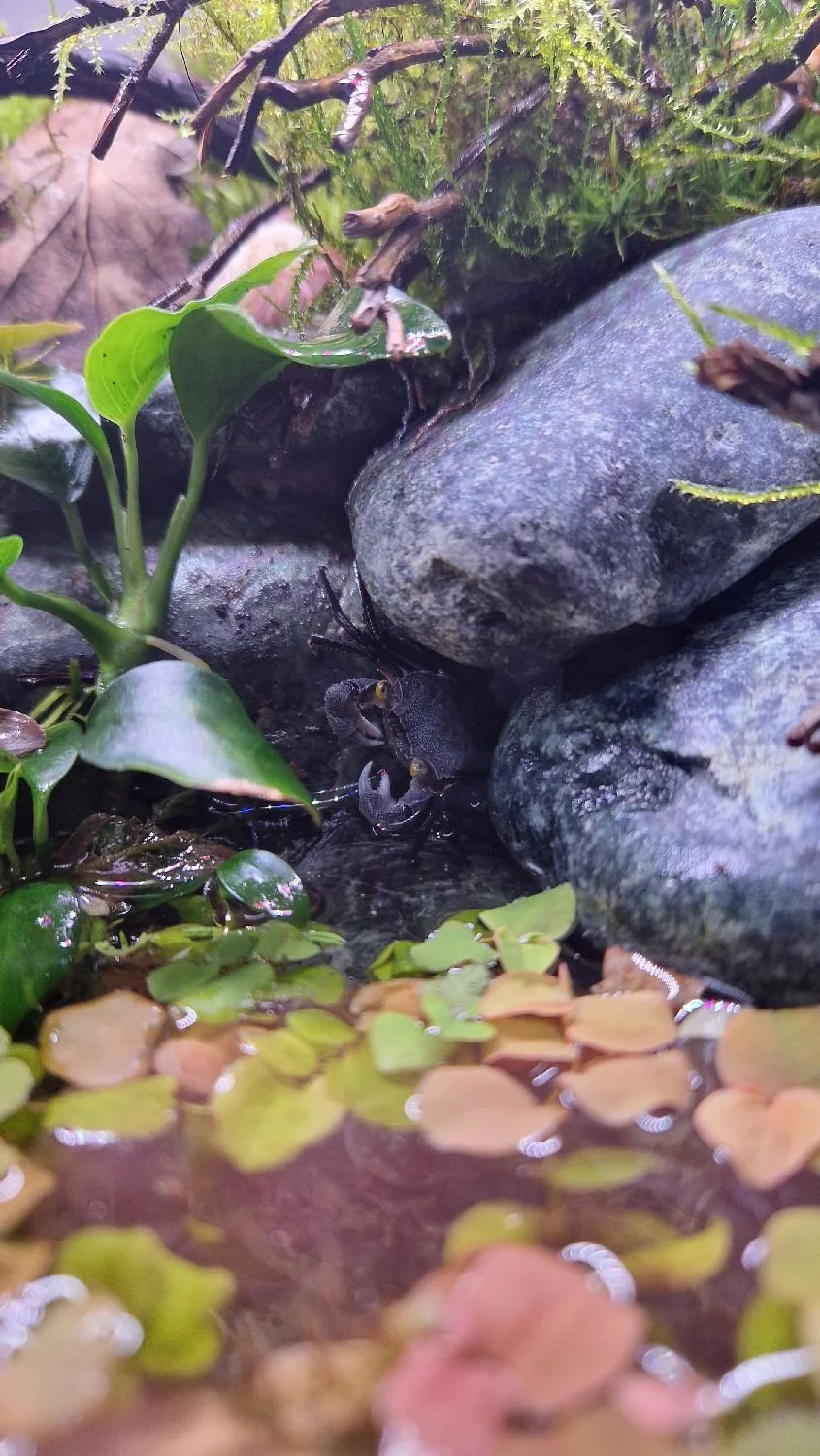
Above: Bartek’s tank and the crabs chilling by the waters edge
Conservation Status
At this point in time, there’s no real data on Geosesarma sp Purple Haze, though there’s a good chance that collection will be causing population issues before too long.