
THE BEST PALUDARIUM BACKGROUNDS

There are many different ways to create a background for a paludarium or terrarium. However, each material comes with its own list of pros and cons. A well-designed background is one of the most important structural and aesthetic components in a paludarium. While I primarily build ecosystems for Geosesarma vampire crabs, the basics are universal for any tank you might be designing. Before you start, your focus should always be on what will best benefit your chosen animal.
For vampire crabs, which are mostly terrestrial and appreciate vertical surfaces, climbing areas, and high humidity, the choice of background material can directly affect their behaviour and long-term well-being. This guide covers five of the most suitable and commonly used background materials for vampire crab paludariums. Each section outlines what the material is, its practical advantages, and any potential drawbacks to consider.
PLANT BACKGROUND
Here’s something you might not have considered! Not using a background! Now, this will depend on your tank size and your idea. But you can actually make quite a nice tank without adding a background. For example, I have created quite a few nice-looking tanks without using a background, instead opting to let the plants grow up over the back. Here’s an example of what you can do with the right plants.
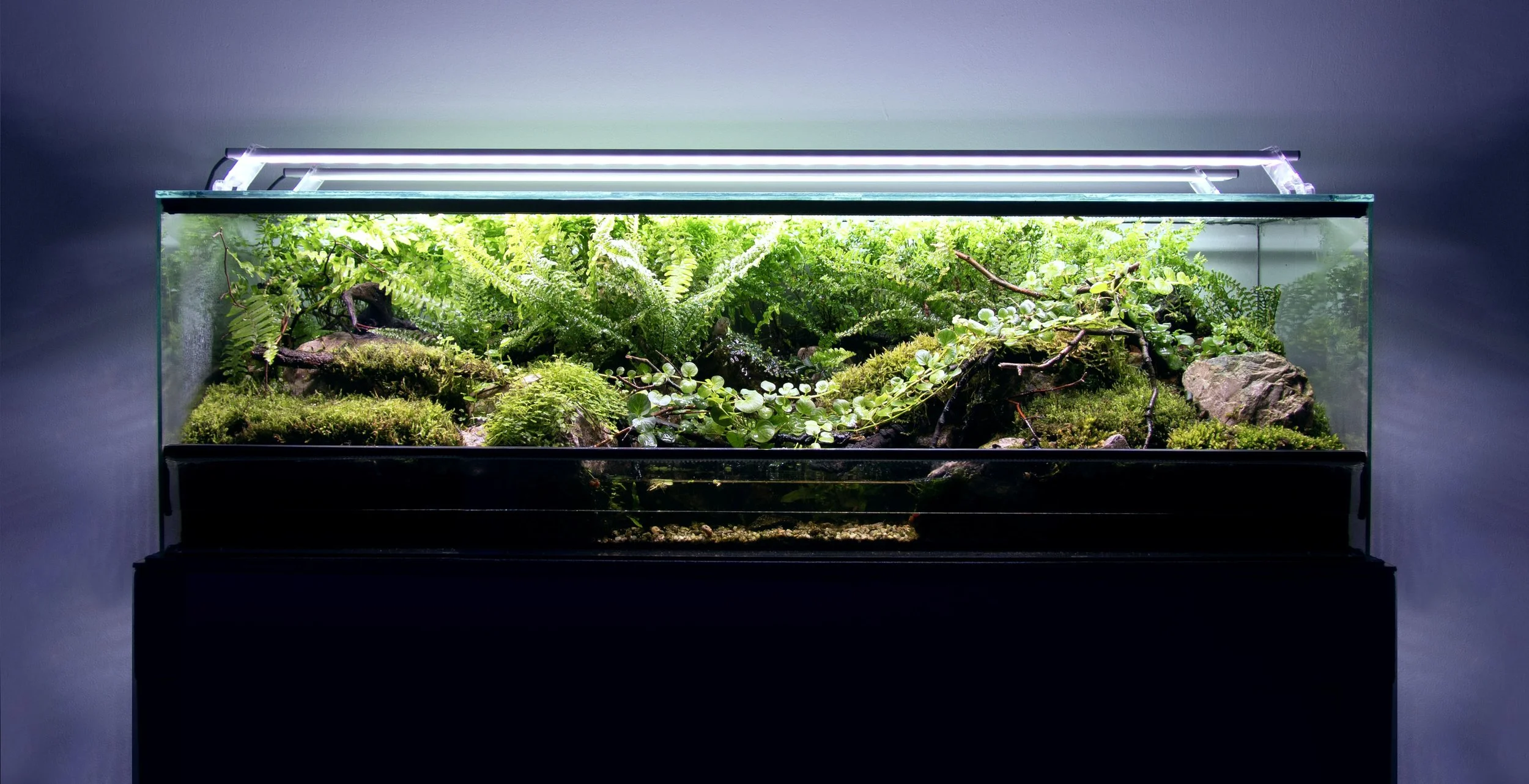
Ferns as a natural paludarium background
Corkboard
Corkboard backgrounds are made from compressed cork granules or natural cork bark. They offer a clean, naturalistic look and are commonly used in reptile and amphibian enclosures. There are a ton of different brands available, and some will come with carbon/charcoal pressed into it. I generally prefer these ones over the plain corkboards, but that’s just a personal preference. Either type will work well.
Pros
Natural aesthetic that blends well with forested or tropical setups
Provides good grip for climbing
Resists mold and mildew naturally
Lightweight and easy to cut and shape
Can support some epiphytic plant growth, especially mosses
It’s usually a sustainable product made from scrap cork.
Cons
Prone to degradation if kept consistently wet, but it’s usually quite slow and will take many years to become a structural issue
High-quality cork bark can be expensive
It can warp over time if not glued down properly.
Coconut Fibre BACKGROUNDS (Coco Mat or Coir)
Coconut fibre mats are made from the coarse outer husk of coconuts. Sold in sheets or panels, they are often marketed for use in reptile tanks or terrariums. In my experience, this stuff works really well, but early on, I’ve found it can get a little bit of a moldy smell, but it clears after a few weeks and doesn’t have any issues outside of that. It works great for creeping and climbing plants as well as climbing animals like crabs. But it can be a little thin to mount anything to.
Pros
Inexpensive and widely available
Helps retain humidity in the enclosure
Natural look with an earthy texture
Lightweight and easy to install
Great for climbing animals and plants.
Cons
Can grow mold if kept too moist without proper ventilation
Breaks down faster than other materials in high humidity
Does not support structural features or heavy plant loads on its own
Clay BACKGROUNDS
Clay backgrounds are typically constructed using terrarium-safe natural clay or pre-mixed products like excavator clay. These can be molded directly onto surfaces to form natural-looking terrain. When making structures of larger sizes, it’s important to add internal structural support or it will crumble, break and slide off the glass over time. This is my favourite background to work with, though it takes a little bit of getting used to if you aren’t familiar with clay’s characteristics. It also works well in combination with corkboards. Just don’t let it dry out completely or it will crack and break apart.
Pros
Fully customizable; allows for sculpted hides, ledges, and plant pockets
Provides excellent texture for climbing
Safe for digging and natural behaviours
Holds form when dry and supports plant roots
Cons
Difficult to work with and time-intensive to install
Heavy, especially when wet
May erode over time in saturated conditions if not sealed or used above the waterline
If it dries it it will crumble and break apart easily. So keep it moist.
Spray Foam BACKGROUNDS
This is probably the most commonly used background material you will see in DIY terrarium backgrounds. It can be shaped, carved, and coated to create complex 3D environments. It’s cost-effective, lightweight, and you can create a lot of different things with it. However! I personally have a major dislike for using sprayfoams as it feels more like creating a landfill rather than an ecosystem. But I can’t deny it’s the easiest material to make really intricate structures with.
Pros
Highly versatile and fully customizable
Lightweight and rigid once cured
Can be used to attach wood, cork, and other decorative elements
Endless options for creativity.
Cons
Toxic if not fully cured. (Avoid any with mould blockers, etc.)
Requires time, ventilation, and attention to safety during installation.
Takes away from the “natural” experience for building an ecosystem.
Fern Boards BACKGROUNDS (Tree Fern Panels)
This is background material that I will always avoid using, and I think you should too, as it is generally sourced with extremely bad environmental practices. While there are some sources that claim to be ethically sourced, I find that hard to believe considering how long it takes for ferns to grow and where the products “usually” come from.
Pros
Naturally supports mosses, ferns, and other small epiphytes
Holds moisture extremely well, promoting a stable humidity gradient
Durable and rot-resistant under moist conditions
Provides a rough surface that is easy for crabs to climb
Cons
Expensive and not always readily available
Rigid and difficult to cut or shape
Not an ethical product.
Will eventually degrade over time, especially in saturated conditions