
CLOWNFISH AND THEIR HOST ANEMONES
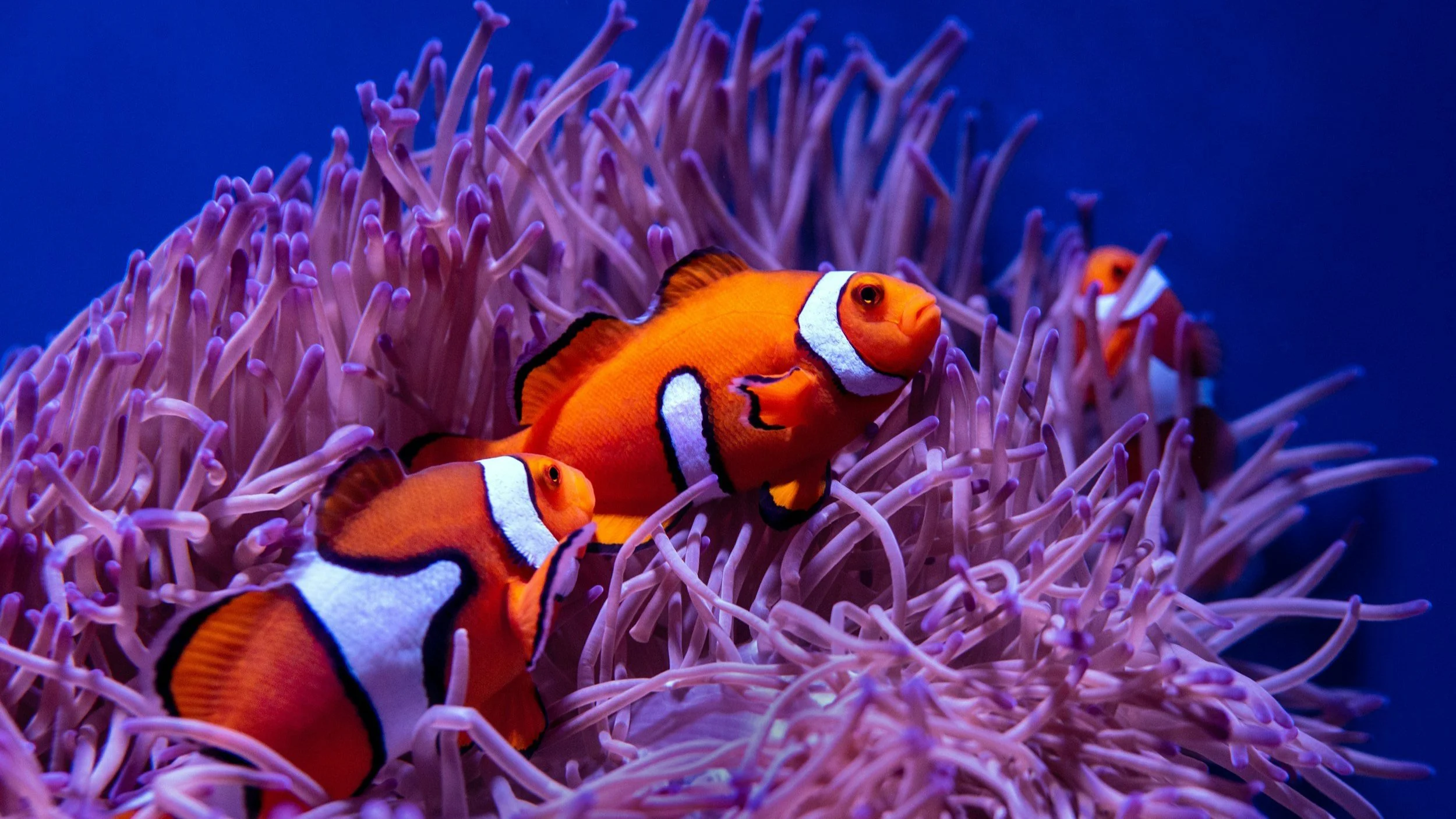
Clownfish and Their Natural Host Anemones: A Complete Guide
Clownfish and sea anemones share one of nature’s most iconic symbiotic relationships. Each species of clownfish has specific anemones they naturally host with in the wild, offering mutual protection and survival benefits. However things are a little different in captivity which is why we’ve put together this guide and the chart below.
Scientific Classification:
Clownfish, also known as anemonefish, belong to the subfamily Amphiprioninae within the family Pomacentridae. There are over 30 recognized species, most of which belong to the genus Amphiprion. The maroon clownfish (Premnas biaculeatus) is the only exception, classified in a separate genus.
Physical Characteristics:
Clownfish are small, brightly coloured fish, often exhibiting patterns of orange, yellow, red, or black with white bands or spots. Their colours and patterns vary significantly between species, helping distinguish them.
Habitat and Range:
Clownfish are native to the warm, shallow waters of the Indian and Pacific Oceans, including the Great Barrier Reef, the Red Sea, and the Coral Triangle. They are typically found in tropical reef environments.
Symbiotic Relationship with Anemones:
Clownfish are famous for their mutualistic relationship with sea anemones. The anemone’s stinging tentacles protect clownfish from predators, while clownfish provide the anemone with food scraps, increased water circulation, and protection from some predators. This relationship is key to their survival in the wild.
Behavior:
Clownfish are social and often live in small groups within a single anemone. Their social hierarchy is dominated by a single breeding pair, with the largest female as the leader. The rest are smaller, non-reproductive males. Interestingly, clownfish are protandrous hermaphrodites, meaning they can change sex—most notably, males can become females if the dominant female dies.
Diet:
Clownfish are omnivores, feeding on algae, plankton, and small invertebrates. They may also consume undigested food from their host anemone.
clownfish & anemone paring in captivity
This is a list of all clownfish (anemonefish) and their hosting anemones to help people understand and address hosting challenges. Anemonefish earned their name from their unique symbiotic relationships with sea anemones.
The age-old tale of the ocellaris clownfish ignoring or showing no interest in a bubble-tip anemone but happily hosting in mushrooms, Xenia, or Duncan corals isn’t because they’re tank-raised. It’s because these species don’t naturally share a symbiotic relationship in the wild.
Clownfish will, however, substitute hosts in an aquarium environment. This is why you’ll often see common clownfish hosting in a bubble-tip anemone (BTA). That said, the process may take longer—or may not happen at all. So it’s really important to understand that before you get your hopes up.
Below is a table that aims to show paring. As always! Be sure to research the fish and anemones you’re interested in and confirm that you have the capacity to care for them properly.

Clown fish and their host Anemone - A comprehensive chart Source u/browny30 (Reddit)