
SEXY SHRIMP (THOR AMBOINENSIS) CARE GUIDE

Thor amboinensis - The Sexy Shrimp
The sexy shrimp (Thor amboinensis) is a small, stunningly beautiful shrimp species known for their quirky “tail-up bobbing” and “dancing” behaviour. These tiny shrimp are native to tropical coral reefs in the Indo-Pacific and are super popular in the saltwater aquarium hobby. Though they are super beautiful and interesting little shrimp, there are quite a few really important things you need to know about them. The first and most important is that they aren’t entirely reef-safe. But we’ll cover that in more detail further down. Most importantly though “Stability is key” to keeping Sexy shrimp alive.
Scientific classification
Domain: Eukaryota
Kingdom: Animalia
Phylum: Arthropoda
Class: Malacostraca
Order: Decapoda
Suborder: Pleocyemata
Infraorder: Caridea
Family: Thoridae
Genus: Thor Species
Physical Description
Size: 1–2 cm in length.
Lifespan: Up to 3 years in captivity. (Water stability is key to longevity)
Appearance: Translucent brown body with white or blue spots outlined in dark brown and a distinctive tail-up posture with rhythmic bobbing movement.
Sexual Dimorphism: Females are slightly larger than males.
Natural Distribution
Though named after Ambon or Amboyna Island, part of the Maluku Islands in Indonesia, Thor amboinensis has a pantropical distribution. It is found across the Red Sea, Indian Ocean, Pacific Ocean, Caribbean Sea, Gulf of Mexico, Madeira, and the Canary Islands.
(Source: Wikipedia)
Behaviour and Symbiosis
Thor amboinensis forms a commensal relationship with another invertebrate, usually a shallow-water sea anemone or mushroom coral. The species most often used as hosts in Bermuda include the carpet anemone (Stichodactyla haddoni), the stinging anemone (Lebrunia danae) and the adhesive anemone (Cryptodendrum adhaesivum). One or several shrimps live among the tentacles of their host, feeding on the tentacle tissue and on the mucus-trapped planktonic particles adhering to it. In the Bahamas, Thor amboinensis forms part of an assemblage of symbiotic invertebrates associated with the anemone Lebrunia danae. Each shrimp, crab and brittle star inhabits its own part of the sea anemone and Thor amboinensis is found hidden deep among the pseudotentacles
(Source: Wikipedia)
Social Structure: Found in small groups (2–5 individuals), sometimes forming harems.
Host Anemones and other corals:
Common hosts in captivity include Entacmaea quadricolor (bubble-tip anemones), Heteractis magnifica, Rock Flower Anemone (Phymanthus crucifer) and Carpet Anemone (Stichodactyla haddoni).
They will also associate with corals like Euphyllia, Ricordea, or Xenia in the absence of anemones. But their natural behaviour can stress these corals and cause injury. So it might not be best to keep Sexy shrimp with these species if you are worried about damage.
Mutualism:
Shrimp gain protection, while anemones benefit from cleaning (removal of debris and parasites).
Shrimp may also feed on anemone mucus, potentially stressing the host if overfed. They will quite often attempt to do this with other coral species if an anemone isn’t available.
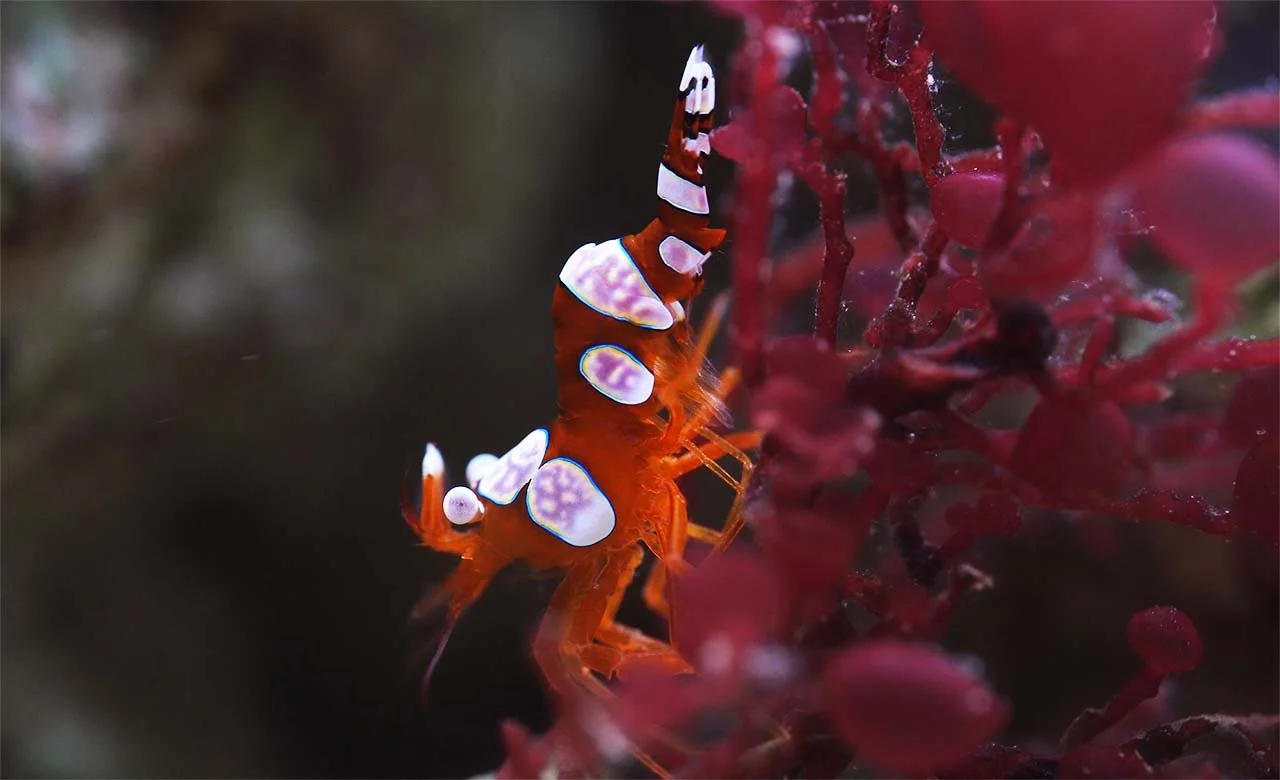
Thor amboinensis resting in some macro algae
Tank Setup for Sexy Shrimp
Reef safe: Not really! These little shrimp have a habit of picking at coral polyps and stressing out certain corals, especially Zoanthids so it’s best to avoid them in tanks with zoas and expensive SPS corals. They do far better in anemone tanks and soft (pest) coral or macroalgae tanks. However, if you aren’t too phased by the potential risks to your coral they will be quite happy in a full-blown SPS reef tank.
Tank Size: Minimum 5 gallons (25 liters) though 10 gallons (50 liters) is easier to look after. You can easily keep 2–5 shrimp with 5 being the better option as they are super social
Environment:
Provide lots of live rock and a sandy substrate for hiding and climbing.
Include host anemones or tentacle-like corals for their natural behaviour. They also do very well in macro algae tanks with fast-growing algae species and soft corals like xenia, sinularia and kenya trees. Avoid keeping Sexy shrimp with Zoas as they will quite quickly wipe them out.
Water Flow: Low to moderate flow to prevent stress.
Lighting: Moderate reef lighting to support anemones and maintain shrimp health. Sexy shrimp are fairly forgiving with lighting so aim to keep your corals happy and your shrimp will be perfectly fine.
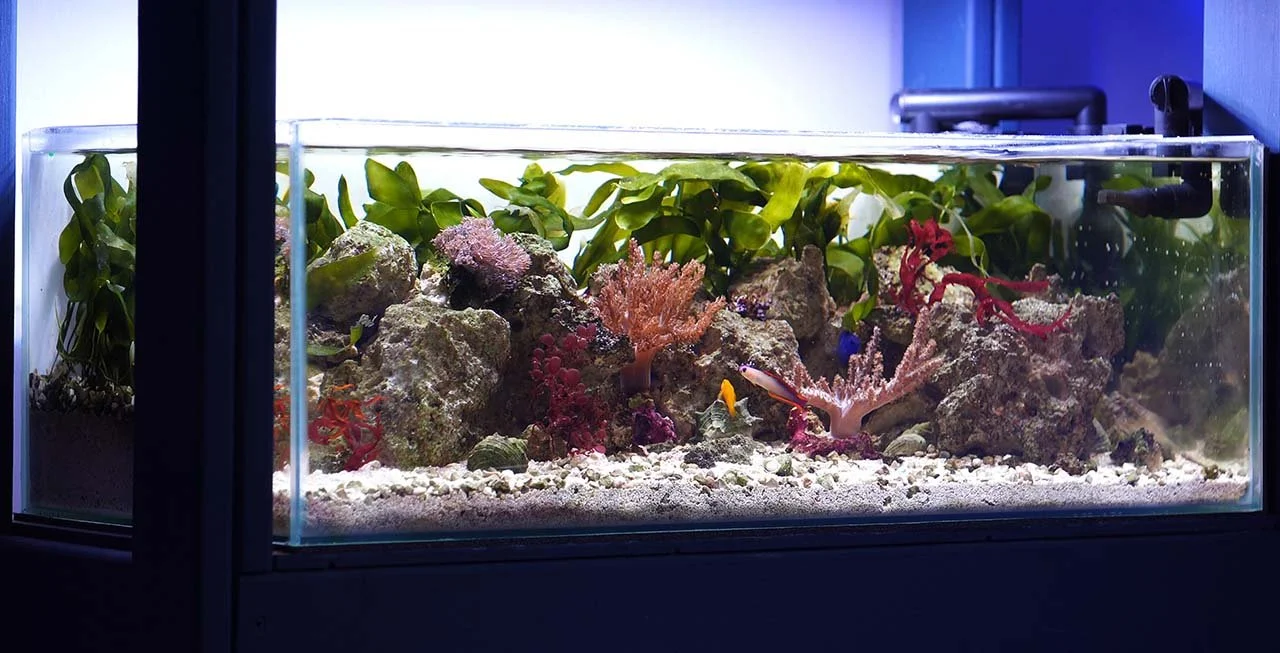
Something like this will work well for keeping Sexy Shrimp
Water Parameters
As we have mentioned a few times already the key to keeping Thor amboinensis alive and well is stability! So make sure any changes to your tank happen really, really slowly.
Temperature: 24–28°C (75–82°F)
Salinity: 1.023–1.025
pH: 8.1–8.4
Nitrates: Below 10 ppm
Ammonia/Nitrites: Zero
The Best anemones for Thor amboinensis
Interestingly Sexy Shrimp aren’t all that fussy when it comes to anemone, they’ll basically accept any kind of anemone you give them. However, the hardest part will probably be finding the specific one that you want in your tank. Just remember anemones are quite sensitive in their own right and do best in tanks that are at least 6 months old. Again, as with Sexy Shrimp, stability is key for keeping anemone alive and happy.
Carpet Anemone (Stichodactyla haddoni) – A common host in both natural habitats and captivity, providing an ideal shelter for the shrimp
Stinging Anemone (Lebrunia danae) – Frequently found in the Bahamas, this species plays a significant role in the symbiotic assemblage of invertebrates, including the shrimp
Adhesive Anemone (Cryptodendrum adhaesivum) – Known for its sticky tentacles, which attract the shrimp and other small invertebrates
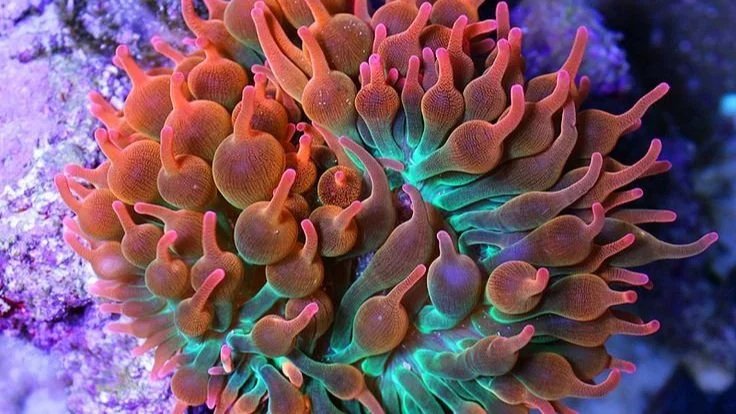
Bubble-tip Anemone (Entacmaea quadricolor) – A popular host in aquariums, its distinctive tentacles make it an ideal location for Thor amboinensis to thrive
Magnificent Anemone (Heteractis magnifica) – Another common host species in captivity, offering both protection and food to the shrimp
Rock Flower Anemone (Phymanthus crucifer) – This smaller, hardy species also provides an excellent home for Thor amboinensis in aquarium settings
Feeding
Diet:
Omnivorous; feed on detritus, microalgae, and mucus from host anemones.
Supplemental diet: Rotifers, copepods, brine shrimp, finely chopped seafood, or specialized pellets.
Frequency: Feed 1–2 times daily if possible. But they’ll do perfectly fine with a single daily feeding.
Tankmates
These little shrimp are super tiny so you want to avoid bigger predator fish that will happily eat them on sight. For whatever reason clown fish don’t seem interested in eating them and neither do most species of damsel and goby. That said, with them being so tiny there is always a risk of a random attack.
Compatible Species:
Small, peaceful fish (e.g., gobies, clownfish).
Reef-safe invertebrates (e.g., snails, small hermit crabs).
Avoid:
Predators like hawkfish, large wrasses, or aggressive crabs that may harm or eat the shrimp.
Breeding Sexy Shrimp in Captivity
Interestingly breeding sexy shrimp (Thor amboinensis) in captivity isn’t all that complicated once you know what you are doing. Rather than writing a huge essay on the topic, this video does a pretty good job of explaining the process. With a little bit of fine-tuning, anyone should be able to breed sexy shrimp in captivity with a little bit of planning and persistence.
Larval Rearing (Speed RUN)
Tank Setup:
Separate breeding tank with stable water parameters and gentle flow steady flow (a circular/cylinder tank is best)
Dim lighting with a heater is also super important. Keep the water stable as per the adult’s requirements.
Feeding Larvae:
Feed microalgae, rotifers (Brachionus), and newly hatched Artemia (brine shrimp).
Feed every 6–12 hours to ensure constant nutrition. (This is really important)
Metamorphosis:
After 15–20 days, larvae settle and transform into juvenile shrimp. (Sometimes it takes a fair bit longer)
Juveniles should be moved to a tank with appropriate hosts. They are super tiny so will be eaten very easily.
Challenges Breeding Sexy Shrimp
High larval mortality due to:
Poor nutrition.
Inadequate flow or water quality.
Adults will eat larvae if not separated.
Reproductive Process
The female Thor amboinensis carries fertilized eggs beneath her abdomen until they are ready to hatch. The zoea larvae go through several stages before undergoing metamorphosis. During this process, they are attracted to potential host anemones by both chemical and visual cues in the water. Research has shown that the larvae are generalists, accepting a variety of anemone species as hosts. Interestingly, the larvae tend to prefer the species of anemone from which the parent shrimp originated, demonstrating some level of host preference.
(Source: Wikipedia)
Potential Problems in Captivity
Overfeeding: May stress host anemones if shrimp overconsume their mucus.
Predation Risk: Their small size makes them easy prey for aggressive species.
Water Quality Sensitivity: Super sensitive to fluctuations in salinity, temperature, or nitrogen levels. Once again, Stability is key!
Conservation Concerns
Threats in the Wild:
Habitat destruction (e.g., coral bleaching, ocean acidification).
Overcollection for the aquarium trade.
Solution: Support captive-bred specimens and avoid wild-caught individuals.