
CAN YOU KEEP VAMPIRE CRABS WITH DART FROGS?

Keeping vampire crabs (Geosesarma spp.) and poison dart frogs (Dendrobatidae and all the others) together in the same enclosure is strongly discouraged due to significant differences in their environmental needs, behaviours, and health considerations. Here's a full breakdown of the reasons why cohabitation is inadvisable.
This is going to be a quick overview of why not, but if you deep dive and research both species fully, you will see exactly why this is a bad combination in a lot more detail.
Divergent Habitat Requirements
Vampire Crabs: These crabs live in paludarium setups with approximately 80% land and 20% water. They require a warm, humid environment with humidity levels of 75% or higher.
Poison Dart Frogs: Dart frogs prefer a fully terrestrial, densely planted vivarium with high humidity levels ranging from 70% to 100%. They are sensitive to excessive moisture and require stable humidity to prevent skin issues.

Vampire Crabs require a dedicated water section
The differing habitat structures make it challenging to create an environment that suits both species simultaneously. While they have similarities and overlaps, you will never be able to get it just right for both species to be exactly where they are most comfortable.
Creating an environment that allows crabs to molt without compromising the frogs' health isn’t really possible. While there are some Geosesarma species, like Geosesarma Notophorum, that don’t require a dedicated water section because they molt on land. They are far more aggressive and bigger, so you’ll be dealing with quite a few other issues.
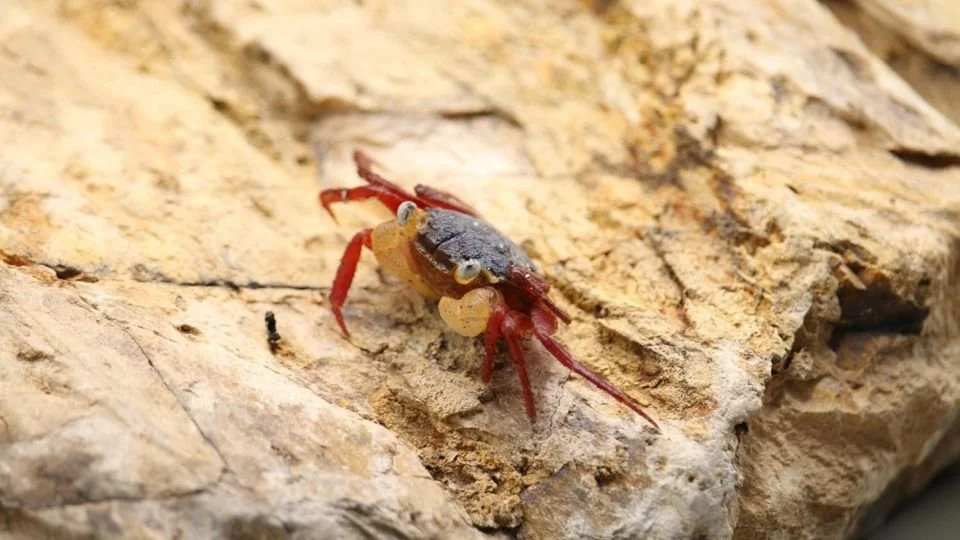
Geosesarma Notophorum
Incompatible Temperature Preferences
Vampire Crabs: Require a warm environment, between
Air: 22–28°C (71–82°F)
Water: 22–25°C (71–78°F)Poison Dart Frogs: Optimal temperatures for dart frogs range between 72°F and 80°F (22°C to 27°C). Temperatures above the mid 80s can be harmful to them.
Again, they do have an overlap, and keeping a tank at 25°C (78°F) is possible, it’s best to emulate natural day/night/seasonal swings. Which might not work well for both species combined in the same tank.
Conflicts and Predation Risks
Predation is a very real concern in mixed-species enclosures. Depending on the species of dart frog, you may run into serious compatibility issues. For instance, Phyllobates terribilis, the largest and most toxic dart frog species in the wild (though not toxic in captivity), has been known to eat small lizards when housed inappropriately with them. A vampire crab is significantly smaller than a lizard, and would likely be viewed as food. This species in particular, is not one to experiment with in cohabitation setups.

Conversely, tiny frogs like Ranitomeya reticulata, one of the smallest thumbnail dart frogs, could fall victim to the crabs. Though vampire crabs are small, they are opportunistic and may attack if a froglet or adult frog is vulnerable, such as when sleeping. Tadpoles and froglets are especially at risk and can be easy targets as well. During the night, crabs roam constantly, so no place will be safe!
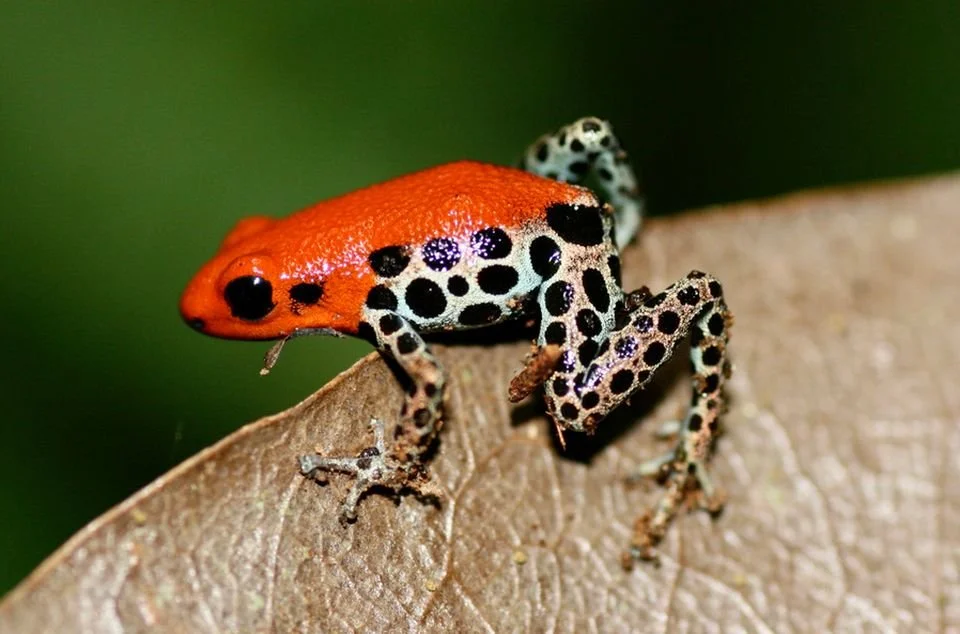
Basically, both species are best kept in species-specific enclosures. Despite their shared tropical habitat preferences, their interactions can turn dangerous quickly, especially when size differences and opportunistic feeding behaviours are taken into account.
Vampire Crabs: They are opportunistic feeders, consuming a variety of foods, including small invertebrates. And they will pounce on things that move in their surroundings. Even if they are a similar size to them. So will bother dart frogs quite often. Pinching at their skin, eyes, etc. They will also kill and eat baby frogs and tadpoles. Vampire Crabs will roam the entire tank just like dart frogs.
Poison Dart Frogs: They feed on small insects like fruit flies and springtails, and while they will eat the same stuff as Vampire Crabs, they will also eat any baby vampire crabs they spot in the tank. So you will have 0 chance of vampire crab babies surviving.

Vampire Crabs fighting
Behavioural Incompatibilities
Vampire Crabs: Are nocturnal, quite territorial and also fairly aggressive and will harass frogs while they are sleeping.
Poison Dart Frogs: Are diurnal and are completely defenceless in captivity, giving vampire crabs a major attack advantage against them. While the frogs can jump and climb, so too can vampire crabs. While they don’t have the same jump abilities, they have a mean lunge that the frogs might not be able to evade.
The differing activity patterns and potential for territorial disputes increase the likelihood of stress and injury. More than likely it will be your frogs that get beat up not the crabs.
Health and Disease Concerns
Vampire Crabs: Require access to both land and water to molt properly.
Poison Dart Frogs: Excessive moisture or standing water can lead to skin infections and other health issues with Dart Frogs. They can also drown in small amounts of water. This is the main reason not to mix the two species in the same enclosure.
Maintenance Challenges
Managing a mixed-species enclosure complicates feeding, cleaning, and monitoring. Uneaten food intended for one species may harm the other, and waste management becomes more complex, increasing the risk of disease. While a good clean-up crew can help with a lot of this, having two different species that both eat clean-up crew members is going to put a fair bit of pressure on the environment.
Ethical and Welfare Considerations
At the end of the day, keeping different species with fairly different requirements together is irresponsible, as no matter how well you think you’re managing both species’ requirements, one of them is going to be suffering or stressed for one of the reasons mentioned above.
Just make a separate tank for each species and call it a day!