
DWARF MEXICAN CRAYFISH (CPO) CARE GUIDE: HOW TO KEEP AND BREED CPO CRAYFISH
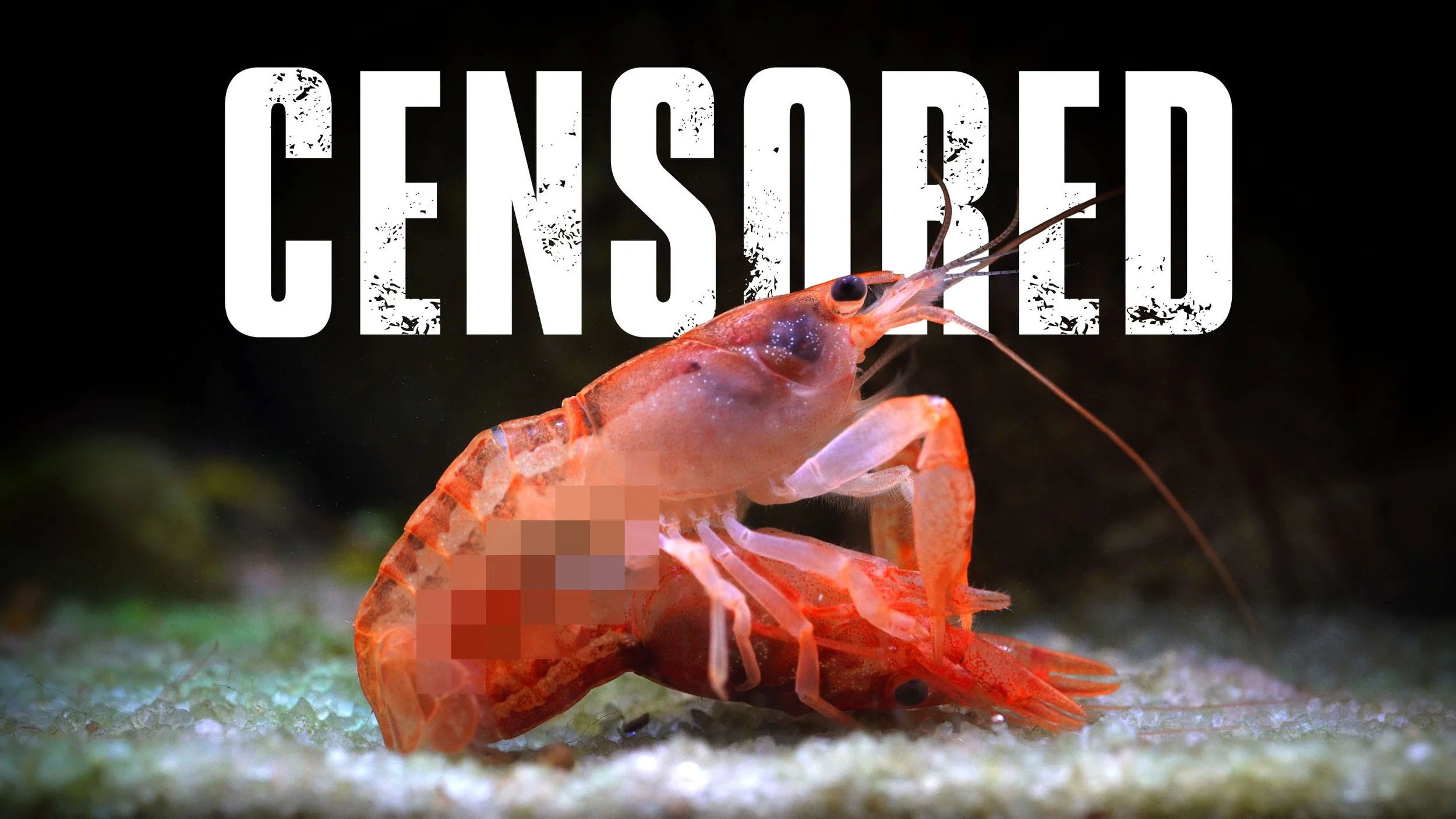
A male and female Dwarf Mexican Crayfish mating
This little guy (above) is a dwarf Mexican crayfish, more commonly known as a CPO. They’re super colorful, mean as hell, surprisingly hardy, and honestly pretty easy to breed once they settle in. And once they’re comfortable, all the really do is fight and make babies! So here’s a simple guide based on my experience keeping and breeding them.
What Are CPOs?
Common names: Mexican Crayfish, Orange Crayfish, CPO
Scientific name: Cambarellus patzcuarensis var orange
Size: Up to 4–5 cm (around 2 inches)
Temperament: Tiny, angry, loves making babies more than anything else.
Lifespan: Around 2 years
Difficulty: Easy to medium
They come in a few different colors: orange, rust, brown, marbled, sometimes grey, but the bright orange ones are definitely the coolest and the most common. They are also banned in a lot of countries as crayfish can become invasive very fast. Australia is one of numerous countries that have banned CPOS.
Water Parameters for keeping Mexican Crayfish
CPOs are actually pretty tough little things.I’ve kept them in a filterless, heaterless planted tank that dropped down to about 17°C during winter on straight hard tap water, and they still did completely fine.
That said, here’s the sweet spot if you want them within the best ranges.
Tank Size: 10 gallons / 40 liters+
Temperature: 18–24°C (65–75°F)
pH: 7.5–8.0
GH: 3–18
KH: 3–15
TDS: 200–300
Nitrate: Under 20 ppm
Nitrite: 0
Ammonia: 0
Tank Setup
The more plants, rocks, caves, cracks, crevices, and random junk you can cram into the tank, the better. CPOs absolutely love complex tanks with endless little hiding spots. It helps with stress, molting, and especially breeding. One of the best setups I’ve used for raising babies was actually a hillstream-style aquascape that I didn’t even build for crayfish. But because it had so many gaps between rocks and little caves everywhere, it turned out to be perfect. The babies could disappear into places nothing else could reach. So combining that style with plants would be even better.
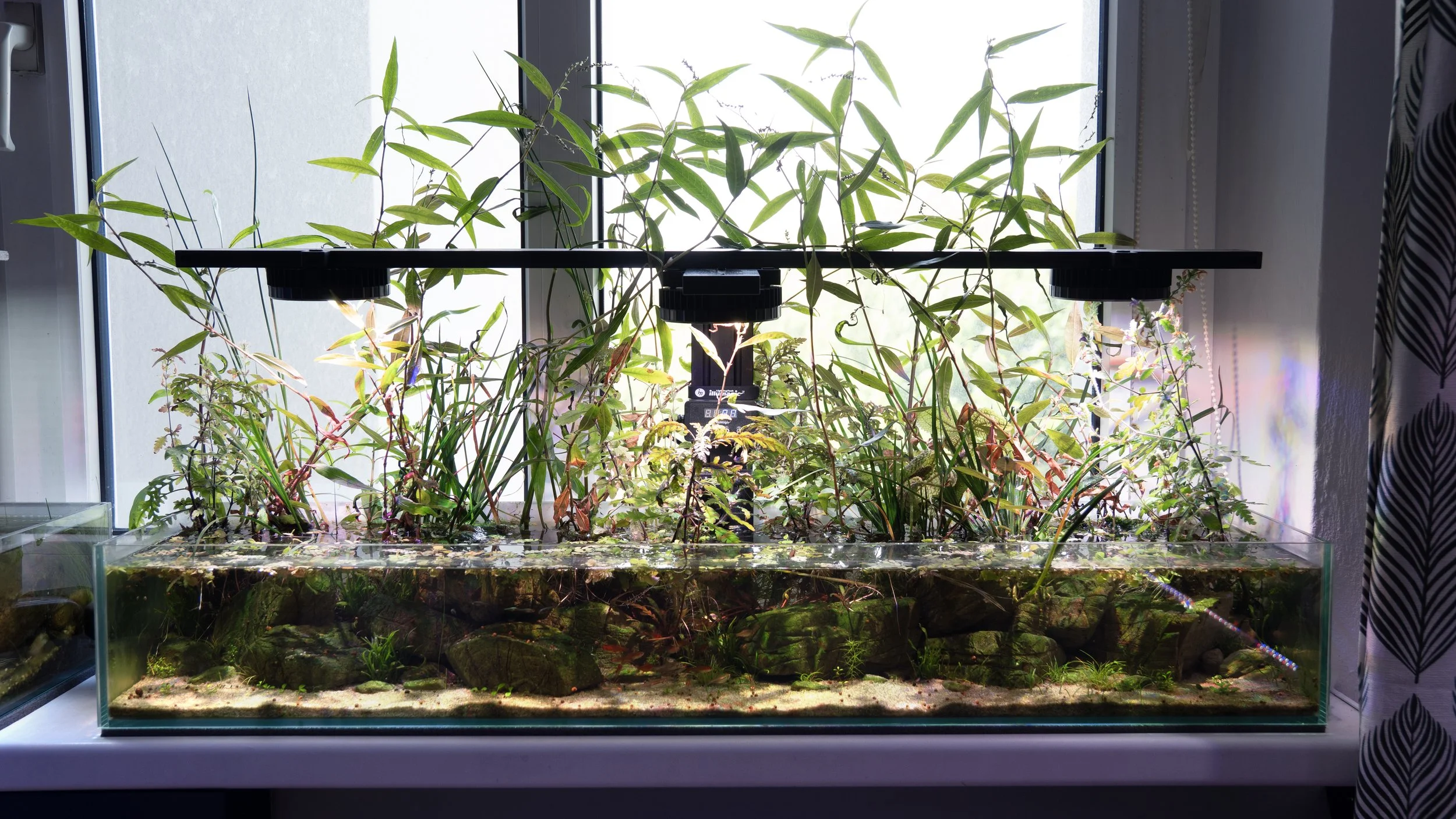
Dwarf Mexican Crayfish tank set up. Surprisingly they don’t seem to climb out like other species
Keeping Males and Females Together
When I first got mine, I picked up one male and one female, mainly because they were the last two left in the shop. Ideally though, you’d want more females than males. These things are tiny psychopaths.
For the first month, mine got along completely fine. Then one day I found the female with a missing claw and almost all her legs ripped off. So yeah. They can get pretty brutal. But they have the ability to regrow lost limbs through a process called molting. After a molt, she regrew almost everything.
If you notice a female getting beaten up:
Separate them immediately
Give them plenty of hiding spots
Leave them alone to recover
Most of the time they bounce back surprisingly well.
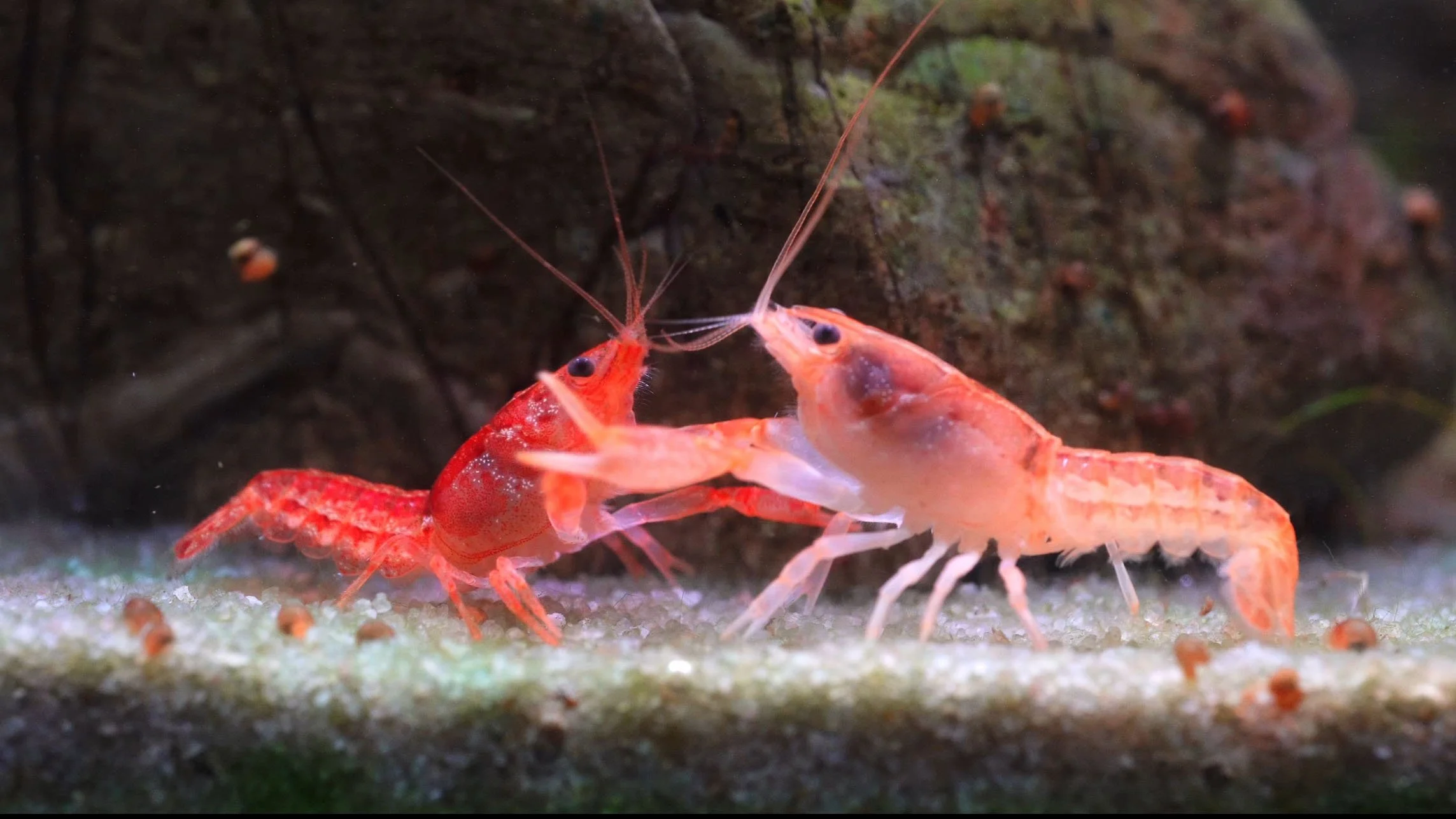
Molting
Molting is when crayfish shed their shell so they can grow. Right after a molt, they’re super soft and vulnerable, which is usually when things go badly if there’s another crayfish harassing them. Don’t freak out if they disappear for days or even weeks after molting. Mine vanished into the rocks for ages at one point and I genuinely thought she’d died. Then she randomly reappeared like nothing happened.
Breeding Dwarf Mexican Crayfish
Breeding them is honestly pretty simple. Once the female is comfortable and things go well, she’ll start carrying eggs underneath her tail. After that, she’ll usually hide away somewhere dark and barely come out for weeks. Just leave her alone and let her do her thing. Eventually, one day you’ll suddenly notice tiny little baby crayfish roaming around the tank. The babies are ridiculously small at first, around 5 mm long, and look like miniature copies of the adults.
Raising the Babies
As soon as I spotted babies, I removed the adult female and swapped the male back into another tank. That cycle basically repeated itself over and over. The biggest thing with baby CPOs is making sure nothing eats them. And honestly, way more fish eat baby crayfish than people expect.
Fish to Avoid
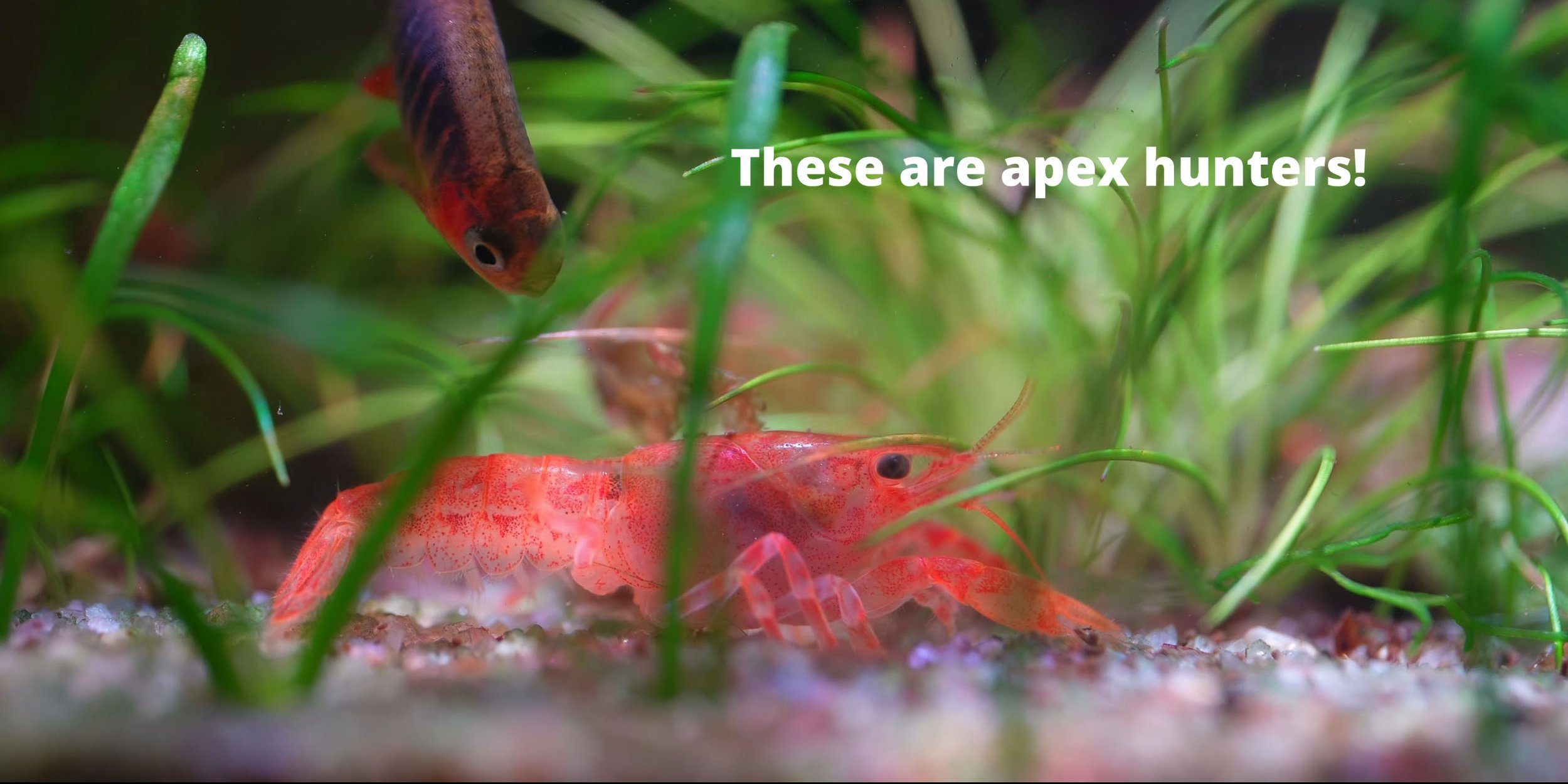
One of the worst offenders I’ve seen were emerald rasboras. These little things are absolute assassins. They don’t just pick at babies in passing, they actively hunt them down like tiny underwater snipers. So if your goal is breeding shrimp or crayfish successfully, definitely avoid keeping babies with fish like that. That said, adult crayfish can sometimes target fish as well so fish aren’t completely safe from becoming a snack either. Though most of the time they are a bit to fast for the crayfish to catch. Most of the time! Not all of the time!
Feeding
CPOs will eat pretty much anything. Though you will want to make sure they are getting a good amount of calcium.
A good mix includes:
Sinking pellets
Algae wafers
Frozen foods
Blanched vegetables
Leaf litter
Random leftovers they find before anything else does
Any commercial fish foods you can buy.