
EVERYTHING YOU NEED TO KNOW ABOUT NEOCARIDINA SHRIMP

Neocaridina shrimp are hardy, colourful freshwater dwarf shrimp originating from eastern Asia, especially Taiwan and southern China. Belonging to the species Neocaridina davidi, they are one of the most popular beginner-friendly shrimp in the aquarium hobby due to their tolerance for a wide range of water parameters, prolific breeding, and striking colour morphs. Their most iconic variant is the Red Cherry Shrimp, but selective breeding has expanded the palette to include nearly every colour imaginable.
While shrimp can be super sensitive, if you buy them locally, they are usually raised on local tap water, which means they will be way more likely to do well in your tank. That said, it’s still always best to drip acclimate them into your tank.
Interesting Facts
Neocaridina shrimp exhibit a fascinating trait where their colour intensity can vary based on genetics, stress, diet, and environmental factors.
Their exoskeletons are semi-transparent, and their colouration comes from chromatophores (pigment cells) and the underlying shell layers.
Unlike Caridina shrimp, Neocaridina do not require acidic water and can thrive in tap water if it’s dechlorinated and safe.
They are often used in planted aquariums not only for aesthetics but also as part of the cleanup crew for algae and detritus.
Males tend to be smaller and paler in colour compared to females.
Water Parameters
Maintaining stable parameters is more important than achieving perfect numbers. However, these are the ideal ranges:
Temperature: 20–26°C (68–78.8°F); can tolerate up to 28°C (82°F) short-term. Hotter temperatures will increase breeding but also reduce lifespan. So, keeping them closer to 25 °c, 78°f is best.
PH: 6.5–8.0 (neutral to slightly alkaline is ideal)
GH (General Hardness): 6-8 GH
KH (Carbonate Hardness): 3-6 KH
TDS: 150–250 ppm
Ammonia/Nitrites: 0 ppm always
Nitrates: <20 ppm (lower is better)
Use a liquid test kit for accuracy, and remineralise RO/DI water if needed using shrimp-specific minerals (e.g., Salty Shrimp GH/KH+).
Tank Requirements
Tank Size: 5 gallons minimum, but 10+ gallons recommended for stability and colony growth.
Cycle: Fully cycled tank with established biofilm and no ammonia/nitrite. Let the tank cycle for 4 weeks for the best results.
Substrate: Inert gravel, sand, or shrimp-safe soil (though Neocaridina don't require buffering).
Plants: Live plants like Java Moss, Anubias, Bucephalandra, and floating plants (duckweed, frogbit) help reduce nitrates and provide grazing surfaces.
Filtration: Sponge filter or a gentle hang-on-back (HOB) with a pre-filter sponge.
Lighting: Moderate lighting encourages algae and biofilm growth; avoid intense light that encourages problem algae.
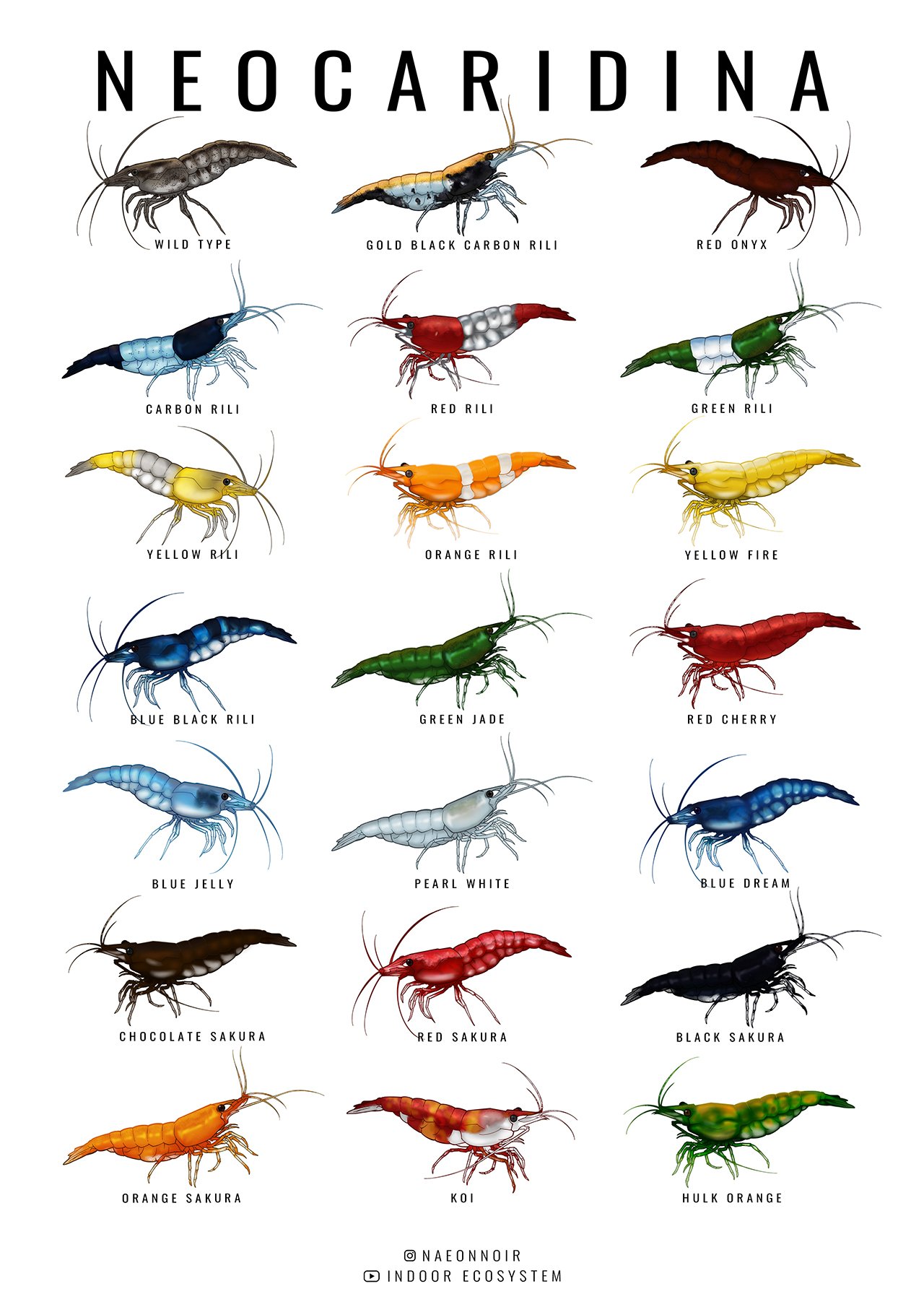
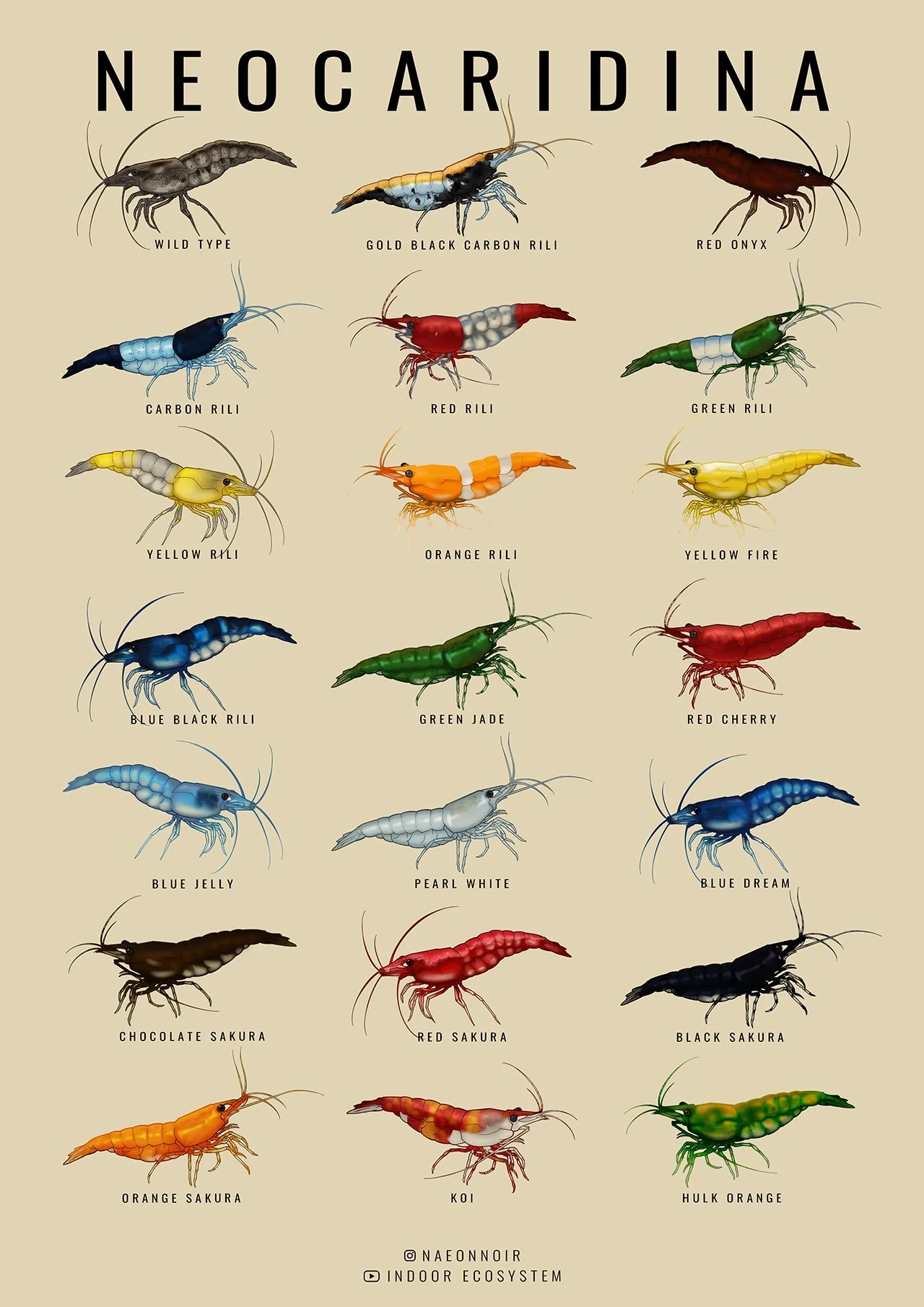
Support our work and grab yourself a shrimp poster!
Diet
Neocaridina shrimp are omnivorous scavengers. A varied, balanced diet improves health, colour, and breeding.
Staple: High-quality shrimp pellets (e.g., Bacter AE, Shrimp King, GlasGarten)
Vegetables: Blanched zucchini, spinach, kale, green beans
Occasional Treats: Frozen bloodworms, daphnia, or protein-rich shrimp sticks
Biofilm: Naturally occurring and essential, especially for juveniles
Feed sparingly—uneaten food can foul the water quickly. Shrimp can graze for hours on biofilm and algae, which are often enough in well-established tanks.
Breeding (OVERVIEW)
Neocaridina breed easily in stable freshwater without special conditions.
Maturation Age: 4–6 weeks
Breeding Temperature: 22–26°C (72–79°F)
Berried Females: Carry 20–40 eggs under their abdomen for ~3–4 weeks
Hatchlings: Fully aquatic miniature versions of adults, no larval stage
Survival: Higher in planted tanks or with moss for hiding
Overpopulation can occur quickly in small tanks if predation or culling isn’t done.
Breeding (Detailed)
Breeding Neocaridina shrimp is relatively straightforward, but there are ways to optimise for survival rate, colour quality, and healthy growth.
Colony Setup: A stable, mature tank with mosses or dense plant growth supports juvenile survival. Moss, like Java Moss or Subwassertang, traps food particles and creates a microhabitat.
Sex Ratio: A good ratio is 1 male to 2–3 females to ensure constant breeding. But it doesn’t really matter after a certain point. Trying to keep track of a colony once it reaches a certain level is quite difficult.
Mating Behaviour: Females release pheromones after molting. Males will rapidly swim around searching for her. Successful mating results in eggs appearing under the female’s abdomen.
Incubation: Females fan and clean their eggs with pleopods. Incubation lasts ~3 weeks, depending on temperature.
Juvenile Care: Provide powdered food (e.g., Bacter AE, Spirulina powder), as baby shrimp need access to constant, tiny food particles.
Survival Boosters: Keep predators away, add catappa leaves, maintain sponge filters for gentle flow, and minimise disturbance.
Culling and Colour Grading
To maintain or improve shrimp colour lines, selective breeding and culling are essential.
Colour Grading: Neocaridina are graded based on opacity, saturation, and pattern consistency. For example:
Fire Red: Deep, uniform red with little to no translucency.
Painted Fire Red: Solid, glossy red with no visible internal organs.
Sakura Grade: Rich red but with some transparency or colour gaps.
Culling: Remove shrimp that show undesirable traits like clear patches, wild colouration, poor body structure, or inconsistent patterns. Culling doesn't always mean euthanasia these shrimp can be moved to separate display tanks.
Line Breeding: Separate the best males and females of each generation into breeder tanks. Monitor offspring, and remove any that regress in colour or form.
Avoid Crossbreeding Colours: Mixing morphs often results in dull or wild-type offspring due to recessive genes. However, you can experiment with cross-breeding colours, just do it in a separate tank. One specifically for extreme experimentation.
Consistent culling and selective breeding over multiple generations is how high-end colour strains are maintained or improved.
Popular Neocaridina shrimp Colour Morphs
Colour morphs are created through generations of selective breeding. Each morph can have grades based on opacity, intensity, and uniformity.
Red Cherry Shrimp (RCS): Grades: Cherry, Sakura, Fire Red, Painted Fire Red (from least to most vibrant)
Blue Dream / Blue Velvet: Vary from sky blue to deep cobalt; Blue Dreams are typically darker
Yellow Shrimp: Bright yellow or golden; Goldenbacks have a distinct dorsal stripe
Orange Sakura: Bright tangerine-orange, sometimes mistaken for red
Green Jade: Deep forest green; it can be hard to maintain strong colour lines
Chocolate / Black Rose: Rich brown to jet black variants
Rili Shrimp (Red, Blue): Feature clear sections on the body with a colored head and tail
Mixing different colour morphs can result in wild-type brown offspring due to recessive genetics.
Neocaridina shrimp Tankmates
Compatible:
Small peaceful fish (ember tetras, chilli rasboras, endlers)
Snails (nerites, ramshorns, Malaysian trumpet snails)
Other dwarf shrimp (only of the same genus, if not breeding selectively)
Avoid:
Bettas, gouramis, cichlids, or any predatory or nippy fish
Crayfish or large freshwater crabs.
Shrimp fry are vulnerable even to nano fish, so breeding tanks should be shrimp-only. Or extremely dense planted tanks. Some babies will be eaten, but enough will survive to keep your population growing. There are some exceptions to these rules, but this article is based on the most common results. For example, some betta fish do well with shrimp, while others will murder and eat every single last one just for the sport of it. While it might seem strange Dwarf Mexican Crayfish do quite well with shrimp too.
Other animals to keep with shrimp
Common Issues & Troubleshooting
Molting Problems: Often due to incorrect GH or sudden parameter swings
Shrimp Deaths: Acclimation shock is common; always drip acclimate for 1–2 hours
Colour Fading: Poor diet, stress, low-grade genetics, or sudden temperature drops
Planaria or Hydra: Avoid overfeeding; manual removal or targeted treatments needed
Copper Toxicity: Check all plant fertilisers and medications for copper content
Tips for Success
Add Indian almond leaves or alder cones to support biofilm and offer tannins
Regular small water changes (10–20% weekly) help keep parameters stable
Test water regularly, especially in nano tanks
Observe shrimp behaviour daily; inactive or floating shrimp may signal issues
Quarantine new plants or tankmates to prevent pest introduction