
Geosesarma sp Banana - Source: @MillenniumSnakes
Scientific Classification
Scientific Name: Geosesarma sp. Banana
Common Names: Banana Vampire Crab, Lemon Vampire Crab, Yellow Black Eye Crab, Sunshine Crab
Discoverer: Unknown
Distribution: Java, Indonesia
Scientifically Described: No
Availability in Trade: Moderate (Seems to come in waves sometimes a lot, sometimes none)
Identification & Characteristics
Geosesarma sp. Banana is a small, mostly terrestrial species of vampire crab native to the tropical forests of Java, Indonesia. Like other members of the Geosesarma genus, it is highly adapted to life on land and only requires access to shallow water, deep enough to cover its entire body. If the water isn’t deep enough, it won’t be able to molt properly and will die.
Appearance:
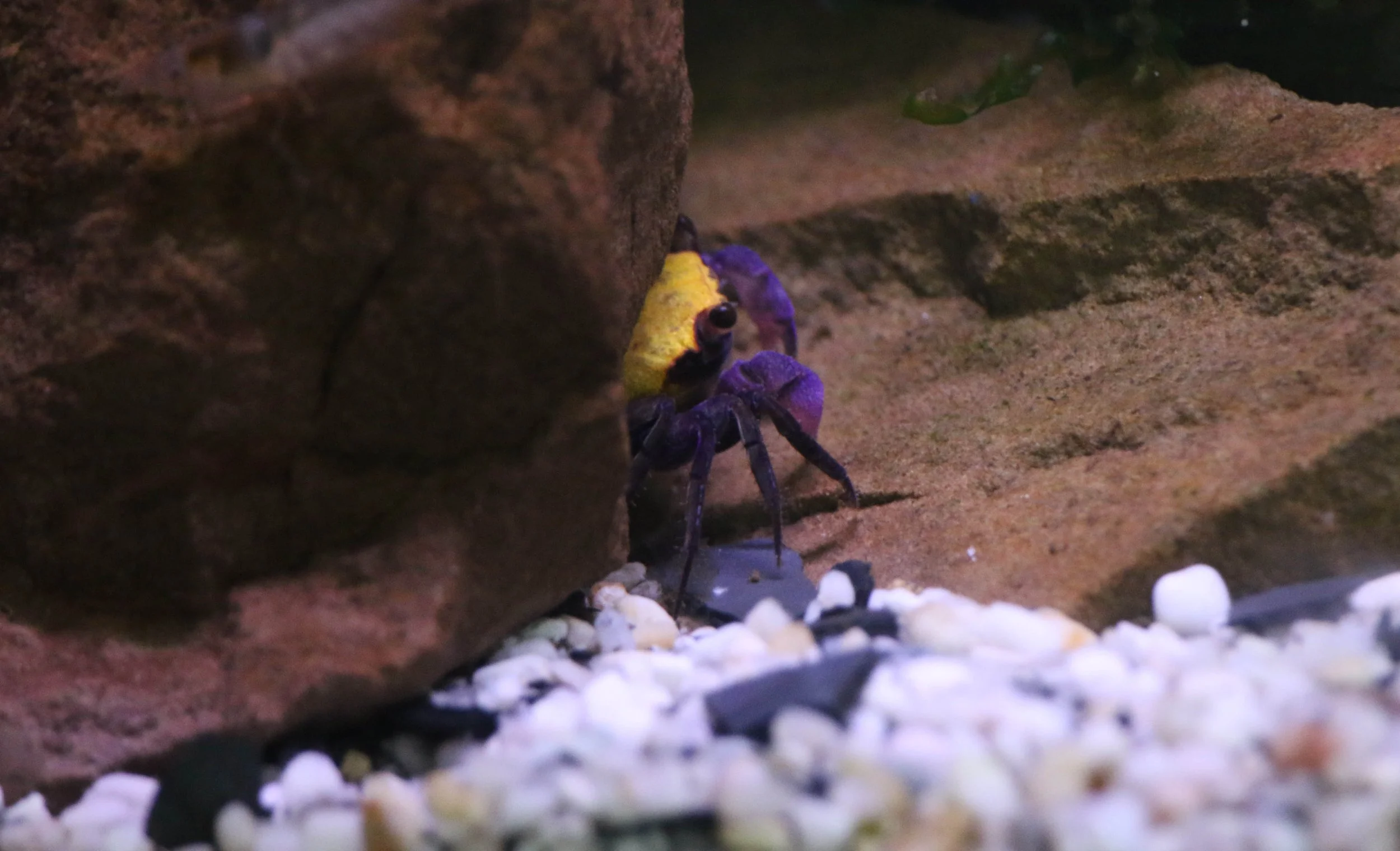
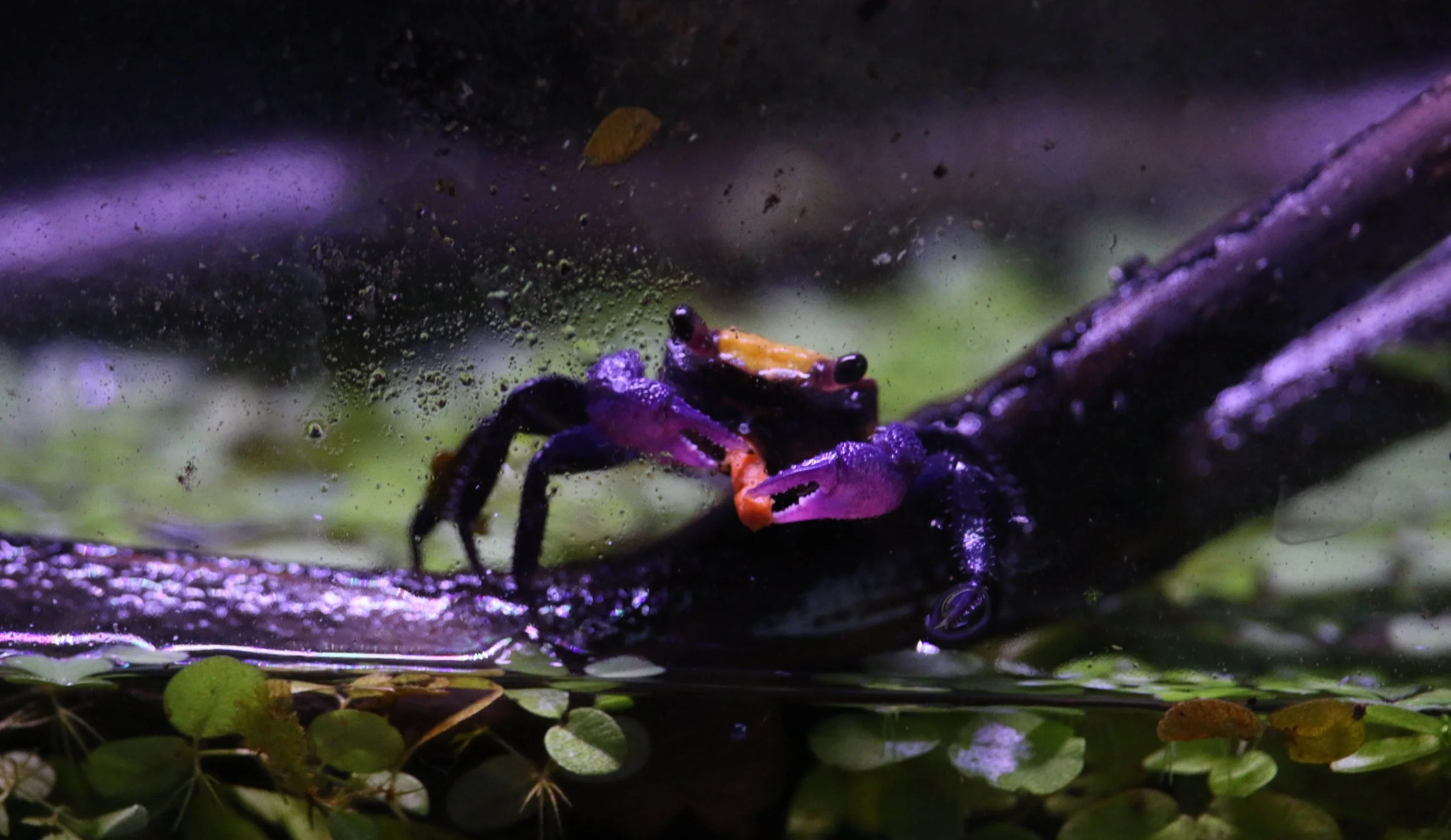
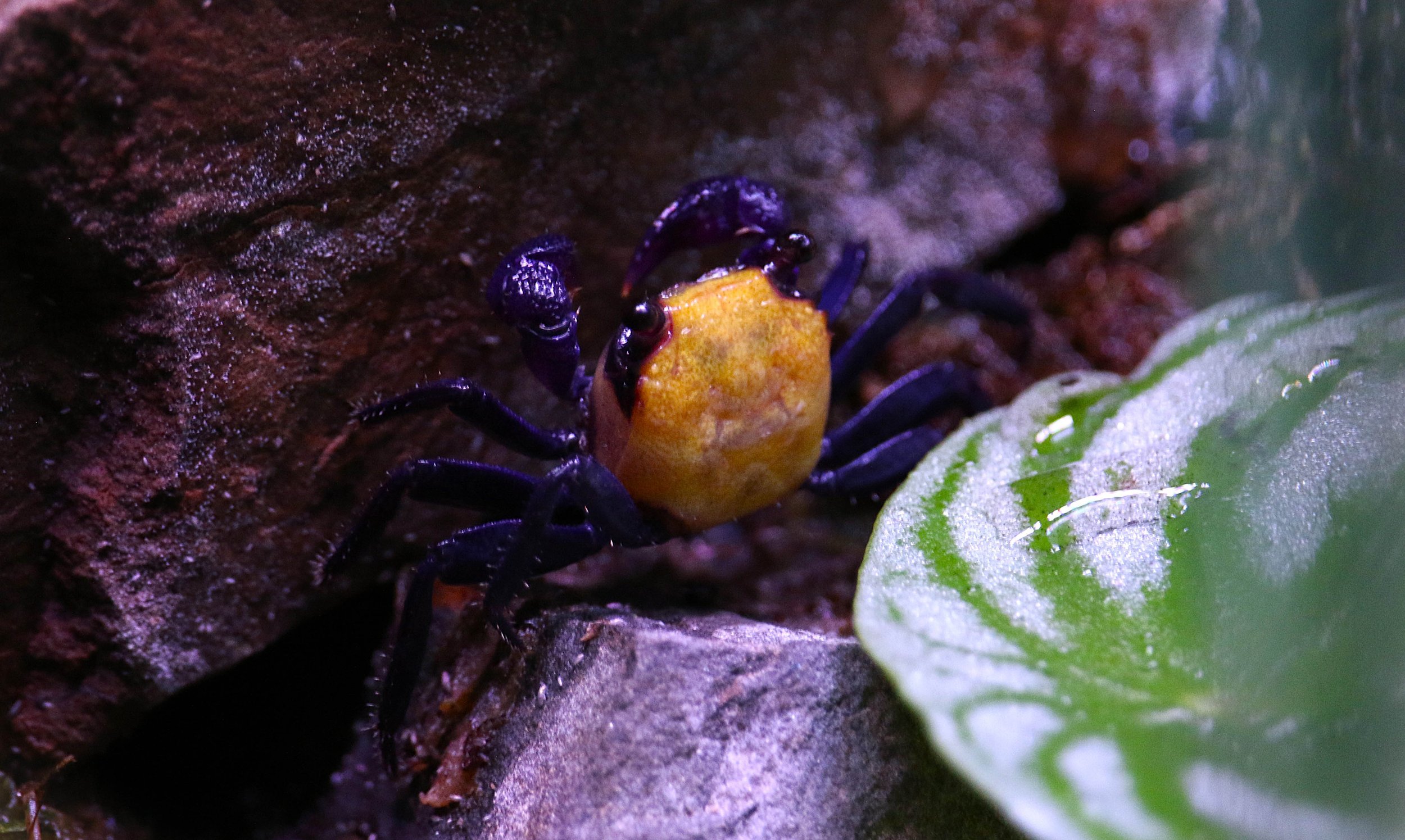
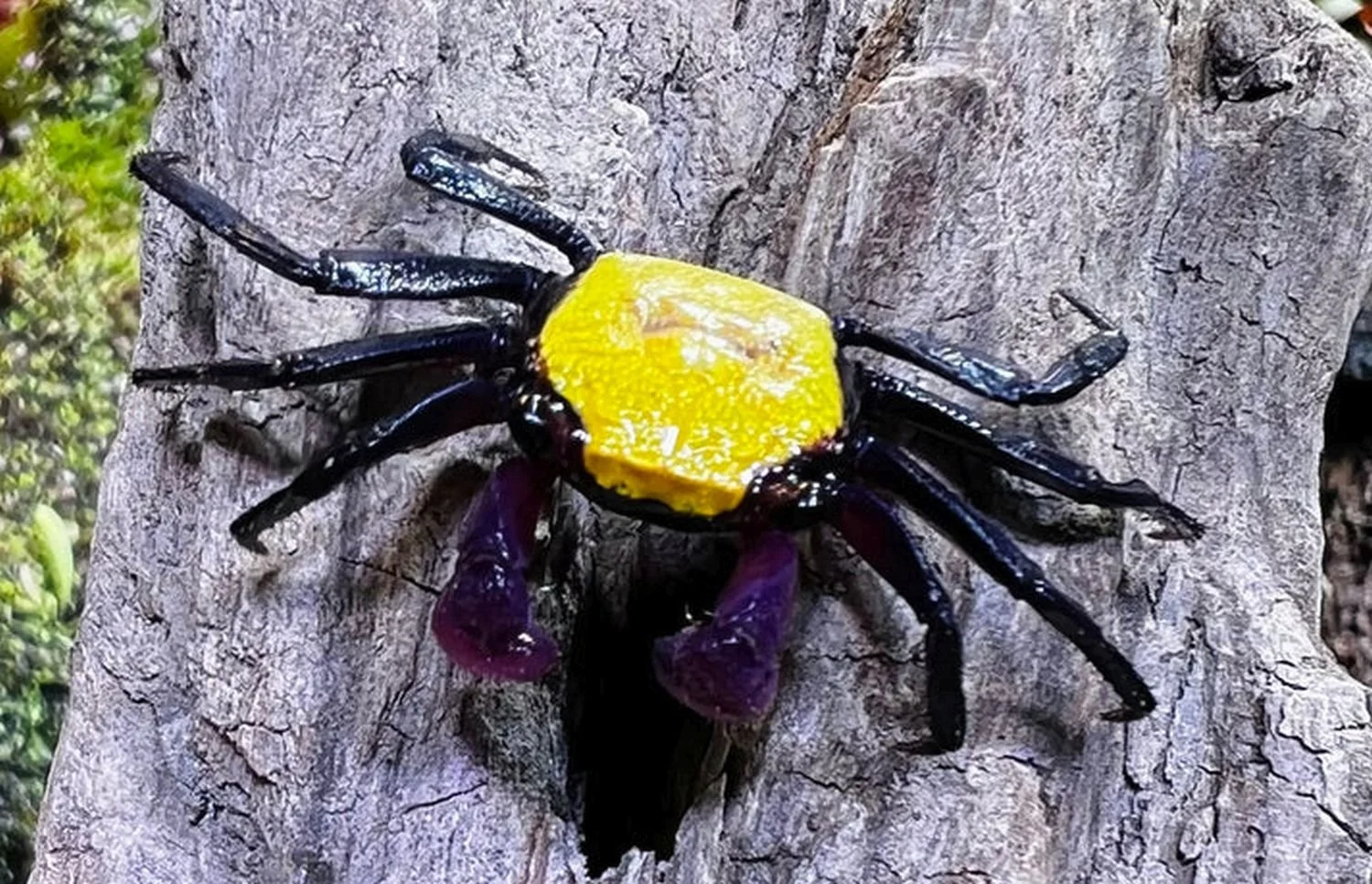
Carapace: Bright yellow
Legs: Black to black-violet. Under bright light they can even look purple.
Claws: Violet
Eyes: Black
Underside: Black to dark brown
Colour variation: Individuals may display slight variations in shade and intensity. Especially on their backs.
They are excellent climbers and surprisingly agile, often exploring vertical surfaces within their enclosure.



Distribution & Habitat
Geosesarma sp. Banana is native to Java, Indonesia, where it is found:
Tropical forest floors
Areas near streams and watercourses
Humid environments with dense leaf litter
In the wild, they spend most of their time on land, digging burrows and hiding beneath natural cover such as roots, rocks, and fallen leaves. Access to water is important, but they do not live fully aquatic lives and need to be kept in paludariums that are around 80% land and 20% water.
Behaviour & Social Structure
Social behaviour: These crabs are relatively social and can live in groups when provided with enough space and hiding spots.
Burrowing: They actively dig burrows in soft substrate, especially females.
Climbing: Exceptional climbers; enclosures must be escape-proof.
Plant safety: Unlike some crab species, Geosesarma sp. Banana does not damage plants, making it ideal for heavily planted paludariums.
As with all vampire crabs, they are secretive and spend much of their time hiding, especially during daylight hours.
When Kept in Captivity
Geosesarma sp. Banana thrives in paludarium-style enclosures that replicate its natural environment.
Environmental Requirements
Humidity: 75% or higher
Air Temperature: 22–28°C (71–82°F)
Overnight temperature drops: Normal and beneficial if gradual
A secure lid is essential, as these crabs are skilled escape artists.
Water Section Guidelines
Although primarily terrestrial, a shallow water section is required:
Water Temperature: 22–25°C (71–78°F)
pH: 7.5–8.0
KH: 0–10
GH: 4–16
Ammonia: 0
Nitrite: 0
Nitrate: Below 20 ppm
Clean, stable water conditions are important, even though they spend limited time submerged.
Diet
Geosesarma sp. Banana is omnivorous and easy to feed in captivity.
They will readily accept:
Plant matter
Leaf litter
Algae
Small insects and invertebrates
Commercial crab foods
A varied diet helps maintain strong colouration, healthy molts, and successful breeding.
Breeding Behaviour
Like other Geosesarma species, breeding can be aggressive:
Males may harass females persistently
Females carry fertilized eggs under their abdomen
Eggs hatch directly into miniature crabs (no larval stage)
Females hide in burrows while carrying eggs. Once released, juveniles are independent immediately and vulnerable to cannibalism, including from adults.
Conservation Status
Geosesarma sp. Banana has not been formally assessed for conservation status. However, as an undescribed species with limited distribution, excessive collection for the pet trade could pose a risk in the future.
Responsible captive breeding is strongly encouraged to reduce pressure on wild populations.
Interesting Facts
Despite its popularity, Geosesarma sp. Banana does not yet have an official scientific species name
Its bright yellow coloration makes it one of the most visually striking Geosesarma variants
It prefers land so strongly that it may rarely enter water except to hydrate
IMPORTANT
Do not mix different Geosesarma species or color forms in the same enclosure.
They are territorial and will often kill each other when mixed.